
Home Blog Page 82

NASSIT DG Turns 60…It’s Time To Go

Portrait of a man with a shaved head wearing a yellow shirt, looking slightly upward, in a bright indoor setting. The shirt has a blue logo on the chest.
Director General of NASSIT, Mohamed Fuaad Daboh

By Mohamed Mattia

The embattled Director General of NASSIT, Mohamed Fuaad Daboh, is refusing to retire at 60, even though his institution is tasked with the sole responsibility of paying pension benefits to retirees of 60 and above.

Even though his age is being disputed, NASSIT records show that he turns 60 in July this year.

His unpremeditated approach to his work has led to NASSIT being on the brink of collapse. No viable investment project has been undertaken since Fuaad Daboh was appointed DG of NASSIT in 2018.

Some employees of NASSIT are praying day and night to see the back of Fuaad Daboh in order to save the scheme from collapsing.

The SLPP Government of Ahmad Tejan Kabbah established NASSIT in 2021. Since then, the NASSIT Act has not been reviewed.

It is estimated that about 25 percent of pensioners spend between six and ten months to get registered for payment of their pensions.

Many people have called on Mr Fuaad Daboh to retire peacefully in the interests of NASSIT and the SLPP led government. Their prayer is for NASSIT not to collapse under another SLPP leader.

Fuaad Daboh will officially turn 60 in July this year. He has been lucky to be catapulted to the enviable post of DG at NASSIT because of his Bo School connections. After almost eight years at the helm of affairs, he must retire honorably and give way to a new era of development at NASSIT. Lonta!

Orange Mobile Finance Sierra Leone Appoints Mahamane Sidi Touré as New CEO

Mahamane Sidi Touré
Mahamane Sidi Touré

Orange Mobile Finance Sierra Leone has announced the appointment of Mr. Mahamane Sidi Touré as its new Chief Executive Officer, signaling a strategic move aimed at strengthening leadership and advancing digital financial services in the country.

The appointment, confirmed by the company’s Board of Directors, brings on board a seasoned telecommunications engineer with more than 17 years of experience within the SONATEL Group. Mr. Touré is widely recognized for his expertise spanning technology, commercial strategy, and mobile financial services, making him a key asset in driving the company’s next phase of growth.

Over the years, Mr. Touré has held several senior leadership positions within the Orange network, notably at Orange Mali and Orange Mobile Finance Mali. In these roles, he played a pivotal part in expanding mobile money services, introducing innovative solutions, and strengthening market competitiveness.

Prior to his new role in Sierra Leone, he served as Chief Executive Officer of Orange Mobile Finance Guinea-Bissau, where he delivered impressive results. Under his leadership, the company experienced rapid growth, achieving profitability and recording its first dividend payout within just 15 months of operation—an achievement widely regarded as a benchmark in the mobile finance sector.

The Board noted that his appointment underscores Orange Mobile Finance Sierra Leone’s commitment to deepening financial inclusion and enhancing customer-focused digital solutions. With the country’s growing demand for accessible and reliable mobile financial services, industry observers see his leadership as timely and strategic.

In a statement, the Board and Management expressed confidence in Mr. Touré’s ability to lead the institution toward sustained growth and innovation, while extending a warm welcome and best wishes for success in his new position.

His arrival is expected to further position Orange Mobile Finance Sierra Leone as a leading player in the nation’s evolving digital finance landscape.


Hon. Rosemarie Bangura Elevates Sierra Leone on the Continental Stage

Portrait of a smiling woman in a lavender lace dress with a silver choker necklace, standing before a patterned backdrop.

At a time when Africa continues to redefine its place in global affairs, Sierra Leone is once again stepping forward with pride and purpose. The election of Hon. Rosemarie Bangura as Vice Chairperson of the West African Regional Caucus of the Pan-African Parliament marks a moment of national celebration and continental significance.

That milestone is more than a personal victory; it is a powerful reflection of Sierra Leone’s growing voice within Africa’s governance landscape. Known for its resilience, cultural richness and commitment to democratic progress, the country continues to produce leaders who are shaping conversations beyond its borders.

Representing Tonkolili District, Hon. Rosemarie Bangura has built a reputation grounded in service, integrity and results. Her leadership has consistently focused on uplifting communities, advancing gender inclusion and strengthening democratic institutions. Those qualities have now earned her the confidence of her peers across West Africa, positioning her at the heart of regional decision-making.

The West African Caucus of the Pan-African Parliament plays a pivotal role in promoting unity, addressing shared challenges and advancing policies that impact millions across the sub-region. In her new role, Hon. Rosemarie Bangura will help coordinate dialogue, support regional cooperation and ensure that West Africa speaks with clarity and strength on critical continental issues.

Her election also shines a spotlight on Sierra Leone as a nation of opportunity and leadership. From its scenic beaches and vibrant heritage to its steady democratic gains, the country stands as a symbol of progress and potential. Leaders like Hon. Rosemarie Bangura embody this spirit; demonstrating that Sierra Leone is not only rich in natural beauty but also in human capital and visionary leadership.

Across the continent, her achievement resonates as a message of inspiration; particularly for women and young leaders. It reinforces the belief that with dedication and purpose, African leaders can rise to influence policies that shape the future of the continent.

With Hon. Rosemarie Bangura stepping into that influential position, expectations are high, but so is confidence in her ability to deliver. Her journey is a testament to what is possible when commitment meets opportunity and her success reflects the broader story of a nation on the rise.

This is not just her moment; it is Sierra Leone’s moment.

Dr. Tonya Musa Calls for New Social Contract as Sierra Leone’s Press Freedom Declines

Man standing outdoors in a gravel lot, wearing a dark utility vest over a maroon polo, a cap, and a gold watch.
Communication and Media Expert, Dr. Tonya Musa

By Amin Kef (Ranger)

Communication and Media Expert, Dr. Tonya Musa, has called for a renewed social contract for journalism in Sierra Leone, stressing that genuine protection and economic sustainability are essential to building a truly independent press.

His call comes as the country marked World Press Freedom Day on May 3, 2026, a moment he described as one shaped by a complex mix of hard-won legal gains, persistent political and economic pressures and the opportunities and risks brought by rapid digital transformation. He emphasized that the current climate demands an honest reckoning with the contradictions confronting modern journalism in Sierra Leone.

Central to his concerns is the country’s sharp decline on the global World Press Freedom Index, where Sierra Leone dropped from 56th to 79th position within a year. He noted that the fall in the safety indicator, from 71st to 112th, was particularly alarming, highlighting increasing physical risks faced by journalists, especially during politically sensitive periods marked by threats and violence.

Dr. Tonya Musa acknowledged that legal reforms, including the repeal of the 1965 Public Order Act in 2020, marked a significant milestone in strengthening press freedom. However, he cautioned that progress remains incomplete. He raised concerns over the 2025 Counter-Terrorism Bill, warning that it could be misused to suppress dissent. He also pointed to provisions within the Cyber Security Act, which he said have reportedly been used to summon editors over allegations such as “cyberstalking,” developments he warned could erode earlier gains.

Economic fragility within the media sector, he added, continues to compound those challenges. Dr. Tonya Musa stressed that sustainable journalism cannot exist without sustainable revenue models, noting that financial vulnerability exposes media institutions to political and commercial influence. That, he said, blurs the line between independence and survival, raising serious ethical concerns about the autonomy of the press.

On the digital front, he observed that while technology has empowered journalists with tools for more in-depth and impactful reporting, it has also opened the door to disinformation, manipulation and surveillance. He referenced warnings by the Sierra Leone Association of Journalists (SLAJ), which has cautioned that digital platforms are increasingly being exploited by political actors to spread falsehoods and inflame public tensions. Weak regulatory clarity and concerns about unchecked surveillance, he added, further complicate the media landscape.

Dr. Tonya Musa also highlighted a growing digital literacy gap, particularly among young people who engage with media largely for entertainment purposes without the skills to verify information or participate effectively in civic discourse. With traditional gatekeeping mechanisms weakening, he warned that citizens are becoming more vulnerable to misinformation in an increasingly unfiltered information environment.

To strengthen resilience, he called for increased investment in community-based media literacy initiatives, alongside stronger legal protections that safeguard legitimate expression. According to him, a credible and independent press cannot exist without both an informed public and a secure operating environment.

Raising critical questions about the state of journalism, Dr. Tonya Musa asked how a country can rank relatively well in legal frameworks yet perform poorly in overall press freedom. He also questioned whether journalism can truly remain independent when its survival depends on state support or advertiser interests. Additionally, he called for clarity on how societies can balance efforts to combat online disinformation without sliding into censorship and what responsibility global technology companies bear in protecting journalists who rely on their platforms.

President Julius Maada Bio has similarly underscored the importance of the media, noting that a free and empowered press remains a fundamental pillar of democracy, central to transparency, accountability and informed civic engagement. Dr. Tonya Musa stressed that achieving that vision requires concrete action beyond rhetoric.

He further emphasized the need for strong ethical standards within the profession, calling for a robust, practice-based framework to guide journalists, particularly in contexts where laws may be vague or open to misuse. Journalists, he noted, must be equipped to navigate such complexities as responsible custodians of truth.

Dr. Tonya Musa warned that the economic precarity of media professionals risks transforming them from independent watchdogs into instruments of those who control financial resources. At the same time, he noted that the digital age continues to challenge journalism’s authority, as algorithms disrupt traditional gatekeeping even while offering powerful tools for accountability.

He concluded that Sierra Leone stands at a critical crossroads, stressing that the future of journalism will depend on the country’s ability to forge a new social contract; one that protects journalists, sustains media institutions, empowers citizens and upholds the core principles of truth, accountability and democratic governance.

Alhaji Amadu Juldeh Sowe Rises from Local Baker to Industrial Powerhouse as New Flour Mill Boosts Sierra Leone’s Economy

Speaker in a white polo and cap speaks into a handheld mic at a lectern decorated with blue and yellow ribbons (Life Flour logo on hat)

By Amin Kef (Ranger)

Sierra Leone’s journey toward industrial growth and economic self-reliance has gained fresh momentum with the commissioning of a modern flour milling facility in Cline Town, Freetown; an investment that not only signals progress but embodies a powerful story of determination and transformation led by businessman Alhaji Amadu Juldeh Sowe.

The facility, operated by Sierra Leone Flour Mill and owned by Alhaji Amadu Juldeh Sowe, was officially commissioned by Julius Maada Bio on Thursday, April 30, 2026. While the event marked a significant milestone in the country’s industrialization drive, the spotlight firmly rested on Alhaji Amadu Juldeh Sowe, whose personal journey from a modest local baker to a major industrial player has captured national attention.

President Bio described the investment as a strong endorsement of Sierra Leone’s private sector potential, emphasizing its alignment with the Government’s agenda to boost local production, reduce import dependency and strengthen food security. He noted that the expansion of domestic flour production would not only stabilize supply but also position the country competitively within the sub-regional market.

“This project reflects resilience, renewal and a bold step toward economic sovereignty,” the President stated, highlighting the importance of converting local and imported raw materials into finished goods within Sierra Leone.

For Alhaji Amadu Juldeh Sowe, however, the commissioning represented far more than an economic milestone; it was the culmination of a deeply personal journey rooted in struggle, perseverance and vision.

Speaking at the ceremony, Alhaji Amadu Juldeh Sowe recounted his early days as a young boy assisting his father in a small bakery business. At the time, the family relied on purchasing flour from the very factory he now owns. He vividly recalled standing outside the factory gates with his father, waiting to collect bags of flour, as they were not permitted access into the premises.

Years later, that same boy, who had left school to support his family’s livelihood, has risen to become Chairman and Chief Executive Officer of the facility, now overseeing its operations and expansion.

His story, widely described as inspirational, underscores the transformative power of entrepreneurship and local ownership in shaping Sierra Leone’s economic future.

“When I started, we were only trying to survive. Today, we are building something that contributes to national development,” Alhaji Amadu Juldeh Sowe said, expressing gratitude for the support received from Government policies and financial institutions.

The facility itself mirrors that transformation. When Alhaji Amadu Juldeh Sowe acquired the mill in 2015, it had been dormant for nearly a decade, raising skepticism about its viability in a market dominated by imported flour. Through sustained investment, strategic planning and policy support, including tax incentives and waivers on wheat imports, the once-abandoned plant has been revived into a high-capacity industrial hub.

Management disclosed that production capacity has now increased significantly, rising to approximately 600 metric tonnes per day, a major leap expected to lower flour prices, improve supply stability and expand exports to neighboring countries such as Liberia and Guinea.

Beyond production figures, the project is already generating tangible economic benefits. Employment opportunities are expanding, supply chains are strengthening and locally branded flour products are gaining competitiveness in both domestic and regional markets.

The commissioning ceremony drew a high-profile audience, including senior Government officials, Members of Parliament, development partners and regional delegates; an indication of the project’s broader economic and political significance.

Among them was World Bank Country Manager, Abdu Muwonge, who described the investment as a strong example of effective collaboration between Government, development partners and the private sector. He noted that the initiative aligns with national agricultural and food security priorities, particularly the Feed Salone Strategy aimed at boosting local production and reducing reliance on imports.

Alhaji Amadu Juldeh Sowe acknowledged the critical role played by such partnerships, noting that access to financing and technical support had been instrumental in transforming the facility into a viable and competitive enterprise.

He also commended the Government’s efforts in creating an enabling business environment, citing policy reforms, infrastructure support and concessions as key drivers behind the project’s success.

President Bio, in his remarks, reflected on the historical significance of flour production in Sierra Leone, recalling the establishment of the original Freetown Flour Mill in 1968 by Seaboard West Africa Limited. Once a symbol of industrial ambition, the facility had played a central role in supplying bakeries nationwide before falling into decline.

Its revival under Alhaji Amadu Juldeh Sowe’s leadership, the President noted, represents not just the restoration of lost capacity but the emergence of a new era of indigenous ownership and industrial confidence.

“This is about reclaiming our productive strength and ensuring that Sierra Leoneans take the lead in building their own economy,” he said.

Observers say the symbolism of the moment cannot be overstated. What was once a place of exclusion for a young boy has now become a platform of leadership and opportunity under his stewardship.

Standing at the facility, many were struck by the powerful narrative it represents; a shift from dependence to self-reliance, from limitation to possibility.

Sierra Leone’s ongoing push for industrialization finds strong inspiration in the journey of Alhaji Amadu Juldeh Sowe, whose success story highlights what is possible when local enterprise is backed by sound policy and strategic investment.

The story of Alhaji Amadu Juldeh Sowe is not just about personal success; it is a reflection of a broader national aspiration; to build an economy driven by its own people, powered by resilience and sustained through innovation.

With the gates of opportunity now firmly open, the message is clear: Sierra Leone’s industrial future may well be shaped by those who once stood outside looking in but who now hold the keys to transformation.

As Press Freedom Slips Sharply in 2026 Index… SLAJ, Reporters Union and Media Freedom Coalition Demand Urgent Protection for Journalists

World Press Freedom Day 2026 poster showing three diverse journalists with camera gear and a microphone labeled Truth, advocating press freedom and truthful reporting.

By Amin Kef (Ranger)

Sierra Leone’s media sector is facing renewed scrutiny and growing concern following a significant drop in the country’s global Press Freedom ranking, as key stakeholders including the Sierra Leone Association of Journalists, the Sierra Leone Reporters Union and the Media Freedom Coalition warn of increasing threats to journalism and call for urgent reforms to safeguard the profession.

The warning comes in the wake of the 2026 World Press Freedom Index released by Reporters Without Borders, which shows Sierra Leone dropping more than 20 places to approximately 79th position, with a declining score that reflects mounting challenges in journalist safety, economic stability and political tolerance. The development coincides with global commemorations of World Press Freedom Day, a moment traditionally reserved for reflection on the role of journalism in advancing democracy, peace and accountability.

At the international level, the Media Freedom Coalition has sounded a stark warning about the deteriorating conditions under which journalists operate. In a statement marking World Press Freedom Day, the Coalition stressed that journalism remains a cornerstone of democratic societies and global peace, even as it comes under sustained attack.

The Coalition highlighted that journalists working in conflict zones and politically volatile environments are increasingly exposed to violence, harassment and intimidation. Drawing on data from the Committee to Protect Journalists, it noted that at least 129 journalists were killed in 2025, making it one of the deadliest years for media professionals in decades.

According to the Coalition, the risks now extend beyond physical harm to include digital threats, misinformation, surveillance and economic suppression. It observed that symbols once associated with protection, such as “PRESS” identification, are increasingly becoming targets, reflecting a troubling shift in how journalists are perceived in crisis situations.

The Coalition urged Governments worldwide to end impunity for crimes against journalists, strengthen legal protections and ensure that media practitioners can operate freely and safely. It emphasized that protecting journalism is not only a democratic obligation but also a critical investment in global stability and peace.

Within this global context, Sierra Leone’s performance in the 2026 index has triggered widespread concern among media stakeholders. The country, once regarded as a reform success story following the repeal of criminal libel laws, is now facing a reversal that analysts say reflects deeper structural challenges.

Observers attribute the decline largely to worsening safety conditions for journalists. Reports of threats, intimidation and harassment, particularly during politically sensitive periods, have increased raising fears that journalists may resort to self-censorship to avoid reprisals.

The findings suggest that while legal reforms have improved the formal framework for press freedom, they have not fully translated into a safe and enabling environment for journalists. That disconnect between law and practice has become a central issue in discussions about the future of media freedom in Sierra Leone.

Economic vulnerability also remains a major concern. Many media houses operate under severe financial constraints, relying heavily on advertising from Government institutions and politically affiliated entities. That dependency creates pressure on editorial independence and limits the ability of journalists to pursue critical reporting without fear of financial consequences.

Responding to the index, the Sierra Leone Association of Journalists (SLAJ) has renewed its call for stronger and more durable protections for press freedom. The Association emphasized the need for constitutional guarantees that explicitly safeguard freedom of expression and the safety of journalists.

SLAJ acknowledged the progress made through the repeal of criminal libel but warned that such gains remain fragile without broader institutional support. The Association expressed concern over provisions in existing laws, including aspects of the Cybersecurity and Crime Act and the Counter-Terrorism Act, which it believes could be misused to restrict legitimate journalistic activity.

The Association also drew attention to the growing threat of digital harassment, particularly targeting female journalists and called for stronger measures to address online abuse and intimidation. It stressed that protecting journalists requires a comprehensive approach that goes beyond legal reform to include enforcement, accountability and cultural change.

SLAJ further underscored the importance of strengthening the media ecosystem through capacity building, ethical standards and sustainable funding mechanisms. It highlighted the role of initiatives such as the National Fund for Public Interest Media in supporting independent journalism and urged continued commitment from Government and development partners.

The Sierra Leone Reporters Union (SLRU) has echoed similar concerns, emphasizing that press freedom is essential to national development, peace and democratic governance. In its World Press Freedom Day message, the Union warned that journalists continue to face multiple pressures that undermine their work.

The Union pointed to challenges including poor working conditions, limited access to information, economic hardship and rising threats against reporters. It noted that misinformation and emerging technologies are further complicating the media landscape, making it more difficult for journalists to maintain credibility and public trust.

SLRU maintained that a free press should not be seen as an adversary of the state but as a partner in nation-building. It called on Government institutions, security agencies and the public to respect the role of journalists and ensure their protection.

Reaffirming its commitment to defending the rights and welfare of reporters, the Union stressed that the future of Sierra Leone’s democracy depends on the ability of journalists to operate without fear or interference.

Adding to the national conversation, communication and media expert Dr. Tonya Musa has called for a fundamental reset in how journalism is supported and protected in Sierra Leone.

He described the current moment as a turning point shaped by both progress and persistent challenges, noting that the country’s decline in the press freedom index reflects deeper systemic issues. He highlighted the sharp drop in safety rankings as particularly alarming, pointing to increased risks faced by journalists covering sensitive topics.

Dr. Tonya Musa acknowledged the significance of past legal reforms but cautioned that they are insufficient without effective implementation and broader structural support. He warned that certain legislative provisions could be used to suppress dissent if not carefully managed.

A key concern, he noted, is the economic fragility of the media sector. According to him, sustainable journalism cannot exist without sustainable funding models, as financial vulnerability exposes media institutions to undue influence and compromises editorial independence.

He also addressed the impact of digital transformation, noting that while technology has expanded opportunities for journalism, it has also introduced new risks, including misinformation, surveillance and the erosion of traditional gatekeeping roles.

Dr. Tonya Musa emphasized the need for improved media literacy among citizens, warning that a poorly informed public is more susceptible to manipulation in an increasingly complex information environment. He called for greater investment in public education and community-based initiatives to strengthen critical thinking and civic engagement.

Raising broader questions, he challenged stakeholders to reflect on the contradictions within Sierra Leone’s media landscape, including how legal progress can coexist with declining press freedom and how journalism can remain independent amid financial dependency.

The combined responses from SLAJ, SLRU, the Media Freedom Coalition and media experts underscore the urgency of addressing the challenges facing journalism in Sierra Leone. While the country has made notable strides in reforming its media laws, the 2026 press freedom index highlights the need for deeper, more sustained action.

Stakeholders agree that protecting press freedom requires a holistic approach that includes legal safeguards, economic support, institutional accountability and cultural respect for the role of journalism.

As Sierra Leone navigates this critical moment, the choices made by Government, media institutions and society at large will determine whether the country can reclaim its progress or continue on a path of decline.

The message from all sides is clear: a free, independent and secure press is not optional; it is essential to democracy, peace and national development.

CSO Consortium Endorses Gento’s Banana Island Port, Predicts Massive Job Creation and Economic Growth

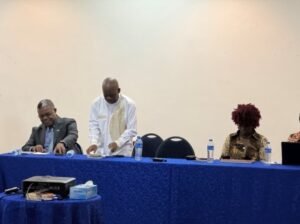
Man in a gray blazer and blue shirt reads from papers at a table with a purple cloth, speaking softly into a discussion. It appears to be a small meeting or presentation.

By Amin Kef (Ranger)

A coalition of Civil Society Organizations in Sierra Leone has publicly endorsed the proposed Banana Island and Kent Harbour Terminal project, describing it as a transformative investment capable of accelerating job creation and reshaping the country’s economic trajectory.

The Civil Society Consortium on Community Accountability and Service Delivery, led by its Chairman William Sao Lamin, announced its position during a Press Conference held on April 30, 2026, at the YACAN Conference Hall on Settra Kroo Street, off Kroo Town Road in Freetown. The Consortium’s statement, jointly delivered by Alphonso Manley and William Sao Lamin, highlighted strong support for the port development initiative and commended the leadership driving the project forward.

In its official communication, the Consortium expressed appreciation to President Dr. Julius Maada Bio and Members of Parliament for approving the Banana Island and Kent Harbour Terminal proposal. The group described the move as a demonstration of collective national leadership and bipartisan commitment to development, emphasizing the importance of effective collaboration between Government and private sector actors.

Central to the endorsement is the role of entrepreneur Mohamed Gento Kamara, Chief Executive Officer of the Gento Group of Companies. The Consortium credited his vision and investment drive as instrumental in positioning the project as a cornerstone of Sierra Leone’s economic transformation efforts, noting that private sector leadership remains critical in unlocking growth opportunities.

According to the Consortium, the project is expected to deliver significant employment benefits. During the construction phase, it is projected to create over 1,000 direct jobs, while long-term employment opportunities could exceed 10,000 once operations begin. Those figures, the group noted, represent a substantial contribution to strengthening the country’s labour market and improving livelihoods.

Beyond direct employment, the Consortium anticipates wider economic spillovers, estimating that between 50,000 and 100,000 indirect jobs could be generated across sectors such as transportation, logistics, trade and services. It added that such outcomes would align with national targets aimed at expanding job opportunities and reducing poverty.

The statement further underscored the project’s potential to reduce the cost of living by improving shipping efficiency and logistics systems. Enhanced port operations are expected to lower importation costs, which could ultimately translate into more affordable goods for consumers nationwide.

In addition, the Banana Island and Kent Harbour Terminal project is expected to deliver critical infrastructure upgrades, including a modern seaport, railway linkages to mining areas, logistics hubs and industrial facilities. The Consortium noted that those developments would ease pressure on road networks, improve supply chain efficiency and position Sierra Leone as a more competitive player in regional and global trade.

Describing the initiative as a “game-changing national asset,” the Consortium called for sustained collaboration among stakeholders to ensure successful implementation. It reaffirmed its commitment to monitoring the project and promoting transparency and accountability throughout its execution.

“The Banana Island Port Project presents a unique opportunity to transform the economy, create jobs and improve living standards,” the statement emphasized.

The Consortium concluded by urging Sierra Leoneans to support the initiative, which it described as a defining project for the country’s future. Chairman William Sao Lamin reiterated that civil society will continue to play an active role in ensuring that the anticipated benefits are delivered effectively.

With growing support from Government, civil society,and the private sector, the Banana Island and Kent Harbour Terminal project is increasingly being positioned as a flagship development with the potential to drive sustained economic growth and national progress.

Vice President Declares 2026 ‘Year of Execution’, Positions Workers as Architects of Development

Man in a light-colored traditional suit places his right hand over his heart while standing indoors.
Vice President, Dr. Mohamed Juldeh Jalloh

By Amin Kef (Ranger)

In a powerful display of leadership at the 2026 National Labour Conference, Vice President Dr. Mohamed Juldeh Jalloh signaled a decisive shift in Sierra Leone’s economic strategy, moving the nation from the era of blueprints to a relentless era of “action and proof.”

Addressing a packed hall of workers, union leaders and private sector employers on May 1, 2026, at the Miatta Conference Centre, the Vice President positioned the Sierra Leonean worker as the primary catalyst for the nation’s transformation. The event, themed: “Building Worker’s Power for Sierra Leone’s Transformative Agenda,” served as both a celebration of recent policy achievements and a bold roadmap for the country’s digital future.

In a stirring keynote speech, Dr. Mohamed Juldeh Jalloh rejected the traditional view of labour as a passive recipient of aid, emphasizing instead its central role in national progress.

“The real engine of Sierra Leone’s transformation is not foreign investment or Government planning; it is the millions of workers showing up every single day to build this country,” he stated.

He further stressed that under the current administration, workers have been elevated to their rightful place in the national hierarchy.

“Workers are not beneficiaries; they are the architects of development,” he declared.

The Vice President highlighted a string of legislative gains that have directly improved livelihoods across the country since 2018.

Among the key achievements, he pointed to historic wage increases, noting that the national minimum wage has been raised to NLe 1,200, representing a significant 66 percent increase from previous levels.

He also underscored efforts to include the informal sector in national development policies. In what he described as a landmark move, the Government is extending social protection measures to market women, artisans and fishermen; groups he said have long operated outside the reach of formal economic systems.

On gender equity, Dr. Mohamed Juldeh Jalloh reaffirmed the Government’s commitment to enforcing equal pay for equal work and expanding financial access for women-led businesses, positioning gender inclusion as a cornerstone of sustainable economic growth.

Beyond traditional labour concerns, the Vice President outlined a forward-looking vision for Sierra Leone’s participation in the global digital economy.

He emphasized that technology is no longer a distant prospect but an immediate reality creating new opportunities, particularly for young people.

“Opportunity without protection is ‘cheap exposure,’” Dr. Mohamed Juldeh Jalloh warned, stressing that as Sierra Leoneans engage with global digital platforms, they must do so under conditions that guarantee fair wages and adequate protections.

He described the Government’s investment in vocational training and digital skills development as a “core economic strategy,” aimed at equipping the workforce with the tools needed to compete in an increasingly digital world.

Concluding his address, the Vice President called for a renewed sense of shared responsibility among Government, labour unions and employers.

He urged employers to see a skilled and empowered workforce as a long-term investment rather than a cost, assuring citizens that the Government remains committed to delivering on its promises.

“Sierra Leoneans are not waiting any longer,” he said. “2026 is the year we move from intention to execution  and from promise to proof.”


Man in white attire and glasses speaks, gesturing with his hands; official government seal of the Office of the Vice President on his chest.

President Bio Officially Launches Partnership with Africell to Relaunch Sierratel as MVNO

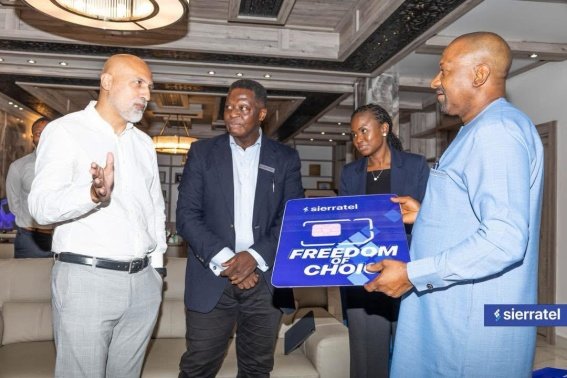
Officials in suits cut a blue ribbon at an outdoor ceremony, with onlookers and flags in the background.

By Alvin Lansana Kargbo

President Dr. Julius Maada Bio has officially launched a strategic partnership between the Government of Sierra Leone and Africell to relaunch Sierratel as a Mobile Virtual Network Operator (MVNO), marking a significant step in revitalizing the country’s telecommunications sector.

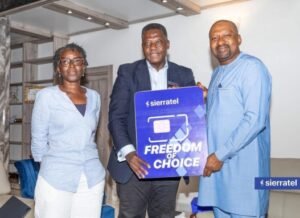
The launch, held on Tuesday 5th May, 2026 at the Miatta Conference Centre, formalizes a framework that enables Sierratel to return to the market by leveraging Africell’s infrastructure, technology and commercial strength, while maintaining full Government ownership.

Under the MVNO model, Africell will provide network coverage, technical backbone and sustained investment, while Sierratel focuses on service delivery, customer engagement and product innovation. The arrangement allows for immediate rollout of services without the need for heavy public sector capital expenditure.

Africell Chief Executive Officer, Shadi Gerjawi, described the agreement as a defining national milestone, stating that it reflects Africell’s long-standing commitment to invest in Sierra Leone and deliver world-class telecommunications services. He emphasized that the initiative provides a practical and sustainable pathway for Sierratel’s return, enabling full operations from the outset.

The Africell CEO reiterated that the partnership does not amount to privatization, stressing that Sierratel remains wholly owned by the Government. He noted that Africell’s role is to strengthen the company through modern infrastructure, operational efficiency and continuous commercial investment to ensure long-term competitiveness.

He further disclosed that Sierratel subscribers will immediately access voice, data and mobile money services, supported by a dedicated operational team established by Africell to ensure independence and market competitiveness. He said the initiative is expected to enhance nationwide connectivity, improve service reliability and introduce flexible, customer-focused offerings.

Addressing legacy challenges, the CEO confirmed that Africell will assume part of the financial liabilities owed to Sierratel staff.

The Minister of Communication, Technology and Innovation, Salima Monorma Bah, in her statement, said the Government deliberately avoided both privatization and direct infrastructure investment, opting instead for a sustainable partnership that leverages private sector efficiency while preserving public ownership.

She noted that although Sierratel’s infrastructure had declined over time, its brand remained a valuable national asset. The MVNO model, she explained, provides a viable route for rapid market re-entry, enabling the company to generate revenue while delivering improved services.

The Minister added that the Government has committed an initial $2 million toward staff-related obligations and reaffirmed its commitment to settling all verified arrears transparently. She said the partnership is expected to increase competition, improve affordability and expand access to telecommunications services, particularly among underserved populations.

In his keynote address, the President of Sierra Leone, Rtd Brigadier Dr. Julius Maada Bio framed the initiative as a cornerstone of his Government’s broader reform agenda, stressing that countries seeking relevance in the modern global economy must prioritize connectivity. He said Sierra Leone’s decision to partner with Africell reflects a deliberate strategy to strengthen national systems, improve service delivery and position the country to compete both within Africa and internationally.

The President underscored the link between connectivity and human capital development, noting that improved telecommunications infrastructure would enable innovation, enhance productivity and create opportunities across sectors. He highlighted that young people, who make up the majority of Sierra Leone’s population, stand to benefit significantly from increased digital access, describing them as central to the country’s transformation.

Reflecting on Sierratel’s legacy, the President recalled its historic role as the backbone of national communication, connecting institutions, businesses and families across the country. He stated that the company’s revival goes beyond commercial considerations, representing the restoration of a strategic national asset with deep social and economic relevance.

President Bio acknowledged that years of structural inefficiencies and outdated technology had weakened the company, but maintained that the Government remained committed to finding a responsible and sustainable path to recovery. According to him, the partnership with Africell demonstrates a shift toward practical, results-oriented solutions that align with current industry realities.

He also addressed concerns around staff welfare, commending the resilience of Sierratel employees who remained committed despite prolonged challenges further assuring that all verified obligations would be settled through a transparent and accountable process as well as reaffirming his Government’s commitment to fairness.

The President intimated how the collaboration with Africell would expand access to reliable communication services across both urban and rural communities, improving opportunities for traders, students, farmers and entrepreneurs. He added that enhanced connectivity would support critical sectors such as education, healthcare and agriculture, while strengthening national security systems.

He also described the partnership as a clear sign of rising investor confidence in Sierra Leone, highlighting that credible international partners are becoming more willing to engage with the country as reforms continue to take shape. Emphasizing the need for progress, he added that embracing innovation and adaptability remains essential for Sierra Leone to stay competitive in an increasingly dynamic digital landscape.

The President concluded by describing the Africell–Sierratel partnership as more than a corporate agreement, characterizing it as a transformational step toward national development, grounded in performance, accountability and measurable impact.

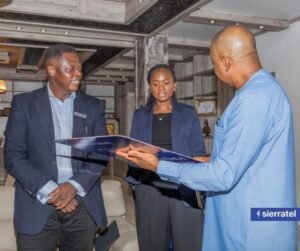
As part of the relaunch, Joe Abass Bangura was appointed Managing Director of the Sierratel MVNO, tasked with overseeing its operations and market positioning.

The event also recognized long-serving Sierratel staff for their loyalty and dedication, including Ibrahim Mansaray (Driver), Edward Yarrimeh Kamara (Workers’ Representative), Issa Bangura (Director of Engineering), Kandeh Mansaray (Office Assistant) and Mariama Olu-Williams (Customer Care Manager), some of whom have served the company for over three decades.

Africell confirmed that the network is now fully operational, supported by a 24/7 customer care system. The company stated that the partnership is designed to restore public confidence, enhance service quality and drive financial inclusion through expanded mobile money services.

The relaunch of Sierratel under the MVNO framework underscores a shift toward public-private collaboration in Sierra Leone, positioning the telecommunications sector for greater efficiency, sustainability, and growth.


President Bio Holds Productive Talks with All People’s Congress Leaders, Reaffirms Commitment to National Unity

Group of dignitaries posing for a formal photo in a conference room, with the Nigerian flag in the background behind them.
President Dr. Julius Maada Bio, alongside Vice President Dr. Mohamed Juldeh Jalloh pose for picture with senior members of the opposition APC party after high-level meeting at State House

By Amin Kef (Ranger)

President Dr. Julius Maada Bio, alongside Vice President Dr. Mohamed Juldeh Jalloh on Tuesday, May 5, 2026, held a high-level meeting at State House with senior representatives of the main opposition All People’s Congress (APC), in what has been described as a constructive step toward strengthening political dialogue and national cohesion.

The engagement brought together key figures within the APC, including Acting National Chairman, Amb. Alhaji Osman Foday Yansaneh, Opposition Leader in Parliament, Abdul Kargbo, Mayor Yvonne Aki-Sawyerr, Chairman Kasho Holland-Cole, and other representatives from various organs of the party.

According to the President, the discussions were “productive,” reflecting a shared commitment among political stakeholders to prioritize the interests of the nation above partisan considerations. In a statement following the meeting, President Bio emphasized the importance of sustained dialogue and collaboration in addressing the country’s challenges.

The President reaffirmed his administration’s commitment to fostering continued engagement across political lines, stressing that inclusive governance remains central to Sierra Leone’s democratic progress. He noted that cooperation between the ruling government and opposition parties is essential for promoting peace, stability, and national development.

“Working together in the service of our people and our nation is not optional—it is necessary,” the President stated, highlighting the need for unity in advancing the country’s broader development agenda.

The meeting, held at State House in Freetown, is part of ongoing efforts to maintain open channels of communication between the government and opposition, particularly in a political landscape where dialogue is increasingly seen as vital to democratic consolidation.

Observers note that the presence of senior APC figures signals a willingness on both sides to engage constructively, with the aim of strengthening democratic institutions and fostering mutual understanding.

The discussions also underscored the importance of prioritizing peace and national cohesion, especially at a time when collaborative leadership is required to navigate economic and social challenges.

The meeting comes amid ongoing efforts under the post-election national unity agreement and tripartite process aimed at easing political tensions and strengthening democratic governance.

The APC leadership has publicly endorsed Vice President Juldeh Jalloh to continue engagements on behalf of government, signaling a willingness from both sides to sustain dialogue and implement agreed reforms.