By Amin Kef (Ranger)
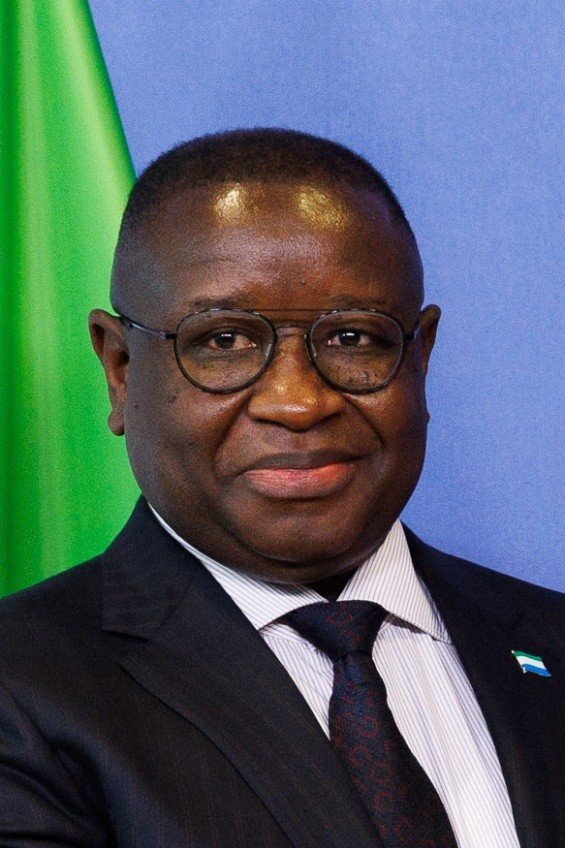
The Government of Sierra Leone has firmly dismissed any prospect of a third-term presidency, as senior officials reaffirmed President Julius Maada Bio’s commitment to constitutionalism and democratic governance during the Ministry of Information and Civic Education’s Weekly Press Conference held on Tuesday, January 27, 2026.

Addressing journalists at the Miatta Conference Centre in Brookfields, the Minister of Information and Civic Education, Chernor Bah, said this was the first time in Sierra Leone’s democratic history that discussions around a third-term presidency had not surfaced. He attributed that development to President Bio’s unequivocal respect for the two-term constitutional limit, stressing that the President has made it “abundantly clear” that no third-term agenda would be tolerated.
The Minister emphasized that the ongoing constitutional review process is designed solely to serve the national interest, not the ambitions of any political party. He clarified that the Constitutional Amendment Bill currently before Parliament primarily addresses election-related matters, while other entrenched constitutional reforms would proceed through a broader review process culminating in a national referendum.
The Attorney General and Minister of Justice, Alpha Sesay, also addressed the press conference, providing a detailed briefing on the constitutional review process and the contents of the proposed Constitutional Amendment Bill tabled in Parliament earlier that day.
Tracing Sierra Leone’s constitutional evolution, the Attorney General recalled that the 1978 Constitution established a one-party state, which was later replaced by the 1991 multiparty Constitution shortly before the outbreak of the civil war. He noted that Article 10 of the 1999 Lomé Peace Agreement recommended a comprehensive review of the 1991 Constitution to prevent democratic regression, a call later reinforced by the Truth and Reconciliation Commission (TRC).
Acting on those recommendations, the late Ahmad Tejan Kabbah issued a White Paper and established the Peter Tucker Constitutional Review Committee. That effort was later advanced under former President Ernest Bai Koroma, who constituted the Justice Edmond Cowan Constitutional Review Committee in 2013. The committee, comprising over 80 representatives from political parties, civil society, youth groups and women’s organisations, conducted extensive nationwide consultations.
According to the Attorney General, the committee held more than 10,000 public consultations, received over 150 position papers, conducted 80 expert engagements and 180 direct stakeholder meetings, distributed more than 70,000 consultation forms nationwide and recorded 40,960 website visits. Its report was submitted in 2017, followed by a Government White Paper that accepted some recommendations while modifying others.
In 2021, President Julius Maada Bio issued an additional White Paper, incorporating progressive provisions such as gender equality and women’s empowerment into the proposed new Constitution. Following the 2023 National Peace and Unity Agreement, a Tripartite Committee agreed on 80 recommendations, with non-entrenched clauses tabled as electoral reforms ahead of the 2028 general elections, while entrenched clauses will proceed to a referendum.
Highlighting key amendments in the current Bill, the Attorney General explained that Section 49(1) seeks to empower Parliament to remove a Vice President who is expelled from the political party under which he or she was elected. The Bill also proposes reforms to the proportional representation system by repealing Section 38A and amending Section 74 to allow a category of Members of Parliament to be elected through proportional representation.
Another major proposal seeks to replace the long-standing 55 percent presidential victory threshold with a simple majority of 50 percent plus one vote, alongside a requirement for candidates to secure at least 20 percent of votes in two-thirds of districts nationwide. The Bill also introduces provisions allowing independent candidates to contest presidential elections, subject to strict eligibility criteria.
The Attorney General noted that adopting proportional representation has proven cost-effective, revealing that the Government saved approximately NLe20 million between 2023 and 2025 by avoiding by-elections, with savings redirected to education, health and agriculture.
Civil society voices also featured in the process. Mariama Jalloh, National Director of the Young Women in Governance Network, called for clearly defined women’s rights in the new Constitution, including pay equity, a 30 percent quota for women and improved access to education and healthcare.
Meanwhile, Parliament on Monday, January 26, 2026, held a pre-legislative engagement on the Bill. Welcoming lawmakers and stakeholders, the Clerk of Parliament, Karmoh K. Conteh, assured the nation that due process would be strictly observed. The session featured robust debate, with the Leader of the Opposition, Abdul Kargbo, urging transparency and warning against procedural shortcuts, while the Majority Leader, Matthew Sahr Nyuma, expressed confidence in Parliament’s consultative approach.
The engagement concluded on an optimistic note, with civil society representative, Basita Michael, describing the process as encouraging and reflective of a genuine opportunity to shape a Constitution that serves the people of Sierra Leone.