By Foday Moriba Conteh
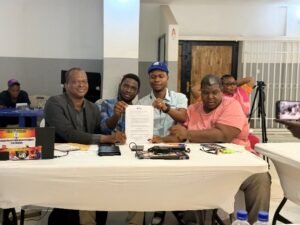
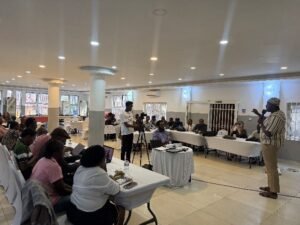
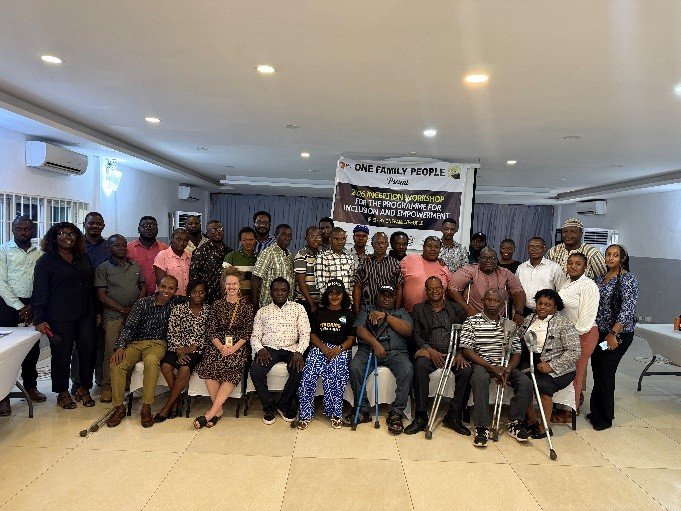
One Family People (OFP), with funding from the Liliane Foundation, on Tuesday, 10th February 2026, concluded its 2026 inception workshop for the Programme for Inclusion and Empowerment (PIE) project and signed contracts with eight partner organizations from five districts. The partners received a total of NLe8,874,000 equivalent to over eight billion old Leones to support nationwide implementation of the project. The event, held at the Saphyre Court Hall in Freetown, aligns with OFP’s 2025–2027 Multi-Annual Plan aimed at strengthening disability inclusion across education, healthcare, livelihoods and advocacy.

Samuel POV Macauley, OFP’s Operations and Programmes Director, said the annual inception workshop is an opportunity to review plans, strengthen collaboration and map strategies for effective implementation. He described the PIE project as a “community-based initiative with a strong foundation for development,” noting that it represents a shift from a charity-focused model to a rights-based approach.
“Previously, interventions largely provided direct aid, such as shoes and medical support but lacked system strengthening and community ownership. This new model combines support for the most vulnerable with capacity building for institutions and stronger advocacy,” Samuel POV Macauley explained.
Under the PIE project, OFP collaborates with the National Rehabilitation Programme, the Sierra Leone Autistic Society and five district-level implementing organizations: Polio Persons Development Association, Welfare Society for the Disabled, Disability Awareness Action Group (Western Rural) and Dorothy Springer Trust (Western Urban), among others. Samuel POV Macauley disclosed that in 2025, the network received funding of NLe5.57 million. The 2026 increase to NLe8.874 million reflects OFP’s commitment to expanding the project’s scope and overcoming challenges experienced during the pilot year.
He also emphasized the importance of collaboration with Government institutions, particularly the National Commission for Persons with Disabilities (NCPD), pledging OFP’s support in developing a national Community-Based Inclusion strategy and a technical committee to drive implementation of the Disability Act. “Stronger partnerships with Government and other stakeholders will enhance advocacy and evidence-based interventions,” he added.
Ishmael Kebbie, Deputy Director and Program Manager at the National Rehabilitation Programme, lauded PIE for promoting sustainable support for persons with disabilities. He stressed the need for continuity in development programs, warning that abrupt withdrawal of services can worsen vulnerabilities.
“When organizations discontinue initiatives abruptly, the burden returns to Government institutions, which already face competing priorities. Sustainability must be central to every project,” Ishmael Kebbie said. He praised PIE for adopting a long-term, rights-based approach aligned with national health priorities. Despite limited resources in 2025, the project enabled many persons with disabilities to access corrective surgeries and rehabilitation services, transforming lives and restoring dignity. Over 70 percent of beneficiaries who underwent reconstructive procedures are now more independent, with some engaging in productive livelihoods, contributing directly to national development and poverty reduction.
Laura Boothby, Therapy and Rehabilitation Program Manager at World Hope International, highlighted the importance of collaboration and sustainability in disability inclusion. As an occupational therapist working with the Enable the Children Programme, she described PIE as the beginning of a long-term movement to improve rehabilitation and inclusion. She encouraged organizations to join the Technical Working Group for Children with Disabilities under the NCPD, a platform promoting coordinated action among community-based groups, NGOs and international partners. Laura Boothby also invited stakeholders to World Hope International’s annual Beach Jogging event on February 14, which will bring together over 2,000 children, including many with disabilities, to promote inclusion and social interaction.
Brima Abdulai Sheriff, Chairman and Chief Commissioner of the NCPD, unveiled a renewed vision for inclusive development in Sierra Leone. He emphasized that the new Commission brings fresh leadership, energy and openness to collaboration. “We are ready to work with everyone to ensure the dignity, inclusion and empowerment of persons with disabilities,” he stated.
The Chairman highlighted the urgent need for accurate data on disability in Sierra Leone, noting that current estimates of 400,000 persons are grossly understated. He pledged that the Commission will work with partners like OFP to ensure reliable data collection and called for disability inclusion to be mainstreamed in national policies.
Empowerment, he said, must be tailored to individual realities, from children in school to adults using wheelchairs. He also underscored the challenges faced by women and girls with disabilities and called for stronger collaboration among Government Ministries, universities and development partners.
Joseph A. Kamara, President of the Sierra Leone Union on Disability Issues (SLUDI), called for increased investment in organizations of persons with disabilities to ensure sustainability. He commended OFP for financial and technical support but emphasized that such assistance should strengthen local organizations rather than replace them. “Organizations of persons with disabilities must exist beyond projects and funding cycles. We were not created because of money; we were created to address the real needs of our people,” he said. Joseph Kamara also encouraged stakeholders to support smaller and emerging disability groups and stressed that collective action is key to lasting impact.
Dr. Kabba F. Bangura, Leader of Cluster II and Executive Director of the Disability Awareness Action Group, pledged partner organizations’ full commitment to PIE objectives. He praised OFP’s financial and technical support and acknowledged the rigorous monitoring mechanisms, noting that although challenging, they enhanced accountability and performance.
The Leader of Cluster II emphasized community ownership, active participation of persons with disabilities and ensuring services reach local communities. “We are committed to working very hard to achieve the objectives of PIE and to ensure persons with disabilities become productive members of society,” he said.
Dr. Abdulai Dumbuya, CEO of Dorothy Springer Trust and Inclusive Education Advisor to PIE, urged implementing partners to fully utilize technical advisory support. He explained that the advisory team provides expertise in inclusive education, health, livelihoods, social inclusion, empowerment, monitoring, evaluation, accountability and learning.
He cautioned that early engagement with advisors prevents mistakes and improves the quality of program delivery, citing an example where consultation prevented duplication of school clubs. He emphasized proper documentation of advisory processes to ensure accountability and encouraged partners to maintain open communication.
John Conteh, Acting Director of Social and Religious Affairs at the Ministry of Social Welfare, reaffirmed the Government’s commitment to promoting the rights and wellbeing of persons with disabilities. He commended OFP for initiating PIE, describing it as a programme aligned with national inclusion, equity and social justice agendas.
The Acting Director of Social and Religious Affairs highlighted that PIE complements legal and international frameworks, including the Persons with Disabilities Act 2011 and the UN Convention on the Rights of Persons with Disabilities. He encouraged partners to prioritize community ownership, gender responsiveness and the active involvement of persons with disabilities throughout planning, implementation, monitoring and evaluation. He also described the signing of partnership agreements as a milestone demonstrating commitment to transparency, coordination and results-oriented programming.
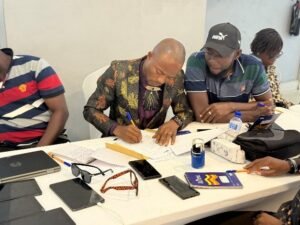
The inception workshop concluded with the formal signing of contracts with partner organizations, marking the official commencement of the 2026 PIE project implementation phase. Stakeholders, including Government officials, partners and technical advisors, renewed their commitment to advancing disability inclusion and empowerment nationwide.