
By Amin Kef (Ranger)
A new press release has raised alarm over what experts describe as a major climate data gap at the heart of the global food system; one that is leaving billions of dollars in corporate climate commitments largely unverified and exposing major agribusinesses to growing regulatory and reputational risks.

According to the release, agriculture and food systems are responsible for nearly one-third of global greenhouse gas (GHG) emissions, much of it coming from farm-level and land-use activities such as deforestation, livestock production and cultivation practices. Yet, despite the sector’s significant impact, these emissions are often poorly measured, invisible in reporting or based on broad estimates rather than real, verifiable data gathered directly from farms.
The report points to land-use change as one of the biggest drivers of emissions across agricultural supply chains, noting that about 75% of global deforestation is linked to agricultural expansion. This trend is pushing Governments, investors and consumers to demand greater transparency from companies involved in the sourcing of commodities such as cocoa, palm oil, coffee, rubber and other crops associated with deforestation risk.
While many companies have announced bold “Net Zero” targets, the press release warns that most of these commitments still lack credible verification. Research cited in the document indicates that 82% of corporate Net Zero targets remain unverified, largely due to missing Scope 3 emissions data and limited land-use information. Scope 3 refers to emissions produced across a company’s value chain, particularly those generated before raw materials reach factories, meaning the majority of emissions occur outside direct corporate control but remain central to genuine climate accountability.
Industry analysts say this missing data creates serious blind spots. Many companies still do not have credible farm-level insight into fertilizer use, land conversion, carbon stock, energy inputs, crop management and livestock practices. As a result, companies struggle to identify where emissions are coming from, how to reduce them effectively and whether suppliers are complying with emerging environmental standards.
The press release explains that this problem is becoming more urgent as climate reporting expectations accelerate globally, fueled by investor scrutiny, enforcement frameworks and new regulatory requirements such as the European Union Deforestation Regulation, the Corporate Sustainability Reporting Directive and internationally recognized guidance such as SBTi FLAG and ISO 14068.
To address the “invisible emissions” problem, the release highlights a growing shift toward new monitoring and verification systems that combine geospatial monitoring, satellite imagery and validated on-the-ground data collection. This approach makes it possible for companies to quantify emissions tied to land-use change, detect deforestation risk hotspots and support climate-aligned sourcing decisions.
Koltiva, a global agritech company referenced in the release, is presented as one of the actors contributing to this emerging solution. Through its digital platform and emissions monitoring tools, Koltiva is supporting efforts to integrate verified field data with geospatial intelligence; helping companies turn fragmented farm information into credible, auditable and decision-ready climate data.
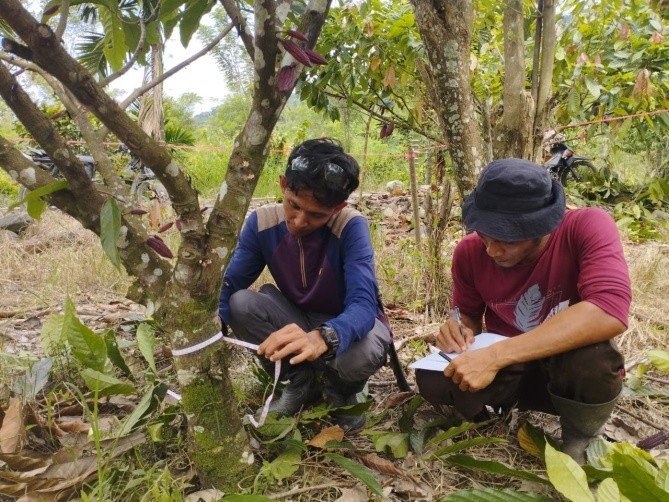
The press release underscores that while satellite tools offer broad visibility, they cannot fully explain the real practices happening on farms. Experts argue that “ground-truthing”, the process of validating remote sensing outputs through verified field evidence is essential for building climate data that can withstand scrutiny from regulators, investors and global buyers.
With the global food sector under increasing pressure to prove measurable progress, the document concludes that transparent climate data systems are no longer a luxury but a strategic necessity. It argues that companies able to measure and manage farm-level emissions will set the benchmark for climate-smart agriculture, while those that fail to close the data gap risk falling behind as the world shifts toward higher expectations for verified sustainability and credible Net Zero delivery.