
By Amin Kef (Ranger)
The Government of Sierra Leone has officially declared the Mpox outbreak over, marking a major public health milestone after nearly one year of sustained national response and recovery efforts.

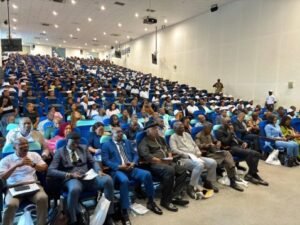
The declaration was made on Monday, 15 December 2025, by the Minister of Health, Dr. Austin Demby, in collaboration with the National Public Health Agency (NPHA), following the attainment of internationally accepted public health benchmarks set by the World Health Organization (WHO). Those standards require that a country records no new Mpox cases for at least forty-two consecutive days nationwide.
According to health authorities, all sixteen districts in Sierra Leone have now surpassed that threshold, with several districts reporting more than 150 days without a single confirmed case.
Mpox was first detected in Sierra Leone in January 2025, prompting the Minister of Health to immediately declare a Public Health Emergency. What followed was one of the most complex health emergencies the country has faced since the Ebola outbreak, unfolding amid a broader global and continental resurgence of the virus.
By the end of the response period, Sierra Leone had recorded a total of 5,442 confirmed Mpox cases. Of those, 5,382 patients recovered, representing a remarkable 99 percent recovery and survival rate. The country recorded a case fatality rate of just 1.1 percent, one of the lowest reported during the outbreak on the continent.
“This is not luck. This is leadership. This is systems at work,” Dr. Austin Demby said, describing the outcome as the result of deliberate planning, national ownership and coordinated execution across Government and society.
Health authorities emphasized that the success of the response reflected a truly national effort. Medical personnel, surveillance officers, community health workers, traditional leaders, civil society organizations and international partners all played critical roles.
Through the Ministry of Health and NPHA, Sierra Leone vaccinated more than 186,000 people, prioritizing frontline health workers and vulnerable populations. Over 22,500 contacts were traced and monitored, while laboratory capacity expanded from just two facilities to nine testing sites nationwide.
The NPHA led an aggressive decentralization of public health services, bringing surveillance, testing, treatment and risk communication directly to communities under a whole-of-government and whole-of-society approach.
The declaration of the end of the Mpox outbreak coincided with the second anniversary of the National Public Health Agency. Since its establishment, the NPHA has emerged as a central pillar of Sierra Leone’s health security architecture, overseeing early detection, heightened surveillance and effective management of public health emergencies.
“Sierra Leone has a history of dealing with outbreaks but this was new,” said Prof. Foday Sahr, Executive Director of NPHA. “This was the first huge Mpox outbreak and it tested every aspect of our system.”
Mpox, a zoonotic viral disease characterized by fever, headaches and painful skin lesions, was first identified in laboratory monkeys in Denmark in 1958, with human cases documented in the Democratic Republic of Congo (DRC) from 1970. The most widespread global outbreak began in May 2022 in the United Kingdom and spread to over 120 countries.
The WHO declared Mpox a Public Health Emergency of International Concern (PHEIC) in July 2022. Although that emergency was lifted in 2023, renewed outbreaks, including a new strain identified in the DRC, prompted Africa CDC to declare a Public Health Emergency of Continental Security in August 2024, followed by a second WHO PHEIC.
By the time Sierra Leone recorded its first cases in January 2025, neighboring Mano River Union countries; Guinea, Liberia and Côte d’Ivoire, had already reported infections, heightening the country’s risk profile.
At the height of the outbreak, Sierra Leone became one of the leading drivers of Mpox transmission in Africa, recording over 5,000 cases within six months. Health officials acknowledged that early challenges, particularly delays in funding and limited treatment infrastructure, contributed to the rapid escalation.
“When we started, we knew what to do and how to do it, but the biggest challenge was resources,” said Dr. Joseph Sam Kanu, Programme Manager for Surveillance and Applied Epidemiology at NPHA.
The country initially relied on home-based care due to limited bed capacity, a policy that was later revised as more treatment centers were established. From an initial 13 beds at the 34 Military Hospital, national capacity expanded to more than 700 beds nationwide.
Health workers across the country bore the brunt of the response. At the 34 Military Hospital, Dr. Captain Adama Kamara recalled managing up to 60 daily admissions with limited resources, often making difficult decisions about patient care.
In Port Loko District, one of the most affected areas, Medical Superintendent Dr. Saiku Tejan described the outbreak as the most challenging mission of his career. He recounted the successful delivery of a healthy baby girl by a pregnant Mpox patient, achieved through strict infection prevention measures.
“These moments reminded us why we had to keep going,” Dr. Tejan said.
Laboratory limitations initially constrained the response, particularly for genomic sequencing. Through partnerships with the Institute Pasteur de Dakar, mobile laboratories were deployed in Port Loko and Koinadugu, increasing the country’s sequencing and testing capacity to eight sites.
To break transmission chains, the Government launched “Operation Find Them All,” a nationwide campaign combining surveillance, contact tracing and community engagement. Despite global vaccine shortages, Sierra Leone secured 267,000 doses at no cost, with support from partners including the United States, Africa CDC, Gavi, WHO and UNICEF. Approximately 200,000 people were vaccinated by October 2025.
The response also confronted widespread misinformation and stigma, which discouraged early treatment seeking. Health officials intensified risk communication and community engagement to counter false narratives, particularly claims linking Mpox to promiscuity.
Survivors such as Mathew Fomba Sam, who delayed seeking care due to fear and misinformation, later became advocates for early treatment and public awareness.
From being a regional hotspot, Sierra Leone’s Mpox response has since become a reference point for other countries. Africa CDC invited Dr. Austin Demby to share Sierra Leone’s experience during its weekly press briefings, highlighting the importance of national leadership and local ownership.
“It’s a testament to country leadership and partnership with Government leaders, traditional authorities, civil society and development partners,” Dr. Austin Demby said.
The end of the Mpox outbreak marks not only a public health victory but also a reaffirmation of Sierra Leone’s growing capacity to respond to complex emergencies through coordination, resilience and collective action.