By Amin Kef (Ranger)
The Government of Sierra Leone has officially launched a bold nationwide campaign dubbed “300 Days of Activism”, aimed at eliminating preventable maternal and child deaths and ensuring that no child is left without life-saving vaccines.

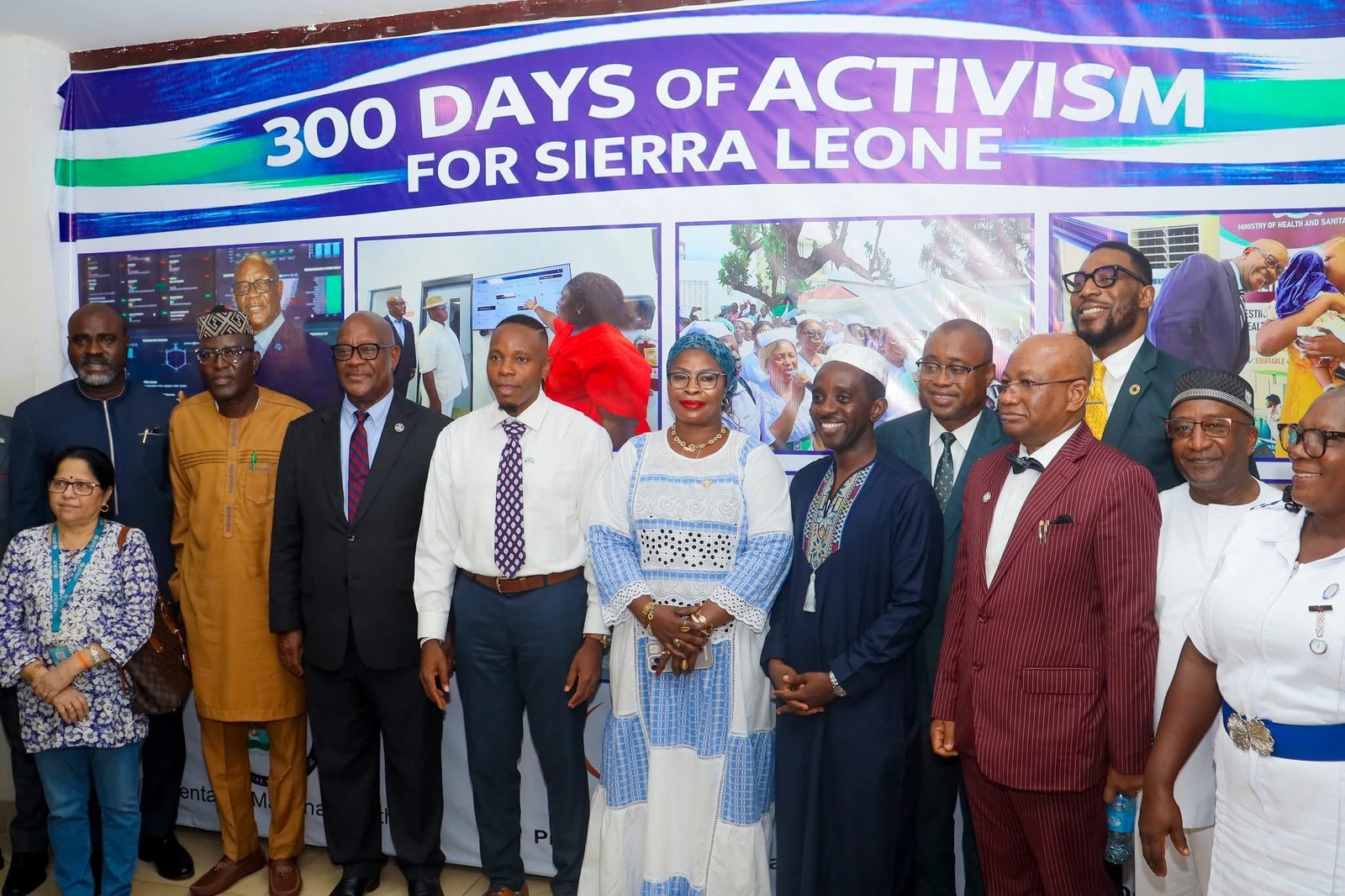
The landmark initiative was unveiled on Monday, March 2, 2026, in Freetown, bringing together Government officials, development partners, civil society organizations and healthcare professionals. The campaign aligns with the country’s commitment to achieving the United Nations Sustainable Development Goal 3 (SDG 3), which focuses on ensuring healthy lives and promoting well-being for all at all ages.
At the heart of the campaign are three ambitious targets, widely referred to as the “Triple Zeros”:
- Zero preventable maternal deaths
- Zero infant and child deaths
- Zero zero-dose children; referring to children who have not received any routine vaccinations
The initiative reflects the Presidential commitment made by His Excellency President Julius Maada Bio at the 39th African Union Summit in Addis Ababa to end preventable maternal and child deaths in Sierra Leone.
The United Nations Population Fund (UNFPA) Sierra Leone joined the Government and stakeholders at the launch, pledging full support for the flagship reform. UNFPA emphasized its commitment to working closely with the Ministry of Health to expand access to rights-based voluntary family planning, quality emergency obstetric care, respectful maternity services and strengthened referral systems.
The Deputy Chief Medical Officer, speaking at the ceremony, highlighted significant progress made in the health sector over the past decade. He revealed that maternal mortality has reduced by over 70 percent in recent years, attributing the gains to strengthened accountability frameworks, improved performance of healthcare workers and better service delivery mechanisms.
He described the 300 Days of Activism as a comprehensive, multi-sectoral strategy designed to accelerate progress and close remaining gaps in maternal, newborn and child healthcare.
Dr. Moses, outlining the operational framework of the initiative, explained that the campaign will prioritize increasing immunization coverage, expanding essential newborn care, promoting skilled facility-based deliveries, strengthening human resource capacity and enhancing health data management systems across districts.
Family planning, he stressed, remains central to the strategy, alongside protecting newborns, improving emergency neonatal care, integrating child health services at both national and community levels, and ensuring efficient vaccination tracking systems.
The Sierra Leone Association of Allied Health Professionals pledged its unwavering support for the campaign. Representing the association, Mr. Conteh reaffirmed their dedication to ensuring that “no woman should die while giving birth.” He underscored the importance of competence, accountability, safe surgical procedures, emergency responsiveness and infectious disease control throughout the 300-day period.
The Deputy Minister of Local Government, Jamiru, emphasized the critical role of community health centers and local authorities in driving success. He called on men to actively support their spouses during pregnancy and childbirth, describing maternal health as a shared national responsibility.
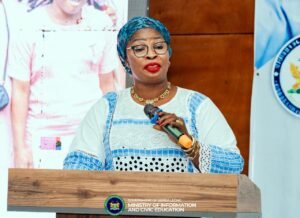
The Minister of Information and Civic Education, Chernor Bah, described Sierra Leone’s healthcare sector as undergoing steady transformation. Reflecting on past challenges when maternal deaths were widespread, he noted that the country is now writing a new chapter.
“For too long, Sierra Leone was defined by too many preventable losses in childbirth. That is not the story we are authoring anymore,” he said.
He highlighted the newly established Maternal Center of Excellence in Kono, which reportedly served 27 patients within its first 24 hours of operation, including emergency cesarean sections and neonatal intensive care admissions.
“Our commitment is clear: Zero Preventable Maternal Deaths. Zero Unattended Births. Zero Women Lost to Care,” he declared, praising the leadership of President Bio and the implementation efforts of the Ministry of Health.
Delivering a goodwill message, the Minister of Health and Sanitation, Dr. Austin Demby, stressed that no pregnant woman should die due to inadequate healthcare services. He reiterated the President’s pledge at the African Union Conference to champion systemic healthcare reforms and encouraged other African nations to adopt similar approaches.
The Minister of Gender and Children’s Affairs, Dr. Isata Mahoi, emphasized that maternal health extends beyond medicine, describing it as a moral and developmental imperative. She reaffirmed Government’s commitment to achieving zero preventable maternal deaths, zero unsafe births and zero-dose children.
Dr. Isata Mahoi noted that the campaign aligns with the Gender Equality and Women’s Empowerment (GEWE) Act, reinforcing that maternal healthcare is a fundamental right. She highlighted the importance of improved road access for pregnant women, mental health support, gender inclusion and women’s empowerment as key pillars of national development.
Delivering the keynote address, Chief Minister, David Moinina Sengeh, reflected on the Government’s 2018 vision centered on human capital development through education and health reforms. While acknowledging the 70 percent reduction in maternal deaths since 2018, he urged sustained commitment at all levels.
“We still have to do more as a nation,” he said, calling on citizens to become advocates and activists within their communities.
He emphasized that success will depend on district-level execution, community engagement and collective responsibility.
As the campaign officially commenced, stakeholders reaffirmed their determination to ensure that every woman and every child in Sierra Leone not only survives but thrives.
The 300 Days of Activism represents not just a health intervention, but a national movement; one that seeks to transform systems, empower communities and secure a healthier future for generations to come.