By Amin Kef (Ranger)
The Sierra Leone Civil Aviation Authority (SLCAA) has concluded a five-day FASAP-RAMP Onsite Training for Safety Inspectors, reinforcing the country’s commitment to aviation safety and regulatory compliance.

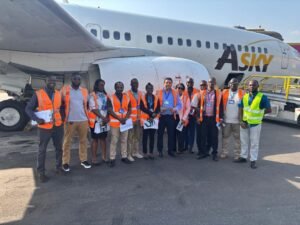
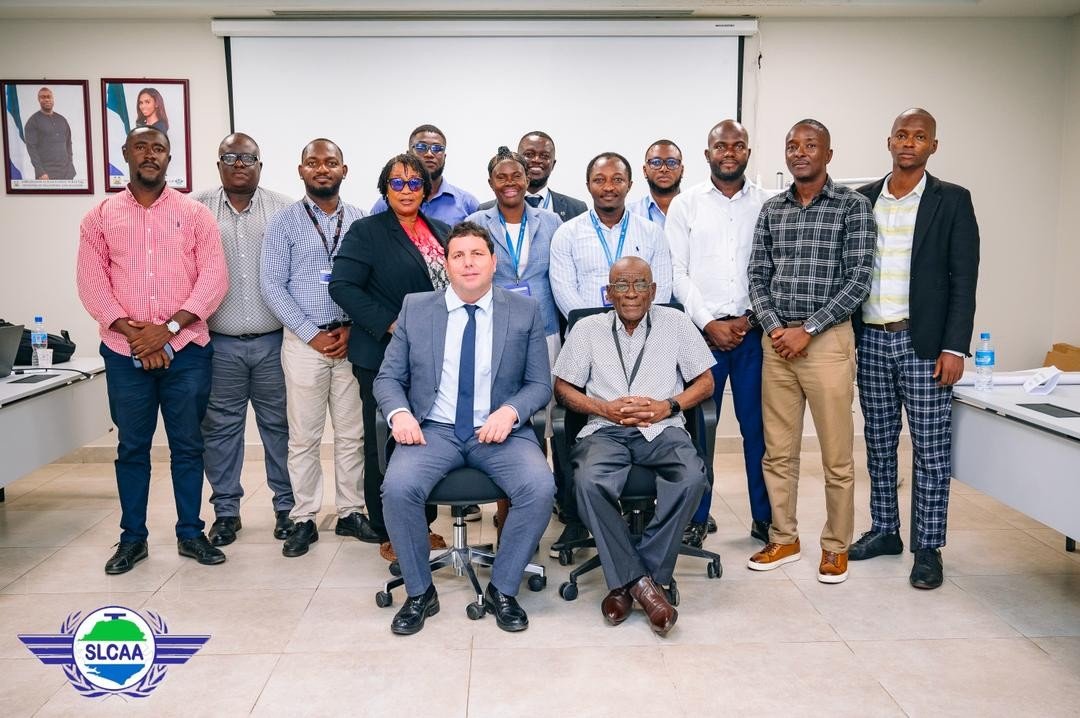
The intensive training programme was held from 9–13 February 2026 at the Freetown International Airport (FIA) Conference Room and brought together Safety Inspectors tasked with overseeing aircraft operations and ensuring adherence to international aviation standards.
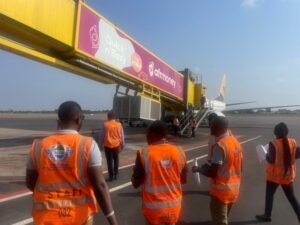
The exercise focused on strengthening technical expertise in ramp inspection procedures, aircraft ground safety oversight and compliance monitoring in line with global best practices. Participants underwent practical sessions designed to sharpen their inspection techniques, improve risk identification skills and enhance their understanding of regulatory frameworks governing aviation safety.
Ramp inspections are a critical component of aviation oversight. They involve detailed checks on aircraft while on the ground to ensure conformity with safety requirements, operational standards and airworthiness protocols. Through the FASAP-RAMP training, inspectors were equipped with updated knowledge and practical tools necessary to effectively monitor aircraft operations within Sierra Leone’s airspace.
Director General of the Sierra Leone Civil Aviation Authority, Musayeroh Barrie, described the training as a significant milestone for the institution. She noted that the successful conclusion of the FASAP-RAMP Onsite Training demonstrates SLCAA’s resolve to continuously strengthen its safety oversight systems and institutional capacity.
“The SLCAA has successfully concluded the FASAP-RAMP Onsite Training held from 9–13 February 2026 at the FNA. This milestone strengthens our safety oversight, enhances institutional capacity and reaffirms our commitment to international standards and regulatory excellence,” she stated.
According to the Authority, the programme forms part of broader efforts to align Sierra Leone’s aviation regulatory environment with standards set by the International Civil Aviation Organization (ICAO) and other global aviation bodies. By building the competence of frontline inspectors, SLCAA aims to improve operational surveillance and ensure that both domestic and international operators comply with prescribed safety requirements.
Officials emphasized that a well-trained inspectorate is essential for maintaining a safe and secure aviation ecosystem. The aviation sector plays a strategic role in national development, facilitating trade, tourism, and international connectivity. As such, maintaining high safety standards remains a top priority for the Authority.
The training concluded with a certificate presentation ceremony, marking another step in SLCAA’s ongoing drive to strengthen human resource capacity and reinforce operational safety across the aviation sector. Participants received certificates in recognition of their successful completion of the programme and their commitment to upholding aviation safety standards.
Industry stakeholders have welcomed the initiative, describing it as timely and necessary, particularly at a period when air travel continues to grow and regulatory scrutiny worldwide remains high. Enhanced inspection capacity is expected to contribute to improved compliance levels and bolster confidence in Sierra Leone’s aviation system.
The FASAP-RAMP Onsite Training underscores SLCAA’s broader strategy of continuous professional development, institutional strengthening and regulatory modernization. By investing in training and capacity building, the Authority seeks to ensure that Sierra Leone’s aviation industry remains competitive, compliant and responsive to emerging global safety demands.
With the completion of the programme, SLCAA has reaffirmed its unwavering commitment to promoting aviation safety, regulatory excellence and alignment with international best practices. The Authority maintains that safeguarding the travelling public and ensuring operational integrity within Sierra Leone’s airspace will remain central to its mandate.