
By Amin Kef (Ranger)
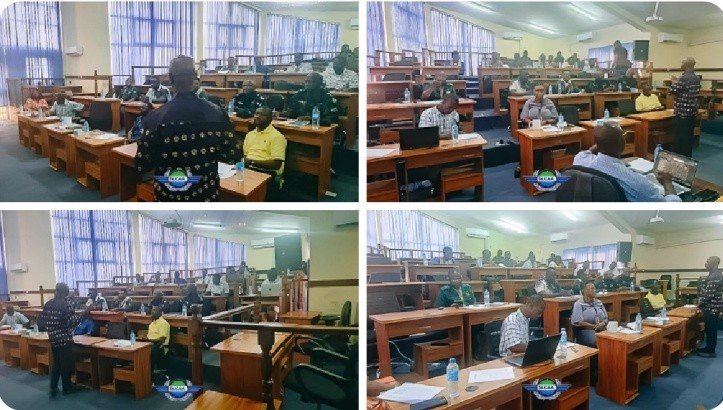
The Sierra Leone Civil Aviation Authority (SLCAA) has taken a significant step toward enhancing national aviation safety following the successful completion of a comprehensive three-day Aviation Security (AVSEC) Risk Matrix Review held from March 16 to 18, 2026, at the Freetown International Airport.

The high-level exercise brought together a wide range of key stakeholders from across Sierra Leone’s security and aviation landscape, including the Office of National Security (ONS), the Republic of Sierra Leone Armed Forces (RSLAF), the Sierra Leone Police (SLP), Immigration authorities, airport operators and Aviation Security (AVSEC) service providers. The collaborative review was aimed at reassessing existing threats, identifying operational vulnerabilities and strengthening preparedness against evolving security risks within the aviation sector.
At the conclusion of the intensive sessions, participants successfully developed and validated an updated and harmonized 2026 Aviation Security Risk Matrix tailored specifically for Freetown International Airport. The revised framework is designed to enhance proactive threat detection, improve coordinated responses and support intelligence-driven decision-making processes across the aviation system.
According to SLCAA officials, the updated risk matrix introduces a more dynamic and threat-sensitive approach to aviation security. It enables authorities to anticipate, prevent and mitigate potential risks before they escalate, while also ensuring the strategic deployment of resources to areas of greatest need. This risk-based approach is expected to significantly improve both efficiency and effectiveness in security operations.
A major outcome of the review was the strengthening of inter-agency coordination among security institutions operating within the airport environment. Enhanced collaboration is expected to improve communication, intelligence sharing and joint response mechanisms, thereby fostering a unified and more resilient aviation security structure.
“The updated AVSEC Risk Matrix reflects our continued commitment to safeguarding Sierra Leone’s aviation space through proactive and intelligence-led measures,” the Authority stated, emphasizing that the initiative aligns with international aviation security standards and global best practices.
Participants also underscored the importance of risk-based decision-making as a cornerstone of modern aviation security systems. By prioritizing intelligence-led strategies, stakeholders are better positioned to allocate resources efficiently while maintaining the highest safety standards for passengers, personnel and infrastructure.
The SLCAA further noted that the exercise builds on recent advancements within the sector, including the installation of modern SIMFOX security systems and the implementation of Best Practices for Security Equipment (BPSE) inspection training. Those developments have strengthened the capacity of aviation security personnel to effectively operate and maintain critical screening equipment, thereby enhancing overall airport safety.
In addition to national initiatives, the Authority continues to benefit from strong international partnerships. In July 2025, SLCAA hosted the International Civil Aviation Organization (ICAO) Western and Central African (WACAF) CODEVMET Mission in Freetown. The mission brought together experts from Liberia, Guinea and Sierra Leone under the Roberts Flight Information Region framework to strengthen aeronautical meteorological services and regulatory oversight in line with ICAO standards.
SLCAA Director General, Madam Musayeroh Barrie, has consistently emphasized the importance of regional cooperation in advancing aviation safety, noting that improved meteorological services and regulatory systems are essential for safe and efficient air navigation.
Through continued collaboration with international bodies such as the European Civil Aviation Conference (ECAC) under the CASE II Project, SLCAA has also delivered specialized training programmes aimed at improving security equipment inspection and maintenance standards at Freetown International Airport.
The successful completion of the 2026 AVSEC Risk Matrix Review marks another important milestone in Sierra Leone’s efforts to modernize its aviation security framework. It underscores the country’s commitment to maintaining a secure, resilient and globally competitive aviation sector while boosting international confidence in its air transport systems.