By Amin Kef (Ranger)
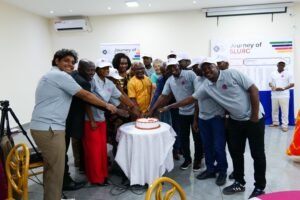
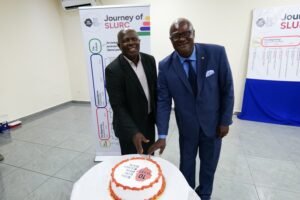
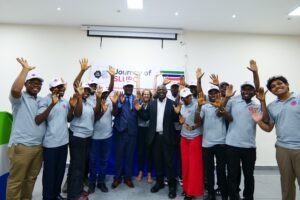
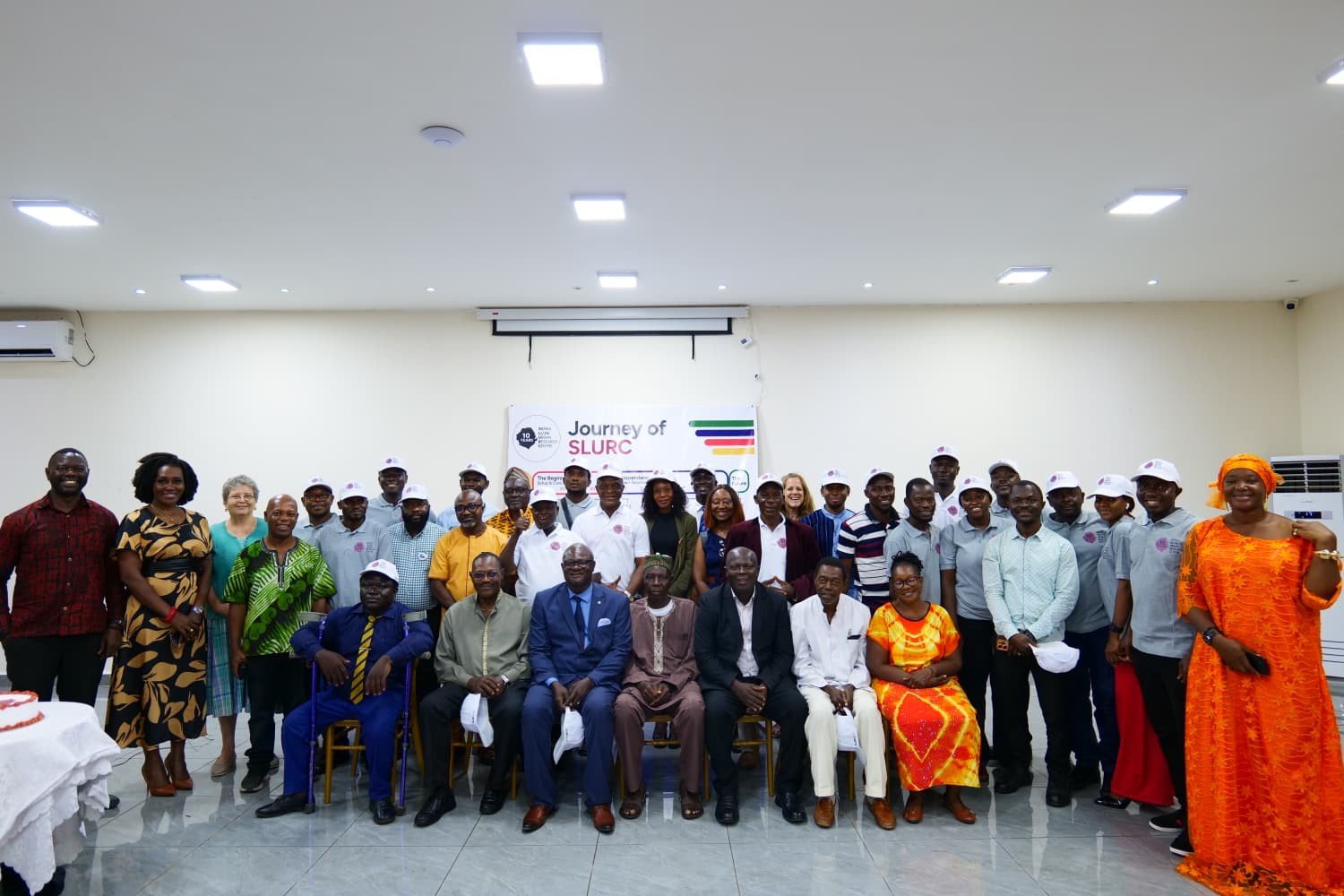
The Sierra Leone Urban Research Centre (SLURC) has commemorated its 10th anniversary with a high-level gathering of Government officials, academics, civil society leaders, development partners, community representatives and members of the media, reaffirming its commitment to evidence-based urban development and inclusive city planning.

Held on Monday, February 16, 2026, at the New Brookfields Hotel in Freetown under the theme: “A Decade of Urban Knowledge and Transformation,” the event celebrated ten years of research, advocacy and institutional growth that have helped reshape national conversations around urbanization, informal settlements and climate resilience.
The ceremony reflected on SLURC’s journey from a modest research initiative in 2015 to a nationally recognized urban knowledge hub influencing policy, strengthening local capacity and promoting community-led development.
Delivering the Opening and Welcome Address, Director of Research and Training, Braima Koroma, described SLURC’s founding in 2015 as “a bold idea—that research and community voices could come together to shape better cities.”
What began as a partnership between the Bartlett Development Planning Unit at University College London (UCL) and the Institute of Geography and Development Studies at Njala University, with core funding from Comic Relief (UK), has evolved into one of Sierra Leone’s most influential urban research institutions.
“We began in four informal communities in Freetown,” Braima Koroma recalled. “Today, our reach extends across informal settlements and secondary cities nationwide.”
He emphasized that SLURC’s growth has been anchored in three principles: sound and timely evidence, capacity building as the foundation for lasting change and inclusion as a moral imperative rather than a mere methodology.
Quoting a community leader from SLURC’s early years, Braima Koroma reminded the audience: “Research is not useful if it stays on paper—it must live in our streets and homes, and in the decisions that shape our future.”
In his presentation titled: “The Journey of SLURC,” Executive Director Dr. Joseph M. Macarthy situated the Centre’s work within the broader context of Sierra Leone’s rapidly urbanizing landscape.
According to him, Cities are expanding at unprecedented rates. Informal settlements are growing. Pressure on housing, sanitation, land tenure systems and infrastructure continues to intensify. A decade ago, urban policy-making was constrained by fragmented and inconsistent data, weak analytical systems and limited institutional capacity for spatial planning.
SLURC was established to confront those structural gaps, he pointed out.
A 2013 feasibility study by Njala University and UCL had revealed that urban data in Sierra Leone was sparse, inconsistently disaggregated and insufficient to guide effective planning. Against the backdrop of Africa’s projected 900 million additional urban dwellers by 2050, the absence of reliable evidence posed serious risks, the Executive Director informed.
With its official launch in Freetown in 2016 and its international debut the same year at the UN-Habitat III Conference in Quito, Ecuador, SLURC signaled its ambition to connect local urban realities to global conversations, he furthered.
Over the past decade, the Centre has expanded from four to nine thematic research areas. It has grown from engagement in four informal settlements to sustained partnerships in 20 settlements and eight secondary cities across Sierra Leone.
Beyond research outputs, SLURC’s defining contribution lies in translating evidence into practical change.
Its policy briefs, research reports, documentaries and academic publications have informed municipal planning processes and national development debates. Through City Learning Platforms and national urban conferences, the Centre has created spaces where evidence is debated, adapted, and applied.
Dr. Joseph M. Macarthy stressed that SLURC’s most significant achievement may be the trust it has cultivated.
“In informal settlements and municipal offices alike, we have elevated visibility and facilitated dialogue between residents and authorities,” he said.
Communities have used data to negotiate for safer housing, tenure security and development initiatives. City authorities have drawn on SLURC-supported evidence to strengthen flood resilience planning. Young researchers trained through SLURC programmes have carried skills back into universities and local communities.
Academic collaborations have also deepened capacity building. An MSc partnership launched in 2017 has engaged 120 students, while a 2018 Massive Open Online Course reached 6,900 participants globally. In 2025, SLURC forged a learning alliance with the University of Namibia and Imperial College London, reinforcing its international partnerships.
One of the most powerful moments of the anniversary celebration came through community-led skits on mangrove restoration.
The first dramatization depicted a failed project designed without local input; saplings planted out of season, disregard for tidal knowledge and eventual collapse of the initiative.
The second illustrated SLURC’s co-production model. By working with fishers, women’s groups, environmental agencies and local councils, the project integrated traditional knowledge with scientific data, identified appropriate planting zones and aligned restoration efforts with alternative livelihood support.
The result was higher sapling survival, community guardianship and stronger institutional buy-in.
The message was clear: when evidence is built with communities rather than imposed upon them, outcomes are more durable ecologically, socially and economically.
The anniversary ceremony also featured a recognition segment honoring institutions and individuals who have contributed to SLURC’s progress.
The Federation of Urban and Rural Poor (FEDURP), represented by National Chairperson Yirah Conteh, was celebrated for grassroots advocacy and amplifying community voices.
Academic and governance partners honored included Dr. Alhaji Njai for scholarly collaboration; Madam Haja Lukay of Bo City Council for advancing sustainable city governance; and Dr. Alphajor Cham of the Ministry of Lands, Housing and Country Planning for bridging institutions through collaborative leadership.
SLURC Board Member and CODOHSAPA founder Francis Reffell was recognized for fostering inclusive dialogue. Dr. Percy Toriro, Urban Planning Advisor to the Resilient Urban Sierra Leone Project at the Ministry of Finance, received acknowledgment for strategic guidance.
Within the institution, Senior Finance Administrator Rashid Smart was honored for financial stewardship, while Dr. Abu Conteh received an Outstanding Award for excellence, dedication and mentorship.
The media’s role in amplifying urban issues was also underscored. Amin Kef Sesay, Proprietor and Managing Editor of The Calabash Newspaper, was recognized for public-interest journalism that brings evidence and community voices into national discourse on inclusive urban development.
Finally, founders Braima Koroma and Dr. Joseph M. Macarthy were honored for strategic leadership and pioneering vision in establishing SLURC as a hub of urban knowledge.
While celebrating achievements, the leadership acknowledged ongoing challenges. Urban research capacity in Sierra Leone remains relatively young. Specialist expertise is limited. Gender disparities persist. Staff retention and funding sustainability remain concerns.
Data systems, though strengthened, require continued investment in disaggregation, methodological rigor and effective policy translation.
Dr. Joseph M. Macarthy described that candid reflection as a sign of institutional maturity.
“Urban transformation demands courage, innovation and collaboration,” he said. “We cannot shy away from the challenges.”
SLURC’s new Strategic Plan commits to expanding mentorship programmes, deepening learning alliances, embedding climate risk reduction into planning and strengthening open, ethical data practices.
Perhaps most ambitiously, the Centre is preparing for a transition toward private university status, integrating postgraduate teaching with applied research to train the next generation of Sierra Leonean and African urban professionals.
In a country where urban populations are growing rapidly and three-quarters of residents are under the age of 35, institutions that bridge evidence and implementation are increasingly indispensable.
As the ceremony concluded, Braima Koroma delivered a message that captured both gratitude and resolve:
“Ten years behind us, a lifetime ahead. Together, we build cities of dignity, resilience and hope.”
Francis Reffell delivered the closing remarks in his capacity as a board member.
For Sierra Leone, SLURC’s first decade demonstrates that when knowledge is public, when stakeholders learn together and when communities help shape priorities, urban transformation is not merely aspirational; it is already unfolding.