Solidaridad West Africa in Sierra Leone has strengthened the capacity of more than 200 smallholder women farmers by providing modern agro-processing equipment under the Resilient Food and Nutrition Security (RFaNS) Programme. The beneficiaries, organized into 75 groups across Bo, Kenema and Moyamba Districts, received a range of machines and tools designed to boost production, enhance value addition and improve household income.
Supported by The Church of Jesus Christ of Latter-day Saints, the initiative targets women , who previously benefited from improved inputs to cultivate cassava, orange-fleshed sweet potatoes, rice and assorted vegetables. The latest support aims to scale up production, reduce post-harvest losses, improve packaging and strengthen market access for locally processed agricultural products.

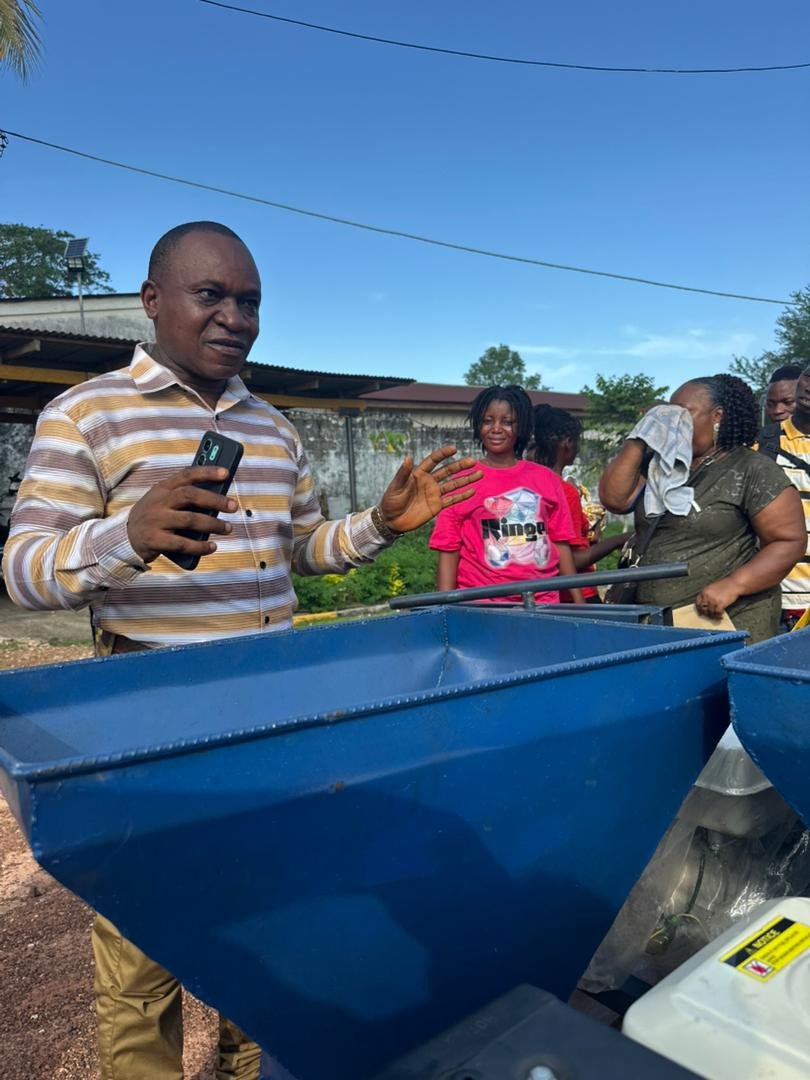
The distributed items include grinders, dryers, rice mills, gari processing machines and blenders. Beneficiary groups were also guided on branding and promotion strategies to improve the visibility and competitiveness of their products in local markets.
Speaking during the intervention, Andrew Kojo Morrison, Country Representative of Solidaridad Sierra Leone, said the RFaNS programme is designed to enhance productivity, competitiveness and sustainability among smallholder farmers.
“Through this partnership with The Church of Jesus Christ of Latter-day Saints, we have transformed the lives of women farmers in Sierra Leone,” he said. “Our farm-to-nutrition approach ensures that mothers use orange-fleshed sweet potatoes, vegetables and rice to prepare nutritious meals for their children. Pregnant and lactating women no longer rely on costly supplements but use their harvests to produce nutrient-dense foods, helping reduce malnutrition.”
According to Andrew Kojo Morrison, more than 2,000 women farmers have benefited from improved seeds, fertilizers, organic pesticides, processing machines and technical support through the programme.
Before distributing the machines, Solidaridad collaborated with the Ministry of Agriculture and Food Security (MAFS) to train women farmers in equipment handling under the RFaNS IV Project. The training, held at Unity Hall in Bo Town, was facilitated by Aminata Bah, Senior Programme Officer at Solidaridad and Engineer Nabieu Kamara from MAFS.
Aminata Bah noted that many smallholder farmers struggle with post-harvest losses and limited processing technologies. “Providing modern equipment greatly improves food quality, reduces losses and strengthens the entire value chain,” she said. “Our goal is to expand market access and increase income for women farmers.”
Engineer Nabieu Kamara emphasized that the training covered both operation and basic maintenance of rice and cassava processing machines. He said the knowledge will help women increase productivity and reduce dependency on traditional processing methods. “If more women receive support like this, Sierra Leone can move closer to becoming a food-secure nation,” he added.
Isatu Sesay, Coordinator of the National Federation of Farmers (Bo District), expressed deep appreciation on behalf of farmers and the Ministry. She said the support will increase production, processing and packaging for various markets. “This is a milestone for communities in Bo, Kenema and Moyamba. These machines will significantly boost local value addition,” she stated.
Momoh Kamara, District Monitoring and Evaluation Officer at MAFS, commended Solidaridad for complementing Government efforts under the Feed Salone Programme. He noted that the intervention aligns with key pillars on boosting production, promoting agro-processing and empowering women and youth.
The RFaNS Programme continues to improve food and nutrition security among vulnerable households by enhancing agricultural productivity, expanding access to nutritious foods and building community resilience. Through targeted training and resource support, the initiative has contributed to increased food production and improved dietary diversity across participating communities.