By Amin Kef (Ranger)
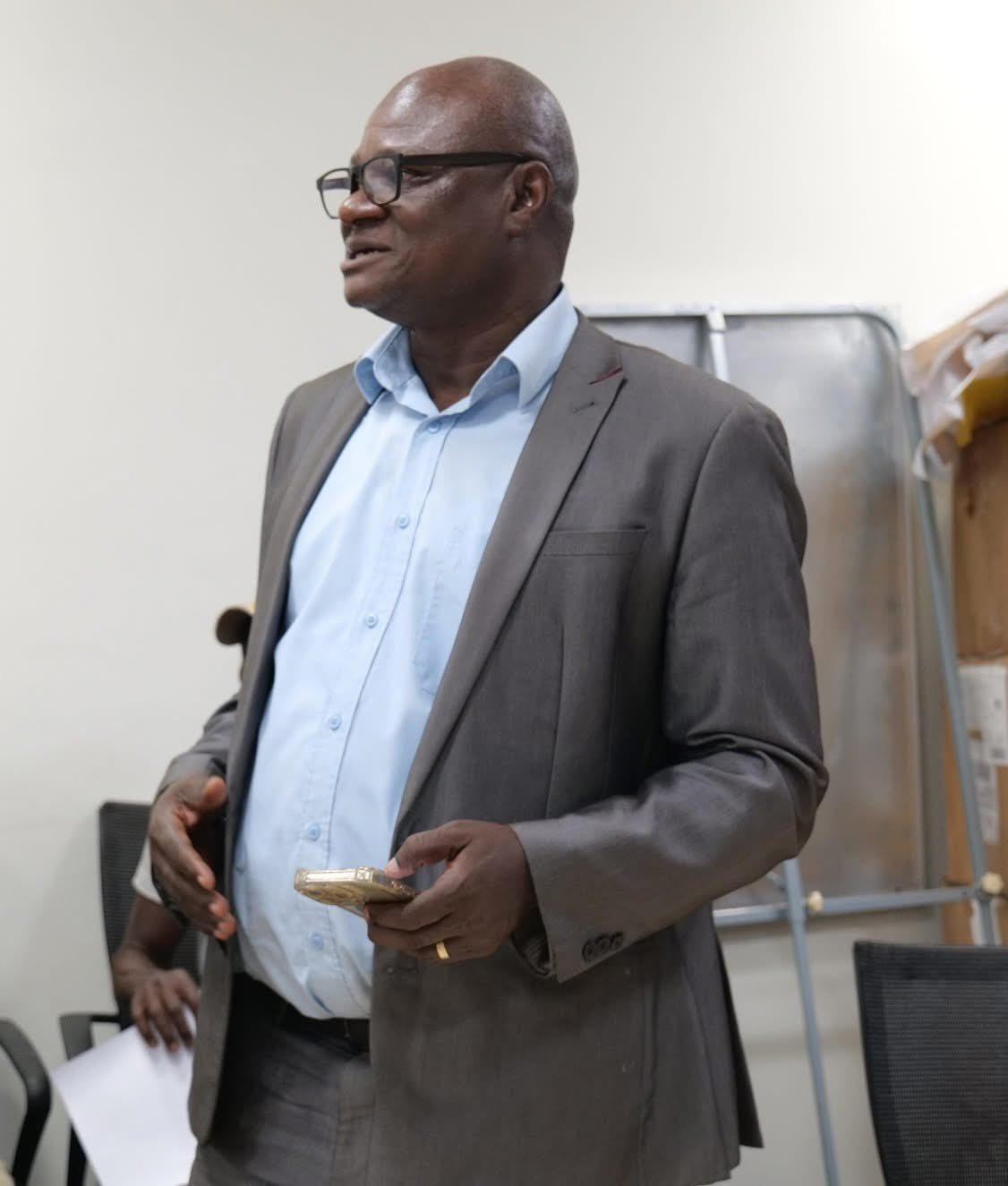
For the past ten years, Braima Koroma has stood at the centre of Sierra Leone’s evolving urban research landscape, quietly but decisively shaping how cities are studied, understood and transformed. As Director of Research and Training at the Sierra Leone Urban Research Centre (SLURC), Braima Koroma has emerged as one of the institution’s founding pillars; an anchor of its research vision, a steward of its partnerships and a driving force behind its reputation as a leading hub for evidence-based urban policy and practice.

Since SLURC’s establishment, Braima Koroma has been integral to defining its ethos: research rooted in community realities, co-produced with residents and translated into practical action. Over a decade, he has led and supported a remarkable portfolio of major research programmes, many funded by the UK Government and global development partners. These include high-profile initiatives such as Knowledge in Action for Urban Equality (KNOW), Urban Africa: Risk and Capacity (Urban ARK), OVERDUE, which tackles sanitation taboos across urban Africa, and Beyond the Networked City, a programme exploring innovative systems for water, sanitation and energy.
Beyond Freetown, his expertise has extended SLURC’s reach across Sierra Leone and the region. Through consultancies with the World Bank and the African Development Bank (AfDB), Braima Koroma has contributed to Climate Action Plans for three cities, Flood Risk Assessment and Management Plans for eight secondary cities, Spatial Development Plans for six cities, a Spatial Development Framework for Lungi and critical studies on sand mining in the Western Area Peninsula and the Mahera area. Those interventions have strengthened local planning, informed safeguards and improved the resilience of rapidly growing urban centres.
Colleagues describe Braima Koroma as a leader who brings calm authority to complex, multi-partner projects. His ability to align diverse stakeholders, communities, councils, ministries, academics and international partners has been instrumental in delivering results under demanding conditions. He is widely credited with transforming intricate research challenges into celebrated successes, while maintaining a positive, collaborative working culture.
As Director of Research and Training, Braima Koroma also oversees quality assurance across SLURC’s work, monitoring field activities, editing publications and ensuring methodological rigour. He frequently leads visiting delegations on site tours, offering firsthand insight into informal settlements, flood-prone communities and upgrading initiatives. Internally, he is known for mentoring emerging researchers and encouraging staff to step forward into leadership, fostering a culture of empowerment and shared ownership.
Braima Koroma’s professional journey is underpinned by a strong academic foundation. He studied at Njala University College, University of Sierra Leone, graduating with a First-Class BSc (Hons) in Environment and Development, followed by an MSc in Environmental Sciences (Development Studies), earning distinctions for his work on woodfuel flows in Greater Freetown and soil conservation strategies in Moyamba District. As a Chevening Scholar, he later completed an MSc by Research at Manchester Metropolitan University in the United Kingdom, producing a distinction-level thesis on sustainability frameworks in North West England. These formative studies foreshadowed his lifelong focus on the nexus between environment, development and policy.
Alongside his research leadership, Braima Koroma has sustained a substantive academic career spanning nearly two decades. He has taught at both Njala University and the University of Sierra Leone, supervising more than forty postgraduate theses and contributing to curriculum development in Development Studies, Rural Development and Environmental Management. His teaching portfolio, covering development theory, research methods, governance, environmental management and sustainable development economics, reflects the multi-dimensional nature of urban change in the Global South.
Braima Koroma’s research leadership is further reflected in his roles as City Lead or Co-Investigator in international consortia such as the African Cities Research Consortium (ACRC), KNOW, Urban ARK, Transitions to Sustainable Urban Mobility in Sub-Saharan Africa (T-SUM), AT2030, OVERDUE and Beyond the Networked City. Across those programmes, he has helped institutionalize city–community learning platforms that support inclusive settlement upgrading, strengthen local governance and advance mobility equity in Freetown. His work on digital tools, including the ReMapRisk Freetown platform, has made urban risk and vulnerability more visible and actionable for both decision-makers and residents.
A prolific author, Braima Koroma has published widely in peer-reviewed journals such as Environment and Urbanization, Journal of Transport Geography, International Journal of Sustainable Transportation, Urban Planning and Current Research in Environmental Sustainability. His writing explores urban risk accumulation, informality, resilience practices, accessibility, walkability and public transport, bridging scholarly insight with practitioner relevance. He also serves on the editorial boards of the African Journal of Housing and Sustainable Development and the Health and Cities Journal, contributing to the shaping of continental urban research agendas.
Beyond academia, Braima Koroma has provided advisory services to national and international institutions, contributing to policy frameworks such as Sierra Leone’s National Disaster Risk Management Policy, environmental and social management frameworks, and resettlement policy instruments linked to infrastructure and land administration reforms. His public service includes membership of the Steering Committee of the Integrated and Resilient Urban Mobility Project under the Ministry of Transport and Aviation, as well as roles within university governance and national thematic working groups aligned with the UNFCCC and UNCCD.
Internationally, Braima Koroma’s work has taken him across Africa, Europe, Latin America, the Middle East and South Asia, equipping him with comparative perspectives that enrich his work at home. Yet, his focus remains firmly grounded in Sierra Leone; particularly in translating research into tangible improvements in neighbourhoods across Freetown and secondary cities such as Bo, Kenema, Makeni, Port Loko and Koidu.
As SLURC marks a decade of Braima Koroma’s service, his legacy is already evident: the institutionalization of co-learning platforms, the elevation of community knowledge in urban planning and stronger evidence-to-action linkages for inclusive, resilient city-making. Through scholarship, mentorship and quiet leadership, Braima Koroma has not only supported SLURC’s mission; he has propelled it forward.
Happy 10th Anniversary, Braima Koroma;a decade of excellence and a legacy still unfolding.