By Ibrahim Sorie Koroma, Senior Health Promotion Officer – HEP/MoH
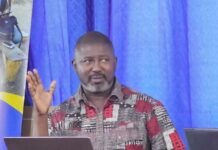
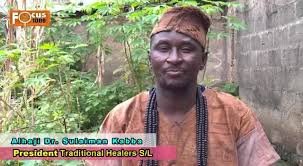
The President of the Sierra Leone Indigenous Traditional Healers Union, Dr. Alhaji Sulaiman Kabbah, has strongly defended the role of traditional healers in Sierra Leone, insisting that they are “not killers but healers,” while calling on the Government and development partners to support the Union to operate more effectively and responsibly.

Dr. Alhaji Sulaiman Kabbah made the statement during a recent stakeholders’ engagement meeting held in Freetown, where representatives from the health sector, community leaders and civil society organizations gathered to discuss the place of traditional medicine within the country’s broader health and social framework.
Addressing participants, the Union president said traditional healers have long been misunderstood and, in some cases, wrongly associated with violence and harmful practices. He argued that, on the contrary, traditional healers have historically contributed to peace, stability and community well-being.
“We are healers, not killers,” Dr. Alhaji Sulaiman Kabbah emphasized. “Our responsibility has always been to protect lives, restore balance and help communities live together in peace.”
He recalled what he described as a dark period in Sierra Leone’s past when violent deaths were reportedly common and human life was undervalued in certain areas. According to him, fear and suspicion dominated many communities at the time, with allegations that some killings were linked to witchcraft or other harmful practices.
Dr. Alhaji Sulaiman Kabbah claimed that members of the Traditional Healers’ Union played a key role in helping to curb those acts of violence. He said the Union worked discreetly within communities to identify perpetrators and neutralize what he termed “wizardry guns,” a metaphor he used to describe efforts to dismantle harmful spiritual practices and restore calm.
“Because of our interventions, many of those acts stopped,” he said. “We worked quietly to protect lives and bring stability where fear once prevailed.”
Despite those contributions, the Union president noted that traditional healers continue to face significant challenges, including limited recognition, inadequate resources and weak institutional support. He appealed to the Government, civil society organizations and international partners to engage the Union more constructively and provide the necessary backing to help it function in a more organized and regulated manner.
“With proper support, training and collaboration, we can do more to promote peace, health and harmony in our communities,” Dr. Alhaji Sulaiman Kabbah stated.
He further called for sustained dialogue between traditional healers and formal authorities, stressing that improved cooperation would help dispel long-standing misconceptions and ensure that traditional practices align with national laws, public safety standards and public health objectives.
According to him, integrating traditional healers into broader health promotion and community peace initiatives could strengthen trust at the grassroots level and complement ongoing efforts to improve social cohesion and health outcomes across the country.