By Amin Kef (Ranger)
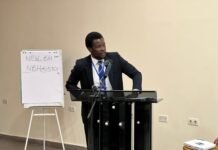
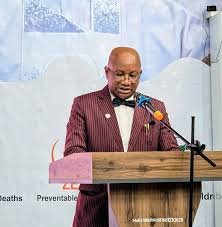
As Sierra Leone joined the rest of the world in commemorating World Health Day 2026 and marking the 78th anniversary of the World Health Organization on April 7, 2026, the WHO Representative in Sierra Leone, Dr. George Ameh, delivered a powerful message underscoring the central role of science in transforming the nation’s health sector.

Speaking under this year’s global theme : “Together for Health. Stand with Science,” Dr. George Ameh noted that the message strongly reflects Sierra Leone’s remarkable health progress over the years and the critical importance of evidence-based interventions in saving lives, strengthening resilience and improving national health outcomes.
He highlighted that over the past two decades, Sierra Leone has recorded significant gains in maternal and child health, describing the progress as a testament to sustained investments in policy reforms, stronger service delivery systems, reliable data mechanisms and the unwavering dedication of frontline healthcare workers. According to him, maternal mortality has declined by 74 percent, dropping from 1,682 deaths per 100,000 live births in 2000 to 354 in 2023, while under-five mortality has reduced by 55 percent, from 225 to 94 deaths per 1,000 live births within the same period.
Dr. George Ameh emphasized that those achievements were made possible through the collaborative efforts of Government, health workers, communities, WHO and development partners, all working together to ensure that science-driven strategies are translated into practical solutions that reach mothers and children across the country.
He further pointed to major improvements in child health outcomes through expanded immunization programmes, malaria prevention strategies, better nutrition services and strengthened primary healthcare interventions for common childhood illnesses. A notable milestone, he said, was reached in 2024 when Sierra Leone introduced the malaria vaccine, with over 550,000 doses rolled out across 15 districts to protect children under five from one of the country’s leading causes of death.
The WHO Representative also referenced Sierra Leone’s notable success in reducing malaria-related deaths, recalling that in 2016 the country recorded one of the highest declines in malaria deaths in West Africa, a development he described as clear evidence of the life-saving power of science-led interventions.
Further reinforcing the country’s commitment to innovation, Dr. George Ameh commended the January 2026 launch of the National Health Information Hub, Sierra Leone’s first centralized platform for science-driven health intelligence. He said the digital platform is already strengthening real-time monitoring of maternal and child health outcomes, immunization coverage, mortality patterns and disease surveillance, thereby enabling planners, clinicians and policymakers to make faster, smarter and more evidence-based decisions.
According to him, WHO’s support to Sierra Leone extends far beyond the formulation of global guidelines and standards, encompassing service delivery enhancement, laboratory strengthening, outbreak preparedness and response, digital health systems, surveillance and workforce development. He stressed that from the West African Ebola epidemic to COVID-19, Mpox and other emerging public health threats, Sierra Leone has demonstrated that resilient health systems are built through collaboration, science and evidence.
He particularly underscored the growing importance of the One Health approach, which recognizes the deep interconnection between human, animal and environmental health. Dr. George Ameh said that framework remains highly relevant as Sierra Leone confronts challenges such as zoonotic diseases, antimicrobial resistance, food insecurity and climate-related health risks.
In a strong appeal for broader public engagement, Dr. George Ameh stressed that science must not remain confined to laboratories and academic spaces alone. Rather, he said, it must reach villages, schools, hospitals, farms, markets and households where its benefits can directly improve lives.
He said the nation must celebrate every mother now enjoying a safer childbirth experience, every child protected through vaccination and every health worker empowered by timely and reliable data, noting that such achievements clearly demonstrate what becomes possible when science, solidarity and national commitment converge.
Looking ahead, he urged Sierra Leone to draw inspiration from global scientific milestones, including the International One Health Summit and the Global Forum of WHO Collaborating Centres, by deepening its commitment to science-driven reforms, expanding local research capacity and strengthening partnerships with universities and scientific institutions.
He warned that in an era where misinformation often spreads faster than disease outbreaks, rebuilding public trust in science has become a national imperative. Citizens, he noted, must be equipped with accurate, accessible and culturally relevant health information to combat falsehoods and strengthen confidence in proven health interventions.
On behalf of WHO, Dr. George Ameh called on the Government of Sierra Leone and all development partners to increase domestic investment in science, broaden local research opportunities and deepen cross-sector collaboration to ensure that evidence-based health solutions reach every household in the country.
“As we mark World Health Day 2026, we celebrate lives saved, systems strengthened and partnerships forged,” he stated, adding that through science and solidarity, Sierra Leone can continue building a healthier, safer and more resilient future for all.