
By Amin Kef (Ranger)
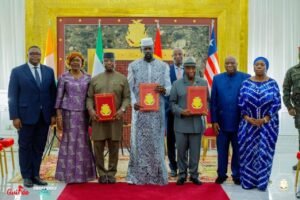
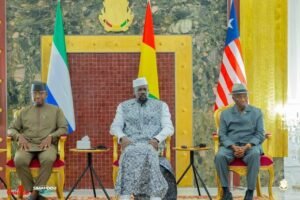
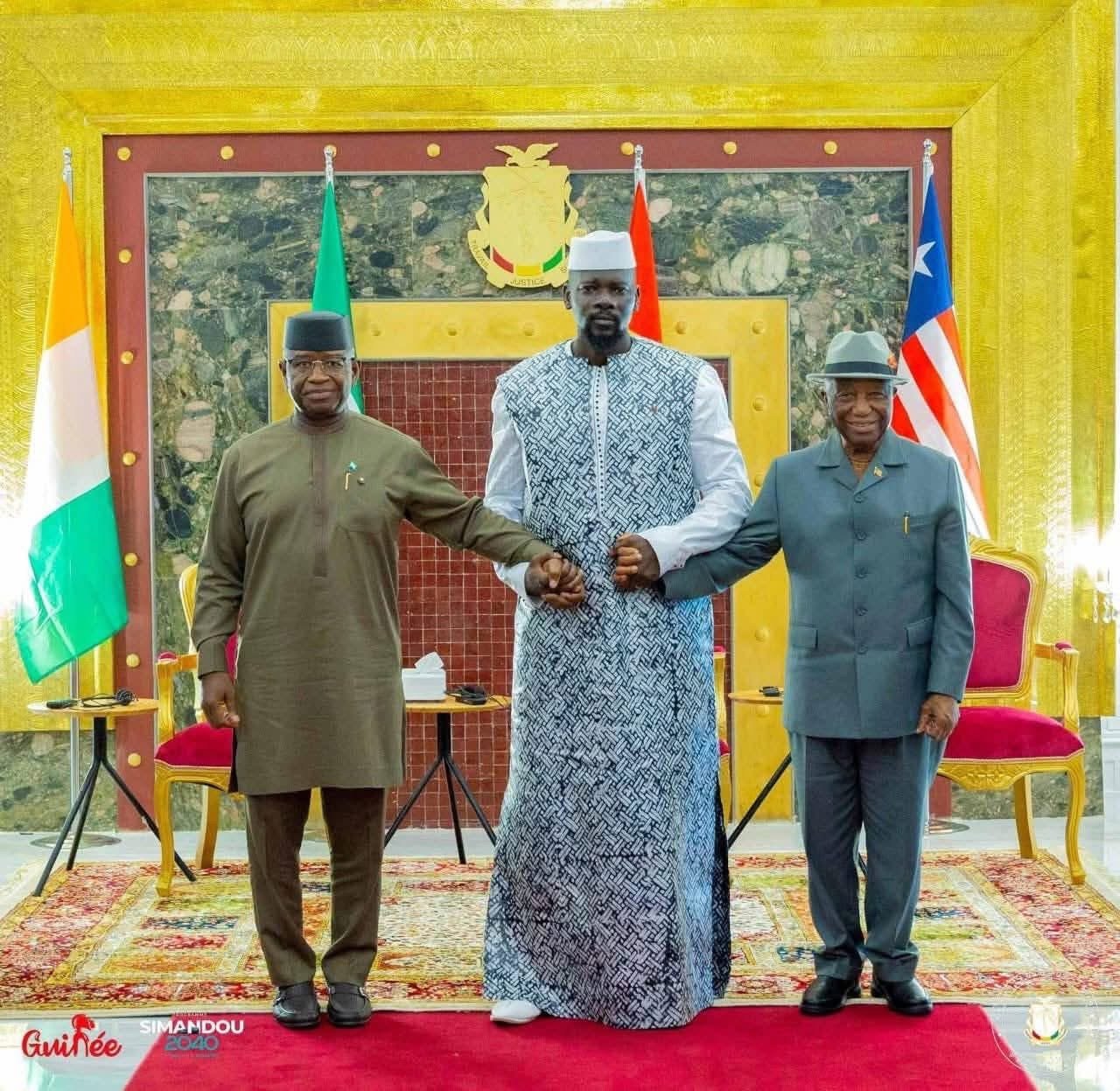
In a decisive demonstration of leadership and regional unity, the Presidents of Guinea, Liberia and Sierra Leone have reaffirmed their commitment to peaceful coexistence and strengthened border cooperation following a high-level tripartite summit held in Conakry on Monday, 16 March 2026. The meeting brought together President Mamadi Doumbouya of the Republic of Guinea, President Joseph Nyuma Boakai of the Republic of Liberia and President Julius Maada Bio of the Republic of Sierra Leone, with Côte d’Ivoire participating as an observer, at a time when rising tensions along their shared borders threatened stability within the Mano River Union.
The summit came against the backdrop of growing security concerns in key border areas, including the long-disputed Yenga region between Sierra Leone and Guinea and reported incursions along the Liberia–Guinea frontier in Lofa County. These incidents heightened fears of escalation and disrupted local communities, prompting urgent calls for diplomatic intervention. In response, the three leaders chose dialogue over confrontation, signaling a shared resolve to preserve peace through cooperation and mutual respect.
At the centre of the discussions was President Julius Maada Bio, who also serves as Chairman of the Authority of Heads of State and Government of the Economic Community of West African States (ECOWAS). He emphasized unity and peaceful engagement, stating that, “At the conclusion of the Tripartite Summit on border disputes held in Conakry, we, the Leaders, reaffirmed our shared commitment to maintaining stability along our borders, promoting security cooperation and strengthening the bonds of neighborliness among our three nations.” President Julius Maada Bio also commended President Joseph Nyuma Boakai and President Mamadi Doumbouya for the openness and camaraderie that characterized the discussions.
In a joint communiqué, the leaders expressed concern over rising global conflicts and reaffirmed their respect for sovereignty, territorial integrity and good neighbourliness. They agreed that all border disputes would be resolved through peaceful diplomatic means in line with Article 33 of the United Nations Charter, rejecting any form of military escalation. To support this, they announced the establishment of joint technical commissions to address border delimitation, management and security coordination.
Concrete steps toward de-escalation were also recorded, with Guinea announcing a progressive easing of its defence posture along its borders with Sierra Leone and Liberia, as confirmed in Communiqué No. 003 issued by General Ibrahima Sory Bangoura, Chief of the General Staff of the Guinean Armed Forces. The move has been widely seen as a confidence-building measure aimed at restoring calm while maintaining national security.
The leaders further agreed to strengthen collaboration among their defence and security institutions to tackle emerging threats such as terrorism, transnational organized crime and trafficking through joint patrols, intelligence sharing and improved communication channels. They also highlighted the importance of linking peace with development, committing to enhanced cooperation in trade, infrastructure, energy and environmental protection, alongside facilitating the free movement of people, goods and services across their borders.
To prevent future tensions, relevant national agencies were directed to intensify engagement, promote dialogue among border communities and work with regional and international partners to clarify and demarcate both territorial and maritime boundaries. The Presidents also agreed to convene a broader Mano River Union summit within one month to sustain dialogue and advance regional peace and development.
President Mamadi Doumbouya’s role as host reflected a shift toward diplomacy, while President Joseph Nyuma Boakai emphasized the protection of border communities and peaceful conflict resolution. For Sierra Leone, President Julius Maada Bio’s leadership further reinforces the country’s growing influence as a stabilizing force in West Africa.
The outcomes of the Conakry summit signal a renewed commitment to the founding ideals of the Mano River Union and offer hope for affected communities seeking a return to normalcy. More broadly, the meeting stands as a strong reminder that dialogue, trust and collective action remain the most effective tools for safeguarding peace and advancing regional progress.