
By Amin Kef (Ranger)
A high-level joint assessment mission comprising the Economic Community of West African States (ECOWAS), the United Nations Office for West Africa and the Sahel (UNOWAS) and the Commonwealth Secretariat has concluded its third assessment visit to Sierra Leone on April 20, 2026, reaffirming international commitment to the country’s democratic stability while setting out a comprehensive roadmap for electoral and constitutional reforms.
The mission, conducted from April 13 to 20, 2026, focused on evaluating the implementation of the Agreement for National Unity (ANU), signed on October 18, 2023, between the Government of Sierra Leone and the opposition All People’s Congress (APC). It also reviewed progress on the recommendations of the Tripartite Committee, which was established to address electoral concerns following the 2023 general elections.
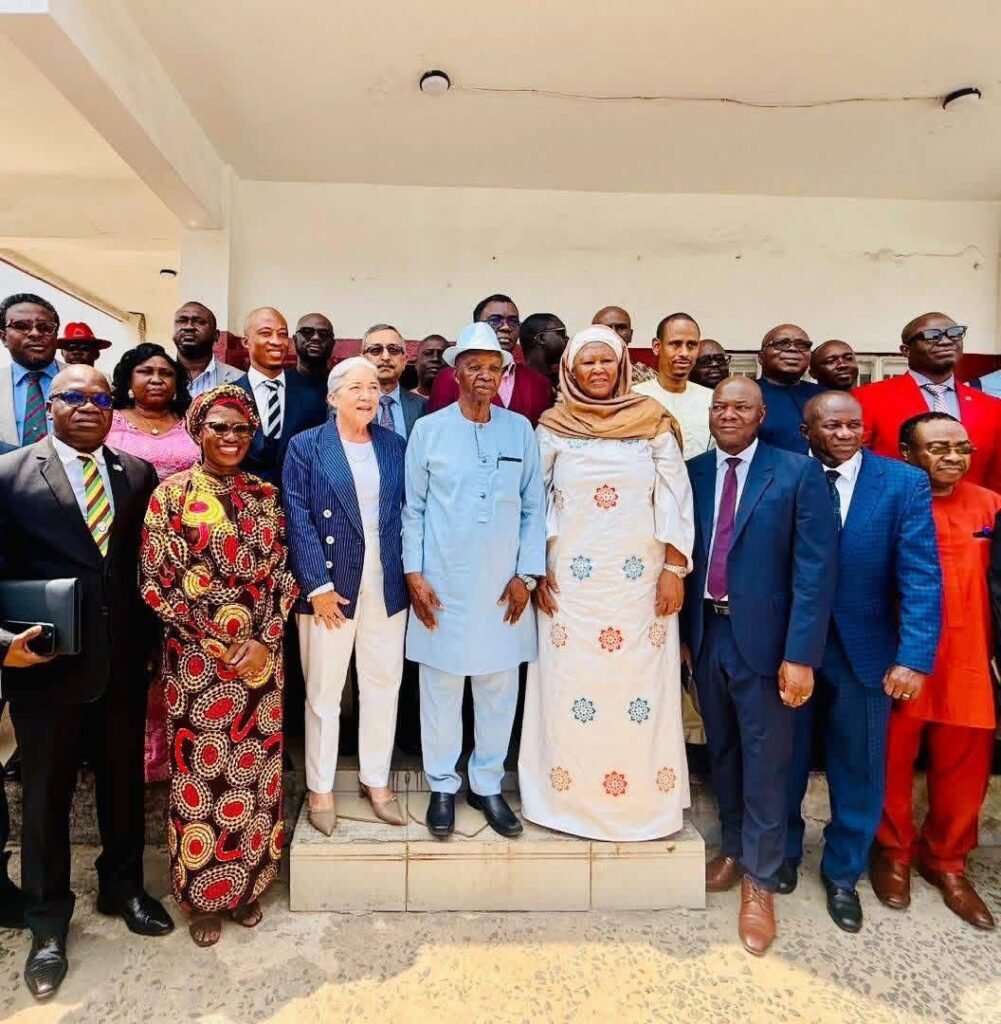
Co-led by former Gambian Vice President, Fatoumata Jallow-Tambajang, UNOWAS Deputy Special Representative, Barrie Freeman, and Commonwealth Deputy Secretary-General Tanmaya Lal, the delegation engaged a wide range of stakeholders across the political and governance spectrum.
The team held consultations with President Julius Maada Bio, senior cabinet officials, opposition leaders, Parliament, the Electoral Commission for Sierra Leone, the Political Parties Regulation Commission, security agencies, Civil Society Organizations and members of the diplomatic community. The process was facilitated by the Independent Commission for Peace and National Cohesion, with technical support from international partners.
In its concluding statement, the mission acknowledged that while notable progress has been made in implementing aspects of the ANU, significant challenges remain. It welcomed the renewed commitment demonstrated by both the Government and the APC to strengthen dialogue, rebuild trust and ensure inclusive governance processes moving forward.
A key highlight of the mission was the recognition of the tabling of the Constitution of Sierra Leone (Amendment) Bill, 2025 in Parliament. The international partners urged lawmakers and stakeholders to work collaboratively to finalize constitutional and legislative reforms, emphasizing the importance of broad consultation and national consensus.
Crucially, the mission facilitated renewed dialogue between the Government and the APC to address lingering disputes over the implementation framework of the Tripartite Committee’s recommendations. At the end of those engagements, both parties reached a series of agreements aimed at accelerating reforms and strengthening democratic institutions.
Among the most significant outcomes is the decision to engage Parliament in urgently establishing a Parliamentary Standing Committee on Electoral Matters. This body will be responsible for reviewing the electoral cycle and ensuring preparedness for the 2028 general elections, a move widely viewed as critical to restoring confidence in the electoral process.
The parties also agreed to restructure and expand the implementation framework of the ANU. That includes the creation of a High-Level Oversight Mechanism to monitor progress and the expansion of the Tripartite Steering Committee to include representatives from additional political parties and Civil Society Organizations. Observers say such expansion is expected to enhance transparency and inclusivity in the reform process.
In addition, a team of legal experts will be constituted to guide constitutional and legislative reforms. The team will draw representation from the Government, the APC and other stakeholders, ensuring a balanced and technically sound approach to reform implementation.
The mission also emphasized the need to strengthen the national Peace and Election Management Security framework. Vice President Mohamed Juldeh Jalloh is expected to play a central role in that process through continued engagement with the National Security Council.
Electoral reform remained at the heart of the discussions, with both parties committing to the restructuring of the Electoral Commission within the ANU framework by December 31, 2026. The reform process is expected to address concerns around transparency, accountability and public confidence in the electoral system.
Another critical area of agreement relates to the use of data from the 2026 Population and Housing Census. The parties committed to ensuring that the data is used as a tool for development planning and governance, with inclusive stakeholder engagement to prevent disputes and enhance public trust.
Significantly, the APC agreed to end its boycott of governance processes and resume participation in national institutions. That development is being widely interpreted as a major breakthrough in efforts to normalize the political environment and promote inclusive governance.
The international mission also issued a strong appeal to political leaders, supporters and citizens to exercise restraint, avoid inflammatory rhetoric and refrain from spreading misinformation. It stressed that peace and stability depend on responsible political conduct and sustained dialogue among all stakeholders.
In a separate but related statement, the APC outlined its position following the conclusion of the engagements. Signed by its National Secretary General, Lansana Dumbuya, the party described the talks as a critical opportunity to address longstanding concerns about electoral governance and institutional credibility.
The APC reiterated that it had used the platform to clearly articulate its concerns regarding what it views as delays in implementing key recommendations of the Tripartite Committee. It warned that certain actions, particularly those affecting the leadership of the Electoral Commission, could undermine public confidence if not handled transparently and inclusively.
The party acknowledged that the discussions facilitated by international partners had resulted in concrete commitments, including the restructuring of the Electoral Commission and the establishment of accountability mechanisms with defined timelines.
According to the APC, those commitments will be subject to a joint review process by December 2026, with continued monitoring by both national and international stakeholders. The party also welcomed the Government’s pledge to adopt an inclusive approach in utilizing census data for governance and electoral planning.
Despite expressing cautious optimism, the APC made it clear that it considers the current process a decisive opportunity for meaningful reform. It warned against delays or superficial compliance, emphasizing that it expects tangible progress within the agreed timeframe.
Addressing its supporters across the country and in the diaspora, the APC leadership urged calm, discipline and unity. It encouraged members to actively engage in monitoring the implementation process, stressing that the focus has now shifted from negotiation to accountability.
The party further underscored that it has given the process what it described as a “final chance,” noting that any failure to implement agreed reforms by the December 2026 deadline could prompt it to reassess its position and determine its next course of action within democratic and legal frameworks.
Political analysts view the outcome of the joint mission as a critical turning point in Sierra Leone’s post-election recovery process. With clearly defined commitments, timelines and oversight mechanisms now in place, attention is expected to shift toward implementation and measurable progress.
The international moral guarantors reaffirmed their commitment to supporting Sierra Leone’s democratic development, emphasizing the importance of inclusive governance, institutional reform and national cohesion.
With the country preparing for the 2028 general elections, the success of those efforts will depend largely on sustained political will, effective institutional collaboration and the ability of all stakeholders to prioritize national unity over partisan interests.