

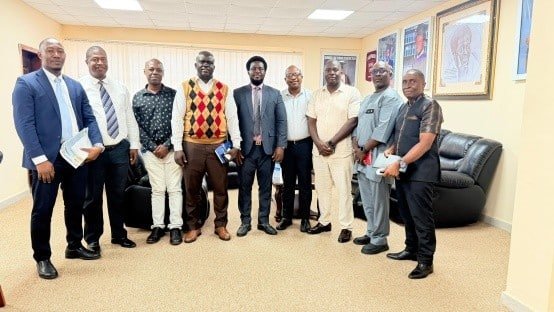
The Anti-Corruption Commission (ACC) has initiated a review of the collection and management of revenue from Sierra Leone’s five percent rice import duty following accountability concerns raised by the Budget Advocacy Network (BAN).
Officials of the two institutions met at Integrity House on Tower Hill, Freetown, on Monday, 31 August 2026, after BAN released a policy report assessing how proceeds from the levy were being handled and whether they were supporting the Agricultural Development Fund (ADF) as intended.
The report also examined the extent to which resources allocated through the Fund could improve agricultural opportunities for women under the Government’s Feed Salone programme.
ACC Commissioner, Francis Ben Kaifala Esq. described the current arrangement surrounding the revenue as insufficiently coordinated. He said the Commission would verify the issues highlighted in the report before presenting recommendations to the relevant authorities.
Francis Ben Kaifala cited the ACC’s management of recovered public assets as an example of how dedicated financial arrangements can strengthen oversight. He recalled advocating for a separate Recovery Account after the Commission began remitting substantial recovered funds to the Ministry of Finance.
According to him, establishing a similar account for revenue reserved for agricultural development could improve monitoring, auditing and public accountability.
The ACC Commissioner proposed that BAN submit recommendations outlining practical mechanisms for managing and tracking the funds. The Commission, he added, would conduct an independent assessment and prepare a report for the Minister of Finance.
BAN Coordinator, Abu Bakarr Kamara, welcomed the Commission’s willingness to examine the matter and work with civil society. He said such collaboration is essential to ensuring that revenue collected for specific development priorities is used transparently.
Abu Bakarr Kamara explained that the Government’s 2024 Budget Statement committed proceeds from the reintroduced five percent rice import duty to the Agricultural Development Fund.
Following that commitment, BAN began advocating for women farmers to receive a meaningful share of the resources invested through the Fund. The organisation is seeking the allocation of at least 30 percent of the relevant funding to initiatives benefiting women in agriculture.
As part of its investigation, BAN contacted several state institutions in 2025 to determine how much revenue had been collected from the duty and how the money was being managed.
Information received from the National Revenue Authority and the Ministry of Finance, among other institutions, formed the basis of the policy report submitted to the ACC.
Both institutions agreed to maintain their collaboration while the ACC conducts its review. The process is expected to establish the facts surrounding the revenue and identify measures to improve transparency, traceability and accountability in managing public funds reserved for agricultural development.