

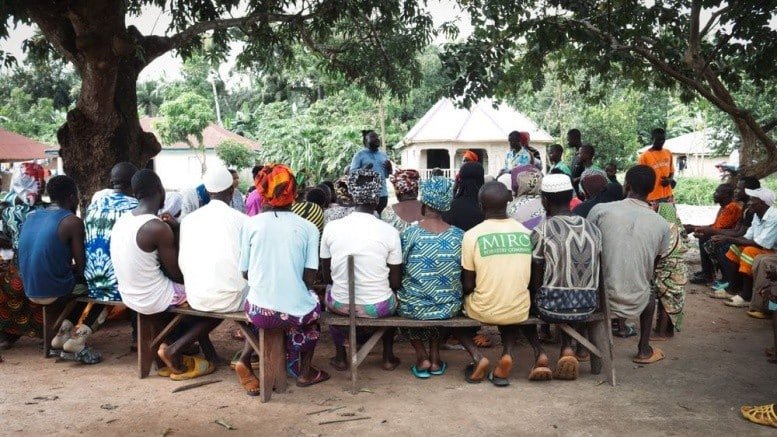
A new report on Thursday, 3 September 2026 has raised concerns about the effects of a large-scale reforestation and carbon credit project on customary land rights, local livelihoods and community participation in Tonkolili and Port Loko districts.
The report, titled: Uprooted Promises: A Case Study of Carbon Credits, Land Rights and Community Impacts in Sierra Leone, was produced by Swedwatch, HEKS and the Sierra Leone Network on the Right to Food (Silnorf).
It examines the “Reforestation of Degraded Lands in Sierra Leone” project, which covers approximately 10,000 hectares of commercial forestry plantations. About 5,000 hectares are reportedly eligible to generate carbon credits.
The plantations are owned by UK-based Miro Forestry Developments Limited, which has operated in Sierra Leone since 2012. Swiss climate consultancy South Pole was engaged to help register the plantations as a carbon project under Verra’s Verified Carbon Standard and facilitate the sale of credits.
Registered in 2021 with a crediting period beginning in 2016, the project has reportedly generated more than 480,000 carbon credits.
The report alleges that some communities lost access to land previously used for subsistence farming and the collection of natural resources after parts of the area were converted into commercial plantations.
Researchers said they found a gap between official project documentation, third-party assessments and the experiences shared by residents of six communities visited during fieldwork in October 2025.
Although project documents described the area as “degraded,” residents reportedly said portions of the land had been actively used for farming and harvesting fruit, firewood and other resources.
Some interviewees associated their restricted access to the land with growing food insecurity, poverty and declining household income. Others said they did not fully understand the duration and conditions of the land leases.
Abass John Kamara, Deputy National Coordinator of Silnorf, said meaningful participation must go beyond formal consultation, particularly where women and other vulnerable groups are concerned.
“Communities need to understand and genuinely consent to decisions affecting their land,” Abass John Kamara said.
The report also claimed that many residents, key informants and some local authorities were unaware that the plantations were generating carbon credits. They reportedly believed the land was being used only for commercial timber production.
Women interviewed during the research said they were particularly affected because they had lost access to firewood and fruit trees while being largely excluded from land negotiations and lease payments. According to the report, payments were commonly distributed through male community elders.
Some landowners also described the reported annual rent of US$12 per hectare as inadequate compensation for the loss of farming income and access to natural resources.
The report further questioned how revenues generated through the sale of carbon credits are benefiting affected communities.
Miro reportedly earned US$6.7 million from carbon credit sales across its two African projects in 2024. Project documents cited in the report indicated that five percent of net profits would be placed in a community fund.
However, interviewed landowners said they had not received a share of the carbon credit proceeds, while the researchers found no functioning mechanism for distributing operational revenue.
Responding to Swedwatch, Miro explained that it had not yet recorded a net profit; a position the report said was supported by the company’s financial disclosures. The company reportedly committed to reviewing a revenue-based benefit-sharing arrangement from January 2027 as a possible alternative to the net-profit model.
Davide Maneschi, Programme Officer at Swedwatch and co-author of the report, said carbon market expansion must be supported by firm human rights protections, meaningful consultation and sustained dialogue with affected communities.
He warned that projects intended to support climate action should not undermine the rights and livelihoods of people who depend on the land.
Miro and South Pole disputed the report’s description of the project’s effects, maintaining that their operations comply with Sierra Leonean laws, international sustainability standards and approved carbon methodologies.
They also cited independent third-party certification, including certification by the Forest Stewardship Council and questioned aspects of the study’s methodology. The companies argued that its conclusions depended mainly on verbal accounts collected from a limited number of communities.
Miro nevertheless expressed its willingness to investigate the concerns, engage relevant stakeholders and improve its practices where necessary.
South Pole said it had established independently assured internal procedures to conduct more rigorous project screening beyond the requirements of existing carbon standards. Verra had not issued a statement at the time the report was published.
The report acknowledged that the project had produced reported benefits, including employment opportunities, tree-cover restoration and improvements to the local microclimate. However, it said those benefits were not experienced equally and remained disputed by some residents.
It recommended that Miro renegotiate relevant land leases in accordance with Sierra Leone’s Customary Land Rights Act of 2022, introduce a revenue-based benefit-sharing system and ensure women participate fully in land governance.
The report also urged South Pole and Verra to strengthen human rights due diligence, supervision and engagement with affected communities.
The Government of Sierra Leone was encouraged to introduce and enforce carbon market policies that protect customary land rights, establish effective grievance mechanisms and require greater transparency from investors.
The organisations concluded that third-party certification alone could not adequately address the social effects of carbon projects. They called for transparent benefit sharing, genuine community ownership, independent oversight and stronger protection of local livelihoods.