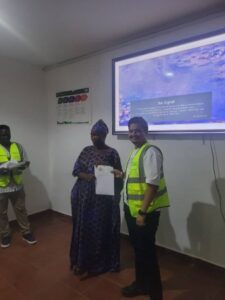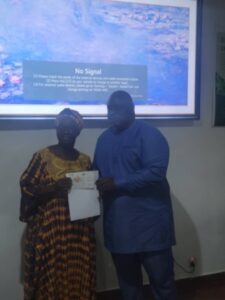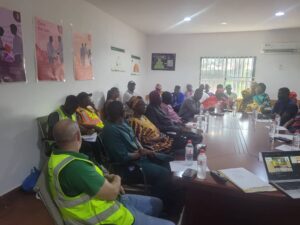

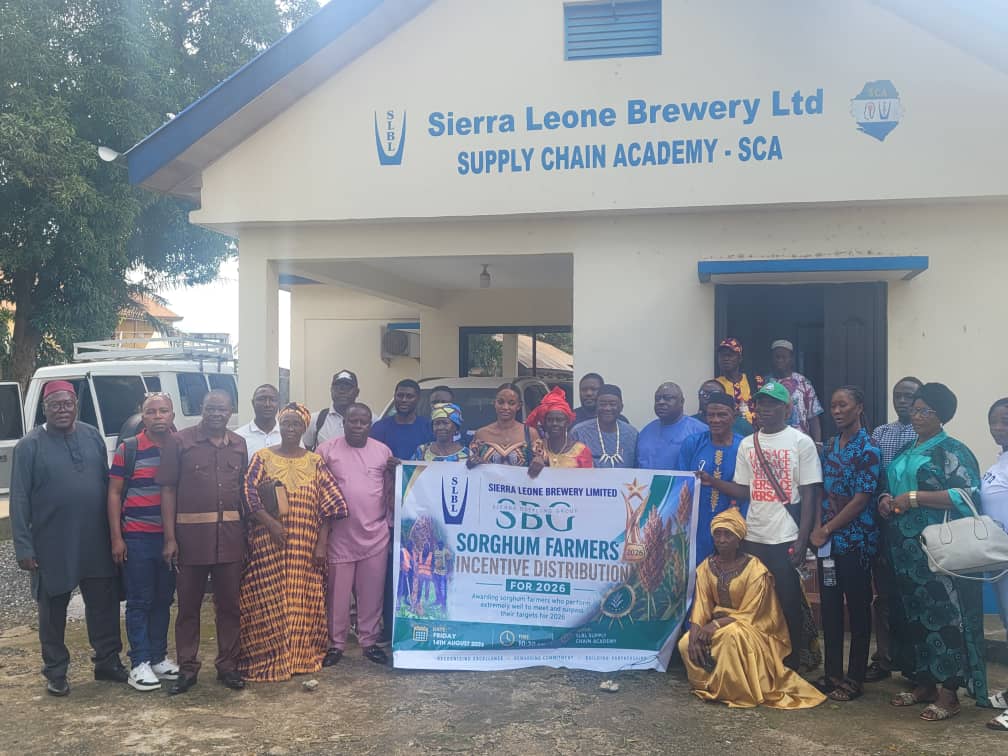
Sierra Leone Brewery Limited (SLBL), in collaboration with Sierra Bottling Group (SBG), has rewarded 12 sorghum farmers with a combined NLe 513,000 incentive package after they surpassed the company’s 2026 supply target, recording the highest sorghum production in the company’s history.
The incentive distribution was held on Friday, 14 August 2026, at the SLBL Supply Chain Academy, under the theme: “Empowering Local Farmers, Building a Stronger Sierra Leone.” The farmers exceeded the company’s target of 800 metric tonnes, supplying 1,004 metric tonnes of sorghum during the year.
Speaking at the ceremony, SLBL Managing Director, Henry du Plessis, commended the farmers for their commitment, particularly highlighting the increasing participation of women in sorghum farming.
“I am happy to see the women stepping up,” Henry du Plessis said, describing their participation as a sign of progress and expressing hope about the future of farming in Sierra Leone. He recalled his earlier commitment to the farmers that SLBL would buy whatever quantity they produced, noting that the farmers had not only kept their word but had exceeded expectations.
“You kept your word. And you over delivered,” he said.
Henry du Plessis urged the farmers to celebrate their achievement while preparing for the next production cycle, noting that the company would continue to work with local farmers.
According to Joseph Sesay, Sorghum Local Sourcing Lead at SLBL, the incentives were provided to farmers who reached or performed above their respective targets and contributed significantly to the company’s sorghum supply for 2026.
He explained that sorghum supplied by local farmers is used as an ingredient in the production of beverages including Maltina, Star Beer and Mutzig.
“The farmers are very integral to our work,” Joseph Sesay said, explaining that farmers’ ability to meet production targets directly affects the company’s production capacity. He added that SLBL sometimes uses a flexible recipe that allows the company to increase the quantity of sorghum used in its production when adequate local supplies are available.
Joseph Sesay said the company has set a higher target of between 1,350 and 1,400 metric tonnes for 2027, while expressing hope that farmers would once again surpass the target.
Representing the Government, Director of Export at National Investment Board (NIB), Bobson Margai described the incentive distribution as a commendable initiative that recognizes farmers’ contribution and encourages them to increase production.
He said the NIB’s mandate includes attracting and facilitating investment and exports in Sierra Leone, stressing the importance of stronger collaboration between SLBL, SBG and the NIB. Bobson Margai also encouraged the farmers to formally register their businesses to improve their access to investment opportunities.
The event also highlighted the growing involvement of women in sorghum farming, with beneficiaries sharing how the activity has created additional sources of income and improved their livelihoods.
One of the beneficiaries, Ya Wara Sesay, said sorghum farming had become more rewarding as her annual yield increased compared to when she started. She encouraged other farmers to join the sector, noting that farmers need to work collectively to achieve greater results.
Another beneficiary, Lamrana Bundu, who previously worked as a trader, said becoming a sorghum farmer was initially challenging but determination enabled her to overcome the difficulties. She added how she has no regrets about venturing into sorghum farming, describing it as an activity that has significantly contributed to her livelihood.
Paramount Chief Massa Yeli Tham III of Gbanti Chiefdom, Bombali District disclosed how he recently ventured into sorghum farming as an additional source of income beyond his traditional responsibilities.
He said the experience has already begun contributing to his progress and pledged to encourage other traditional leaders in his district to invest in sorghum farming.
With a new target of up to 1,400 metric tonnes for 2027, SLBL and its farming partners are expected to build on this year’s achievement and strengthen efforts to boost local agricultural production.