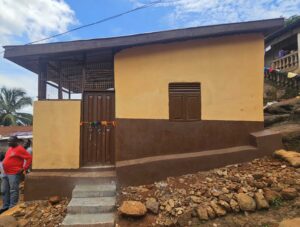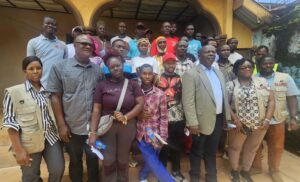

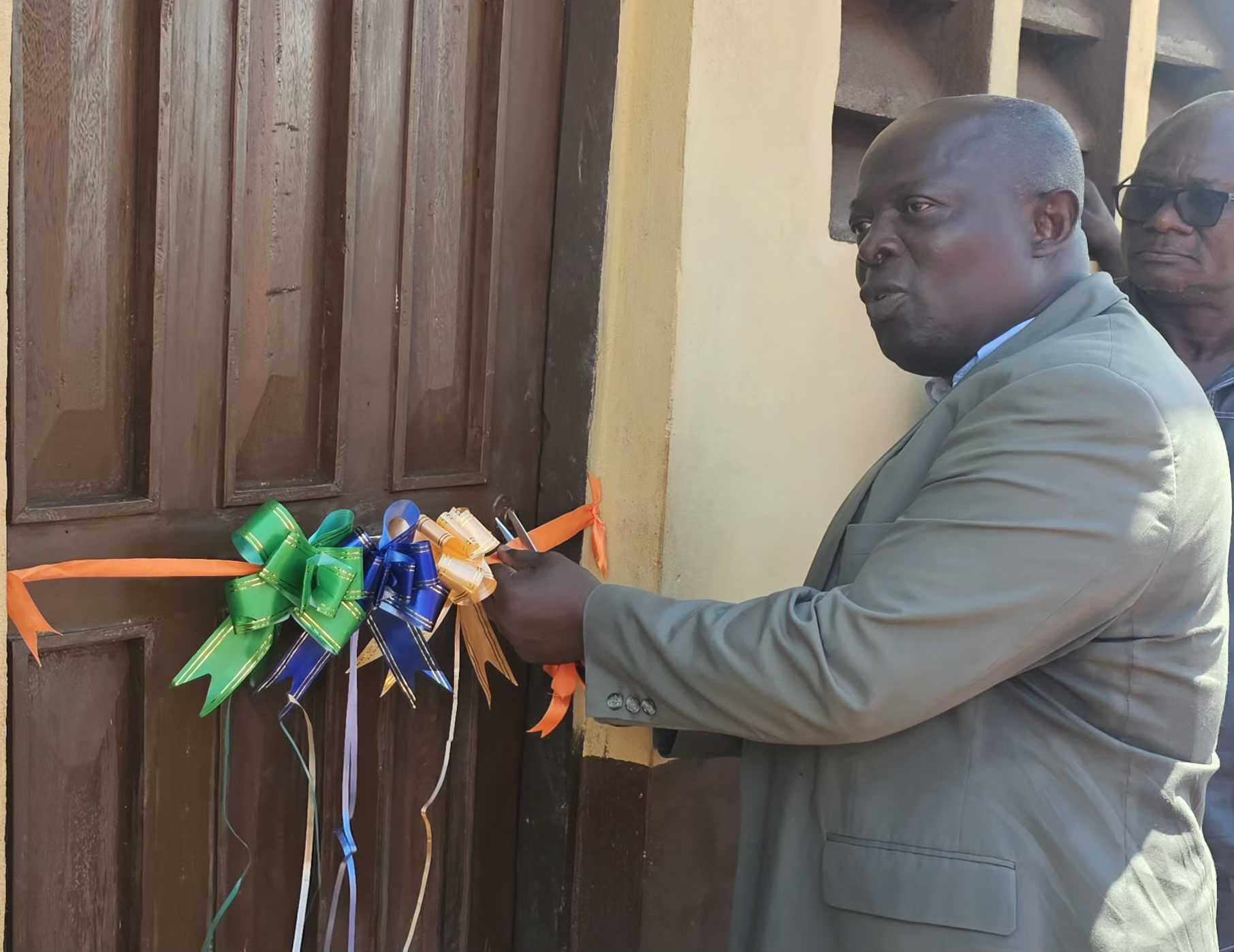
The Sierra Leone Urban Research Centre (SLURC) formally handed over four upgraded climate resilient homes to beneficiaries in the Moyiba informal settlement as part of efforts to demonstrate affordable ways of improving housing resilience to climate change. The ceremony was held on Thursday, August 20, 2026,
The intervention was implemented under the URBAN TRACS project, Transformative Research for Adaptation to Climate Change in Informal Settlements, which uses research and community participation to identify practical solutions to climate related challenges affecting vulnerable urban communities.
The four upgraded homes form part of SLURC’s pilot resilience intervention, designed to test affordable measures that can strengthen existing houses against climate shocks while improving the comfort, safety and living conditions of residents.
The project involved local builders, labourers and researchers from Moyiba, as well as architecture students, ensuring that members of the community participated directly in the assessment, design and construction process.
Speaking at the handover, SLURC Executive Director, Dr. Joseph M. Macarthy, said the project demonstrated the importance of combining research, community knowledge and practical interventions to address the challenges facing informal settlements.
He said SLURC’s work over the past decade had focused on generating evidence from communities and sharing research with Government institutions, development partners and other stakeholders to support better urban development decisions.
Dr. Joseph M. Macarthy said climate change posed an increasing threat to Sierra Leone, particularly to vulnerable communities exposed to rising temperatures, intense rainfall and other climate related hazards.
He explained that the effects of climate change could damage homes and infrastructure, disrupt livelihoods and reverse development gains, making climate resilience an urgent priority.
According to him, the Moyiba project is intended to show that improving vulnerable communities did not necessarily require expensive housing schemes or the relocation of residents.
He said SLURC instead sought to identify affordable interventions that could strengthen existing homes and make them safer and more resilient.
The Executive Director said the approach was based on the principle that residents should be part of identifying problems and developing solutions because they possess important knowledge about the conditions in their communities.
He added that SLURC’s interventions extend beyond housing to areas such as drainage improvement, water provision and rainwater management, all aimed at strengthening resilience in vulnerable communities.
Research Officer at SLURC, Ansumana Tarawally, explained that the project began with an assessment of housing conditions in Moyiba to identify structures most vulnerable to climate shocks.
He said researchers examined the condition of foundations, walls and roofs, the number of people living in each household, the size of the houses and the economic circumstances of homeowners.
Ansumana Tarawally said several houses were found to have weak foundations and damaged structures, while some experienced water entering their homes during heavy rainfall.
The research team initially assessed a wider group of houses before applying specific criteria to identify those most suitable for the pilot intervention. Ten houses were eventually selected for detailed assessment and design, with four receiving the current upgrades.
He said homeowners and their neighbours were involved in discussions and design validation to ensure that the proposed interventions reflected their actual needs.
The upgrades varied according to the condition of each house and included foundation and wall strengthening, roof improvements, ceiling installations, better ventilation, improved windows, privacy measures and other structural interventions.
Ansumana Tarawally said the project also focused on the use of affordable and durable materials, noting that poor quality materials often have short lifespans and increase maintenance costs for low income households.
He said some of the homes were fitted with improved windows and ventilation systems to allow air and natural light into the buildings while maintaining security. Other interventions were aimed at reducing excessive indoor heat and improving protection against heavy rainfall and strong winds.
A key feature of the project was the involvement of local workers and young people. Tarawally said local builders and labourers were engaged in the construction, while architecture students and researchers contributed to the assessment and design process.
He said the approach was intended to ensure that knowledge and skills gained through the project remained within the community and could be applied to other homes.
SLURC also installed temperature monitoring devices in selected houses to collect data on indoor conditions before and after the interventions.
Ansumana Tarawally said the data would allow researchers to measure the impact of the upgrades and identify which interventions were most effective in improving thermal comfort and climate resilience.
He said the findings would contribute to SLURC’s wider research and could help guide similar interventions in other informal settlements across Sierra Leone.
One of the beneficiaries, Isata Mansaray, a mother of two, expressed appreciation to SLURC for transforming her previously dilapidated home.
Isata Mansaray, who said she had been abandoned by her husband and is raising her children in difficult circumstances, described the intervention as a significant improvement in her family’s living conditions.
She said the condition of the house had exposed her family to several difficulties, particularly during heavy rainfall and expressed gratitude for the opportunity to live in a safer and more comfortable environment.
She appealed for similar interventions to be extended to other vulnerable households in Moyiba, noting that many residents continue to live in poor housing conditions.
Chief of Moyiba, Chief Yaraba Bangura, also commended SLURC for the intervention and urged the beneficiaries to take responsibility for maintaining the upgraded homes.
He said the project had demonstrated that practical improvements could make a significant difference in the lives of residents and called for continued collaboration between SLURC, the community and other development partners.
The Chief appealed for the expansion of the initiative, noting that many other households in Moyiba continue to live in vulnerable and deteriorating structures.
He urged organisations and development partners to consider supporting similar housing improvements in the community, stressing that the needs extend beyond the four homes upgraded under the pilot project.
The handover marks another step in SLURC’s efforts to generate practical evidence on climate resilient housing and demonstrate solutions that can be adapted and replicated in other vulnerable urban communities.
Through continued monitoring, research, training and community engagement, SLURC aims to use the lessons from Moyiba to inform broader approaches to affordable and climate resilient housing in Sierra Leone.