
Women in the Media Sierra Leone (WIMSAL) and its partners have secured the adoption of a new gender-responsive safeguarding policy designed to prevent sexual exploitation, abuse, harassment and discrimination across Sierra Leone’s media industry.
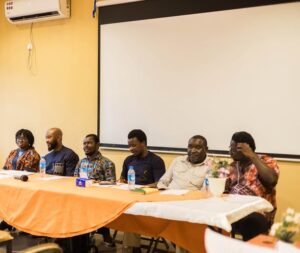
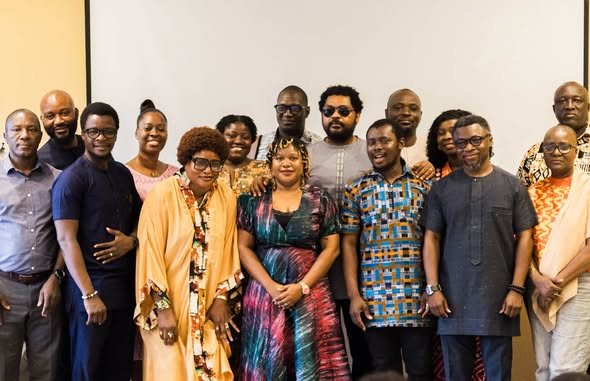
The WIMSAL Gender-Responsive Safeguarding Policy for Media Institutions, 2026, was adopted and endorsed during a one-day Policy Dialogue Forum held at the Civil Service Training College, Tower Hill, Freetown, on Friday, 21 August 2026.
WIMSAL organized the engagement with support from Comic Relief and in partnership with BBC Media Action. The forum was held under the theme, “Advancing Gender-Responsive Safeguarding Policies in Media Houses.”
Media executives, journalists, professional associations, Civil Society Organisations and development partners attended the dialogue to examine the challenges affecting women and other vulnerable professionals in media workplaces.
The forum focused particularly on sexual exploitation, abuse and harassment, weak reporting structures, fear of retaliation and the limited representation of women in leadership and decision-making positions.
President of WIMSAL, Eastina Taylor-Tucker, said no media professional should be required to sacrifice personal dignity or safety in exchange for employment or career advancement.
“No woman or man should have to surrender their dignity, safety or body to work in Sierra Leone’s media sector,” Eastina Taylor-Tucker stated.
BBC Media Action Country Director, Musa Sangarie, said the safety and equal participation of women must be treated as essential elements of media freedom.
“There can be no truly free media if women are not free to participate in it fully, safely and equally,” Musa Sangarie maintained.
The forum built on previous interventions undertaken by WIMSAL and BBC Media Action to address sexual harassment, exploitation and gender inequality in Sierra Leone’s media sector.
Those interventions included support for the establishment of a secretariat through which cases of sexual exploitation, harassment and abuse could be reported. They also included BBC Media Action’s 2025 report on sexual harassment in the media and a 2026 study examining women’s representation and leadership.
President of the Sierra Leone Association of Journalists (SLAJ), Alhaji Manika Kamara, described the findings of the 2025 BBC Media Action report as deeply concerning.
He said the reported level of harassment experienced by women media professionals, together with widespread under-reporting and weak accountability mechanisms, required urgent and decisive action from all stakeholders.
According to Alhaji Manika Kamara, safeguarding should no longer be regarded as an optional or secondary concern within media institutions.
He said SLAJ’s commitment to press freedom, professionalism, ethics and the welfare of journalists also required the association to support measures that would guarantee safe and dignified working conditions.
The SLAJ President maintained that Sierra Leone could not claim to have a genuinely free and credible media environment when journalists, particularly women, feel unsafe, intimidated or unable to report abuse without fear of retaliation.
He called on media institutions to establish clear safeguarding policies, confidential complaint procedures, accessible reporting channels and transparent mechanisms for handling allegations of sexual harassment and other forms of abuse.
Alhaji Manika Kamara stressed that adopting policies would not be enough unless media owners, editors and managers ensured their effective implementation.
He welcomed the proposed Safeguarding Charter and encouraged media houses and other stakeholders to endorse and uphold it.
The SLAJ President further explained that sexual harassment is not solely a women’s concern but a professional, institutional and human rights issue requiring collective action.
He said media owners, editors, managers, journalists, journalism training institutions, professional associations, regulators, Civil Society Organisations and development partners must all contribute to building a safer industry.
“SLAJ urges all media institutions to move from commitment to concrete action,” Alhaji Manika Kamara stated.
He called for stronger safeguarding systems, greater accountability, increased reporting, adequate protection for survivors and the full integration of gender justice into Sierra Leone’s media development.
The newly adopted WIMSAL Gender-Responsive Safeguarding Policy provides minimum standards that media institutions are expected to implement in their workplaces.
It establishes measures for preventing sexual exploitation, abuse and harassment and eliminating gender-based discrimination and violence.
The policy also seeks to increase women’s meaningful participation in leadership and decision-making positions within media institutions.
Other provisions include the establishment of safe and accessible reporting mechanisms, fair and impartial investigations and protection for complainants, survivors and witnesses against retaliation.
The document further addresses online gender-based abuse and the specific dangers faced by women journalists in the course of their work.
It also requires media institutions to strengthen safeguarding through regular training, monitoring and clearly defined responsibilities.
Participants emphasized that safeguarding policies must not exist only on paper. Their effectiveness, they said, should be demonstrated through the daily decisions, conduct and practices of media institutions.
The stakeholders agreed that gender should never become an obstacle to professional advancement and that no position of authority should be used as a licence for exploitation.
They also stressed that no person who files a complaint in good faith should face retaliation, while survivors must be treated with dignity and accused persons must receive due process.
The forum further affirmed that nobody should be placed beyond accountability because of status, public office, wealth or influence.
WIMSAL pledged to continue working with media institutions, regulators, professional associations, Civil Society Organisations and development partners to ensure that the commitments contained in the policy are translated into action.
The organisation said the initiative is intended to transform Sierra Leone’s media culture from silence to accountability, vulnerability to protection and written promises to meaningful institutional reform.
The forum concluded with a call for media houses to create workplaces where journalists can perform their professional duties, pursue leadership opportunities and contribute to national development without harassment, discrimination or fear.