

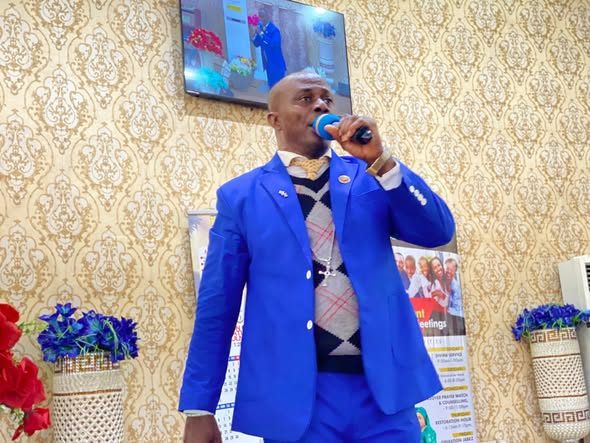
Apostle Amos Lawrence Lelleh
The controversy surrounding Apostle Amos Lawrence Lelleh has moved beyond a disagreement over a sermon. It has become a test of Sierra Leoneans’ commitment to religious tolerance, freedom of expression and peaceful disagreement.
Apostle Amos Lawrence Lelleh preached from the pulpit of his own church and presented a message based on what he believes to be the teachings of the Bible. People may disagree strongly with his interpretation. They may question his choice of words, challenge his theology or argue that he should have approached the subject differently. Those are legitimate responses in a society where people are free to hold different views.
What cannot be accepted is an attempt to answer preaching with violence.
Accounts circulating on social media allege that stones were thrown at the church, equipment and musical instruments were damaged and the pastor was physically confronted.
Before condemning Apostle Amos Lawrence Lelleh, people should ask whether they listened to his entire sermon and understood the context in which his statements were made. Those who were not present should be particularly careful about presenting assumptions or second-hand claims as established facts.
This does not mean Apostle Amos Lawrence Lelleh is above criticism. No pastor, politician, journalist or public figure should be. Freedom of expression includes the freedom of others to challenge what has been said.
But there is an important line between criticism and intimidation.
Religious freedom becomes meaningless if a preacher is free to speak only when everyone agrees with him. Tolerance is most important when we encounter ideas that offend, challenge or contradict our own beliefs.
Sierra Leone is a country widely known for religious coexistence and tolerance. That reputation should be protected. Christians, Muslims and people of other beliefs must continue to resolve disagreements through dialogue rather than confrontation.
Apostle Amos Lawrence Lelleh has the right to preach his understanding of Scripture. Those who disagree have an equal right to challenge him peacefully. Neither right requires violence.
The principle should therefore be straightforward: challenge the sermon if you must, debate the Scripture if you disagree but do not attack the pastor or destroy the church.
The truth may sometimes hurt, and opinions may offend, but violence must never become the answer.
The wider question of free speech and press freedom in Sierra Leone also remains central to how disagreements are handled, while trust, accountability and public confidence in institutions are important to peaceful civic engagement.