

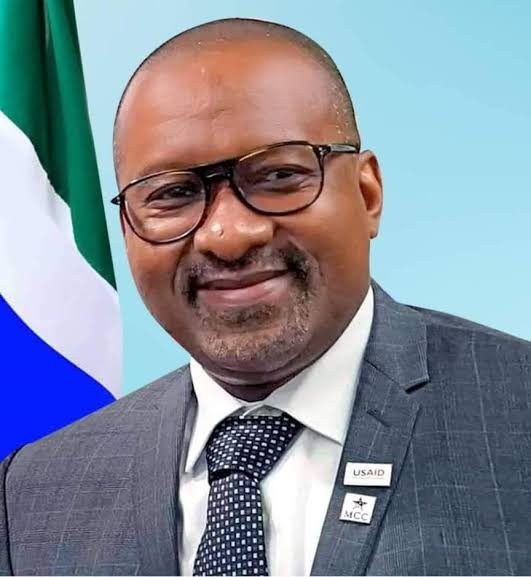
Vice President Dr. Mohamed Juldeh Jalloh has received commendation from the Union of Academic Staff Association (UASA) following his intervention in the prolonged industrial dispute between university lecturers and the Government of Sierra Leone, which has resulted in the immediate suspension of the strike that disrupted academic activities across the country’s public universities.
The development represents a significant breakthrough in efforts to restore normal teaching and learning activities within Sierra Leone’s higher education sector, following weeks of uncertainty surrounding negotiations over salary adjustments and improved conditions of service for academic staff.
In an official Press Release issued on Friday, 6 November 2026, UASA expressed profound appreciation to Vice President Dr. Mohamed Juldeh Jalloh for his personal involvement in addressing the longstanding disagreement, acknowledging that his intervention created an opportunity for renewed dialogue and a peaceful settlement.
The Union particularly recognised the Vice President’s appeal to academic staff to suspend their industrial action and resume their professional responsibilities while awaiting a formally signed agreement from the Ministry of Finance.
Following the appeal, UASA convened plenary meetings involving its constituent associations to consider the proposal and determine the appropriate course of action. After extensive consultations, members agreed to suspend the strike with immediate effect, demonstrating their willingness to pursue a negotiated settlement.
In the statement signed by UASA Secretary-General, Abiodu Williams, the Union made clear that its decision was influenced by the respect it holds for Vice President Dr. Mohamed Juldeh Jalloh and its appreciation of his efforts to resolve the impasse.
“Out of profound respect for the Honourable Vice President, UASA has decided to suspend the ongoing strike action with immediate effect,” the statement declared.
The decision marks an important development in the industrial dispute, which had generated growing concerns among students, parents, university administrators and other stakeholders over disruptions to academic programmes.
The strike, which commenced on 16 September 2026, was linked to longstanding demands by university lecturers for improved remuneration and the implementation of harmonized conditions of service. The disagreement reflected broader concerns about the welfare of academic staff and the need to strengthen the country’s higher education system.
Against that background, the intervention of Vice President Dr. Mohamed Juldeh Jalloh has been welcomed as an important step towards bridging differences between the Government and university lecturers.
His engagement provided an opportunity for both sides to move away from prolonged industrial confrontation and towards constructive negotiations aimed at addressing the concerns of academic staff while safeguarding the interests of students.
Although the suspension represents significant progress, UASA emphasized that several outstanding matters must be addressed before a comprehensive settlement can be achieved.
The Union expressed its expectation that a joint meeting would be convened involving Vice President Dr. Mohamed Juldeh Jalloh, the Ministry of Finance and the Ministry of Technical and Higher Education to formalize the commitments reached during the discussions.
According to UASA, the proposed agreement should clearly indicate the accepted percentage salary increase and provide specific timelines for its implementation. The Union considers those provisions essential to ensuring transparency, accountability and mutual understanding among the parties.
UASA also called on the Tertiary Education Commission (TEC) to expedite the approval of the Harmonized Conditions of Service and make the approved document available to its leadership.
The Harmonized Conditions of Service remain a central issue in the negotiations, as academic staff seek a consistent framework governing their employment conditions, remuneration and professional welfare across public universities.
Furthermore, the Union requested that the Ministry of Finance involve UASA representatives in calculating the financial implications of the agreed salary adjustments. It maintained that such participation would promote transparency, accuracy and confidence in the implementation process.
Those demands indicate that the decision to suspend the strike does not constitute a final settlement of the dispute. Rather, it provides an opportunity for the Government and academic staff to conclude negotiations and formalize their commitments without further disruption to university operations.
For students who have experienced interruptions to lectures, academic assessments and other university activities, the suspension offers renewed hope that normal academic programmes will resume.
The development is also significant for university administrators, who have faced the challenge of managing academic schedules amid the industrial action.
Vice President Dr. Mohamed Juldeh Jalloh’s involvement demonstrates the importance of high-level engagement in addressing disputes affecting essential public institutions. His appeal for dialogue and restraint has helped create conditions for renewed cooperation between the Government and university lecturers.
The Union’s public expression of appreciation further reflects the confidence generated by the Vice President’s involvement and the importance academic staff attach to his commitment to facilitating a peaceful resolution.
However, the sustainability of the breakthrough will depend largely on the timely conclusion of the proposed agreement, the implementation of agreed salary adjustments and progress towards approving the Harmonized Conditions of Service.
UASA reaffirmed its commitment to constructive engagement and a peaceful settlement that protects the interests of lecturers, students and the wider higher education sector.
With the strike now suspended, attention turns to the Ministry of Finance, the Ministry of Technical and Higher Education and other relevant institutions to ensure that the remaining issues are addressed through continued consultation.
The latest development places Vice President Dr. Mohamed Juldeh Jalloh at the centre of efforts to restore industrial harmony within Sierra Leone’s university system, while reinforcing the importance of dialogue, mutual respect and responsible leadership in resolving national challenges.
For the country’s higher education sector, the suspension represents a welcome opportunity to restore academic stability, rebuild confidence among stakeholders and pursue lasting improvements in the welfare of university lecturers.