

The Government of Sierra Leone has called for the effective enforcement of existing gender and employment laws alongside practical newsroom safeguards to protect women working in the media.
Director of Information and Government Services, Francess Josephine Kafula, said measures designed to promote gender justice must also preserve press freedom, editorial independence and journalists’ ability to investigate issues of public interest.
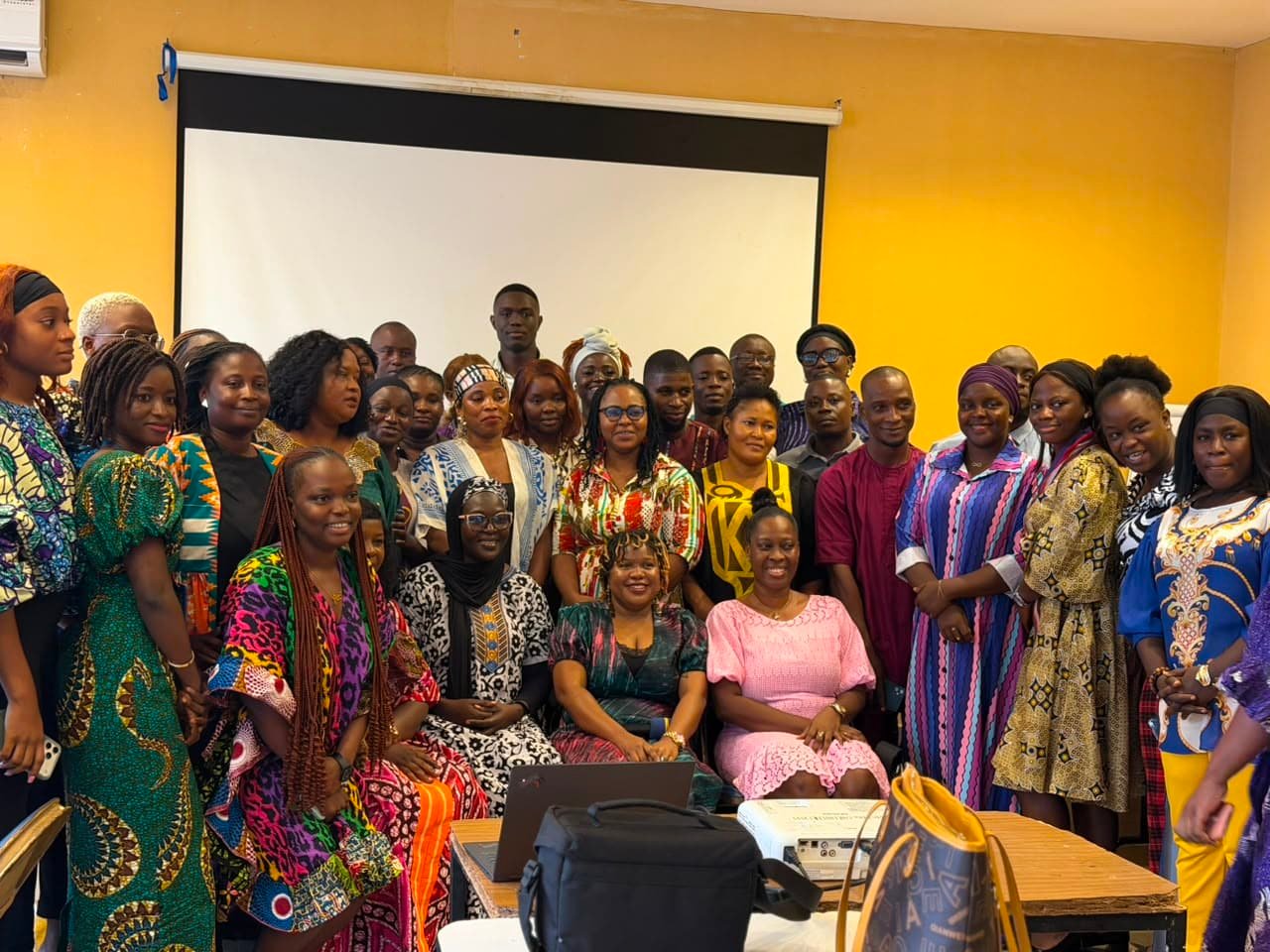
She made the statement during a Policy Dialogue Forum on Gender Justice in the Media, organized by Women in the Media Sierra Leone in partnership with Comic Relief. The event was held on Friday, 21 August 2026, at the Civil Service Training College in Freetown.
Francess Josephine Kafula explained that achieving gender justice requires more than increasing the number of women employed by media institutions. She said newsrooms must create conditions that allow female professionals to join the industry, build sustainable careers, assume leadership responsibilities and perform their duties without discrimination, harassment or intimidation.
According to her, evidence presented during the forum showed that the challenges confronting women journalists were neither theoretical nor isolated. She said unsafe working conditions could undermine the welfare of media practitioners and weaken the quality, credibility and independence of journalism.
Francess Josephine Kafula cited the Gender Equality and Women’s Empowerment Act of 2022 and the Employment Act of 2023 as important legal instruments already available to address discrimination and workplace abuse.
She, however, maintained that stronger enforcement is necessary to ensure that the protections contained in those laws translate into meaningful improvements for women working in newsrooms and other media spaces.
The Director welcomed the proposed Safeguarding Charter, describing it as a practical framework through which media institutions could turn legal obligations and public commitments into clear workplace procedures.
She said journalists experiencing abuse should know where and how to report their concerns, who would receive the complaints and what measures would protect their identities. Reporting systems, she added, must also shield complainants and witnesses from retaliation.
The proposed charter provides for confidential complaint mechanisms, transparent investigation procedures, protection against reprisals, referral services, digital-security measures, management accountability and regular monitoring of implementation.
Francess Josephine Kafula also drew attention to the growing dangers faced by women journalists online. She noted that media work now extends far beyond traditional newsrooms, exposing female professionals to harassment, threats and intimidation through social-media platforms and other digital channels.
Safeguarding policies, she argued, must therefore address risks in both physical and online working environments.
While supporting stronger protections, Francess Josephine Kafula cautioned against introducing measures that could interfere with editorial decision-making or restrict legitimate journalism. She maintained that safety and press freedom should reinforce each other rather than be treated as competing priorities.
“A safe journalist is better positioned to work independently, investigate issues of public interest and contribute to an informed society,” she said.
Discussions at the forum were informed by findings from a 2025 global study examining sexual harassment in the media. The research included responses from 298 participants in Sierra Leone and identified gender differences in experiences involving verbal, online and physical sexual harassment.
The briefing clarified that the results represented the experiences of those who participated in the study and should not be interpreted as a comprehensive assessment of every journalist or media institution in the country.
Under the emerging framework, the Government is expected to support the enforcement of existing gender and labour legislation, increase awareness of workplace rights, strengthen journalist safety and digital protections and encourage media organisations to comply with national employment standards.
It is also expected to work with regulators, professional associations, Civil Society Organisations and media owners to develop workable approaches for implementation.
Francess Josephine Kafula urged all parties to ensure that the dialogue produced concrete outcomes instead of ending with another statement of intent.
“We should not leave this dialogue with another declaration. We should leave with measurable commitments,” she said.
The forum concluded with participants presenting gender justice as a wider institutional reform issue involving workplace safety, equality, staff welfare, female representation, digital rights, accountability and media freedom.