

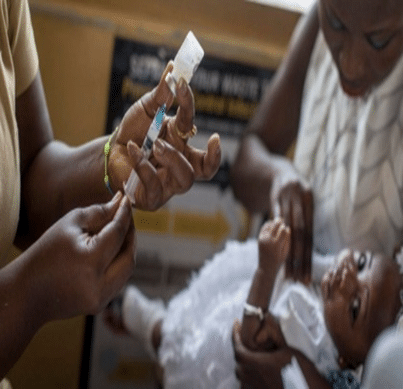
Sierra Leone’s drive to reach children who have never received routine vaccinations has recorded significant progress, with 7,117 of the targeted 9,006 zero-dose children located and vaccinated under the ongoing 300 Days Activism campaign.
The figure represents 79 percent of the national target at the halfway point of the campaign, demonstrating growing success in extending lifesaving immunization services to children in hard-to-reach and underserved communities across the country.
For many families in Sierra Leone, accessing routine vaccination services remains challenging. Some communities are located several kilometres from the nearest health facility, while others are scattered across difficult terrain that becomes even harder to access during the rainy season.
Some children may also have never been captured by the routine immunization system, making it necessary for health workers to actively identify, locate and vaccinate them.
Those children, commonly referred to as “zero-dose children,” are at the centre of the Ministry of Health’s 300 Days Activism campaign, which seeks to ensure that no eligible child is left without essential protection against vaccine-preventable diseases.
With 7,117 children already vaccinated, 1,889 zero-dose children remain to be reached during the second half of the campaign.
The Ministry of Health, with support from its partners, is intensifying efforts to locate the remaining children and ensure that every eligible child receives lifesaving vaccines.
Central to the campaign has been a shift beyond the traditional approach of waiting for parents and caregivers to bring their children to health facilities.
Community Health Workers, vaccinators, community leaders and other local structures are actively supporting efforts to identify children who may have been missed by routine immunization services.
Health facility records, community information and micro-planning data are also being used by outreach teams to track and trace zero-dose children, particularly in settlements where routine health services have historically struggled to reach eligible families.
Some districts have already exceeded their initial vaccination targets, highlighting the impact of intensified community outreach.
Falaba has vaccinated 464 more zero-dose children than originally projected, while Karene exceeded its target by 262 children and Western Area Rural surpassed its initial target by 141.
Health authorities say the figures demonstrate that outreach teams are identifying children who may previously have been missed or were living in communities not adequately captured during initial planning.
However, exceeding projected targets has also prompted closer examination of available data. Authorities say the figures could reflect previously unmapped settlements, population movements, children accessing vaccination services outside their original catchment areas or initial population estimates that were lower than the actual number of eligible children.
Beyond the vaccination figures, programme analysis estimates that the broader intervention has contributed to approximately 592 lives saved, including mothers and children.
For families and communities, however, the impact goes beyond statistics. Every child vaccinated represents another child with greater protection against potentially deadly but preventable diseases and another family benefiting from essential healthcare services.
The progress recorded during the first 150 days also underscores the importance of collaboration between communities, health workers, local leaders, the Ministry of Health and development partners.
Through active community engagement and targeted outreach, children who were previously invisible to the routine immunization system are increasingly being identified and protected.
With 79 percent of the national target already achieved, attention now turns to the remaining 1,889 zero-dose children.
The Ministry of Health and its partners are expected to intensify outreach, strengthen community mobilization and improve the use of health data during the remaining 150 days of the campaign. The effort complements Sierra Leone’s broader immunization and disease-prevention initiatives.
The objective remains clear: to find every eligible zero-dose child, provide essential vaccination and ensure that geographical location or difficulty accessing health facilities does not prevent children from receiving lifesaving protection. Similar preventive-health efforts include the planned hepatitis B birth-dose vaccination programme.