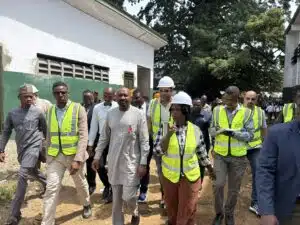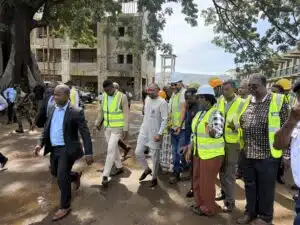

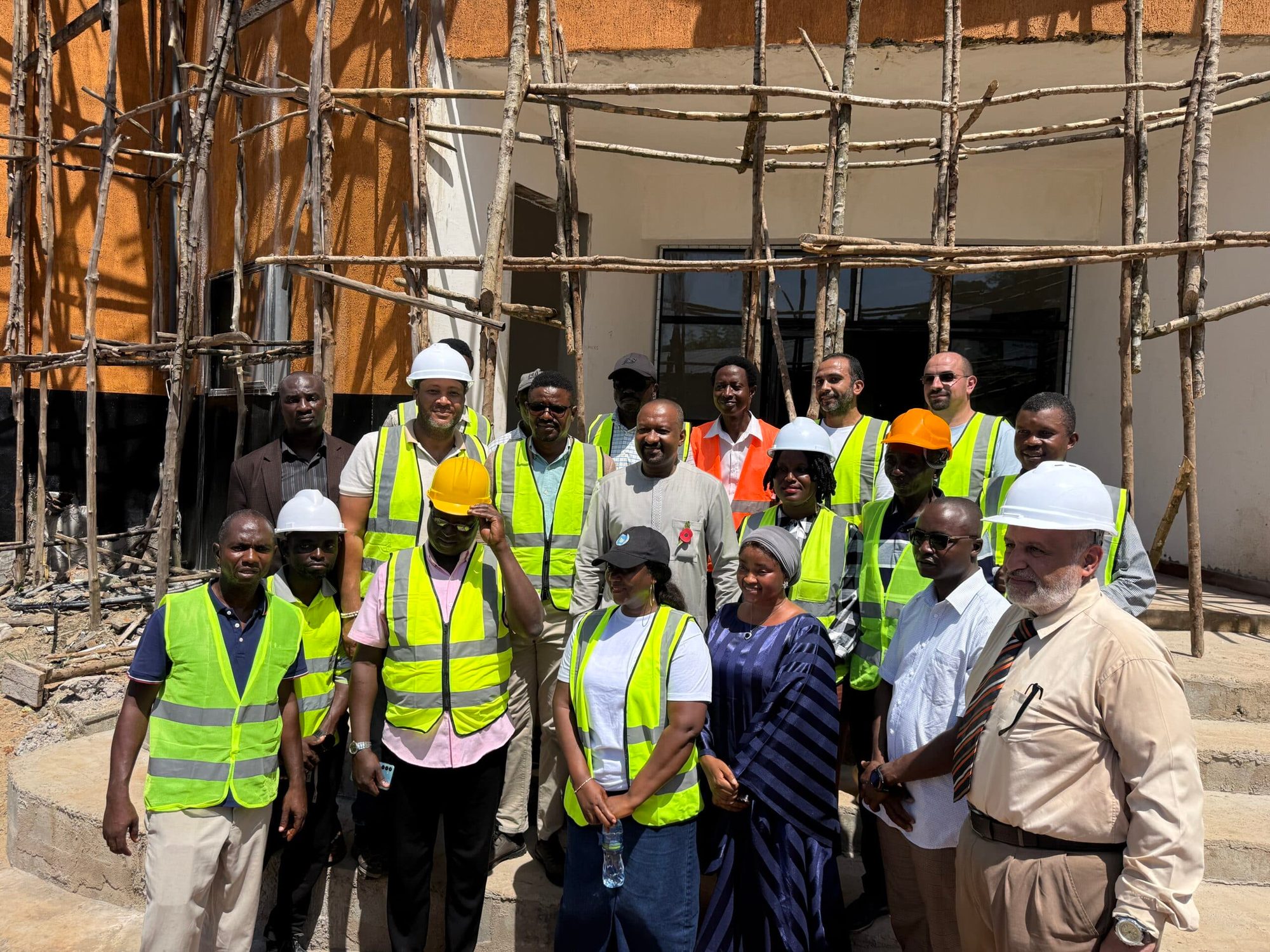
Vice President, Dr Mohamed Juldeh Jalloh, on Thursday, 29 October 2026, inspected ongoing construction and rehabilitation works at Prince of Wales School in Kingtom and Milton Margai Technical University’s Brookfields campus, calling for stronger collaboration among stakeholders to ensure the timely completion of the projects.
The inspection, which brought together representatives from the Ministry of Finance, the Ministry of Technical and Higher Education (MoTHE), the Ministry of Basic and Senior Secondary Education (MBSSE), the Education Sector Support Project (ESSP) team, civil society organizations and the media, formed part of President Dr Julius Maada Bio’s directive for the Vice President to monitor Government-supported infrastructure projects across the country.
The monitoring exercise focuses on construction quality, value for money, project delivery and the benefits of public investments to citizens.
The works are being implemented under the Sierra Leone Support of Education Project (SLSEP), a US$68 million initiative of the Government of Sierra Leone, through MoTHE and MBSSE, with funding from the Saudi Fund for Development (SFD), the OPEC Fund for International Development (OFID) and the Arab Bank for Economic Development in Africa (BADEA). The project aims to improve educational infrastructure and strengthen teaching, learning, administrative and residential facilities at selected educational institutions across Sierra Leone.
During the inspection, Vice President Mohamed Juldeh Jalloh assessed progress at the two institutions and emphasized the importance of cooperation among Government Ministries, contractors, consultants and project management teams to ensure that the facilities are completed within the agreed timelines and meet the required standards.
He acknowledged that infrastructure projects could face challenges relating to financing, administrative procedures, project management and contractual responsibilities, stressing that addressing such issues require a coordinated approach.
“We need to support the entire project team so that we can deliver these projects,” he said, calling on stakeholders to work together to overcome outstanding challenges and ensure the successful completion of the works.
At Prince of Wales School, the Vice President described the ongoing construction and rehabilitation works as a major infrastructure improvement for the institution.
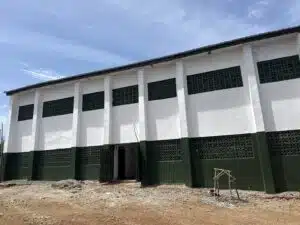
The project includes the construction of a modern complex comprising 24 classrooms, sanitary facilities, a perimeter fence to improve campus security and teachers’ quarters. It also involves the renovation of existing classrooms and administrative facilities, including offices for the principal and vice principal.
According to Dr Mohamed Juldeh Jalloh, the new classroom complex is expected to accommodate more than 1,000 pupils, providing additional learning space and improved facilities for teaching and learning.
He commended the quality of work observed during the inspection but acknowledged delays in the project’s delivery. He urged the relevant stakeholders to intensify their efforts to complete the remaining works without further unnecessary delays.
The Vice President also highlighted the importance of civil society organisations in monitoring public infrastructure projects, noting that independent assessments and comprehensive reports could help the Government evaluate progress, identify challenges and assess the impact of its investments.
At Milton Margai Technical University’s Brookfields campus, Dr Mohamed Juldeh Jalloh commended the university administration for its support and cooperation in the implementation of the project.
He particularly applauded the Dean of the campus, Mrs Aminata Bangura, for presenting a comprehensive report documenting the condition of the facilities before and after rehabilitation.
The report, he noted, provided useful information on the improvements made and demonstrated the importance of documenting infrastructure development to support monitoring and accountability.
Vice President said the inspection formed part of a broader programme to assess ongoing infrastructure projects across the country. He disclosed plans to visit additional institutions, including schools and teacher-training colleges outside Freetown, to assess progress and identify areas requiring Government intervention.
He explained that the findings from the inspections would enable the Government to engage relevant stakeholders, address outstanding challenges and determine the support needed to facilitate the completion and handover of the facilities.
The Vice President described the SLSEP as part of broader efforts to modernize educational infrastructure nationwide, emphasizing that improved facilities were essential to creating better learning environments and strengthening educational delivery.
He urged contractors and project management teams to remain committed to their responsibilities, assuring stakeholders that challenges affecting the completion of the projects would be examined and addressed.
Dr Mohamed Juldeh Jalloh also pledged to revisit the institutions to assess further progress and support efforts to ensure that the facilities are completed and handed over for use.
Meanwhile, civil society activist, Alphonso Manley, welcomed the progress made on the projects, particularly the improvements observed following the Vice President’s earlier monitoring visit.
Alphonso Manley called for sustained monitoring and adequate funding to ensure that the remaining works are completed. He said the Vice President’s previous visit had contributed to improvements and welcomed assurances that challenges affecting the projects would be addressed.
He expressed confidence in the commitment to finding practical solutions to the outstanding issues, while stressing the need for continued engagement among stakeholders.
Project managers also assured the Vice President of their commitment to completing the outstanding works within the agreed timelines.
The inspection also provided an opportunity to review outstanding works and identify challenges that could affect delivery. The lasting benefits of the investment will depend on completing the facilities to the required standards, equipping them adequately and maintaining them for sustained use.