

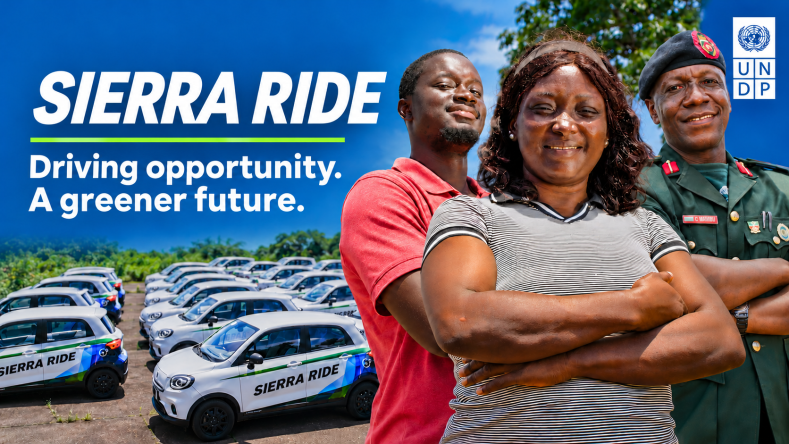
The Government of Sierra Leone, in partnership with the United Nations Development Programme (UNDP), is advancing efforts to modernize public transportation, promote environmental sustainability and create employment opportunities for young people through the Sierra Ride electric vehicle initiative.
The project, implemented in collaboration with the Ministry of Youth Affairs and the Armed Forces Technical Education Centre (AFTEC), seeks to introduce environmentally friendly transportation while equipping young Sierra Leoneans, particularly women, with practical skills to participate in the transport sector.
Initially supported by US$1 million in Government–UNDP co-financing in 2025, the initiative received an increased investment of US$1.5 million in 2026 to facilitate the acquisition of electric vehicles, development of charging infrastructure and implementation of supporting technologies.
The investment covers the design, production and shipment of 50 electric vehicles, installation of solar-powered charging stations, GPS tracking systems, development of a digital booking application and integration of mobile-money payment services.
Additionally, 100 prospective drivers are undergoing training at AFTEC in preparation for the initial rollout in Freetown.
One beneficiary, Yvonne Kamara, expressed appreciation for the opportunity, describing the training as an important step towards women’s economic empowerment.
“The Sierra Ride training has empowered us as women to pursue equal opportunities in the transport sector. Since I started training with Sierra Ride, I feel like my life has changed,” she stated.
Minister of Youth Affairs, Ibrahim Sannoh, explained that the initiative forms part of the Government’s broader commitment to establishing a modern, accessible and sustainable transportation system.
He noted that while motorcycles and tricycles remain widely used across Sierra Leone, Sierra Ride offers an opportunity to diversify transportation options while reducing environmental pollution.
According to Ibrahim Sannoh, the Government intends to expand the fleet from the initial 50 vehicles to 200 through a proposed green fund, subject to additional investment.
Another trainee, Patrick Kanneh, who experienced three years of unemployment, described the programme as a potential turning point in his life.
“This opportunity is a blessing for me. After three years of being unemployed, I finally have a chance to earn a living, support myself and build a better future,” he said.
Director of AFTEC, Colonel Charles Mambo, welcomed the initiative, emphasizing its environmental benefits and contribution to technological advancement.
He explained that electric vehicles produce zero tailpipe carbon emissions, making their introduction an important step towards reducing transport-related pollution and promoting cleaner urban mobility.
Beyond employment creation, Sierra Ride is expected to encourage investment in vehicle maintenance, charging infrastructure, digital transportation services and other emerging green-economy opportunities.
Although operations will initially concentrate on Freetown, the Government and UNDP envisage potential expansion into provincial areas as additional resources and partnerships become available.
The initiative demonstrates how Government financing, international development cooperation and technical training can support youth empowerment, sustainable economic development and Sierra Leone’s transition towards cleaner transportation.