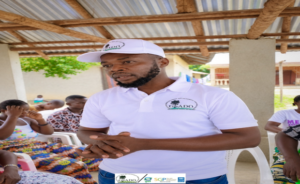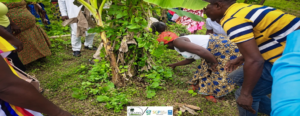

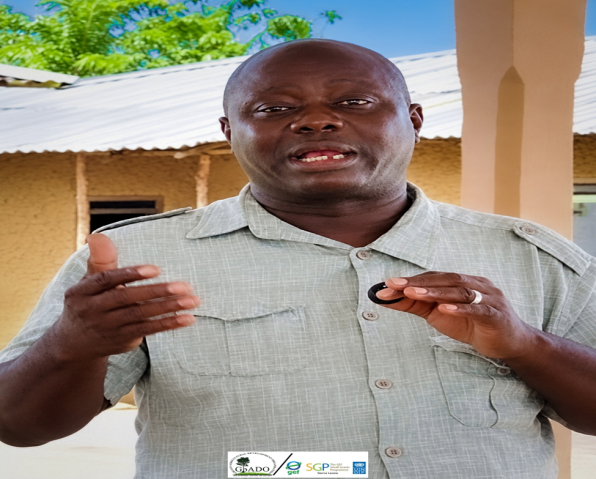
Gbujan Agricultural Development Organization (GbADO) has conducted a one-day practical training workshop for 60 farmers from Futa Pejeh and Gbongay villages in Pejeh Chiefdom, Pujehun District, to strengthen their knowledge and practical skills in cost-effective agricultural soil conservation methods.
The training, held on 4th November 2026, forms part of GbADO’s one-year agricultural and environmental sustainability project, supported by the Global Environment Facility Small Grants Programme (GEF SGP), at the United Nations Development Programme (UNDP).
The workshop was facilitated by Mr Foday Waine Fowai, who guided participants through various affordable and locally adaptable soil conservation techniques designed to minimise soil erosion, improve soil fertility, enhance agricultural productivity and promote sustainable farming practices.
Speaking during the opening session, the Project Manager, Mr Ayuba Koroma, explained the rationale behind the project, emphasising the importance of protecting agricultural land against soil degradation and erosion, particularly in farming communities that depend heavily on agriculture for their livelihoods.
He noted that soil is one of the most important resources for agricultural production, providing essential nutrients, retaining water and supporting healthy crop growth. However, poor farming practices, excessive soil disturbance, deforestation and uncontrolled surface runoff contribute significantly to soil degradation, resulting in declining soil fertility and reduced agricultural yields.
Mr Koroma further explained that the project was designed to equip farmers with practical knowledge and affordable techniques that could be implemented using locally available materials without placing additional financial burdens on them.
He encouraged participants to take full advantage of the training by applying the knowledge acquired on their farms and sharing the techniques with other farmers in their respective communities. He also highlighted the potential benefits of the training, including improved soil fertility, increased crop productivity, reduced production costs, better water management and strengthened household food security.
The Paramount Chief of Pejeh Chiefdom, PC Sheku Abdul Khadiru Manyaba Koroma, expressed satisfaction with the implementation of the project, noting that he was already aware of its objectives and importance to the chiefdom.
He commended GbADO for bringing practical agricultural knowledge and support to farmers in the communities and urged participants to take the training seriously, actively participate in the practical sessions and translate the knowledge gained into improved farming practices.
The Paramount Chief also expressed appreciation to the United Nations Development Programme (UNDP), through its GEF Small Grants Programme, for supporting the initiative, describing the intervention as an important contribution to sustainable agriculture, environmental protection and community development in Pejeh Chiefdom.
During the training, participants were introduced to several cost-effective soil conservation techniques, including mulching with locally available materials, cover cropping and green manuring, crop rotation and intercropping, minimum soil disturbance, contour farming, grass strips and vegetative barriers, stone lines, brush barriers, agroforestry and compost preparation.
The training also covered practical approaches to water management, including rainwater harvesting, safe drainage, runoff control and the protection of waterways. Participants learned how to identify early warning signs of soil erosion, assess the condition of their farmlands and select appropriate conservation methods based on soil type, slope, available resources and farming conditions.
A major highlight of the workshop was the practical demonstration of how to construct and use a simple A-frame level for identifying contour lines across sloping farmland. This technique enables farmers to establish planting rows and vegetative barriers along the natural contours of their land, thereby slowing surface runoff and reducing soil loss.
Participants also engaged in group exercises to diagnose common soil-related challenges affecting their farms, identify affordable conservation measures and develop simple farm action plans outlining the practices they intend to adopt.
The workshop concluded with key messages encouraging farmers to keep their soil covered, minimise unnecessary soil disturbance, manage surface water safely, combine appropriate conservation techniques and regularly maintain their conservation structures.
Through this one-year project, GbADO seeks to strengthen farmers’ capacity to adopt environmentally sustainable agricultural practices, improve soil health and contribute to food security and resilient rural livelihoods in the project communities.
The organisation reaffirmed its commitment to promoting sustainable agricultural development and environmental protection in line with its motto: “SAFE ENVIRONMENT, SAFE FOOD, SAFE BODY.”
The project is supported by the Global Environment Facility Small Grants Programme (GEF SGP), at UNDP.