

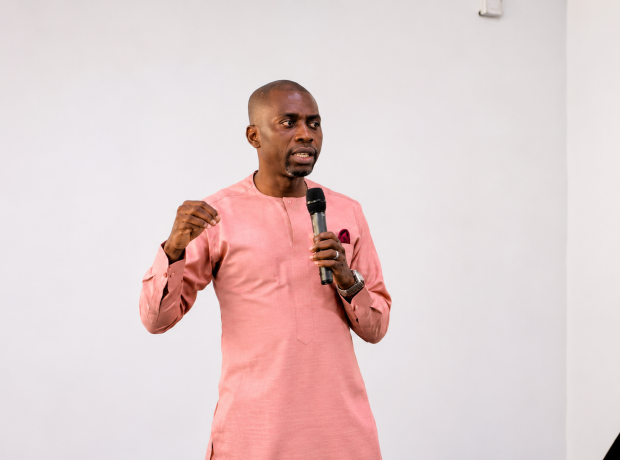
The Sierra Leone Public Transport Authority (SLPTA) has defended the procurement and operation of the country’s Waka Fine bus service, challenging several allegations raised by civil society activist Edmond Abu, Executive Director of the Native Consortium and Research Centre (NCRC), concerning the US$7.5 million investment.
Responding to the allegations, Deputy Director-General of SLPTA, Christian N. Ngombu Esq., said the procurement process followed an International Competitive Bidding (ICB) procedure, with inspections conducted at different stages in India before the buses were shipped to Sierra Leone.
He argued that claims questioning the procurement process and the buses’ status as brand-new vehicles should be assessed against the available procurement, manufacturing, inspection and delivery records.
According to Christian N. Ngombu, the procurement advertisement was published on August 30, 2021, with October 29, 2021, set as the deadline for bid submissions. Thirteen bidding documents were purchased, while nine bids were received.
The evaluation process was completed on January 25, 2022 and the contract was signed on July 12, 2022. He said the procurement was conducted through International Competitive Bidding and was subject to prior review.
Christian N. Ngombu explained that the bidding process was not restricted exclusively to vehicle manufacturers, arguing that an international competitive process allows eligible suppliers and authorized agents to participate, provided they meet the prescribed technical and financial requirements.
He maintained that the identity of a supplier as an agent or dealer does not, by itself, establish that the procurement was irregular or that the buses were not genuine products of the manufacturer.
Addressing questions about whether the buses were brand-new, Christian N. Ngombu said a pre-manufacturing inspection of the prototype was conducted at the Alwar factory in India on March 19, 2023.
He said representatives from the Ministry of Transport and Aviation, the Public Financial Management Unit (PFMU), the Sierra Leone Road Safety Authority (SLRSA) and the Sierra Leone Road Transport Corporation (SLRTC), as it was then known, participated in the inspection.
A second inspection was conducted at the same factory on September 12, 2023, after manufacturing and before shipment. Representatives of the relevant Government institutions, the bidder and the bidder’s banker reportedly participated.
According to the Deputy Director-General, the shipment was supported by a bill of lading dated September 30, 2023 and the buses arrived in Sierra Leone on November 14, 2023.
He further stated that a pre-delivery inspection report was completed on November 30, 2023, followed by formal acceptance of the fleet on December 5, 2023. Stakeholders subsequently conducted another post-delivery inspection on December 8 and 9, 2023.
Christian N. Ngombu said spare parts were delivered with the buses and that the Authority has manufacturer certification, individual chassis and engine numbers, and delivery inspection reports available for verification.
He also addressed the 2016 marking reportedly observed on the buses’ windshields, explaining that it represents the glass safety and quality standard rather than the year the buses were manufactured.
On the operational status of the fleet, Christian N. Ngombu provided figures that differ from the allegation that 11 buses are grounded.
He said 42 buses are currently available, with 36 deployed for daily operations and six kept on standby. According to him, the standby vehicles are intended to provide cover during scheduled emergencies, accommodate situations involving driver shortages and support driver training.
The Waka Fine service commenced operations in February 2024 and operates daily between 6:00 a.m. and 10:00 p.m.
The figures provided by SLPTA, challenged the suggestion that 11 buses are presently grounded. Christian N. Ngombu acknowledged that the operation has faced challenges, particularly in scheduling, driver availability, maintenance and traffic management.
He said the Ministry of Transport and Aviation has requested an operational audit of Metro Transport Company (MTC), with the Audit Service having responded to the request.
The Deputy Director-General also addressed concerns surrounding the fare collection system and the commission paid to the ticketing service provider.
He explained that the initial arrangement operated on a cost-recovery basis, under which MTC invoiced SLPTA at the end of each month. The initial fare collection contract did not provide for a fixed percentage, but was later terminated because it was considered unsustainable.
Christian N. Ngombu said the current fare collector initially received a 15 per cent commission, which has since been revised to 10 per cent. He added that the rate could be reduced to as low as three per cent, depending on the revenue generated.
The Authority also acknowledged weaknesses in the cashless ticketing arrangement, particularly the limited number of outlets available for passengers to top up their cards.
Christian N. Ngombu
admitted that cash payments have remained more common than card transactions, despite the introduction of the card system.
He said plans are underway to integrate the ticketing platform with mobile money services, including Afrimoney , Orange Money and Q Money, to make payments and card top-ups more accessible.
The Authority also intends to work with the fare collector to restore onboard cameras, point-of-sale (POS) devices and T-20 machines.
He described those measures as part of ongoing reforms, noting that the improvements would require time to become fully operational.
Christian N. Ngombu attributed some of the operational difficulties to traffic congestion and the increasing costs associated with running the buses.
He identified the return of commercial motorbike riders, poda-poda vehicles and kekes to the Waka Fine corridors as factors contributing to congestion.
He also cited street trading along Sani Abacha Street, the parking of trailers and heavy-duty vehicles between Upgun and Sarola, and mixed traffic use along Savage Street following the closure of the old railway line bridge.
According to him, those conditions have increased operating costs, reduced turnaround times and affected revenue generation.
He explained that Waka Fine buses are required to operate according to their schedules, whether they are full or partially occupied. This means that the operator continues to incur costs even when seats are not filled.
On staffing, he said two drivers are assigned to each bus daily, while MTC is responsible for statutory and employment-related obligations, including NASSIT contributions, PAYE, medical benefits and end-of-service benefits for drivers and other administrative staff. The company also provides uniforms for its drivers.
Christian N. Ngombu further identified rising fuel prices and maintenance expenses as major pressures on the service, noting that fuel accounts for more than 50 per cent of operational costs.
He argued that public transport systems in other countries, including Lagos and Senegal, also receive Government support, suggesting that subsidy arrangements are an important consideration in sustaining affordable public transport services.
Christian N. Ngombu said Waka Fine initially operated under a cost-recovery arrangement before a substantive contract between SLPTA and MTC was signed on November 21, 2024.
Under the arrangement, MTC is responsible for operating the buses, while SLPTA performs regulatory functions, including coordination, contract monitoring and fare or tariff regulation.
The Deputy Director-General identified driver behaviour, scheduling and coordination as additional operational challenges requiring attention.
He said the Ministry’s request for an operational audit of MTC was part of efforts to examine the company’s operations and address weaknesses in the service.
On the long-term sustainability of the project, Christian N. Ngombu said the Authority’s priorities include regular driver training, ensuring the availability of qualified drivers, maintaining the buses and addressing the high cost of fuel.
He also identified external factors such as traffic management, law enforcement, exclusivity of the designated bus corridors and public attitudes towards the transport reform as important to the service’s success.
He described the Waka Fine reform as being at an early stage, arguing that comparable public transport reforms in other countries took several years to develop and achieve operational stability.
Christian N. Ngombu welcomed civil society monitoring but urged activists and researchers to engage relevant institutions and conduct fact-finding before making public assertions about the project.