Chairman and Information Commissioner of the Right to Access Information Commission (RAIC) of Sierra Leone, Dr. Ibrahim Seaga Shaw, has underscored the need for sustained collective efforts to promote access to information and safeguard information integrity across West Africa and the Sahel.
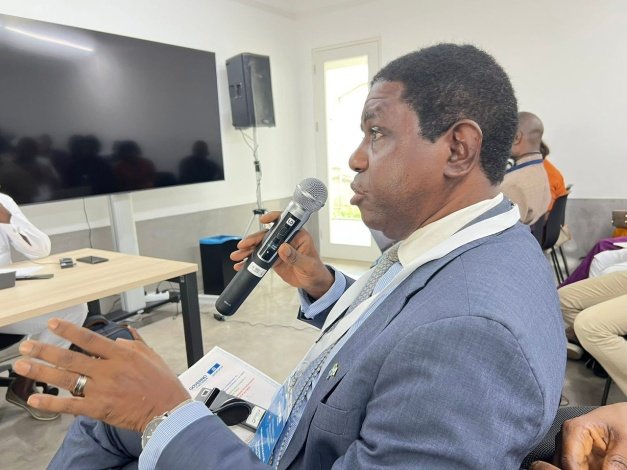
Speaking at the UNESCO Regional Conference on Information Integrity, held on September 8, 2025 in Praia, Cape Verde from September 3rd to 5th, Dr. Ibrahim Seaga Shaw emphasized that inclusive access to information and proactive disclosure are critical to combating disinformation and reinforcing public trust. He contributed to one of the conference’s high-level panels alongside experts from Nigeria, Ghana and Cape Verde.
Dr. Ibrahim Seaga Shaw highlighted Sierra Leone’s progress in establishing a robust legal foundation through the Right to Access Information Act 2013 and the 2022 Regulations, which empower RAIC as an autonomous body to enforce compliance. He noted that the Commission has authority to impose fines and issue enforcement orders, while also pointing out that ongoing legal reviews aim to strengthen enforcement mechanisms.
According to him, demand for information in Sierra Leone has grown significantly, with recorded requests rising from 13,016 in 2022 to 19,391 in 2023, before settling at 15,000 in 2024. He stressed that more than 90 percent of requests were successfully processed each year; an achievement that places Sierra Leone among leading countries globally on access to information.
While progress has been made, Dr. Ibrahim Seaga Shaw warned of serious challenges posed by rapid advances in digital technologies. He cited growing threats such as media illiteracy, deepfakes, AI-generated disinformation and the misuse of social media, all of which fuel misinformation, panic and conflict.
He argued that secrecy, delayed responses or outright inaccessibility of official information create fertile ground for fake news. “Where there is a vacuum, misinformation fills it,” he stated.
To counter those threats, Dr. Ibrahim Seaga Shaw proposed that Governments, oversight bodies, civil society and the media must work together to make public-interest data accessible, usable and impactful. He showcased Sierra Leone’s digital transition, where request, acknowledgment, response and complaint forms, once paper-based, are now fully digitized and integrated into RAIC’s website, making information accessible at the click of a button.
He also called for investment in robust, inclusive fact-checking platforms and the promotion of multilingual access, ensuring that citizens can request information in languages they are most comfortable with, including local dialects.
Highlighting Sierra Leone’s obligations, Dr. Ibrahim Seaga Shaw noted that public authorities are legally mandated to proactively disclose at least 22 classes of information. These include organograms, contracts, projects, minutes of meetings and employee directories. He stressed that proactive disclosure is crucial to dispelling fake news before it takes root.
“Authorities must make one of two choices either proactively disclose information or allow the public to create their own, which may not be true,” he remarked.
The conference concluded with the adoption of a policy framework and action plan to promote transparent and accountable information governance across West Africa and the Sahel. It also served as a precursor to the 17th International Conference of Information Commissioners, which Sierra Leone will host in Freetown in September 2026, under the theme Information Integrity in the Digital Age.
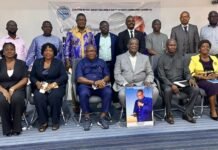
Other members of the Sierra Leone delegation included Emmanuel Abubakarr Turay, Acting Director of Government Information Services, and Millicent Kargbo, President of the Sierra Leone Association of Women in Journalism.