
Home Blog Page 2

SLAJ, Media Stakeholders Engage Attorney General on Proposed Stand-Alone Chapter on Press Freedom

SLAJ, Media Stakeholders Engage Attorney General

By Amin Kef (Ranger)

The Sierra Leone Association of Journalists (SLAJ), alongside key media and civil society stakeholders, on Thursday, 26th February 2026, engaged the Attorney General and Minister of Justice, Alpha Sesay Esq., and his Deputy, Saptieu Saccoh, in discussions centred on a proposed stand-alone constitutional chapter on Press Freedom and Freedom of Expression.

The meeting forms part of ongoing consultations under the national constitutional review process and follows an earlier engagement held in February 2025, during which SLAJ formally presented its proposal for what it envisions as Chapter 12 of the Constitution; a dedicated chapter to constitutionally guarantee freedom of expression, press freedom and access to information.

SLAJ has been advocating for a stand-alone constitutional chapter on media freedom since 2016, when it submitted a proposal to the Justice Cowan Constitutional Review Committee. Although the recommendation was not reflected in the subsequent Government White Paper, the Association has sustained advocacy efforts over the years.

Speaking on behalf of media stakeholders, SLAJ President Alhaji Manika Kamara expressed appreciation to the Attorney General for engaging journalists and civil society actors on critical national issues. He emphasized that Sierra Leoneans deserve a clear and explicit constitutional guarantee of freedom of expression and press freedom, particularly amid ongoing public debates surrounding the Constitutional Amendment Bill currently before Parliament.

He observed that the absence of detailed constitutional protections has, at times, contributed to an atmosphere where citizens feel apprehensive about expressing independent views on national matters for fear of political labelling or backlash. He further cited comparative examples such as Kenya, whose constitution contains detailed and enforceable provisions safeguarding fundamental rights and freedoms.

In his response, Attorney General, Alpha Sesay, described the engagement as constructive and reaffirmed the importance of the media in the constitutional review journey.

“Journalists have accompanied Sierra Leone’s constitutional review process and remain a crucial part of this national exercise,” he noted, adding that his office welcomed SLAJ’s detailed submission on a stand-alone chapter for media freedom.

He provided a historical overview of constitutional reform efforts, referencing the Lomé Peace Agreement and the Truth and Reconciliation Commission (TRC), both of which recommended constitutional reforms. He further highlighted past initiatives including the Peter Tucker Committee established under former President Ahmed Tejan Kabbah and the Justice Cowan Committee under former President Ernest Bai Koroma. Several of the Cowan Committee’s key recommendations were later accepted in a Government White Paper.

The Attorney General also explained that the aftermath of the 2023 general elections led to the formation of a Tripartite Committee comprising representatives of the APC, SLPP and international partners. The Committee worked for approximately six months and produced 80 agreed recommendations, many of which are reflected in the current Constitutional Amendment Bill before Parliament.

Clarifying concerns surrounding the Amendment Bill, particularly provisions relating to electoral reforms, the Attorney General stated that the Bill largely mirrors the Tripartite Committee’s recommendations, with only limited Government modifications made within its legal mandate.

He acknowledged concerns raised by women’s groups regarding provisions such as the financial threshold for independent candidates, noting that such issues are being carefully considered. He also recognized a longstanding trust deficit between successive Governments and citizens, describing it as a national challenge that reform efforts seek to address.

On the broader reform agenda, he disclosed that the constitutional review process is expected to continue until the end of 2026. Proposed reforms include revising Chapter III of the 1991 Constitution into a more robust and justiciable Bill of Rights, alongside new provisions addressing citizenship, local Government, lands and environmental governance.

Regarding the media stakeholders’ proposal, the Attorney General expressed optimism about its consideration. He stressed that the constitutional review process cannot succeed without active media participation and assured the delegation that, if adopted, the Law Officers’ Department would work closely with SLAJ to carefully draft provisions to ensure clarity and avoid ambiguity.

He further clarified that the current Amendment Bill before Parliament focuses primarily on electoral reforms, given that the next general elections are just over two years away. Additional constitutional amendments are expected to follow after Parliament concludes deliberations on the present Bill.

The SLAJ delegation included members of the Association’s Executive, former SLAJ Presidents Ahmed Sahid Nasralla (ex officio) and Umaru Fofana, Tanu Jalloh, Presidents of Women in the Media Sierra Leone (WIMSAL), the Sierra Leone Reporters Union (SLRU) and the Sports Writers Association of Sierra Leone (SWASAL). Also present were the Chairman of the Guild of Editors, the Executive Secretary of the Independent Media Commission (IMC), representatives of the Independent Radio Network (IRN), the Sierra Leone Broadcasters Association (SiLBA) and civil society actors including Abdul M. Fatoma of the Campaign for Human Rights and Development International (CHRDI).

The engagement concluded with a renewed commitment from media stakeholders to remain constructively involved in the constitutional reform process and to advocate for firm and explicit constitutional guarantees protecting freedom of expression and press freedom in Sierra Leone’s supreme law.

ACTB Bank Launches Ramadan–Easter Promotion to Reward Customers

ACTB Bank Launches Ramadan–Easter Promotion

By Foday Moriba Conteh 

A Call To Business Bank (ACTB Bank) has unveiled its Ramadan–Easter Promotion, a nationwide campaign designed to reward customers who receive international money transfers through its branches across Sierra Leone.

The promotion, which commenced on Monday, 2nd March 2026, will run until the end of April 2026. According to the bank’s Head of the International Money Remittance Department, Ophelia Hamilton, the initiative targets customers who receive funds from abroad via ACTB Bank’s remittance platforms.

Speaking at the launch, Madam Ophelia Hamilton disclosed that customers collecting transfers through services such as MoneyGram, Ria, Western Union, WorldRemit and Trans-Fast, among others, will automatically qualify for various gift items upon receiving their funds at any ACTB branch nationwide.

She explained that the promotion has been structured into three categories based on the amount received. Customers who collect between Le 5,000 and Le 20,000 fall within the first tier, those receiving between Le 20,000 and Le 50,000 qualify for the second tier, while customers who receive Le 50,000 and above will be placed in the top category.

Winners, she noted, will receive assorted food items corresponding to their respective categories.

ACTB Bank’s Marketing Manager, Rockslyn Alwyn Findlay, described the initiative as part of the institution’s ongoing commitment to appreciating its customers. He emphasized that the promotion is open to both account holders and non-account holders, including staff members and assured the public of a transparent process.

“This is not the first time we are rewarding our customers,” Rockslyn Alwyn Findlay stated. “We will continue to do so to the best of our ability because we care about our customers.”

ACTB Bank, which started as a microcredit institution, has previously rolled out similar promotions, including one that offered a vehicle valued at $13,000 as a grand prize to customers.

Lands Ministry Concludes Probe into Bathurst/Gloucester Land Dispute, Announces Public Disclosure Meeting

Minister of Lands, Housing and Country Planning, Dr Turad Senesie

By Amin Kef (Ranger)

The Ministry of Lands, Housing and Country Planning has concluded a critical investigation into a disputed parcel of land situated at Bathurst/Gloucester, according to an official public notice issued by the Ministry.

The dispute, which involves multiple individuals and entities claiming ownership of the property, prompted the Ministry to undertake a comprehensive review to determine the authenticity and legal standing of the competing claims.

Those listed as claimants to the property include Umaru Napoleon Koroma; Development Initiative (C/O Hawa Saffa); Richard P.G. Robert; Bademba Barrie; Alpha Koroma; Councillor Mendy; Councillor Zacharia; Ekundice Thomas; the Headman of Gloucester; the Headman of Bathurst; and First Tricon.

In the notice, the Ministry disclosed that the investigation process involved the receipt and review of documents submitted by the various claimants. It also included multiple physical field visits to the site and the use of drone technology to capture aerial views of the land in question.

Officials explained that the primary objective of the investigation was to authenticate the status of the disputed land, verify the legitimacy of the submitted documentation and confirm the physical boundaries of the property.

The Ministry further stated that the findings and recommendations arising from the investigation have been formally presented to the Office of the President.

In line with its commitment to transparency and public accountability, the Ministry has scheduled a public disclosure meeting to present the findings.

The meeting is set for Thursday, March 5, 2026, at 11:00 a.m. at the Conference Room of the Ministry of Lands, Housing and Country Planning.

All interested parties, including the named claimants and members of the general public have been invited to attend the session. The Ministry has requested that attendees arrive on time to ensure the smooth conduct of the proceedings.

The move signals the Government’s continued efforts to address land disputes through structured investigations, institutional oversight and open public engagement.

President Bio Swears in New Chief Electoral Commissioner, Reaffirms Commitment to Electoral Independence

President Julius Maada Bio shaking hands with the newly appointed Chief Electoral Commissioner and Chairman of the Electoral Commission for Sierra Leone (ECSL), Mr. Edmond Sylvester Alpha

His Excellency President Dr. Julius Maada Bio has presided over the swearing-in ceremony of the newly appointed Chief Electoral Commissioner and Chairman of the Electoral Commission for Sierra Leone (ECSL), Mr. Edmond Sylvester Alpha, following his approval by Parliament.

The ceremony, held on Tuesday March 3, 2026 at State House in Freetown, marks a significant moment in the country’s democratic governance, as the new Commissioner formally assumes constitutional responsibility for overseeing the nation’s electoral processes.

Declaring the purpose of the ceremony, Secretary to the President, Baba Brima Fortune, informed the gathering that in accordance with Section 32(3) of the 1991 Constitution of Sierra Leone, President Bio undertook consultations with the leadership of all registered political parties prior to making the appointment.

He disclosed that on 10 February 2026, fourteen (14) registered political parties were formally notified of the intended appointment, out of which twelve (12) submitted letters conveying their approval of Mr. Alpha’s nomination.

Mr. Fortune further confirmed that the nominee subsequently underwent parliamentary scrutiny and debate and was duly approved by Parliament, thereby fulfilling the constitutional requirements for his appointment and swearing-in.

After taking the oath of office to faithfully discharge his duties and uphold the Constitution, Mr. Alpha expressed gratitude to President Bio for the confidence reposed in him. He described his appointment as “a sacred contract with the people of Sierra Leone” and pledged to execute his mandate with independence, transparency, integrity, and inclusiveness.

“Our democracy thrives on the belief that every voice matters and every vote counts,” Mr. Alpha stated. He assured citizens, political parties, and development partners that his stewardship of the ECSL would be firmly guided by the Constitution and the legal frameworks governing elections in Sierra Leone.

He further committed to maintaining an open-door policy and fostering constructive engagement with political stakeholders, civil society organisations, and other partners to strengthen public confidence in the country’s electoral system.

In his congratulatory remarks, President Bio emphasized that the appointment was carried out strictly within the bounds of his constitutional authority. He noted that, unlike certain experiences he observed while serving in opposition, he ensured full compliance with the consultative provisions outlined in the Constitution.

The President described the office of the Chief Electoral Commissioner as one bearing immense national responsibility, underscoring the central role of the ECSL in safeguarding democracy and ensuring credible, transparent, and peaceful elections.

“This is not a mere appointment; it is a great responsibility,” President Bio stated, urging the new Chairman and Commissioners to serve with humility, patriotism, and unwavering dedication to Sierra Leone’s democratic ideals.

He reaffirmed his administration’s commitment to protecting the independence of the ECSL, stressing that strong institutions remain the bedrock of sustainable democracy and good governance.

Reflecting on broader democratic reforms undertaken during his tenure, President Bio highlighted key legislative milestones, including the repeal of Part Five of the Public Order Act of 1965 and the abolition of the death penalty. He reiterated that such reforms demonstrate his government’s resolve to deepen democratic governance and expand civil liberties.

The President concluded by calling for sustained national dialogue among political actors and citizens alike, noting that inclusive engagement and respect for constitutional principles are essential for consolidating peace, unity, and democratic progress in Sierra Leone.

The swearing-in ceremony was attended by senior government officials, Members of Parliament, representatives of political parties, members of the diplomatic corps, and other distinguished guests.

Foreign Minister Credits Vice President for Securing Release of 16 Detained Soldiers

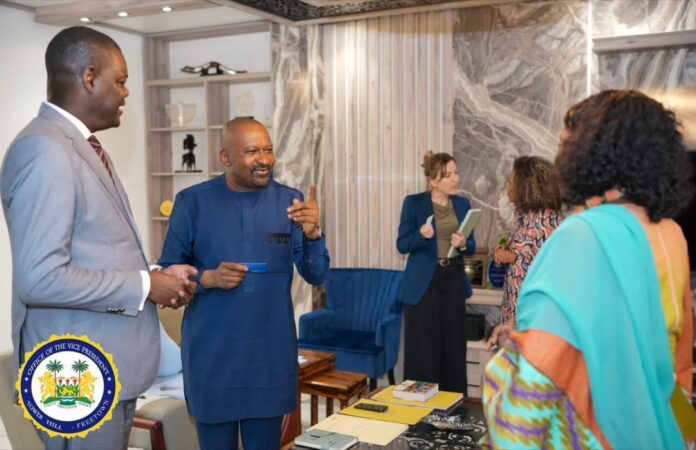
Vice President, Dr. Mohamed Juldeh Jalloh meets released security personnel from Guinean custody

By Amin Kef (Ranger)

Minister of Foreign Affairs and International Cooperation, Alhaji Timothy Musa Kabba, has on Friday February 27, 2026.credited Vice President Mohamed Juldeh Jalloh for what he described as a decisive diplomatic intervention that secured the release of 16 Sierra Leonean security personnel detained in Guinea amid recent border tensions.

The officers were arrested on 22 February 2026 in the Koudaya district of Guinea’s Faranah Region following disagreements over the long-disputed Sierra Leone–Guinea boundary. Guinean authorities alleged that the troops had crossed into their territory. However, the Government of Sierra Leone maintained that the personnel were operating within Kalieyereh in Falaba District, where they were engaged in the construction of a border post when Guinean forces reportedly crossed the frontier and detained them.

The incident revived sensitivities surrounding a decades-old boundary dispute rooted in colonial-era demarcations. Despite the heightened tension, the Government of Sierra Leone opted for diplomatic engagement rather than military escalation.

At the time of the incident, Vice President Juldeh Jalloh was acting as Commander-in-Chief in the absence of President Julius Maada Bio, who is currently serving as Chairman of the ECOWAS Authority of Heads of State and Government. The Vice President swiftly constituted and mandated a high-level delegation to travel to Conakry to engage Guinean authorities on the matter.

Minister Timothy Kabba led the delegation and held discussions with Guinean Prime Minister, Amadou Oury Bah. According to official sources, the talks were described as firm, candid and constructive, ultimately leading to the safe release and handover of the detained personnel on Friday, 27 February 2026.

Speaking at a dinner reception hosted at the Vice President’s Lodge in Freetown to welcome the returning officers, Minister Timothy Kabba commended the Vice President’s leadership and strategic direction.

“When the incident occurred, you demonstrated remarkable courage and clarity of purpose,” the Minister said. “Your instruction and guidance shaped our engagement in Conakry and contributed directly to this successful outcome.”

The 16 servicemen and women were received with dignity upon their return. Led by their commanding officer, they marched into the Lodge premises in full military uniform, maintaining discipline and composure. Government officials confirmed that all personnel were in stable condition.

In his remarks, Vice President Dr. Mohamed Juldeh Jalloh emphasized the longstanding historical, cultural and familial ties between Sierra Leone and Guinea, noting that both nations share deep bonds that transcend borders.

“Guinea and Sierra Leone are two countries but one people,” he stated, underscoring the importance of dialogue, restraint and mutual respect in resolving cross-border misunderstandings.

Minister of Information and Civic Education, Chernor Bah, who attended the reception, described the officers’ return as a moment of national relief and unity. He noted that the Vice President extended a gesture of appreciation by inviting the officers to join him for their first dinner back home, symbolizing solidarity and recognition of their service.

Officials indicated that beyond securing the release of the personnel, the diplomatic engagement may provide renewed momentum for addressing the broader border demarcation concerns between the two neighbouring countries through structured bilateral dialogue.

In a related development, Vice President Juldeh Jalloh on Thursday received a courtesy call from the ECOWAS Committee of Chiefs of Defence Staff in Freetown during their 44th Ordinary Meeting. Discussions focused on evolving defence and security challenges confronting West Africa. During the engagement, the Vice President proposed the establishment of a Regional Defence Academy aimed at strengthening professional military training, cooperation and trust among ECOWAS member states.

On behalf of President Julius Maada Bio, the Vice President expressed appreciation to the regional defence chiefs for their continued commitment to safeguarding democracy, peace and stability across the sub-region.

The successful return of the 16 security personnel has been widely described by Government officials as a testament to Sierra Leone’s commitment to diplomacy, regional cooperation and peaceful conflict resolution, reinforcing the country’s preference for negotiation over confrontation in addressing sensitive cross-border issues.

Rev. Dr. Fornah Concludes 10 Years at BCSL, Leaves 56 Churches, 80 Fellowships and 3rd-Largest Mission Schools

Rev. Dr. Fornah Concludes 10 Years at BCSL

By Foday Moriba Conteh

Rev. Dr. Joseph S. Fornah officially concluded his ten-year tenure as Executive President of the Baptist Convention Sierra Leone (BCSL) during the 52nd Annual Session, held from 26th February to 1st March 2026. The four-day convention, themed: “Serving God Faithfully with the Spirit of Grace,” culminated in a thanksgiving service at the Rev. Dr. Joseph S. Fornah Multi-Purpose Building Conference Hall in Lunsar.

In his farewell address, Rev. Dr. Joseph S. Fornah expressed gratitude to God, the Convention’s leadership, clergy, partners and delegates for their support throughout his decade-long leadership. He described the occasion as particularly meaningful, reflecting on the spiritual, organizational and infrastructural progress achieved under his administration.

He also announced the passing of Rev. Mrs. Christian Doehring’s husband, a missionary at the Evangelical College of Theology (TECT), extending condolences and noting that a memorial service would be held at TECT prior to the repatriation of the remains.

Rev. Dr. Joseph S. Fornah highlighted several accomplishments during his tenure:

  • Refurbishment of the BCSL national office in Freetown.
  • Acquisition and fencing of 21.7 acres of land in Lunsar for the BCSL Conference Centre.
  • Restructuring of the Baptist Eye Hospital (BEHL), enhancing its status as a leading eye care facility.
  • Training of two ophthalmologists, two cataract surgeons and additional medical personnel.
  • Awarding scholarships to over 30 teachers and providing Master’s scholarships to pastors.
  • Construction and rehabilitation of schools and churches across Bo, Kenema, Kono and other districts.
  • Documentation of key Convention properties and rebuilding of the Kingtom compound.
  • Establishment of eight international partnerships, including with the Hungarian Baptist Union and Christian Blind Mission (CBM).
  • Expansion of the Convention to 56 churches and over 80 fellowships nationwide.
  • Growth of the BCSL education system to 15 secondary schools, 51 primary schools and three TVET institutions, ranking it as the third-largest mission-owned school system in Sierra Leone.
  • Strengthening financial sustainability with net assets exceeding Le 63million.

In the final year of his leadership, he noted progress including the installation of an 11KW solar system at the Conference Centre, completion of a modern multipurpose building, monthly support for 20 rural pastors via the Hungarian Baptist Union, training of 56 church planters with the Baptist Global Resource Centre and completion of two Primary Health Centres in Karene and Mongoh under CBM support. He also highlighted BCSL representation at international conferences in Australia, France and South Africa, and humanitarian interventions in over twelve flood- and fire-affected communities.

Rev. Dr. Joseph S. Fornah concluded by urging the incoming leadership to review the Convention’s Strategic Plan and Constitution and to strengthen governance through comprehensive ministerial and church policies. “I have given my best, my energy, my mind, my resources, my strength and I am grateful to witness extraordinary progress over these ten years,” he said, calling for unity, integrity and continued commitment to the Great Commission.

Rev. Dr. Professor Momolu Armstrong Massaquoi, President of the Liberia Baptist Theological Seminary, delivered the Bible exposition on the theme “Serving God Faithfully with the Spirit of Grace.” Drawing from 1 Corinthians 15:58, he emphasized steadfastness, grace, and unity in Christian service.

“The people of grace are those who have encountered the Lord and been transformed by His saving power,” Rev. Dr. Massaquoi explained, stressing that grace unites believers into a spiritual family. He cautioned that spiritual gifts alone do not equate to true spirituality, noting that moral integrity and the fruit of the Spirit, love, humility and faithfulness, are essential for authentic Christian service.

He further elaborated on the power of grace, encouraging delegates to remain steadfast and unwavering in ministry and to go “overboard” in dedication, reflecting the selfless love exemplified by Christ. His message emphasized perseverance, resilience and courage to act according to God’s calling, even when it requires stepping beyond comfort zones.

Paramount Chief, Bai Koblo Queen II, of Marampa Chiefdom praised BCSL for its contributions to nation-building, education and social harmony. He highlighted the Church’s role in healing, guidance and community development, commending its investments in schools, clinics and moral education, which have fostered responsible citizens and peaceful communities.

Rev. Hendry A. Samuels, President of the Council of Churches Sierra Leone, reflected on the 52-year legacy of BCSL, noting its steadfastness amid challenges. He encouraged delegates to balance local church autonomy with collective collaboration and to exercise leadership with grace, humility and love.

Rev. Dr. Warren Fornah, Principal of TECT, commended BCSL for supporting theological education and church development, noting that the institution now hosts over 400 students and is expanding its infrastructure. He stressed that Christian service entails humility, love, unity and selfless sacrifice, calling for avoidance of rivalry, jealousy and suspicion.

Bishop Benjamin B. Bangura, General Superintendent of the National Pentecostal Mission Sierra Leone & Diaspora, praised the Convention’s visible growth and infrastructural development. He underscored faithful leadership, total commitment to God’s vision and spiritual devotion as foundations for sustainable success.

Bishop Magnus Bendu of the Counters of Huntingdon Mission echoed the call for unity, loyalty and forgiveness, encouraging members to support leadership transitions and prioritize reconciliation over suspicion.

Apostle Dr. Abraham Felix Turay of the Evangelical Fellowship of Sierra Leone urged delegates to serve with compassion, humility and unity, highlighting perseverance and dedication in ministry.

Gifty Florence Massaquoi, Executive Director of the Christian Health Association Sierra Leone (CHASL), recognized BCSL’s contributions to health initiatives, including cataract surgeries and community outreach, noting that their impact extends beyond Sierra Leone. She commended the Convention’s support, meticulous planning and alignment with CHASL’s mission.

The 52nd Annual Baptist Convention Sierra Leone brought together pastors, church leaders, delegates and international partners, reaffirming the Convention’s commitment to faithful service, unity and spiritual excellence. The event celebrated the legacy of outgoing President Rev. Dr. Joseph S. Fornah while emphasizing the enduring importance of grace, perseverance and collaborative leadership for the growth of BCSL and its mission across Sierra Leone.

AFRISID, Caritas Commission Solar-Powered Water Facility in Grafton

President and Legal Representative of AFRICSID, Simon Kabba Koroma, cutting ribbon to commission the newly-built Solar-Powered Water Facility in Grafton

By Ibrahim Sesay 

Africa Cooperation Solidarity International Development (AFRISID) in partnership with Caritas Freetown has, on Saturday February 28, commissioned a modern solar-powered water well or facility in Grafton geared towards providing residents safe and reliable drinking water.

The project, titled: “A House of Healing and Growth: Water as a Common Good,” was financed by the Waldensian Church through its “Otto per Mille” (Eight per Thousand) initiative and led by AFRICSID in collaboration with local partners.

The facility consists of a modern borehole water tower with a submersible pump and powered by a fully sustainable solar energy system. It is expected to provide clean, reliable and accessible water to the Grafton community.

Speaking at the commissioning ceremony, Simon Kabba Koroma, President and Legal Representative of AFRICSID, said the initiative was inspired by years of witnessing water challenges in the community.

Simon Kabba Koroma said his engagement with Grafton began in 2001 shortly after the civil war, when he volunteered with War Widows for Christ and God’s Will Children Orphanage Home. During a visit in 2012, after studying in Italy, he initially intended to construct a building for widows but changed plans after observing residents walking long distances to fetch unsafe drinking water.

“When I went back to Italy, I started to put aside small savings geared towards providing safe drinking water,” he said, adding that friends later supported the effort. In 2023, the borehole project was approved and drilled. However, after seeing pregnant women and young mothers struggling with the manual pump, he sought further funding to upgrade the system to a solar-powered facility.

Simon Kabba Koroma stressed that development should not be left to Government alone. “We cannot always rely on Government. We have to play our part,” he said, urging the community to put mechanisms in place to ensure the project’s sustainability.

Rev. Fr. Peter Konteh, Executive Director of Caritas Freetown, described water as “the essence of life” and a foundation for human dignity. He noted that access to safe and reliable water remains a daily challenge for many families across Sierra Leone and the wider African continent.

Citing recent statistics, he said over 60 percent of rural households in Sierra Leone lack access to safely managed drinking water services, with many communities depending on contaminated streams and unprotected wells. Across Africa, he added, more than 400 million people still lack access to clean water close to their homes.

“Without water, there is no health, no education, no economy; only hardship,” he said, calling on Government, civil society, faith-based organisations and development partners to invest in sustainable water infrastructure and promote water conservation and hygiene practices.

Speaking on behalf of the headman and councillor, Mohamed S. Koroma said the community had faced water shortages for years and expressed appreciation to the project partners.

“For a long time, our children have been struggling, walking long distances in search of water,” he said, assuring benefactors that the community would develop rules and regulations to protect the facility. He described sustainability as the most important aspect of the project.

In recognition of Simon Koroma’s contribution, he announced that the street where the facility is located would be renamed “Simon Street.”

Margaret Tucker, representing War Widows for Christ and God’s Will Children Orphanage, commended Simon Kabba Koroma’s long-standing commitment to community service and urged residents to safeguard the facility to ensure it benefits future generations.

The facility is expected to greatly improve access to potable water in Grafton and contribute to better health and social development in the community.

UNDP, Japan Launch $486,600 Peace and Trade Initiatives to Boost Stability in Kailahun and Empower SMEs

UNDP, Japan Launch $486,600 Peace and Trade Initiatives

By Amin Kef (Ranger)

United Nations Development Programme, in partnership with the Government of Japan and the Government of Sierra Leone, has officially launched two strategic initiatives valued at a combined total of USD 486,600 aimed at strengthening peace, human security and economic development in Kailahun District.

The launch, held on 26 February 2026 in Freetown, marks another significant milestone in the longstanding collaboration between UNDP and Japan in supporting Sierra Leone’s national development priorities, particularly in vulnerable border communities and within the Small and Medium-Sized Enterprise (SME) sector.

The first initiative, titled: “Strengthening Peace, Human Security and Resilience in Border Communities Affected by the Situation in Yenga in Kailahun District, Sierra Leone,” is valued at USD 220,000 and will run for 12 months.

The project targets communities in Kissi Teng Chiefdom, an area that has faced multidimensional socio-economic and security challenges linked to the situation in Yenga. Those pressures have impacted livelihoods, social cohesion and access to essential services.

Under the initiative, a solar-powered community-based border post will be rehabilitated, while joint patrol teams will be equipped with motorcycles and two-way radios to enhance coordination and security. The project will also strengthen community-based peace and security structures and deliver market-driven vocational and technical skills training for youth and women, complemented by financial literacy support.

Speaking at the launch, Japan’s Ambassador to Sierra Leone, H.E.  Hiroshi Yoshimoto, described the projects as a concrete expression of Japan’s commitment to peace, stability and economic transformation in Sierra Leone.

“Today’s launch reflects our shared vision translated into action, strengthening peace in border communities while deepening business collaboration and economic ties between Japan and Sierra Leone. Japan remains committed to supporting sustainable peace, resilience and inclusive growth,” he stated.

UNDP Resident Representative Fredrick Ampiah emphasized the strategic alignment of the initiatives with Sierra Leone’s national development priorities, noting that peacebuilding and economic opportunity must advance together.

“These initiatives demonstrate how empowering SMEs, expanding trade and strengthening stability in vulnerable communities are mutually reinforcing goals,” he said.

The second initiative, “Building Trade Bridges: Strengthening SMEs–Japan Business Partnerships for Sustainable Growth in Sierra Leone,” is valued at USD 266,666. It aims to directly benefit 500 youth and women and indirectly support an additional 2,500 individuals through strengthened SME operations.

The project will improve local and global competitiveness through technical assistance, export-readiness training and the establishment of a branding and packaging facility at the Timbuktoo Unipod Innovation Space. The facility is expected to enhance product quality, ensure compliance with international standards and improve marketability for Sierra Leonean products targeting Japanese markets.

Executive Secretary of the Independent Commission for Peace and National Cohesion, Hawa Samai, underscored the link between security and economic empowerment.

“When communities experience tangible benefits of peace, jobs, livelihoods and dignity, they become less susceptible to division and conflict. These interventions are both timely and transformative,” she noted.

Deputy Minister of Internal Affairs, David Fortune , highlighted the importance of strengthening local security structures, saying the initiative empowers residents to actively contribute to maintaining peace and stability in border communities.

Meanwhile, Acting Director for Export Promotion and Regional Integration at the Ministry of Trade and Industry, Mark Tamba Nyuma, reaffirmed that SMEs remain the backbone of Sierra Leone’s economy and that the trade initiative will support economic transformation while consolidating peace gains.

Representing the Kailahun District Council, Chairman Sahr Ahmed Kaikonjor Lamin pledged the Council’s full commitment to ensuring community participation and effective delivery of the projects.

Together, the two initiatives reaffirm the strong and enduring partnership between UNDP and the Government of Japan in advancing stability, resilience and inclusive development across Sierra Leone.

Since 1965, UNDP has partnered with the Government and people of Sierra Leone to reduce poverty, strengthen democratic governance, build climate resilience and promote inclusive economic growth. Guided by its current Country Programme Document, the agency continues to support national priorities aimed at advancing sustainable development and ensuring that no one is left behind.

$124M Lungi Hotel and Presidential Villa Project Secures Parliamentary Approval

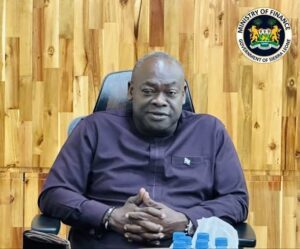
Minister of Finance, Sheku Ahmed Fantamadi Bangura

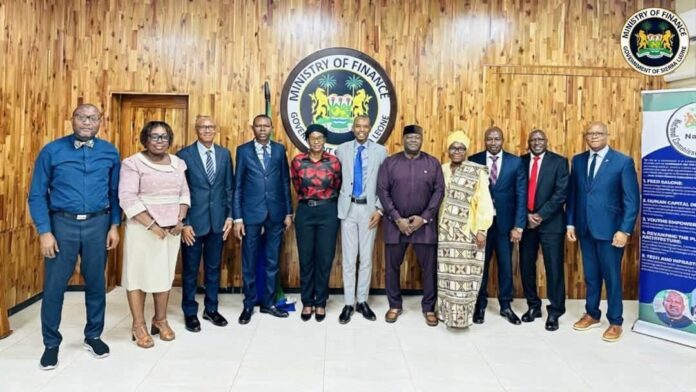
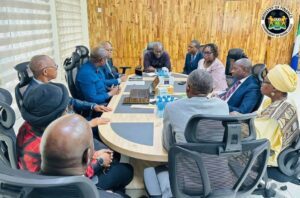
The Parliament of Sierra Leone on Monday, February 25, 2026, unanimously debated and ratified a series of key agreements between the Government of Sierra Leone and several international financial institutions and development partners aimed at strengthening infrastructure, water security, agriculture, regional integration and economic growth.

Presenting the agreements before the House, Minister of Finance, Sheku Ahmed Fantamadi Bangura, described the approvals as a significant step toward expanding Sierra Leone’s development trajectory and enhancing its economic resilience.

Among the most prominent agreements ratified was a Public-Private Partnership (PPP) Agreement for the design and construction of the Lungi Hotel, Congress Centre and Presidential Villa Complex, including the operational management of the hotel facility. The agreement, signed on February 16, 2026, is between the Government of Sierra Leone and FB Group ULUSLARARASI YATIRIM VE DIS Ticaret Anonim Sirketi.

According to the Finance Minister, the project represents a $124 million investment aimed at constructing an ultra-modern facility capable of hosting major international conferences and global events. He explained that the financing arrangement is structured as a loan through a bank and will include the development of a hotel, a presidential villa and a conference complex in Lungi.

The Minister emphasized that the project is expected to enhance Sierra Leone’s global visibility, promote tourism and attract international engagements.

Parliament also ratified several financing and loan agreements with institutions including the International Development Association (IDA), the African Development Bank (AfDB), the African Development Fund (ADF), the Arab Bank for Economic Development in Africa (BADEA), the OPEC Fund for International Development and the International Bank for Reconstruction and Development (IBRD).

Key among them is a $40 million Financing Agreement for the Sierra Leone Water Security and WASH Access Improvement Project, Phase One of a Multi-Phase Programmatic Approach. The project aims to strengthen water supply systems and improve access to safe water and sanitation services nationwide.

Lawmakers further approved additional financing for the Harmonizing and Improving Statistics in West Africa Project, as well as grant support under the Global Environment Facility to strengthen implementation of the Stockholm and Minamata Conventions in African Least Developed Countries.

In the agriculture sector, Parliament ratified agreements relating to the West African Food System Resilience Programme (FSRP) Phase Two, the Livestock and Livelihoods Development Programme (LLDP) and a facility agreement with BADEA to finance the importation of rice and food products.

A loan agreement for the construction of the Bauya–Bendu Road Project and a programme agreement under the Mano River Union Road Development and Transport Facilitation Programme Phase IV were also endorsed, further advancing regional connectivity and infrastructure expansion.

Chairman of the Parliamentary Committee on Finance, Hon. Keikura C. Vandy of Bo District, underscored the importance of resource mobilization for effective governance. He urged implementing agencies to ensure that approved agreements are utilized judiciously and transparently.

Hon. Keikura C. Vandy welcomed the water and livestock-related agreements, encouraging citizens to engage in agriculture to strengthen the national economy. He also commended the Finance Minister for his efforts in advancing economic reforms.

Whip of the Opposition, Hon. Abdul Karim Kamara of Kambia District, called for intensified Government efforts to improve water supply nationwide and reduce dependence on imported goods through greater investment in livestock and local production. While acknowledging the significance of development initiatives, he questioned the immediate impact of the Lungi construction project on the lives of ordinary Sierra Leoneans, stressing that basic social services must remain a priority.

Deputy Opposition Leader 2, Hon. Aaron Koroma, raised concerns about delays in making documents available to Members of Parliament prior to ratification. He also noted the absence of clarity on the operational period of the Lungi agreement and called for improved revenue-sharing terms, suggesting that a 10 percent share appeared minimal. He urged Statistics Sierra Leone to remain professional and apolitical and encouraged the Ministry of Finance to prioritize concessional loan negotiations.

Concluding debate on behalf of the Government, Majority Leader and Leader of Government Business, Hon. Sahr Mathew Nyuma, described the agreements as progressive and development-oriented. He highlighted the strategic importance of the Lungi Complex, noting that Lungi serves as Sierra Leone’s gateway and that the project would significantly boost the local economy.

He also referenced a separate project exceeding $50 million aimed at driving infrastructural and economic development in Bonthe District, affirming Government’s commitment to service delivery and national progress.

Responding to issues raised by Members, the Finance Minister assured Parliament that Government would address concerns and continue to pursue concessional financing arrangements where feasible.

With the ratification of the agreements, Sierra Leone positions itself to accelerate infrastructure expansion, strengthen water security, enhance agricultural productivity and deepen regional cooperation as part of its broader national development agenda.

Yvonne Aki-Sawyerr Hosts Austrian Delegation to Discuss Urban Growth and Job Creation

Yvonne Aki-Sawyerr Hosts Austrian Delegation to Discuss Urban Growth and Job Creation

By Amin Kef (Ranger)

Mayor Yvonne Aki-Sawyerr on Monday, February 23, 2026, hosted a high-level Austrian delegation in Freetown, engaging in strategic discussions focused on urban growth, infrastructure management and job creation in the Sierra Leonean capital.

The Mayor, joined by her Deputy and the Deputy Chief Administrator, received Austria’s Deputy Minister of European and International Affairs, Nikolaus Marschik, during a courtesy call that underscored deepening bilateral engagement between Freetown and Austria.

The meeting provided a platform for the Freetown City Council to share its priorities and perspectives as Austria formulates its new Africa Strategy. According to Mayor Yvonne Aki-Sawyerr, the discussions were frank and forward-looking, addressing both immediate challenges and long-term development goals.

“The meeting provided an opportunity for Freetown to share our priorities and perspectives as Austria shapes its new Africa Strategy,” the Mayor stated.

Central to the dialogue were the structural challenges confronting Freetown as it continues to experience rapid population growth. Mayor Yvonne Aki-Sawyerr outlined concerns relating to land-use planning, the effectiveness of building permit systems and the broader need for robust urban management frameworks capable of supporting a fast-expanding city.

She emphasized that without modernized systems and coordinated urban planning, cities like Freetown risk facing mounting pressure on infrastructure, public services and environmental sustainability.

The Austrian delegation was briefed on ongoing efforts by the City Council to strengthen governance mechanisms and improve administrative efficiency. Discussions also explored how international partnerships could support technical capacity-building, policy reform and sustainable urban development initiatives.

Beyond infrastructure and regulatory reforms, Mayor Yvonne Aki-Sawyerr highlighted Freetown’s development roadmap, which she described as being anchored on one clear objective: job creation.

She explained that urban transformation must go hand in hand with economic empowerment, particularly for young people. By aligning urban management reforms with economic opportunity, the city aims to foster entrepreneurship, stimulate local industries and create a more resilient economic environment.

The Mayor noted that tackling unemployment remains central to addressing broader social challenges, including poverty and migration pressures. As such, strategic partnerships with international actors are seen as vital in mobilizing expertise and investment that can accelerate inclusive growth.

The visit by Deputy Minister, Nikolaus Marschik and his delegation comes at a time when Austria is redefining its engagement with African nations. Freetown’s leadership used the opportunity to position the city as a key partner in areas such as sustainable urban planning, governance reform and youth-focused economic initiatives.

Observers say the meeting reflects Freetown’s proactive diplomatic approach, as city authorities increasingly engage international stakeholders to address pressing urban challenges. Rather than waiting for national-level interventions alone, the City Council continues to pursue city-to-country partnerships aimed at unlocking technical assistance and investment.

While no formal agreements were announced during the courtesy call, the engagement was widely viewed as a constructive step toward enhanced cooperation. Both sides expressed interest in exploring areas of mutual benefit, particularly in urban development and employment generation.

Amid the challenges of rapid urban expansion, the Mayor’s engagement with international partners demonstrates a firm commitment to advancing innovative solutions and strengthening global collaboration. The meeting with the Austrian delegation further highlights the administration’s resolve to reinforce governance systems, unlock sustainable growth opportunities and significantly enhance the quality of life for residents.