
Home Blog Page 90

President Bio Commissions State-of-the-Art NatCA Headquarters, Reinforces Digital Transformation Agenda

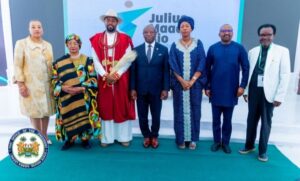
Dignitaries at a plaque unveiling ceremony; a man in a suit speaks into a microphone as others in formal attire and a woman in green watch, with balloon decorations in the background.
President Bio Commissions State-of-the-Art NatCA Headquarters

By Ibrahim Sesay

President Dr. Julius Maada Bio has officially commissioned the new headquarters of the National Communications Authority (NatCA), describing the state-of-the-art facility as a significant milestone in advancing Sierra Leone’s digital transformation and strengthening national data security.

The commissioning ceremony, held on Friday, April 17, 2026, at Southridge, IMATT in Freetown, brought together senior government officials, regulators, telecommunications stakeholders, and members of the diplomatic community. The modern 10-storey building will serve as the headquarters of NatCA while also housing the Ministry of Communication, Technology and Innovation (MoCTI).

The facility includes critical national infrastructure such as a National Data Centre and a Network Operations and Communication Monitoring Centre, aimed at improving regulatory oversight, enhancing service delivery, and safeguarding government data.

Addressing the gathering, President Bio emphasized that the commissioning represents more than the unveiling of a physical structure, noting that it reflects a broader commitment to national development through digital innovation. He highlighted the importance of expanding access to services, particularly for citizens in remote areas who previously had to travel long distances to access basic government services.

“Today is not just about commissioning a building; it is about fulfilling a promise to the people of this country, especially the youth, by investing in their future,” the President stated.

President Bio also acknowledged that the project was initiated by a previous administration, stressing that national development efforts should transcend political lines. “Good decisions for Sierra Leone do not belong to individuals; they belong to the people. We chose to complete this project because it serves the national interest,” he affirmed.

Underscoring the importance of digital sovereignty, the President noted that the newly established data centre will play a critical role in protecting sensitive government information while enhancing efficiency in governance. He further recognized ongoing challenges such as the digital divide between rural and urban communities and the high cost of data, assuring that government is actively engaging service providers to address these concerns.

Linking digital transformation to broader national priorities, President Bio referenced ongoing agricultural initiatives under the Feed Salone programme, highlighting his personal involvement in farming activities as a demonstration of leadership by example.

Minister of Communication, Technology and Innovation, Salima Bah, described the commissioning as a landmark achievement in Sierra Leone’s digital journey. She noted that the telecommunications sector continues to play a vital role in economic growth, enabling communication, mobile money services, and digital governance systems.

“With 14 out of 16 districts now connected by fibre and over 90 percent population coverage achieved, this facility enhances our ability to regulate effectively, promote fair competition, and improve service delivery,” she stated.

She further explained that the co-location of NatCA and MoCTI within the same facility will strengthen coordination between policymakers and regulators, while the National Data Centre will ensure secure, in-country storage and management of government data. She also disclosed plans for a disaster recovery centre to be hosted at State House to further strengthen cybersecurity and system resilience.

Director General of NatCA, Amara Brewah, revealed that construction of the headquarters began in 2015 at a time of rapid growth in mobile penetration and data demand. He described the project as a testament to institutional continuity and collective national commitment.

“This building belongs to every leadership that contributed to its realization,” he said, noting that seven floors are occupied by NatCA while three floors are allocated to the Ministry. He added that the facility includes a 200-seat auditorium, conference rooms, a cafeteria, and other essential infrastructure designed to support efficient operations.

Brewah further highlighted that the Tier-One Data Centre housed within the building will, for the first time, provide Sierra Leone with a secure domestic system capable of hosting and protecting national data.

The commissioning of the NatCA headquarters marks a major step forward in Sierra Leone’s pursuit of digital resilience, improved governance, and inclusive national development, reinforcing government’s commitment to building a robust and future-ready digital economy.

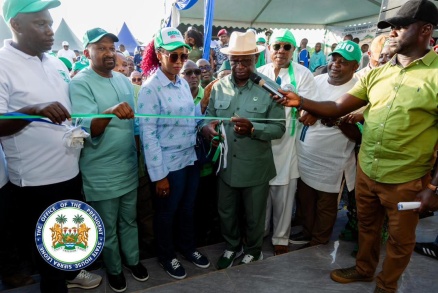
President Bio cutting ribbon to officially commission the new NatCA headquarters
Minister of Communication, Technology and Innovation, Salima Bah

Director General of NatCA, Amara Brewah
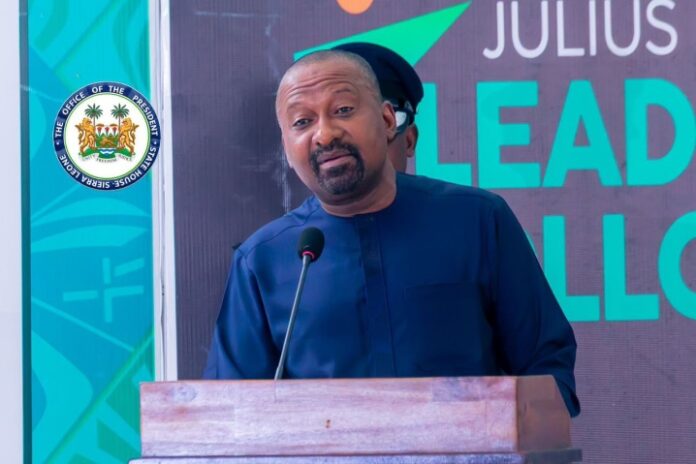
President Dr. Julius Maada Bio

President Boakai Applauds Industrial Investment… Sethi Group Expands Regional Footprint with New Steel Plant in Sierra Leone and Phase II Launch in Liberia

Group of seven dignitaries posing on a red carpet at a welcome event, with a banner and the Liberian presidential seal visible.

By Amin Kef (Ranger)

President Joseph Nyuma Boakai has commended the Sethi Group of Companies for its expanding industrial footprint across West Africa, highlighting its growing investments in both Liberia and Sierra Leone as a major boost to regional economic transformation and job creation.

Speaking on Friday, April 17, 2026, at the Executive Mansion in Monrovia during the ribbon-cutting and groundbreaking ceremony of the Phase II Steel Plant, President Boakai described the company’s operations as a model of impactful private sector investment. The event, which included a tour of the company’s processing facilities, underscored Liberia’s ambition to strengthen its industrial base while fostering cross-border economic cooperation.

“This is not just about investment; it is about improving people’s lives, equipping them with skills, building their confidence, and strengthening the economy,” President Boakai stated, emphasizing that the initiative represents far more than profit-driven enterprise.

The ceremony also spotlighted the company’s regional expansion strategy, with Managing Director Jay Sethi revealing that a state-of-the-art steel plant has been installed in Sierra Leone and is expected to be officially launched in the coming months. The development is anticipated to significantly enhance Sierra Leone’s manufacturing capacity, reduce reliance on imports, and create new employment opportunities within the country’s industrial sector.

Describing Liberia as “home,” Mr. Sethi noted that his family has lived in the country for over five decades, reinforcing the company’s long-standing commitment to national development. He explained that the Sethi Group has evolved from a trading enterprise into a major manufacturing player, contributing meaningfully to Liberia’s economic diversification.

According to him, the company currently employs more than 2,500 people directly, while generating over 500 indirect jobs through the steel scrap value chain—supporting both economic activity and environmental sustainability. With the Phase II expansion underway, direct employment is projected to exceed 4,000 jobs within the next two years, alongside continued investments in corporate social responsibility initiatives.

President Boakai, visibly impressed by the scale of operations, assured the company of his administration’s support, stressing that businesses operating within the legal framework and contributing to national growth would continue to receive government backing.

“From what I see here—the cement business and other activities—this means jobs and income for our people,” he said, noting that the company’s impact extends beyond its immediate workforce to include distributors and related enterprises.

He further urged workers and citizens to take ownership of such investments, cautioning against practices that undermine economic progress. “The stronger this investment becomes, the better it will be for you, your children, and the future of this country,” he added.

Also addressing the gathering, Senate Pro Tempore Nyonblee Karnga-Lawrence called for the decentralization of industrial operations to other parts of Liberia, particularly in areas such as waste management, to improve sanitation and support sustainable urban development.

Meanwhile, Manoj Bihari Verma, India’s Ambassador to Liberia, praised the Liberian Government for creating an enabling environment for private sector growth. He highlighted the growing role of Indian businesses in Liberia’s economy and reaffirmed India’s commitment to strengthening bilateral ties through trade, investment, and capacity building.

Ambassador Verma also commended the Sethi Group for its sustained contribution to Liberia’s development, noting that such investments are instrumental in driving inclusive growth across the region.

The dual expansion in Liberia and Sierra Leone signals a new phase of industrial cooperation between the two neighbouring countries, positioning the Mano River region as an emerging hub for steel production and manufacturing. Analysts believe that with the upcoming launch of the Sierra Leone plant and the expansion in Liberia, the Sethi Group is set to play a pivotal role in reshaping the sub-region’s industrial landscape.

The event underscored the growing role of private sector investment in Liberia and Sierra Leone development agenda, with stakeholders highlighting the importance of partnerships that drive inclusive growth, job creation and sustainable economic progress.


World Bank, IMF Laud Finance Minister for the Impressive Country’s Macroeconomic Performance

Three men in suits shake hands and smile in a corporate office, standing in front of a counter with supplies and a whiteboard behind them.

World Bank Vice President for Western and Central Africa, Ousmane Diagana and International Monetary Fund Director for African Affairs, Abebe Aemro Selassie, have commended Sierra Leone’s Minister of Finance, Sheku Ahmed Fantamadi Bangura, for his transformational leadership in driving the country’s impressive macroeconomic performance during high-level engagements held in Washington DC, United States of America, on Friday 17 April 2026.

The commendations were made as Minister Sheku Ahmed Fantamadi Bangura met with global economic leaders to position Sierra Leone’s economic outlook in line with the development agenda of Dr. Julius Maada Bio. In separate meetings, the international financial leaders not only praised the Minister’s efforts but also signaled their continued commitment to support the country’s economic growth and stability.

During a meeting with Ousmane Diagana and senior sector Directors of the World Bank Group, the Vice President highlighted Sierra Leone’s strong macroeconomic performance and the wide-ranging reforms undertaken by the Government, emphasizing that sustaining economic stability remains critical to consolidating democratic gains. He assured that the World Bank would look favorably on the recommendations presented by the Minister of Finance, particularly those aimed at mitigating the impact of the ongoing Middle East crisis.

The World Bank’s Chief Economist and Senior Vice President for Development Economics, Indermit Gill, also praised Sierra Leone’s economic progress and aligned with the Minister’s assessment of the potential transmission effects of the Middle East crisis. He encouraged the Government to maintain macroeconomic stability while implementing targeted policies that protect the most vulnerable populations, cautioning against broad, untargeted subsidies.

In a separate engagement with the International Monetary Fund, Abebe Aemro Selassie described the meeting as productive and acknowledged that although the IMF does not routinely offer praise, he was impressed by the economic results achieved by the Government of Sierra Leone. He noted that while the Fund remains aware of the challenges posed by the Middle East crisis, it is working with development partners to support member countries in mitigating its impact and encouraged Minister Sheku Ahmed Fantamadi Bangura to make a strong case for additional support, particularly under the Resilience and Sustainability Facility.

Presenting Sierra Leone’s economic position, Minister Sheku Ahmed Fantamadi Bangura expressed appreciation to the World Bank Group for its continued support across key sectors. He outlined significant progress made over the past two years in implementing economic and public financial management reforms, which have contributed to improved macroeconomic stability.

He disclosed that inflation declined to 4.35 percent in December 2025, the exchange rate remained stable, interest rates on Government securities dropped to sustainable levels and the primary fiscal balance recorded a positive position by the end of 2025. He also noted that the World Bank portfolio remains stable, with strong implementation across projects in the education, health and energy sectors.

The Finance Minister, however, acknowledged that the ongoing Middle East crisis has begun to reverse some of the gains achieved, particularly through external economic pressures and called on development partners to provide targeted support to help preserve progress and limit adverse impacts on the country’s economy.

In his engagement with the IMF, Minister Sheku Ahmed Fantamadi Bangura reiterated the Government’s gratitude for the institution’s longstanding support and policy guidance, attributing Sierra Leone’s improved economic performance in part to the strong collaboration with the IMF’s African Department.


Vice President Hands Over Staff Bus to Koidu Government Hospital to Boost Healthcare Delivery

Man in white shirt speaks at a podium with two microphones; official seal visible on the lectern.
Vice President, Dr. Mohamed Juldeh Jalloh

By Amin Kef (Ranger)

Vice President of the Republic of Sierra Leone, Dr. Mohamed Juldeh Jalloh, on Friday 17 April 2026 handed over a 56-seater staff bus and a Toyota Land Cruiser to the Koidu Government Hospital in Kono District, in a move aimed at improving working conditions and enhancing service delivery for healthcare workers.

Speaking at the ceremony, Dr. Mohamed Juldeh Jalloh described the hospital as a place that holds special significance to him, explaining that the intervention followed concerns raised by staff during a previous visit in March 2026 when he joined them for Iftar during the holy month of Ramadan. He noted that the initiative was conceived after health workers identified key challenges affecting their performance, including transportation, accommodation and continued education, adding that he had committed to engaging the Ministry of Health to address those concerns.

The Vice President, whose office supervises the country’s public health sector, stated that the Government secured a 56-seater bus, which he handed over on behalf of Dr. Julius Maada Bio. He emphasized that reliable transportation is critical to improving service delivery, particularly during difficult seasons, noting that the provision of the bus would enable staff to report for duty more consistently while serving as an important component of the welfare package for nurses.

Dr. Mohamed Juldeh Jalloh also urged that the vehicle be properly maintained to ensure long-term benefit, stressing the importance of keeping it in good condition. He further linked the intervention to broader gains in the health sector, pointing out that Government efforts have contributed to reductions in maternal and infant mortality, as well as an increase in the number of healthcare workers nationwide, while emphasizing that continued investment in staff welfare remains essential.

Deputy Minister of Health I, Prof. Dr. Charles Senesie, welcomed the support and described it as consistent with the President’s vision to address challenges within the sector. He noted that transportation remains a critical issue, particularly during emergencies, stating that when crises occur, transport becomes a serious challenge and called for innovative solutions to strengthen healthcare delivery. He added that the Ministry looks forward to further interventions, including the provision of motorbikes.

District Medical Officer, Dr. Mohamed Gbeshay Sheku, also commended the intervention, recalling that staff had struggled with transportation for over 15 years. He expressed confidence that the new support would significantly improve access to services and described the gesture as a reflection of the Ministry’s commitment, noting that healthcare workers remain dedicated to working collectively to improve lives and deliver quality care.


Africell & NBA Africa Host Junior Basketball Clinic for Over 350 Young Athletes in Freetown

Six people pose for a group photo under a pink Africell promotional tent at an outdoor event, wearing lanyards and casual clothes.

By Alvin Lansana Kargbo

Africell Sierra Leone, in partnership with NBA Africa, has convened more than 350 pupils from primary and junior secondary schools for a two-day junior basketball clinic aimed at developing foundational skills and confidence among young athletes in Freetown.

The clinic, held from Thursday 16 to Friday 17 April 2026 at the National Stadium Basketball Court in Brookfields, introduced participants to basic techniques including dribbling, passing, shooting and teamwork through structured drills led by experienced coaches, with sessions carefully designed to create an engaging and supportive learning environment for beginners.

Speaking at the event, Kamanda Koroma, Marketing and Communications Manager at Africell Sierra Leone, said the initiative reflects the company’s commitment to youth development through sports, noting that Africell continues to invest in platforms that nurture talent across various disciplines, with a growing emphasis on sports as a tool for empowerment. He described basketball as one of the fastest-growing sports globally and stated that the partnership with NBA Africa is intended to support long-term development rather than short-term engagement, emphasizing that sport plays a broader role beyond physical activity by serving as a channel for mentorship and personal growth among young people.

Kamanda Koroma further disclosed that Africell has recently partnered with the Sierra Leone Basketball Federation to promote the sport locally adding that the company plans to strengthen collaboration with NBA Africa in order to expand opportunities for youth participation in basketball across the country.

A representative of NBA Africa, Madam Belicent, described the clinic as a milestone, marking the first collaboration between the organization and Africell in Sierra Leone. She noted that the partnership aligns with shared values centered on youth empowerment, entrepreneurship and community engagement, adding that NBA Africa remains committed to supporting grassroots basketball development across the continent.

Also addressing participants, Ali Hijazi, President of the Sierra Leone Basketball Federation, underscored the importance of sustained investment in youth sports, describing the clinic as a significant step in strengthening the country’s basketball development pipeline. He commended both Africell Sierra Leone and NBA Africa for their contribution and called for continued collaboration among stakeholders to ensure consistent opportunities for young athletes, while encouraging participants to apply the skills acquired during the training sessions.

The two-day programme forms part of Africell’s broader efforts to promote basketball development in Sierra Leone by equipping young players with essential skills while fostering discipline, teamwork and confidence.


WFP Sets 2026–2030 Roadmap to Transform Food Security & Strengthen Human Capital in Sierra Leone

Officials unveil a poster titled Sierra Leone Country Strategic Plan 2026–2030 at a World Food Programme event.

The Government of Sierra Leone, in partnership with the World Food Programme, has officially launched the WFP Country Strategic Plan 2026–2030, outlining a comprehensive roadmap aimed at strengthening food systems, improving nutrition and building resilience across the country.

The launch, held in Freetown, brought together senior Government officials, United Nations Heads of Agencies, development partners and representatives of Civil Society, underscoring food security as a central pillar of Sierra Leone’s national development agenda. The new plan aligns with the Medium-Term National Development Plan, the Feed Salone strategy and the United Nations Sustainable Development Cooperation Framework, reinforcing a coordinated approach to tackling food insecurity.

The Country Strategic Plan signals a shift from short-term food assistance to long-term systems strengthening, with a focus on three key outcomes: improved shock preparedness and response, increased access to safe, diverse and locally produced nutritious food, particularly for schoolchildren and vulnerable groups, and the development of resilient livelihoods supported by stronger local value chains.

Central to the plan is the expansion of home-grown school feeding, which integrates education, nutrition and local agricultural production. By sourcing food locally, the programme is expected to enhance learning outcomes while creating reliable markets for smallholder farmers, particularly women and young people. Speakers at the event emphasized that school feeding should be viewed not only as a social intervention but also as a strategic investment in human capital and economic growth.

Country Director of the World Food Programme, Andrew Odero, said the new strategic plan reflects lessons learned from previous programmes and responds to evolving realities. He noted that while food security indicators have improved in recent years, significant nutrition challenges persist, especially among children and rural households. He explained that the plan seeks to transform the trajectory of food security in Sierra Leone by linking nutrition, education, agriculture and livelihoods in a more integrated and sustainable manner.

Deputy Minister I of the Ministry of Basic and Senior Secondary Education, Emily Gogra, highlighted the importance of school feeding in supporting learning outcomes under the Free Quality School Education programme. She observed that although the programme has expanded access to education, hunger remains a major barrier to attendance, concentration and completion, stressing the need for sustained investment in school feeding initiatives.

The Ministry of Agriculture, represented by its Deputy Minister II, outlined progress made in promoting home-grown school feeding and local procurement, noting that an increasing share of food used in school meals is now sourced from Sierra Leonean farmers. Investments in aggregation systems, rice milling and value chain development are helping smallholder farmers, particularly women and youth, to access structured markets and improve their livelihoods. Officials described these developments as early but significant indicators that the country’s food systems are gradually becoming more predictable and sustainable.

United Nations Resident Coordinator, Seraphine Wakana, placed the Country Strategic Plan within a broader global and national context, noting that Sierra Leone continues to face climate shocks, economic pressures and global supply disruptions. She stressed that addressing these challenges requires stronger and more integrated systems rather than isolated interventions, adding that the plan reflects a wider shift within the United Nations system towards long-term resilience and coordinated action. She emphasized that national ownership remains central, with the United Nations playing a supportive and catalytic role.

Minister of Planning and Economic Development, Kenyeh Barlay, welcomed the plan as an important tool for aligning partners, mobilizing smarter financing and delivering measurable results. She noted that the success of the initiative will ultimately depend on effective implementation, particularly in ensuring that farmers can access markets, children receive nutritious meals consistently and communities become more resilient.

Looking ahead to 2030, the World Food Programme Country Strategic Plan 2026–2030 sets out a vision that goes beyond reducing hunger, aiming to build sustainable food systems that support education, livelihoods, resilience and inclusive economic growth for future generations.

Health Alert, WASHNet Commend Government Over GAVI Co-Financing Approval

Man in a dark suit and glasses sits at a desk, speaking with animated hand gestures during a meeting.

By Foday Moriba Conteh

The Executive Director of Health Alert Sierra Leone, Dr. Victor Lansana Koroma, has commended the Government of Sierra Leone for the timely approval of its 2026 GAVI co-financing commitment for vaccines and immunization.

Dr. Koroma made the statement on Friday, April 17, 2026, during a press conference organized by Health Alert Sierra Leone at its office on Blackhall Road in the East End of Freetown. The event brought together stakeholders from the health sector, including representatives of WASHNet and the Parliamentary Caucus on Immunization and Primary Healthcare.

In a joint statement, Health Alert Sierra Leone, WASHNet and the Parliamentary Caucus commended the Ministry of Finance for approving the co-financing commitment ahead of schedule, describing the move as a critical step in sustaining immunization programmes and strengthening the country’s health system.

The organizations disclosed that as part of ongoing advocacy efforts to promote increased domestic financing for healthcare, a high-level engagement was held on April 8, 2026, at the Ministry of Finance headquarters on George Street in Freetown. During the meeting, Dr. Koroma underscored the importance of sustained advocacy to ensure government meets its co-financing obligations under the GAVI framework.

Responding to the concerns raised, Deputy Principal Financial Secretary, Samuel E. B. Momoh, confirmed that the payment had been approved ahead of the deadline. He noted that the timely action would contribute significantly to improving health outcomes and maintaining momentum in immunization coverage across the country.

Despite the progress, the organizations called on the Ministry of Health, through the Extended Programme on Immunization (EPI), to expedite the submission of required PET forms as requested by the Ministry of Finance. They emphasized that prompt submission would facilitate swift disbursement of funds and prevent unnecessary delays in implementation.

Health Alert Sierra Leone and WASHNet further reaffirmed their commitment to closely monitor the process, including the release and utilization of funds through the EPI, to ensure that Sierra Leone continues to sustain gains in vaccines, immunization and overall healthcare delivery.

The stakeholders stressed that sustained collaboration between government institutions and civil society remains key to achieving long-term improvements in public health and safeguarding immunization programmes nationwide.

As Feed Salone Records Major Boost… President Bio Inspects Pee Cee Agriculture’s Large-Scale Onion Farm and Modern Processing Facility in Lungi

By Amin Kef-Ranger

His Excellency President Julius Maada Bio on Thursday, 16 April 2026, undertook an inspection visit to the rapidly expanding Pee Cee Agriculture Limited, a subsidiary of Pee Cee Holdings Ltd onion farm and the company’s new state-of-the-art processing house in Mathene, Lokomasama Chiefdom, Lungi, Port Loko District, further underscoring Government’s commitment to boosting local food production under the Feed Salone initiative. The high-level visit formed part of broader efforts to assess large-scale private sector investments that are driving agricultural transformation, reducing dependence on imported onions and strengthening Sierra Leone’s food security agenda.

The visit enabled President Julius Maada Bio to personally assess the progress of the company’s onion cultivation project, its expanding storage capacity, employment impact and wider contribution to Sierra Leone’s agricultural self-sufficiency drive before concluding with an inspection of the company’s new state-of-the-art processing house. Residents, stakeholders and development observers described the visit as another strong demonstration of Government’s resolve to promote private sector-led agricultural growth, industrial value addition and sustainable economic expansion through strategic collaborations with local investors.

President Julius Maada Bio was accompanied by the Minister of Trade and Industry, Alpha Ibrahim Sesay, the Minister of Labour and Social Security, Mohamed Rahman Swaray, the Minister of Agriculture and Food Security, Dr. Henry Musa Kpaka, the Minister of Gender and Children’s Affairs, Dr. Isata Mahoi, as well as Presidential Spokesman Alpha Kanu. Also present were the Chairman of Pee Cee Holdings Ltd and Head of the Agricultural Project, Mahesh Nandwani, senior management officials, technical experts facilitating the onion cultivation programme, community stakeholders, traditional authorities and residents from nearby villages.

The programme commenced with prayers, after which an honourable son of the soil, Mohamed, formally welcomed President Julius Maada Bio and his entourage to the chiefdom. In introducing the dignitaries, Mohamed described Chairman Mahesh Nandwani as an exceptionally visionary and enterprising businessman whose decision to invest in large-scale onion production is already reshaping local livelihoods through job creation, food production and agro-industrial processing.

Speaking on behalf of the company, Chairman Mahesh Nandwani said the occasion symbolized productivity, innovation and confidence in Sierra Leone’s agricultural future. He expressed profound gratitude to President Julius Maada Bio for creating what he described as a conducive investment climate that inspired the company’s expansion into large-scale farming and agro-processing. Recounting his entrepreneurial journey from humble beginnings as a trader at age 16, Mahesh Nandwani described agriculture as one of the most strategic pathways for Sierra Leone’s economic transformation and long-term stability.

In his remarks, the Minister of Agriculture and Food Security, Dr. Henry Musa Kpaka, said the project has grown from a modest beginning into one of Sierra Leone’s most significant onion production hubs. He noted that the impact is already visible nationwide, with onions becoming more available and affordable on the local market. Dr. Henry Musa Kpaka emphasized that the Feed Salone initiative was deliberately designed with the private sector at the forefront, citing Pee Cee Agriculture’s shift from major importer to major local producer as a clear example of the transformation Government seeks to replicate.

Addressing the gathering, President Julius Maada Bio consolidated his key message around food sufficiency, private sector leadership and community inclusion. He said he deliberately chose to inspect the farm because of its strategic importance to Sierra Leone’s food security and economic diversification agenda. Describing Pee Cee Agriculture Limited as an outstanding example of a successful public-private enterprise, he noted that investments in large-scale farming are drastically reducing the country’s dependence on imported onions while creating vital employment opportunities for surrounding communities.

President Julius Maada Bio emphasized that the Feed Salone programme is gaining momentum nationwide, with increased private sector participation playing a decisive role in driving productivity and strengthening food security. “We are scaling up rapidly and remain committed to partnering with more private sector actors to feed Salone,” he stated, adding that the initiative is already revolutionizing farming across Sierra Leone. He said his firsthand observation of the bustling Pee Cee Agriculture onion farm demonstrates how strategic partnerships with the private sector are transforming agriculture and stimulating rural livelihoods.

He further commended the community, especially the women, for embracing the enterprise and recalled that during his previous visit he had allocated 30 percent participation to them because of their active involvement. In a move that drew loud applause, President Julius Maada Bio announced an additional 30 percent allocation, reaffirming Government’s commitment to inclusive agricultural growth and women’s empowerment within productive sectors.

President Julius Maada Bio stressed that it is the private sector, not Government alone, that must actively drive agricultural and food production. He explained that the success of the initiative can serve as leverage for Sierra Leone to attract more international funding and support for similar investments. He also disclosed that his Government is promoting a “One Pot” vision in which products from various regions contribute to the national food basket, while citing his own involvement in fish, chicken and egg production as a practical example of the productive mindset he continues to encourage nationwide.

He further noted that in times of global uncertainty, including external shocks affecting fuel and commodity supply, national productivity remains the surest safeguard. According to President Julius Maada Bio, what may once have seemed impossible is now becoming possible, as Sierra Leone continues on a path of transformation marked by visible progress in agriculture, livestock and food systems resilience.

Earlier, Presidential Spokesman Alpha Kanu said the project is situated on his ancestral land and noted that the area has significantly opened up through strategic investment and development. He praised President Julius Maada Bio’s inclusive governance philosophy and thanked Chief Executive Officer Mahesh Nandwani for taking the bold step to invest in the locality, assuring him that additional land would be made available whenever expansion becomes necessary.

Providing operational evidence from the field, Deputy Farm Manager John Lahai Alieu disclosed that the project’s growth over the past four years has been transformational. He revealed that the storage facilities can now accommodate up to 2,000 tons of onions, significantly improving post-harvest preservation and market supply. From an initial pilot phase of five hectares, the farm has expanded to 70 hectares this year, with yields projected at 35 tons per hectare and future targets of 60 to 70 tons per hectare.

John Lahai Alieu further disclosed that after overcoming major soil and irrigation challenges through targeted investment, including an 80 million litre water reservoir, the company has significantly boosted productivity. He added that the project currently employs 250 workers, with the workforce rising to about 400 during peak periods, while the estimated value of machinery, structures and farm implements now stands at approximately US$2 million.

The visit climaxed with a field tour during which President Julius Maada Bio rode through sections of the onion farm on a tractor alongside the Minister of Agriculture and Food Security, Dr. Henry Musa Kpaka, closely observing the scale of cultivation, irrigation systems and storage infrastructure before proceeding to inspect the company’s new state-of-the-art processing house. The visit ended on a highly optimistic note, with Government officials, residents and company executives expressing confidence that Pee Cee Agriculture Limited will continue to stand as a national model for private sector-driven agriculture, industrial value addition, employment creation and long-term food self-sufficiency in Sierra Leone.

Bio Receives Credentials from Five Ambassadors, Strengthens Sierra Leone’s Global Diplomatic Ties

President Julius Maada Bio on Tuesday, 14 April 2026, received letters of credence from five newly accredited envoys at State House in Freetown, in a significant diplomatic ceremony underscoring Sierra Leone’s commitment to strengthening bilateral and economic relations with key international partners.

The ambassadors, representing the Russia, Iran, Saudi Arabia, Pakistan and Mexico, were formally presented to the President by Timothy Musa Kabba, Minister of Foreign Affairs and International Cooperation, during the ceremony held at State House.

In his remarks on behalf of the Russian Federation, Ambassador Andrei Stolyarov described Sierra Leone and Russia as longstanding partners and commended the Government’s notable progress in key sectors, including education, infrastructure, healthcare and agriculture. He reaffirmed his country’s readiness to deepen bilateral cooperation and further consolidate diplomatic ties.

Speaking for Iran, Ambassador Javad Deghan Haghighi Lotfabadi expressed strong support for the Government’s flagship Feed Salone initiative, while also commending President Bio’s leadership within ECOWAS, particularly his efforts toward promoting regional peace and security.

Representing Saudi Arabia, Ambassador Saud Mushabab Al Musaed praised the swift establishment of his country’s diplomatic presence in Freetown and reiterated a firm commitment to expanding cooperation grounded in mutual respect and shared benefits.

High Commissioner Mahmood Akhtar Mahmood of Pakistan highlighted the enduring historical ties between Sierra Leone and Pakistan, pointing to ongoing academic and technical exchanges as evidence of the growing partnership. He also lauded President Bio’s influential leadership role within the sub-region.

Also presenting her credentials, Ambassador Norma Ang Sanchez of Mexico reaffirmed her country’s commitment to strengthening South-South cooperation and broadening bilateral engagement with Sierra Leone.

Responding, President Bio warmly welcomed the five envoys and formally accepted their credentials, reaffirming Sierra Leone’s longstanding and cordial relations with their respective countries. He stressed that stronger international partnerships remain essential to advancing the country’s national development priorities, boosting economic growth and promoting shared prosperity.

The credential ceremony marks another important milestone in Sierra Leone’s expanding diplomatic outreach and reflects the Government’s continued commitment to international cooperation, mutual respect and sustainable development.

APC Signals Next Strategic Move After Frank Talks with International Peace Guarantors

By Foday Moriba Conteh

The All Peoples Congress (APC) has described its latest high-level engagement with the International Moral Guarantors as a substantive and significant step forward in the party’s continued pursuit of justice, transparency and democratic integrity in Sierra Leone.

In an official statement issued on 14 April 2026, the opposition party said the meeting provided an important platform to firmly present its position on what it called the continued failure to fully implement the Agreement for National Unity (ANU), the Tripartite Committee Recommendations and broader concerns surrounding electoral credibility, constitutional governance and the rule of law in the country.

According to the APC, its delegation laid out detailed legal, political and evidentiary arguments before the International Moral Guarantors and other international partners, stressing that the issues raised were grounded in facts and rigorous analysis. The party maintained that its concerns were fully acknowledged during the engagement, which it said reinforced the seriousness of the matters under discussion.

The statement also raised concern over the sentencing of Zainab Sheriff, which the APC said took place on the same day the dialogue on justice, governance and national reconciliation was being held. The party described the development as politically sensitive and poorly timed, arguing that it undermined confidence in the spirit of dialogue and the wider reconciliation process.

APC officials stated that the development sends what they called a dangerous signal regarding the Government’s commitment to fairness, justice and democratic accountability, both domestically and in the eyes of the international community. The party further noted that it intends to escalate its position through what it described as all appropriate national, regional and international mechanisms.

Describing the engagement as a “critical turning point,” the APC said it has now clearly defined the issues at stake and placed the concerns of Sierra Leoneans at the centre of ongoing consultations with the Moral Guarantors.

The opposition party further acknowledged growing public sentiment surrounding recent political developments, including the appointment of Edmond Sylvester Alpha and recent remarks made by the leadership of the Sierra Leone People’s Party (SLPP) concerning the APC and its members.

It said following the engagement, the party is consolidating its position and will soon announce its next course of action within the framework of the law, strategic responsibility and national interest.

Reaffirming its commitment to justice, democracy and the rule of law, the APC said it remains prepared to take all lawful and necessary actions, including possible mass mobilization if required, to safeguard what it called Sierra Leone’s democratic future.

The statement concluded with a call for calm, discipline, unity and vigilance among party members and supporters across the country and in the diaspora, assuring them that the party remains focused and ready to provide further directives as the process moves into its next phase.