By Amin Kef-Ranger
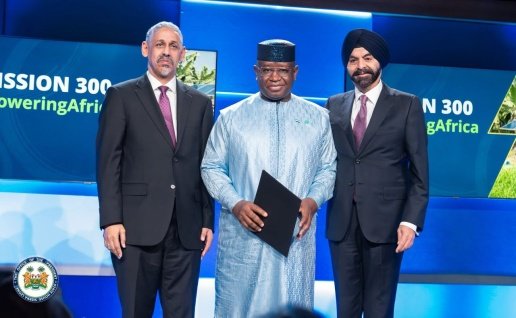
Sierra Leone has crossed a historic threshold with the endorsement of its Mission 300 Energy Compact, a USD 2.2 billion energy infrastructure plan described as the most ambitious in the nation’s history. The announcement, made during the Bloomberg Global Forum 2025 on Wednesday 24 September 2025 in New York, signals the beginning of a transformative journey to expand energy access, promote renewable power and accelerate sustainable development.
The endorsement comes with the full backing of the World Bank Group (WBG), the African Development Bank (AfDB) and other international partners. It also places Sierra Leone among a select group of African nations committing to the Africa-wide Mission 300 initiative, which seeks to connect 300 million people to reliable electricity by 2030.
Mission 300 will directly address Sierra Leone’s long-standing electricity deficit, which has constrained economic growth, industrialization and social development for decades. Currently, only about 36 percent of the country’s population has access to electricity, a figure that the compact intends to raise to 78 percent within the next few years.
The plan focuses on four pillars: expanding renewable power generation, modernizing transmission and distribution networks, promoting clean cooking solutions and creating a stronger environment for private sector participation through reforms in governance and regulation.
For President Julius Maada Bio, who also serves as Sierra Leone’s Minister of Energy, this is more than an infrastructure project; it is a statement of national ambition.
“Our Mission 300 Energy Compact is the most ambitious and comprehensive energy infrastructure initiative ever developed for Sierra Leone. Powered by evidence-based solutions and data, this single plan for Sierra Leone’s energy transformation holds the greatest promise for unlocking sustainable and inclusive development for our people,” President Bio told global leaders at the forum.
The compact was developed in record time under the leadership of the Inter-Ministerial Coordination Group, co-chaired by Minister of Finance Sheku A.F. Bangura and Dr. Kandeh K. Yumkella. Dr. Kandeh K. Yumkella, a seasoned energy and climate change expert, also chairs the Presidential Initiative on Climate Change, Renewable Energy and Food Security, as well as the Energy Governance Coordination Group (EGCG).
Their leadership helped align Ministries, Agencies and partners around a single framework; a significant departure from previous fragmented energy projects. According to officials, this integrated approach ensures that investments are not only large in scale but also coherent, sustainable and capable of driving long-term impact.
Sierra Leone’s endorsement is part of a broader Africa-wide momentum. Mission 300, spearheaded by the World Bank and AfDB, is designed to support African nations in meeting Sustainable Development Goal 7; universal access to affordable, reliable and sustainable energy.
The program builds on lessons from decades of under-investment in energy and the urgent need to power Africa’s growing population and industries. Alongside Sierra Leone, 17 other countries presented their national energy compacts at the Bloomberg Global Forum, joining a coalition of states determined to expand electricity access while promoting renewable energy and climate resilience.
Earlier this year, at the Mission 300 Africa Energy Summit in January 2025, countries such as Nigeria, Tanzania, Zambia and Côte d’Ivoire showcased their commitments. Now, Sierra Leone has positioned itself at the heart of this continental transformation.
At its core, Mission 300 is about more than lights in homes. Reliable electricity is the backbone of modern economies. For Sierra Leone, this compact promises:
- Economic Growth: By expanding access to power, industries such as mining, agriculture and manufacturing can thrive, reducing reliance on imports and increasing local production.
- Social Development: Improved electricity access will enhance healthcare delivery, power schools and universities and support digital learning platforms.
- Climate Action: With an emphasis on renewable energy and clean cooking, the compact contributes directly to reducing emissions, protecting forests and advancing Sierra Leone’s climate goals.
- Job Creation: Construction and maintenance of new facilities, along with private sector participation, are expected to generate thousands of jobs across the energy value chain.
For households, particularly in rural areas, the promise of reliable electricity means better quality of life, longer productive hours and safer, healthier cooking solutions. For businesses, it represents stability, competitiveness and the opportunity to scale operations.
A central element of the compact is the emphasis on private sector participation. Historically, Sierra Leone’s energy sector has struggled with weak utilities, limited capital and inefficiencies in distribution. By embedding governance reforms and opening space for private investment, the compact seeks to attract new resources and expertise.
The strategy also includes strengthening the Electricity Distribution and Supply Authority (EDSA) and enhancing regional integration by linking Sierra Leone’s grid with the West African Power Pool. This will allow the country to import cheaper power during shortages and export excess energy when supply is high.
The World Bank notes that the National Energy Compacts are designed to be country-led, with each nation tailoring its targets to its specific context. The approach emphasizes competitive costs, renewable integration and civil society involvement to ensure inclusive solutions.
Sierra Leone’s compact, worth USD 2.2 billion, is not only the largest infrastructure plan in its history but also one of the most comprehensive among African peers. It reflects both urgency and innovation, combining national ambition with global partnerships.
As the compact moves from endorsement to implementation, the real challenge will be delivery. Past projects in Sierra Leone’s energy sector have often stalled due to funding delays, weak institutional capacity and technical setbacks. However, with strong political leadership, coordinated governance and robust international backing, Mission 300 has a stronger foundation than previous efforts.
For President Bio’s administration, this achievement could define his legacy. For ordinary Sierra Leoneans, it could transform daily life; from studying under streetlights to accessing modern healthcare facilities, from running small businesses with diesel generators to plugging into a stable national grid.
The endorsement of the Mission 300 Energy Compact is not just a ceremonial milestone; it is the beginning of a new chapter in Sierra Leone’s development story. If delivered with determination and accountability, it has the potential to light up the nation’s future, literally and figuratively.