
By Foday Moriba Conteh
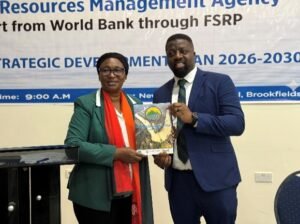
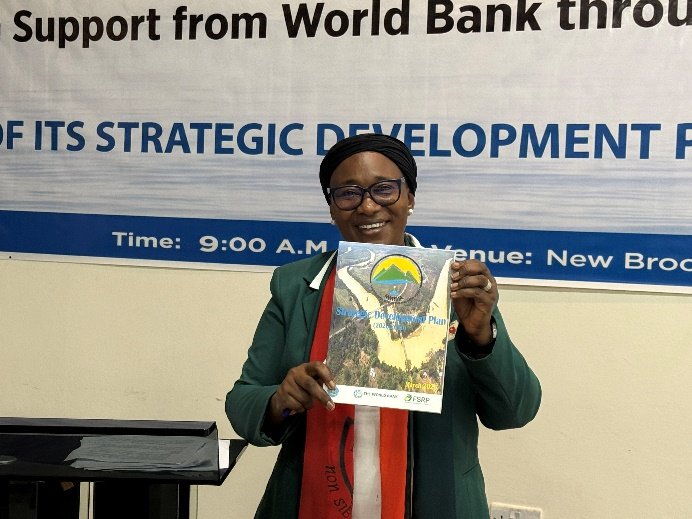
Dr. Hannah Isatta Max-Kyne, Sierra Leone’s Minister of Water Resources and Sanitation, on Thursday 12 March 2026 officially launched the Strategic Development Plan (SDP) 2026–2030 of the National Water Resources Management Agency (NWRMA), emphasizing the need for effective management of the country’s water resources to support sustainable national development.
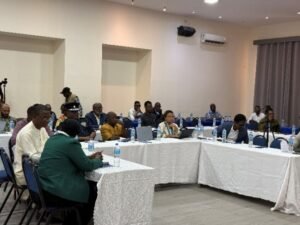
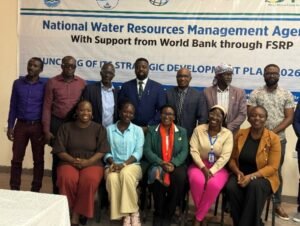
The launch ceremony, held at the New Brookfields Hotel, brought together Government officials, development partners, Civil Society Organizations and stakeholders in the water sector. The strategic plan is supported by the World Bank through the West Africa Food System Resilience Program.
In her keynote address, Dr. Hannah Isatta Max-Kyne said the establishment of the Ministry of Water Resources and Sanitation by President Julius Maada Bio in 2023 reflects the Government’s commitment to strengthening the Water, Sanitation and Hygiene (WASH) sector in Sierra Leone. She noted that water plays a critical role across several sectors including health, agriculture, industry and environmental protection, stressing that proper governance and management of water resources are essential for economic growth and sustainable development.
Despite Sierra Leone being endowed with abundant water resources, the Minister warned that human activities such as illegal mining, deforestation and encroachment on water catchment areas are increasingly threatening water quality and availability, particularly in the Western Area. She emphasized that without proper management and protection, the country risks facing serious water-related challenges in the future.
According to the Minister, the newly launched strategic plan aims to address key challenges within the sector, including weak monitoring systems, limited data management, inadequate enforcement of regulations and insufficient financing for water resource management.
She explained that the plan will prioritize strengthening regulatory and institutional frameworks, improving water monitoring and data systems, protecting watersheds and catchment areas, building institutional capacity and enhancing climate resilience to address floods, droughts and other water-related disasters.
The Minister also underscored the importance of regional cooperation in managing shared water resources, particularly with neighboring countries such as Guinea and Liberia. She called on Government institutions, development partners, Civil Society Organizations, local councils and communities to collaborate in ensuring the successful implementation of the strategic plan.
“The strategy must not remain on paper,” she emphasized, noting that measurable results, strong partnerships and sustainable financing will be critical to achieving the objectives outlined in the document.
Also speaking at the event, Pierre Palmer, Director General of the National Water Resources Management Agency, called for stronger collaboration among stakeholders to ensure the sustainable management and protection of Sierra Leone’s water resources.
He described the launch of the strategic plan as a public commitment by the Agency and its partners to manage water resources responsibly, transparently and sustainably. Pierre Palmer explained that the mandate of the Agency includes leading and coordinating the regulation, management and protection of the country’s water resources.
He added that such involves strengthening water governance systems, improving water allocation and permitting processes, enhancing monitoring and data management, protecting watersheds and catchment areas, and coordinating stakeholders across sectors to ensure that water use for development does not compromise environmental sustainability.
The Director General explained that the new Strategic Development Plan builds on lessons learned from the Agency’s previous strategic plan covering 2019–2023 and aligns with national development priorities as well as global commitments such as the United Nations Sustainable Development Goal 6, which focuses on clean water and sanitation for all.
He said the new plan outlines six key strategic priorities, including strengthening regulatory and institutional frameworks for integrated water resources management, improving water resources monitoring and assessment systems, protecting watersheds and catchment areas, enhancing capacity development and knowledge management, strengthening disaster risk management and climate change adaptation, and improving cooperation on transboundary river basin management.
Providing an overview of the Strategic Plan, Ken Tommy, Assistant Director of the National Water Resources Management Agency, said the new five-year framework was developed following a comprehensive review of the Agency’s previous strategic plan.
He explained that the review examined the Agency’s goals, outputs, activities, financing arrangements and operational performance, while also identifying areas requiring improvement.
Ken Tommy noted that the new plan establishes a clear roadmap for the Agency over the next five years, outlining specific strategies, activities and performance indicators to guide effective water resource management in the country. He added that the plan includes a results-based framework designed to monitor and evaluate progress in achieving its objectives.
Highlighting achievements recorded since 2019, he disclosed that the Agency has developed and operationalized four key water resource management regulations covering water use and catchment protection, dam safety, water pollution control and groundwater development.
In addition, Ken Tommy said the Agency has implemented several initiatives aimed at protecting water resources, including the construction of 3.75 kilometers of catchment protection infrastructure in the Western Area and the restoration of approximately 15,000 hectares of degraded catchment areas.
He further disclosed that a national raw water quality laboratory is now operational and conducting routine water quality monitoring across the country.
Speaking on behalf of the World Bank, Adetunji Oredipe, Senior Agriculture Economist, described the Strategic Plan as a significant step toward strengthening sustainable water resource management in Sierra Leone.
He noted that water plays a vital role in agriculture, food production and national development, emphasizing that agriculture remains one of the largest users of water resources in the country.
Adetunji Oredipe highlighted the World Bank’s ongoing support for initiatives aimed at improving agricultural productivity and regional cooperation through programs such as the West Africa Food System Resilience Program. He stressed that strong policies and effective planning frameworks are essential in ensuring the sustainable management of natural resources.
He also disclosed that discussions are underway regarding a new World Bank Country Partnership Strategy for Sierra Leone, assuring stakeholders that water resource management will remain a priority area for the institution’s future support.
Also speaking at the event, Kepifri Lakoh, Programs Manager of the Food System Resilience Program, highlighted the importance of reliable water data and early warning systems in strengthening the country’s food security and agricultural resilience.
Kepifri Lakoh explained that the Food System Resilience Program, which operates under the Ministry of Agriculture and Food Security, focuses on improving resilience within the country’s food systems.
He noted that developing effective early warning systems is essential in predicting and managing potential disasters such as floods, particularly in the context of climate change and increasingly unpredictable rainfall patterns.
The Programs Manager added that the program is currently supporting the National Water Resources Management Agency by providing infrastructure, equipment and technical training to strengthen its capacity to collect, analyze and report water-related data.
Kepifri Lakoh reaffirmed the Food System Resilience Program’s commitment to supporting the implementation of the new Strategic Plan, emphasizing that strengthening institutions and improving data systems are essential for sustainable agricultural development and food security in Sierra Leone.
Overall, the NWRMA Strategic Development Plan 2026–2030 aligns with Sierra Leone’s national development priorities and aims to improve water governance, strengthen food security, protect the environment and enhance the well-being of citizens through sustainable management of the country’s water resources.