
By Francess Wright
For many residents across Freetown, the unresolved trauma of 10 August 2022 remains deeply tied to the name Hawa Macintyre, a woman whose sudden disappearance after reportedly witnessing abuses during the deadly protest crackdown has become emblematic of the fear that still lingers over Sierra Leone’s civic space. As public frustration intensifies over worsening economic hardship and fresh political tensions linked to the recent appointment of Edmond Sylvester Alpha as Chief Electoral Commissioner of the Electoral Commission of Sierra Leone by President Julius Maada Bio of the ruling SLPP Government, vis-à-vis the 2028 Presidential , Parliamentary and Municipal Elections, to which the main opposition APC Party strongly objected to, plus worsening economic times, going to the extent of boycotting participation in State Governance and planning a pending nation-wide protest, many citizens say the atmosphere now feels disturbingly similar to the days that preceded the violent unrest of August 10, 2022, heightening fears that another nationwide protest could once again trigger devastating consequences.
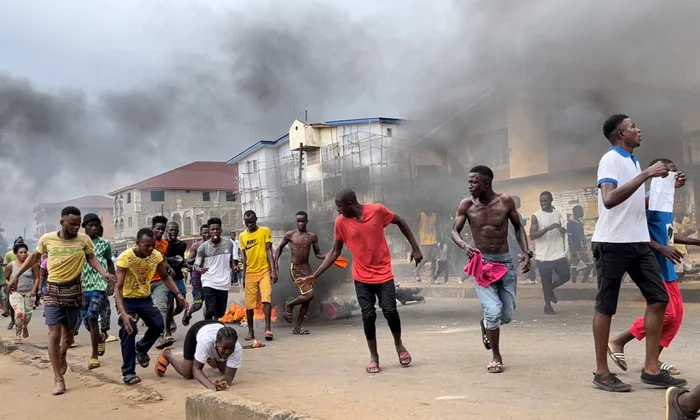
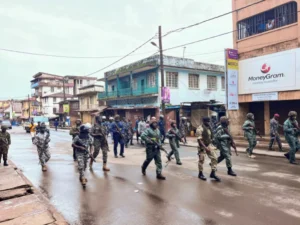
A vox pop conducted by this medium across central Freetown, Waterloo Street, Congo Cross, Up Gun, Lumley and several eastern communities found a city still gripped by unease. Traders, drivers, students and market women spoke in subdued tones about the unbearable cost of food, transport and fuel, but what stood out even more was the palpable fear that now surrounds any conversation about public protest. Nearly every person interviewed referenced the bloodshed of August 10, 2022, when protests initially driven by the rising cost of living descended into violence that left at least 27 civilians and six police officers dead, alongside widespread destruction of public and private property.
Yet beyond the statistics lies a quieter story of fear that continues to shape the lives of families linked, however loosely, to that day. Among the most haunting is the case of Hawa Macintyre, whose name continues to surface in whispered conversations among neighbours and those familiar with her family. Residents said Hawa Macintyre was near her mother’s shop when journalists and bystanders began documenting what they believed were abuses against civilians as security forces moved to suppress the unrest. It was in that same chaos, according to multiple community accounts, that she is believed to have witnessed the fatal shooting of a journalist; an incident that left her deeply shaken and, in the eyes of many around her, dangerously exposed.
According to persons close to the family, suspicion later grew around Hawa Macintyre after rumours spread that journalists and bloggers overseas had received footage and images originating from the area where she was present. In the tense climate that followed, she was allegedly labelled by some as sympathetic to opposition voices and as someone believed to possess knowledge capable of contradicting official security narratives surrounding the protest crackdown.
Several citizens interviewed also quietly suggested that Hawa’s case may not have been isolated. In hushed community discussions, names such as Alusine Kamara, Mohamed Sesay, Ibrahim Savage and Isatu Koroma, whose whereabouts remain unknown, were also mentioned by some respondents as individuals who were, at the time, rumoured to have been linked to the coordination, mobilization or dissemination of information connected to the August 10 protest. While none of those claims have been independently verified, some interviewees purported that such individuals may still remain within the scope of quiet Police interest or broader security scrutiny, contributing to the climate of silence and fear that continues to surround the events.
Several citizens interviewed said that in the weeks and months after the unrest, fear of arbitrary questioning, covert arrests and surveillance became common among individuals suspected of having passed information to journalists or activists. In that atmosphere, Hawa Macintyre’s name reportedly became associated with efforts by security personnel to locate and question persons believed to have witnessed sensitive incidents. Those close to her said that growing sense of vulnerability forced her to flee, after which she disappeared entirely from public view.
When this medium sought to engage relatives and neighbours, most declined to comment, citing fear of reprisals and the broader climate of insecurity that many families linked to the August 10 events still describe in private. Their silence echoed a wider sentiment heard across the capital: that even the memory of witnessing violence can remain a source of danger.
The Sierra Leone Police have consistently maintained that any demonstration must remain lawful and that any threat to public order would be met firmly under the law. But in the minds of many Freetown residents, that official position now intersects with unresolved trauma, economic hardship and growing political distrust surrounding the Edmond Sylvester Alpha appointment controversy.
For many citizens interviewed, the conclusion was sobering. Another nationwide protest could indeed have a major impact in the current volatile climate, but the deepest warning lies not only in the silence left behind by people like Hawa Macintyre, but also in the lingering uncertainty surrounding other names that residents say were once quietly associated with the unrest, including Alusine Kamara, Mohamed Sesay, Ibrahim Savage and Isatu Koroma, all of whom some respondents claimed may still be viewed through the lens of unresolved suspicion and possible Police scrutiny.
In homes where families no longer speak openly, where names are mentioned only in whispers and where absence itself has become a form of testimony, the legacy of August 10 remains not merely a memory, but an enduring fear that still shapes Sierra Leone’s democratic and human rights landscape.