
By Ibrahim Sesay
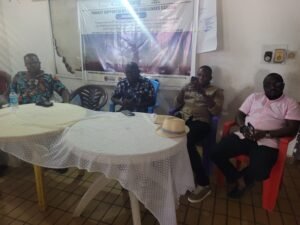
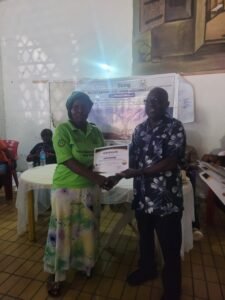
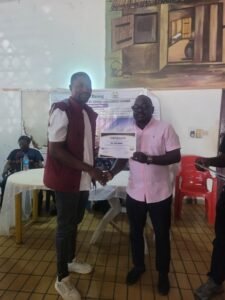
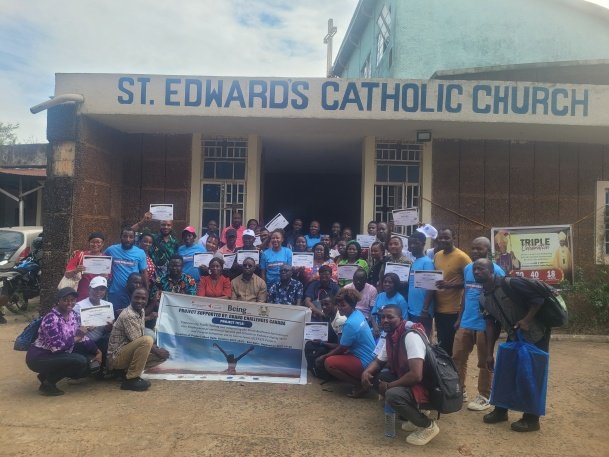
Caritas Freetown has concluded a 10-day Training of Trainers (ToT) programme aimed at strengthening psychosocial support services for young people in Sierra Leone, with 33 frontline workers receiving certification at a closing ceremony held on Friday May 8, 2026 at the St. Edwards Secondary School Compound in Kingtom.
The training was conducted under the Empowering Youth: Scaling and Integrating the Youth Readiness Intervention into Employment Promotion Programs and Schools to Enhance Coping Skills and Prevent Substance Use in Sierra Leone (ELEVATE Project), supported by Grand Challenges Canada.
Participants included Community Health Workers from the Ministry of Health, Social Workers from the Ministry of Social Welfare and Mental Health Nurses from the Kissy Psychiatric Teaching Hospital.
Speaking during the ceremony, Alimamy Rashid Kamara of Caritas Freetown, who also served as one of the trainers, said the project was designed to support young people struggling with emotional distress, poor interpersonal relationships, trauma and unhealthy coping mechanisms.
He noted that many youths face difficulties in setting realistic goals, building community connectedness and managing emotional challenges due to painful experiences they have endured. “We’ve spent 10 successful days training participants on emotional regulation techniques and effective communication skills,” he said.
Alimamy Rashid Kamara explained that participants were introduced to coping strategies such as deep belly breathing, progressive muscle relaxation, stop-think-and-speak techniques and safe emotional regulation methods to help young people manage anxiety, anger and stress.
According to him, one of the major challenges in addressing mental health issues in Sierra Leone remains public misunderstanding and stigma. “A lot of people associate mental health with madness and that lack of understanding becomes a barrier to healing,” he stated, adding that cultural beliefs often lead to stigmatization and isolation of people facing mental health challenges.
He emphasized that mental health should be treated as a collective responsibility involving families, communities, institutions and society as a whole.
Deputy Director of Non-Communicable Diseases and Mental Health at the Ministry of Health, Ismaila Kebbie, said Sierra Leone’s history of traumatic events, including the civil war, Ebola outbreak, mudslide disaster and COVID-19 pandemic, has had a significant impact on the mental wellbeing of many citizens, particularly young people.
“Many youths are silently struggling with stress, trauma, substance abuse, anxiety and other psychosocial challenges without adequate support systems,” Ismaila Kebbie said. He noted that many people facing mental health challenges often lack safe spaces to seek psychosocial support, which lead some to resort to harmful coping mechanisms such as substance abuse.
Ismaila Kebbie described the training as timely, saying it would help frontline workers identify early warning signs and provide basic psychosocial support within schools, communities and youth spaces. He further disclosed that the Ministry of Health is working to integrate mental health services into the country’s primary healthcare system to improve access to support services.
Director of Programmes at the Ministry of Youth Affairs, James B. Sandi, commended Caritas Freetown for what he described as transparency, accountability and inclusivity in implementing development initiatives.
He said many young people remain unprepared to take advantage of opportunities provided by Government and development partners due to various social and psychological challenges. “Mental health is the foundation for somebody to be prepared to embrace change,” he said.
James B. Sandi stressed that drug abuse remains a major concern in Sierra Leone and called for stronger collaboration among the Ministries of Health, Social Welfare and Youth Affairs to tackle the problem. He encouraged participants to use the knowledge and skills gained during the training to support vulnerable youths in their communities, describing them as “ambassadors of change.”
The Director of Programmes also revealed that the Ministry of Youth Affairs is working on a Youth Development Act and hopes to include the Youth Readiness Intervention as part of the Ministry’s core youth programmes.
Gbassay Kanu, Deputy Director of Mental Health and Psychosocial Support at the Ministry of Social Welfare, said substance abuse and mental health challenges continue to affect many young people and families across the country.
“Unfortunately, stigma often prevents victims from seeking help. That is why trainings like this are critical in strengthening community-level support systems,” he said.
The Deputy Director underscored the importance of partnerships between Government institutions, Civil Society Organizations and development partners in addressing the growing mental health and social needs of young people.
Deputy Executive Director of Caritas Freetown, Rev. Fr. Joseph Bangura, urged participants to effectively apply the skills and knowledge gained during the training within their respective communities.
“We are hoping you will effect change within your communities,” he told participants. He added that the success of the first phase could create opportunities for further expansion of the programme to benefit more people across the country.
Participants also expressed appreciation for the training and its practical approach to addressing youth mental health challenges.
Sahid Conteh from the Ministry of Social Welfare said the programme taught participants that substance abuse is not a healthy solution to emotional stress.
“We were taught healthy coping mechanisms including deep-belly breathing, progressive muscle relaxation and safe imagining,” he said.
Sahid Conteh added that the training had prepared him to provide psychosocial support to young people struggling with or at risk of substance abuse. He, however, emphasized the need for adequate financial support to help participants effectively carry out community-based interventions.
Another participant, Elizabeth J. Kamara, described the training as transformative, saying it changed her understanding of mental health and youth support.
“Many young people are going through difficult situations silently and this program has empowered us to listen, support and refer them for help when necessary,” she said.
The ELEVATE Project seeks to scale psychosocial interventions that enhance coping skills and prevent substance abuse among Sierra Leonean youth by integrating mental health support into schools and employment programmes.
Being is an international mental health initiative envisioning a world where young people feel well and thrive, the initiative works with young people to improve their mental health and wellbeing through research, innovation and ecosystem building, with a focus on prevention and promotion in 12 priority countries, including Sierra Leone. Being is hosted by Grand Challenges Canada, funded in part by the Government of Canada, in partnership with Fondation Botnar, Science for Africa Foundation, Orygen and United for Global Mental Health, alongside The UK’s Department of Health and Social Care using UK aid through the National Institute for Health and Care Research.