
By Amin Kef Sesay
The International Press Institute (IPI) has unveiled a major initiative aimed at preserving the history of global journalism and strengthening international cooperation among media professionals, with the launch of a fully digitised archive of its flagship publication, the IPI Report, alongside a series of new training programmes, awards and opportunities for journalists across the world.
The announcement was made in the June 2026 edition of IPI’s monthly membership newsletter, Inside the Network, which highlighted a range of developments designed to support independent journalism and reinforce global press freedom efforts.
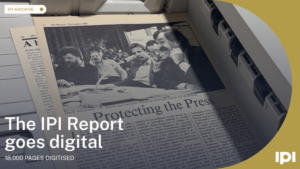
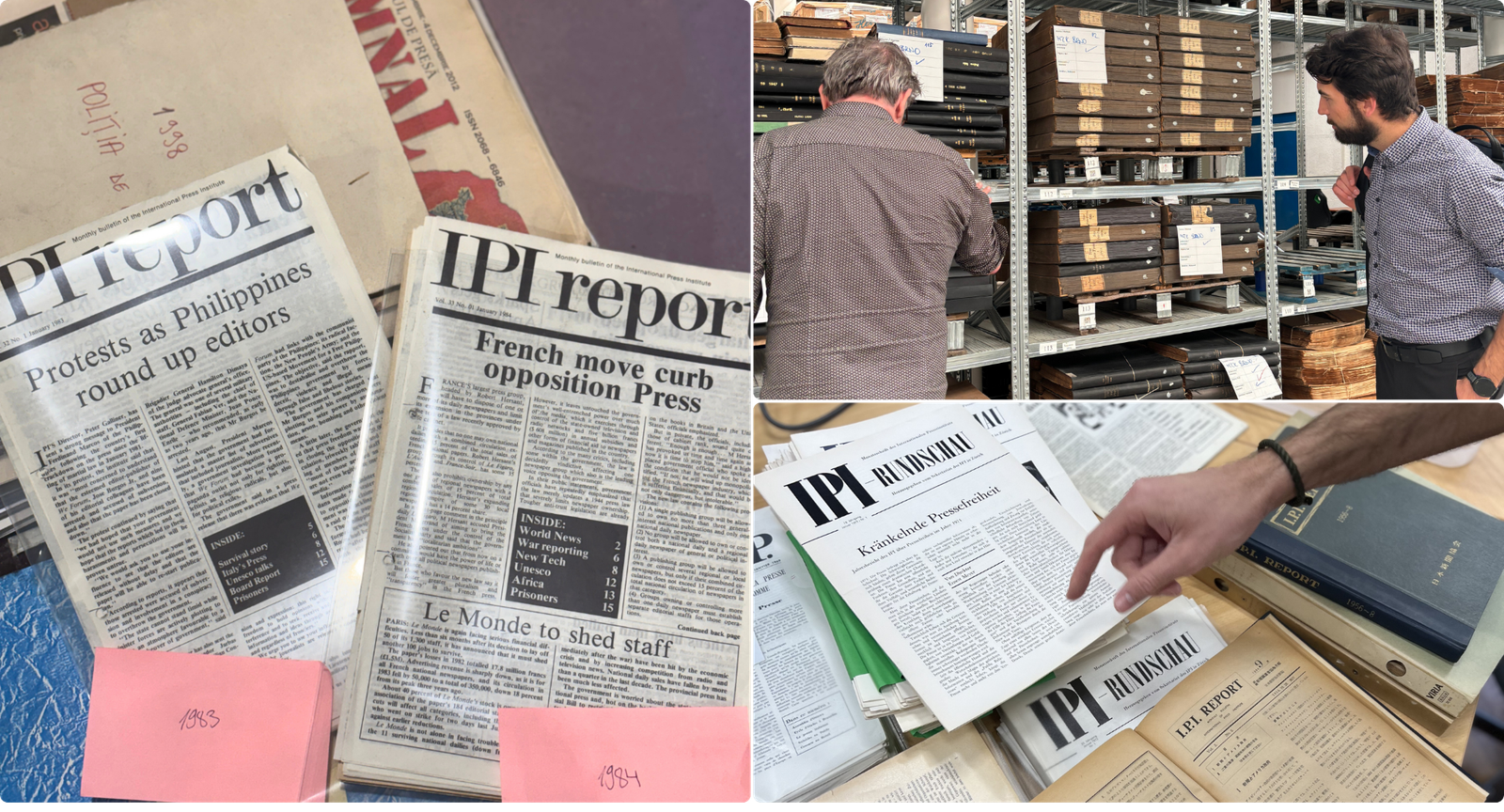
At the centre of the announcement is the successful digitisation of the IPI Report, the organisation’s principal publication produced between 1952 and 2005. The project has made approximately 18,000 pages of historical material fully searchable online for the first time, creating what the organisation describes as one of the most significant archives documenting the evolution of global media freedom.
For more than five decades, the IPI Report served as a platform for discussions and documentation relating to journalism, media development and the defence of press freedom. The publication chronicled major global events including the post-war human rights movement, the Cold War, the era of decolonisation and the emergence of the internet. It also featured debates, book reviews, General Assembly reports and profiles of influential journalists while examining recurring issues such as technological change, the growing participation of women in journalism and changing perceptions of objectivity and media power.
According to IPI, the archive also captures the rich history of its worldwide membership network and the contributions of editors, journalists and media leaders who have dedicated their careers to defending independent journalism and democratic values.
The archive has been made available through Arcanum, a Budapest-based digitisation platform with more than three decades of experience preserving historical records. The collection can be searched in English, German, French, Japanese and Spanish. While access is available through paid subscriptions and more than 200 partner institutions around the world, a free preview mode has also been introduced. IPI further announced that digital copies of the archive will eventually become publicly accessible through a partnership with the Blinken OSA Archivum.
The organisation has encouraged members to explore the archive and contribute memories, historical information and ideas that could support the next phase of the digitisation project.
In addition to preserving journalism’s past, IPI is also investing in the future of the profession. The organisation announced a members-only virtual training programme scheduled for June 16, focusing on interviewing trauma-affected sources.
The training will be conducted by Dr. Kate Porterfield, a senior trainer with the Global Center for Journalism and Trauma, consulting psychologist at the Bellevue Program for Survivors of Torture and Adjunct Professor in Psychiatry at the New York University School of Medicine. Drawing on more than 20 years of experience working with survivors of war, torture and displacement, Dr. Kate Porterfield will guide participants through ethical interviewing techniques, strategies for working with vulnerable communities and methods for protecting journalists from secondary traumatic stress.
The programme will also introduce self-assessment tools aimed at promoting the mental wellbeing of reporters, producers and editors who regularly cover traumatic events.
The newsletter also shines a spotlight on the Somali Journalists Syndicate, one of IPI’s member organisations, following what the organisation described as a disturbing increase in attacks against journalists in Somalia.
IPI reported that throughout May it documented numerous incidents involving arrests, physical assaults and intimidation of journalists. Among those affected was Mohamed Ibrahim Osman, popularly known as Bulbul, the Secretary for Information and Human Rights of the Somali Journalists Syndicate, who was reportedly arrested along with two other journalists during a security operation. According to the organisation, the journalists were allegedly beaten, blindfolded and interrogated over their reporting activities.
IPI has called on the international community to increase pressure on Somali authorities to ensure accountability and protect journalists from further attacks, while expressing its full support for the efforts of the Somali Journalists Syndicate.
Another major highlight in the newsletter is the announcement of the shortlist for the 2026 IPI-IMS Free Media Pioneer Award. Eleven organisations from across Africa, Asia, Europe and Latin America have been nominated in recognition of their innovative and courageous contributions to independent journalism, many of them operating under difficult political conditions or in exile.
The winners will be announced in the coming weeks and formally recognised during the Gabo Festival in Bogotá, Colombia, scheduled for July 24 to 26, where IPI representatives will also meet members and partners.
The organisation also welcomed a large number of new members into its global network, including journalists, editors and media leaders from Africa, Europe and the Americas who joined the IPI network this past month.
The new members come from different parts of the world and represent a wide range of media organisations and journalism specialties.
Among the new members is Sierra Leonean journalist Amin Kef Sesay, Managing Editor of The Calabash Newspaper, whose admission into the network further strengthens Sierra Leone’s representation within the international media community, Eyasu Zekarias Tadesse, reporter and fact-checker at Capitalethiopia and FM 97.7 in Ethiopia; Daniel Drepper, investigative journalist, and Lambertus Robben, Founder and CEO of EU Made Simple, both from Germany; Albert Oppong-Ansah, Desk Head for Environment, Science and Energy at the Ghana News Agency, and Ernestina Asante, multimedia journalist at GhanaWeb, from Ghana.
The new intake also includes Matteo Chiani, Davide Lemmi, Giorgio Michalopoulos and Elisabetta Tola from Italy; Miriam Angil from Kenya; Albina Kastrati from Kosovo; Ahmadou Atafa from Niger; Favour Ulebor-Emmanuel and Alhassan Bala from Nigeria; Dorian Hubati from Romania; Clement Manyathela and Erin Bates from South Africa; Karine Pfenniger from Switzerland; Doğu Eroğlu from Turkey; Steve Menary and Philippe Auclair from the United Kingdom; Natalia Guerrero from the United States/Colombia; and Farai Matiashe from Zimbabwe.
The International Press Institute (IPI) has also welcomed two new organisational members: OCCRP (Organised Crime and Corruption Reporting Project), one of the world’s largest investigative journalism organisations with staff across six continents, and IRPI (Investigative Reporting Project Italy), Italy’s only non-profit investigative journalism centre, which publishes transnational public interest investigations through IrpiMedia.
The newsletter concludes with an extensive list of grants, fellowships and professional development opportunities available to journalists worldwide. These include entrepreneurship grants for exiled media organisations, international journalism awards, reporting fellowships on climate change and artificial intelligence, investigative journalism grants and specialised workshops for media founders.
IPI also reminded members that they can request new membership cards or updated 2026 membership stickers as part of its ongoing efforts to strengthen engagement within the global network.
The latest developments reflect the International Press Institute’s continued commitment to defending media freedom, preserving journalism’s historical legacy and creating new opportunities for journalists to strengthen their skills and expand international collaboration.