

As ECOWAS leaders gather in Freetown and Lungi for the Mid-Year Summit, the official agenda is understandably dominated by security, trade, infrastructure and institutional reform. Those are critical issues for the future of our region. Yet one of the most important economic opportunities in West Africa is still too often treated as a secondary conversation: the creative and entertainment industry.
This week, ahead of the main summit sessions, filmmakers, musicians, digital innovators and policy experts from across the ECOWAS bloc met at Bintumani Hotel to discuss the future of the West African creative economy. The message that emerged from those deliberations was clear: the creative sector is no longer asking to be celebrated; it is asking to be recognized as a serious economic pillar of regional integration.
West Africa possesses extraordinary creative talent. Nollywood has become one of the world’s largest film industries by volume, while Ghanaian music continues to shape global Afrobeats culture. But many ECOWAS countries, including Sierra Leone, Liberia, Guinea, Togo, Benin and The Gambia, remain underrepresented in an industry that their populations enthusiastically consume every day.
The challenge is not a lack of stories. It is a lack of coordinated policy, financing, training and production infrastructure.
For decades, Governments have viewed film and music primarily through a cultural lens. That approach must change. Intellectual property, digital content, streaming distribution and creative services are now major drivers of employment, exports and international influence. The countries that understand this are investing aggressively in film commissions, tax incentives, studio infrastructure and digital distribution networks.
West Africa should do the same.
A practical regional strategy
The discussions in Freetown pointed toward several practical measures that ECOWAS could pursue:
* A regional co-production framework allowing filmmakers and musicians to work across borders with simplified permits and reciprocal incentives.
* A streaming-first distribution strategy that prioritizes digital platforms capable of reaching both African audiences and the diaspora.
* Investment in local-language dubbing and AI-powered translation technologies so content can move easily between Anglophone, Francophone and Lusophone markets.
* A shared training pipeline for editors, sound engineers, camera operators and other technical professionals.
* Harmonized tax and investment incentives to attract regional and international productions.
Those are not theoretical ideas. They are economic tools that have already proven successful in countries such as Rwanda, Kenya and South Africa.
Why Sierra Leone should lead
Sierra Leone is uniquely positioned to take a leadership role. The country has recently invested in conference facilities, logistics infrastructure, roads, power capacity and hospitality services to host major regional events. Those same assets can support a broader creative-industrial strategy.
I believe Sierra Leone should seriously explore the establishment of a dedicated West African Studio City near Lungi or within the wider Port Loko corridor. Few countries in the region offer such a combination of beaches, rainforest, historic architecture, river estuaries and inland landscapes within a relatively compact geographic area. For producers, that means lower travel costs and greater flexibility.
A phased development beginning with a small number of soundstages, backlot facilities and post-production suites could immediately position Sierra Leone as a competitive regional production base.
### The real test after the summit
Summits are often remembered for speeches and communiqués. The more important question is what happens afterwards.
West Africa has the talent, the audience and the cultural influence to build a creative economy capable of generating significant jobs and export revenue. What we have lacked is coordinated political commitment.
If ECOWAS can integrate trade corridors and transportation networks, it can also integrate creative markets. A stronger regional film and music industry would not only create economic opportunities; it would reshape how the world sees West Africa.
For too long, our region has been defined internationally by conflict, instability or humanitarian crises. Through our films, music and digital storytelling, we have the power to present a different narrative; one built on creativity, innovation and cultural confidence.
The conversations that began in Freetown this week should not end when the summit closes. They should become the foundation of a new regional economic strategy in which West Africa’s creative industry finally takes its rightful place at the ECOWAS table.
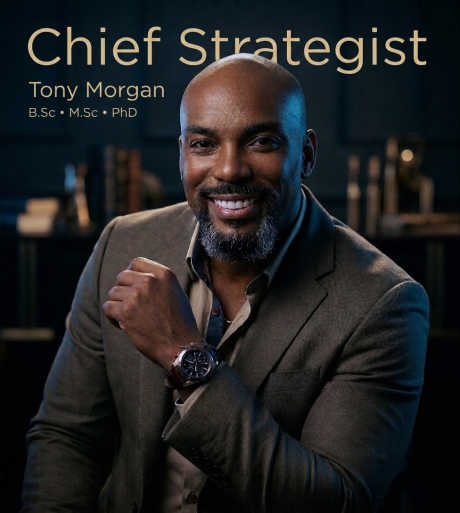
Dr. Tony Morgan is a filmmaker, executive diplomat and advocate for the development of West Africa’s creative economy.