

The Independent Commission for Peace and National Cohesion (ICPNC) has renewed calls for the full implementation of the Truth and Reconciliation Commission (TRC) Recommendations, emphasizing that sustained dialogue, institutional accountability and collective commitment remain essential for preserving peace and strengthening national cohesion in Sierra Leone. The appeal was made during a high-level Stakeholder Review Meeting held on Tuesday, 14 July 2026, at the Ministry of Defence Conference Room, Tower Hill, Freetown, pursuant to Section 12(c) of the Independent Commission for Peace and National Cohesion Act, 2020.
The meeting brought together representatives from Government Ministries, Departments and Agencies, Parliament, political parties, Civil Society Organizations, development partners, governance institutions and the media to assess progress made in implementing the TRC Recommendations, identify remaining gaps, strengthen coordination and improve accountability. Discussions also focused on preparing an updated national report documenting achievements, outstanding commitments and future priorities for advancing reconciliation, justice and lasting peace.
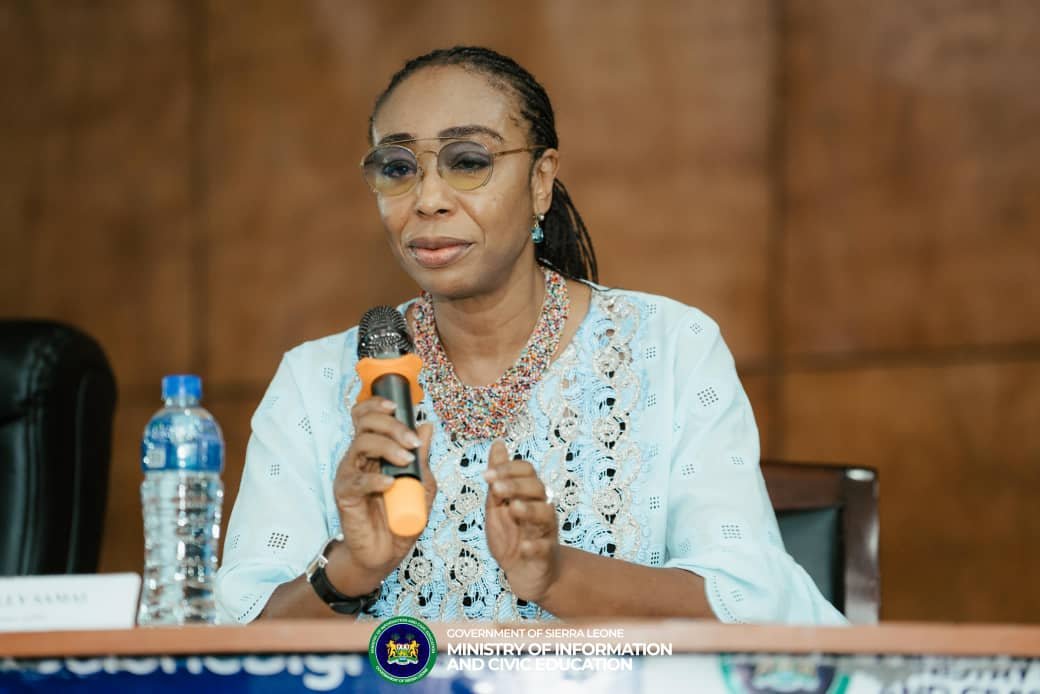
Opening the meeting, ICPNC Executive Secretary, Hawa Sally Samai, described the review as an opportunity to honestly assess the country’s progress while renewing commitment to the unfinished work of reconciliation. She stressed that the exercise was not merely about reporting achievements but ensuring that the experiences and aspirations of survivors, families, communities, women and young people remain central to Sierra Leone’s peacebuilding journey.
“We are here to look back with honesty and look forward with hope,” Hawa Sally Samai said. She acknowledged that Sierra Leone has made significant progress since the civil war by rebuilding institutions, conducting democratic elections and maintaining relative peace, but cautioned that those gains should never be taken for granted.
According to her, peace belongs to every Sierra Leonean and requires active participation from Government institutions, Parliament, political parties, traditional and religious leaders, Civil Society Organizations, development partners, women, youth, the media and citizens.
“Peace is a shared responsibility,” she emphasized, adding that reconciliation demands practical action rather than symbolic commitments. She noted that peace should be reflected in everyday life, where children attend school without fear, farmers cultivate safely, traders conduct business freely, neighbors resolve differences peacefully and women and young people participate meaningfully in national decision-making.
Delivering the keynote address, Attorney General and Minister of Justice, Alpha Sesay, reaffirmed Government’s commitment to ensuring that the TRC Recommendations continue to guide national reforms. He described implementation of the recommendations as both a legal obligation and a moral responsibility, acknowledging that several important recommendations remain only partially implemented, particularly those relating to reparations, governance reforms, accountability, institutional strengthening and legislative changes.
“The victims of our conflict are still alive, still waiting and still watching. They deserve more than good intentions; they deserve action,” the Attorney General declared.
He announced that the Office of the Attorney General and Minister of Justice will undertake a comprehensive review of all legislative recommendations contained in the TRC Report and publicly report on their implementation status. He also pledged closer collaboration with ICPNC in fulfilling its statutory responsibility to monitor and evaluate implementation.
“The Truth and Reconciliation Commission was never meant to be the end of a process. Its recommendations were intended to guide lasting reforms and strengthen our democracy,” he stated.
He further linked implementation of the recommendations to Sierra Leone’s ongoing constitutional reform process, stressing that both initiatives seek to address governance weaknesses, exclusion and institutional failures that contributed to the country’s conflict.
“We owe the people of Sierra Leone more than good intentions. We owe them action,” he concluded.
Providing historical reflections, Dr. Emmanuel Gaima, Principal Executive Adviser to the President on Public Service and Head of the Public Sector Reform Unit, recalled that the Truth and Reconciliation Commission emerged from extensive consultations involving Government, Civil Society Organizations, development partners, the National Forum for Human Rights and communities across Sierra Leone following the civil war.
“We cannot build a peaceful future without creating space for people to tell their stories and acknowledge the truths of our past,” Dr. Emmanuel Gaima said, urging institutions to preserve the collaborative spirit that shaped the country’s reconciliation process.
Participants also proposed practical measures to strengthen implementation and accountability. Dr. Kaifala Marah of the All People’s Congress recommended establishing an online implementation tracker to enable citizens to monitor progress while holding institutions accountable. Other stakeholders proposed introducing standardized reporting templates to improve consistency and strengthen monitoring and evaluation across responsible institutions.
On the same day, Hawa Sally Samai addressed the Ministry of Information and Civic Education’s Weekly Press Conference at the Miatta Civic Centre on the theme, “The ECOWAS Summit and the Implications for Peace and National Cohesion.”
Speaking alongside Information and Civic Education Minister ,Chernor Bah, she said recent national developments provide an opportunity to strengthen reconciliation and rebuild trust among political actors and citizens. Referring to the Government’s public notice announcing the discontinuance of criminal proceedings against former President Dr. Ernest Bai Koroma, she said the development should encourage dialogue rather than deepen political divisions.
“The question now is: what happens next?” she asked, stressing that agreements alone cannot guarantee peace unless they are fully implemented.
Hawa Sally Samai disclosed that the Commission has already begun engaging political stakeholders to understand their commitments and support implementation of national agreements. She noted that assessments indicate approximately 61 percent of the TRC Recommendations remain outstanding, particularly in governance, reconciliation, social justice and national healing.
She urged Sierra Leoneans to protect the country’s hard-earned peace and resist actions capable of creating unnecessary divisions.
“Great societies are not sustained by the absence of difference but by the presence of dialogue,” she stated. “Peace is not accidental. It is deliberate. It is built in the choices we make when the stakes are highest.”
She further called on citizens, institutions and leaders to demonstrate restraint, responsibility and commitment to peaceful engagement.
The ICPNC has also commenced consultations with key institutions, including the Political Parties Regulation Commission, Parliament, the Office of National Security, the Independent Police Complaints Board, the National Civil Registration Authority and the Electoral Commission for Sierra Leone to support implementation of the Agreement for National Unity and the Tripartite Committee Recommendations.
Concluding both engagements, Hawa Sally Samai reaffirmed the Commission’s commitment to promoting dialogue, reconciliation and inclusive governance.
“As we review the TRC Recommendations, let us approach this process with open minds and sincere hearts. Let us listen to one another, respect different views and work together with clear actions that strengthen trust and reconciliation.”
The review meeting ended with renewed commitments from Government, oversight institutions, political parties, civil society and development partners to accelerate implementation of the TRC Recommendations, strengthen democratic institutions, promote accountability and preserve Sierra Leone’s peace. Participants agreed that lasting national cohesion will depend on sustained dialogue, genuine collaboration, practical reforms and collective determination to transform the lessons of the past into a more peaceful, inclusive and prosperous future for every citizen across the country together.