
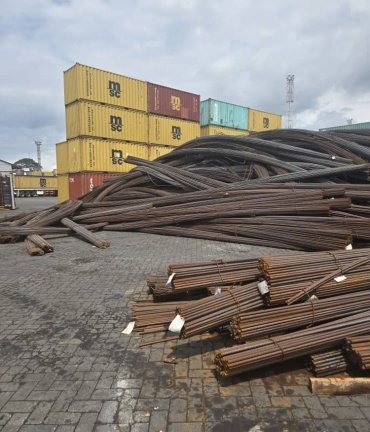
Sonoco Sierra Leone, a major agribusiness and industrial affiliate of the regional Sonoco Group headquartered in Guinea, has come under scrutiny following allegations that iron rods imported into Sierra Leone under a duty-free concession have been diverted into the local commercial market instead of being used for their declared purpose.
According to information obtained by this medium from a source with knowledge of the construction materials sector, the shipment was allegedly declared under a customs duty exemption reportedly granted for a development project. The source claimed that the materials were imported without payment of customs duties, Goods and Services Tax (GST) or other applicable import charges before allegedly being sold to businesses operating within Sierra Leone.
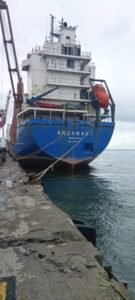
This medium has reviewed a Cargo Manifest relating to a shipment transported aboard the vessel M/V ANUNNAKI, which provides details of a consignment of steel products imported into Sierra Leone.
The cargo manifest shows that the vessel loaded the cargo at Aliaga Port, Türkiye (Turkey) before arriving at the Port of Freetown, Sierra Leone. The shipment was exported by Metal Market Dis Ticaret A.S., based in Kozyatağı Mahallesi, Gulbahar Sokak, Istanbul, Türkiye.
According to the manifest, the consignee was listed as “To the Order of Banque Pour Le Commerce et L’Industrie de Guinée (BCI Guinea),” while the notify party included SIEG BCI, Avenue de la République, Conakry, Guinea, together with Metal Import, Matoto Marché Matoto, Conakry, Guinea. Sources allege that Metal Import was used by Sonoco Sierra Leone in connection with the shipment.
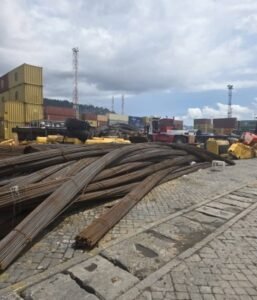
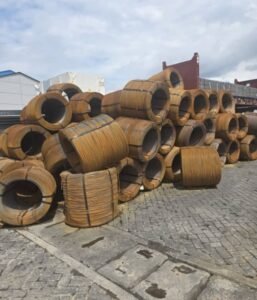
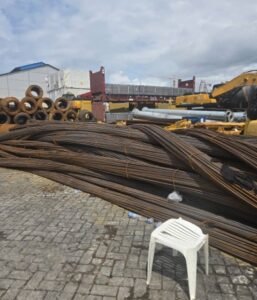
The cargo manifest indicates that the shipment consisted of steel bars and rebar in coils, comprising 2,274 bundles of steel bars weighing 4,612.989 metric tonnes and 346 coils weighing 579.100 metric tonnes, making a total of 2,620 packages. The manifest records a theoretical cargo weight of 5,192.089 metric tonnes and a gross weight of 4,621.320 metric tonnes.
The allegations point to significant revenue losses for the Government of Sierra Leone while creating an uneven playing field for local manufacturers and importers who comply with customs and tax obligations.
The source, who requested anonymity for fear of reprisals, alleged that compliant businesses are finding it increasingly difficult to compete with products that allegedly entered the country under duty-free arrangements.
Manufacturers and importers who pay customs duties cannot compete with materials that allegedly entered duty-free and are then sold on the local market at lower prices. “I employ about 500 workers and pay all the required duties and taxes. How can we compete under those conditions?” the source told this medium.
The source further claimed that the shipment was declared to the Customs Department as duty-free under an exemption linked to a specific project, but alleged that the imported iron rods were instead being supplied to businesses in the local market at significantly reduced prices.
According to the source, such practices would undermine fair competition, place compliant businesses at a commercial disadvantage and reduce Government revenue that would otherwise be collected through customs duties and taxes.
The source urged the National Revenue Authority (NRA) especially the Customs Department to conduct a comprehensive investigation into the shipment, including examining the customs declarations, import documentation, duty exemption approvals and the final destination of the imported materials.
“The documentation and the cargo can be verified. If the authorities investigate the shipment and examine the relevant customs records, they will be able to determine whether the materials were lawfully imported under a duty exemption and whether the conditions attached to that exemption were complied with,” the source alleged.
This medium has reviewed cargo and shipping records relating to steel coils and associated accessories among cargo transported aboard MV ANUNNAKI.
The source also indicated that discussions had initially linked another company to the shipment. However, the source acknowledged that no documentary evidence had been produced to substantiate those claims and advised that any report should focus solely on the allegation that the iron rods were imported under a duty-free declaration unless additional evidence becomes available.
At the time of publication, efforts to obtain official responses from Sonoco Sierra Leone and the National Revenue Authority regarding the allegations, including whether a duty-free concession was granted for the shipment, the conditions attached to any such exemption and whether any official investigation has been initiated. Their responses will be published once received.
Industry stakeholders note that duty exemptions are an important Government policy tool for encouraging investment, industrial development and strategic infrastructure projects. However, they caution that any abuse of such concessions, if established through a lawful investigation, could result in substantial revenue losses for the state, distort market competition and undermine confidence in Sierra Leone’s customs administration.
The allegations have generated concern among manufacturers and importers who say strict enforcement of customs regulations is essential to ensuring a level playing field for all businesses operating in Sierra Leone.
This medium understands that the materials remain at the Queen Elizabeth II Quay. It is therefore calling on the National Revenue Authority (NRA), the Sierra Leone Standards Bureau (SLSB) and other relevant regulatory and revenue agencies to inspect and verify the shipment, review all applicable customs documentation and take any lawful action deemed necessary if irregularities are identified.
This medium will continue to monitor developments and publish any verified findings from the relevant authorities, together with responses from Sonoco Sierra Leone and any other parties connected to the matter, as they become available.