
By Amin Kef (Ranger)
Sierra Leone’s media sector is facing renewed scrutiny and growing concern following a significant drop in the country’s global Press Freedom ranking, as key stakeholders including the Sierra Leone Association of Journalists, the Sierra Leone Reporters Union and the Media Freedom Coalition warn of increasing threats to journalism and call for urgent reforms to safeguard the profession.
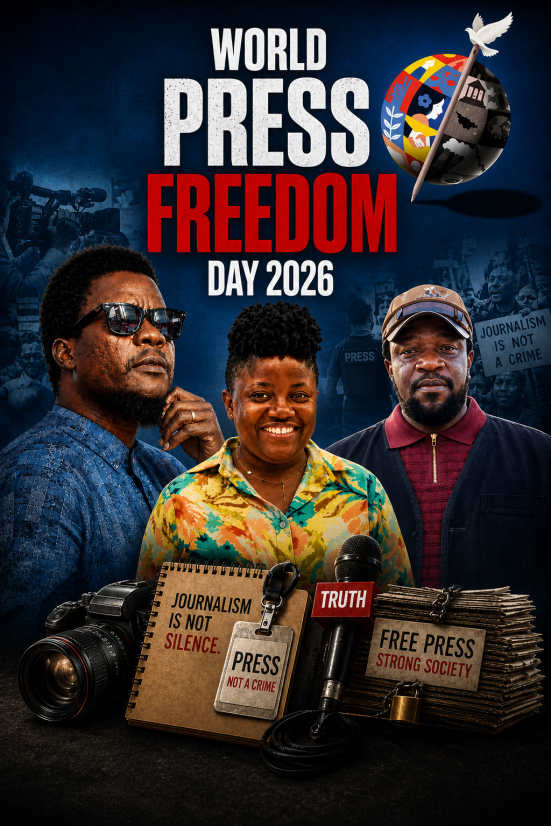
The warning comes in the wake of the 2026 World Press Freedom Index released by Reporters Without Borders, which shows Sierra Leone dropping more than 20 places to approximately 79th position, with a declining score that reflects mounting challenges in journalist safety, economic stability and political tolerance. The development coincides with global commemorations of World Press Freedom Day, a moment traditionally reserved for reflection on the role of journalism in advancing democracy, peace and accountability.
At the international level, the Media Freedom Coalition has sounded a stark warning about the deteriorating conditions under which journalists operate. In a statement marking World Press Freedom Day, the Coalition stressed that journalism remains a cornerstone of democratic societies and global peace, even as it comes under sustained attack.
The Coalition highlighted that journalists working in conflict zones and politically volatile environments are increasingly exposed to violence, harassment and intimidation. Drawing on data from the Committee to Protect Journalists, it noted that at least 129 journalists were killed in 2025, making it one of the deadliest years for media professionals in decades.
According to the Coalition, the risks now extend beyond physical harm to include digital threats, misinformation, surveillance and economic suppression. It observed that symbols once associated with protection, such as “PRESS” identification, are increasingly becoming targets, reflecting a troubling shift in how journalists are perceived in crisis situations.
The Coalition urged Governments worldwide to end impunity for crimes against journalists, strengthen legal protections and ensure that media practitioners can operate freely and safely. It emphasized that protecting journalism is not only a democratic obligation but also a critical investment in global stability and peace.
Within this global context, Sierra Leone’s performance in the 2026 index has triggered widespread concern among media stakeholders. The country, once regarded as a reform success story following the repeal of criminal libel laws, is now facing a reversal that analysts say reflects deeper structural challenges.
Observers attribute the decline largely to worsening safety conditions for journalists. Reports of threats, intimidation and harassment, particularly during politically sensitive periods, have increased raising fears that journalists may resort to self-censorship to avoid reprisals.
The findings suggest that while legal reforms have improved the formal framework for press freedom, they have not fully translated into a safe and enabling environment for journalists. That disconnect between law and practice has become a central issue in discussions about the future of media freedom in Sierra Leone.
Economic vulnerability also remains a major concern. Many media houses operate under severe financial constraints, relying heavily on advertising from Government institutions and politically affiliated entities. That dependency creates pressure on editorial independence and limits the ability of journalists to pursue critical reporting without fear of financial consequences.
Responding to the index, the Sierra Leone Association of Journalists (SLAJ) has renewed its call for stronger and more durable protections for press freedom. The Association emphasized the need for constitutional guarantees that explicitly safeguard freedom of expression and the safety of journalists.
SLAJ acknowledged the progress made through the repeal of criminal libel but warned that such gains remain fragile without broader institutional support. The Association expressed concern over provisions in existing laws, including aspects of the Cybersecurity and Crime Act and the Counter-Terrorism Act, which it believes could be misused to restrict legitimate journalistic activity.
The Association also drew attention to the growing threat of digital harassment, particularly targeting female journalists and called for stronger measures to address online abuse and intimidation. It stressed that protecting journalists requires a comprehensive approach that goes beyond legal reform to include enforcement, accountability and cultural change.
SLAJ further underscored the importance of strengthening the media ecosystem through capacity building, ethical standards and sustainable funding mechanisms. It highlighted the role of initiatives such as the National Fund for Public Interest Media in supporting independent journalism and urged continued commitment from Government and development partners.
The Sierra Leone Reporters Union (SLRU) has echoed similar concerns, emphasizing that press freedom is essential to national development, peace and democratic governance. In its World Press Freedom Day message, the Union warned that journalists continue to face multiple pressures that undermine their work.
The Union pointed to challenges including poor working conditions, limited access to information, economic hardship and rising threats against reporters. It noted that misinformation and emerging technologies are further complicating the media landscape, making it more difficult for journalists to maintain credibility and public trust.
SLRU maintained that a free press should not be seen as an adversary of the state but as a partner in nation-building. It called on Government institutions, security agencies and the public to respect the role of journalists and ensure their protection.
Reaffirming its commitment to defending the rights and welfare of reporters, the Union stressed that the future of Sierra Leone’s democracy depends on the ability of journalists to operate without fear or interference.
Adding to the national conversation, communication and media expert Dr. Tonya Musa has called for a fundamental reset in how journalism is supported and protected in Sierra Leone.
He described the current moment as a turning point shaped by both progress and persistent challenges, noting that the country’s decline in the press freedom index reflects deeper systemic issues. He highlighted the sharp drop in safety rankings as particularly alarming, pointing to increased risks faced by journalists covering sensitive topics.
Dr. Tonya Musa acknowledged the significance of past legal reforms but cautioned that they are insufficient without effective implementation and broader structural support. He warned that certain legislative provisions could be used to suppress dissent if not carefully managed.
A key concern, he noted, is the economic fragility of the media sector. According to him, sustainable journalism cannot exist without sustainable funding models, as financial vulnerability exposes media institutions to undue influence and compromises editorial independence.
He also addressed the impact of digital transformation, noting that while technology has expanded opportunities for journalism, it has also introduced new risks, including misinformation, surveillance and the erosion of traditional gatekeeping roles.
Dr. Tonya Musa emphasized the need for improved media literacy among citizens, warning that a poorly informed public is more susceptible to manipulation in an increasingly complex information environment. He called for greater investment in public education and community-based initiatives to strengthen critical thinking and civic engagement.
Raising broader questions, he challenged stakeholders to reflect on the contradictions within Sierra Leone’s media landscape, including how legal progress can coexist with declining press freedom and how journalism can remain independent amid financial dependency.
The combined responses from SLAJ, SLRU, the Media Freedom Coalition and media experts underscore the urgency of addressing the challenges facing journalism in Sierra Leone. While the country has made notable strides in reforming its media laws, the 2026 press freedom index highlights the need for deeper, more sustained action.
Stakeholders agree that protecting press freedom requires a holistic approach that includes legal safeguards, economic support, institutional accountability and cultural respect for the role of journalism.
As Sierra Leone navigates this critical moment, the choices made by Government, media institutions and society at large will determine whether the country can reclaim its progress or continue on a path of decline.
The message from all sides is clear: a free, independent and secure press is not optional; it is essential to democracy, peace and national development.