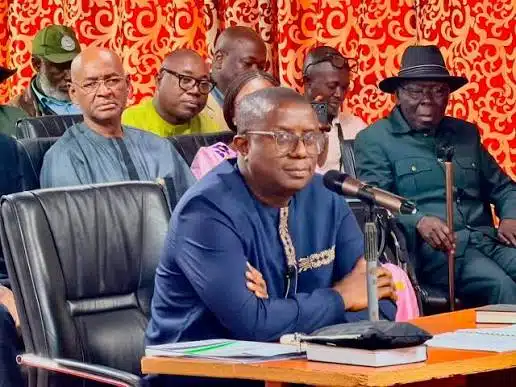
The Ministry of Employment, Labour and Social Security has issued a strong warning to employers across Sierra Leone to comply fully with Section 25 of the Employment Act, 2023, particularly provisions relating to the protection and payment of workers’ End-of-Service and Gratuity Benefits.
The Ministry, in a public notice dated September 16, 2026, reminded all employers, both public and private, of their statutory obligations under the law and urged them to immediately review their existing arrangements to ensure full compliance.
Section 25 of the Employment Act, 2023 (Act No. 15 of 2023), requires employers to establish a separate End-of-Service/Gratuity Benefits Bank Account for the payment of workers’ terminal benefits.
Employers are also required to submit an annual status report of the account to the Commissioner of Labour and comply with prescribed arrangements governing such accounts.
The Ministry further emphasized that funds held in the designated account must not be withdrawn without prior written notice to the Commissioner of Labour.
According to the Ministry, those requirements are mandatory statutory obligations and are not optional measures for employers operating in Sierra Leone.
The Ministry has therefore strongly urged all employers to review their End-of-Service and Gratuity Benefit arrangements and take the necessary steps to ensure that they conform to the provisions of the Employment Act, 2023.
The public notice warns that any employer or responsible officer who fails to comply with Section 25 commits an offence. Upon conviction, the offender is liable to a fine of not less than 300 months of the national minimum wage, imprisonment for a term of not less than three years or both.
The law also provides for the possible closure of an offending establishment in the case of a repeat offender, subject to the applicable statutory requirements.
The Ministry said it will intensify monitoring and enforcement measures to ensure workers’ End-of-Service and Gratuity Benefits are properly protected and that employers comply with the law.
It called on all employers to take the requirements seriously and comply fully with Section 25, warning that defaulters will face the consequences prescribed by law.
The Ministry concluded its notice with a clear warning to employers: “You have been warned.”
The Governments of Sierra Leone and Guinea have agreed on a comprehensive package of measures aimed at strengthening bilateral cooperation, protecting their nationals, improving cross-border trade and employment arrangements, enhancing border security and regulating certain forms of overseas employment travel.
The agreements followed a high-level working visit to Conakry by a Sierra Leone Government delegation led by Vice President Dr Mohamed Juldeh Jalloh. The Sierra Leonean delegation held bilateral engagements with the Government of Guinea, led by Prime Minister Amadou Oury Bah, on September 9, 2026.
The engagement reaffirmed the longstanding friendship and good neighbourliness between Sierra Leone and Guinea and provided strategic direction for addressing issues affecting both countries and their citizens.
Following the high-level talks, officials from the two countries convened an inter-ministerial working meeting at Guinea’s Ministry of Territorial Administration and Decentralization. Discussions centred on immigration, labour and employment, trade, consular affairs, security and the safe and lawful movement of citizens between the two neighbouring countries.
One of the major outcomes was an agreement to facilitate the regularization of Sierra Leoneans and Guineans living and working in each other’s country. Authorities will support nationals in obtaining the necessary residence and employment documentation in accordance with national laws and regional free-movement arrangements.
Special attention will be given to workers, with both Governments seeking to facilitate their movement from informal employment into the formal economy, where they can benefit from labour protections, social security and other applicable rights.
Both Governments also agreed to encourage their nationals living in the neighbouring country to voluntarily register with their respective embassies or designated consular authorities. The arrangement is intended to strengthen consular protection and improve access to identification documents and other consular services. However, such registration will not constitute an additional requirement for lawful entry, residence or movement.
A significant aspect of the agreement relates to overseas employment travel. Sierra Leone and Guinea reaffirmed the right of their citizens to travel between both countries, including through their international airports, under applicable laws and ECOWAS and Mano River Union free-movement frameworks.
However, the two Governments agreed to temporarily suspend facilitated large-group travel arrangements for employment in third countries, including destinations in the Middle East, where such groups intend to transit through the other country’s international airport.
According to the agreement, the temporary measure is designed to allow authorities to develop safeguards against human trafficking, migrant smuggling, fraudulent recruitment, exploitation, mass deportation and other risks associated with irregular overseas employment.
The measure does not affect ordinary individual, family, business, official or other lawful travel between Sierra Leone and Guinea. It applies specifically to facilitate large-group employment travel through the other country’s airport. Authorities are expected to develop the necessary procedures in the coming weeks.
Border security also featured prominently in the discussions. Sierra Leone and Guinea reaffirmed their commitment to implementing the Tripartite Communiqué on border security signed by the Heads of State of Guinea, Liberia and Sierra Leone. The two countries agreed to work with Liberia and, where appropriate, the Mano River Union to strengthen border security, information-sharing and regional coordination.
On cross-border commerce, the two Governments agreed to establish a joint mechanism to identify, register and support Sierra Leonean and Guinean nationals engaged in commercial activities in each other’s territory.
The initiative seeks to promote lawful trade, protect traders and encourage businesses to transition into the formal economy. Authorities will explore simple and reciprocal registration arrangements, including the possibility of a mutually recognized trader identification mechanism or trader’s card. No new trader identification requirement will take effect until procedures have been agreed and communicated to affected traders.
To ensure that the agreements move beyond diplomatic commitments, Sierra Leone and Guinea further agreed to establish a Joint Inter-Ministerial Committee and a Joint Technical Committee to coordinate, monitor and facilitate implementation.
Sierra Leone’s representation on the Joint Inter-Ministerial Committee will include the Minister of Internal Affairs, Minister of Employment, Labour and Social Security, Minister of Information and Civic Education, Deputy Minister of Foreign Affairs, Minister of Trade and Industry and Sierra Leone’s Ambassador to Guinea.
The Joint Technical Committee will bring together senior officials from relevant institutions dealing with immigration and border management, foreign affairs, labour and employment, trade, security, information and public communication. It will develop implementation arrangements and periodically report progress and challenges to the Joint Inter-Ministerial Committee.
Both Governments agreed that implementation will be guided by reciprocity, mutual respect, transparency, non-discrimination, protection of nationals and respect for national and regional legal frameworks. Authorities will also conduct public sensitization before measures directly affecting citizens are implemented.
The Joint Technical Committee is expected to submit an implementation status report every six months, while the ministerial body will review progress and issue further directions where necessary.
The agreement concluded with both Governments reaffirming their commitment to continued dialogue and cooperation aimed at strengthening the longstanding relationship between the peoples and Governments of Sierra Leone and Guinea.
The British High Commissioner to Sierra Leone, Josephine Gauld, has expressed appreciation for the ongoing reforms being undertaken by the Judiciary under the leadership of Chief Justice Komba Kamanda.
High Commissioner Josephine Gauld made the commendation during a courtesy visit to Chief Justice Komba Kamanda at his Chambers in Freetown on 15 September 2026, where discussions focused on the Judiciary’s priorities for the 2026/27 judicial year and opportunities to strengthen cooperation between Sierra Leone and the United Kingdom.
During the engagement, Josephine Gauld congratulated Chief Justice Komba Kamanda on the Judiciary’s priorities for the new judicial year and discussed several areas of mutual interest, including judicial reforms, support from the UKSL Pro Bono Network and continued collaboration between the two countries in strengthening the rule of law and administration of justice.
The meeting also provided an opportunity for the British High Commissioner to express her appreciation to Chief Justice, Komba Kamanda for inviting her to the Judicial Thanksgiving Service held on Sunday at Saint George’s Cathedral in Freetown.
Chief Justice Komba Kamanda, in turn, thanked Josephine Gauld for the United Kingdom’s continued support to the Judiciary and for attending and gracing the Thanksgiving Service.
Chief Justice Komba Kamanda welcomed further support and collaboration that could contribute to improving the administration of justice across Sierra Leone. He underscored the importance of partnerships in strengthening the country’s justice system and ensuring effective access to justice.
The engagement underscores the continued cooperation between Sierra Leone and the United Kingdom in promoting the rule of law, access to justice and an effective and independent Judiciary.
Sierra Leone is set to showcase its growing aviation ambitions and investment opportunities on a major continental platform when the Director General of the Sierra Leone Civil Aviation Authority (SLCAA), Madam Musayeroh Barrie, takes part in the Africa 100 Most Influential Persons Conference & Awards in Kigali, Rwanda, on 25 September 2026.
Madam Musayeroh Barrie will represent Sierra Leone at the high-profile gathering, where she is scheduled to speak during a live red-carpet engagement focusing on civil aviation leadership, institutional excellence, investment opportunities and strategic partnerships in Africa’s aviation sector.
Her participation will provide an international platform to highlight Sierra Leone’s aviation sector, its development priorities and opportunities for investors and strategic partners seeking to participate in Africa’s expanding aviation industry.
The live session, which will be broadcast on YouTube, is expected to feature discussions on “Civil Aviation Leadership: Seize Opportunities” and “Civil Aviation Authority Excellence in Africa.”
Madam Musayeroh Barrie is also expected to share insights into her leadership journey and her experience leading the Sierra Leone Civil Aviation Authority, under a session examining the theme, “From Vision to Director General: Leading Sierra Leone Civil Aviation Authority.”
A major focus of her engagement will be investment opportunities and partnerships in Africa’s aviation sector. She is expected to outline approaches to attracting partners for scalable aviation initiatives and discuss how strategic investment can support the growth and sustainability of aviation across the continent.
The programme will further feature a live question-and-answer session addressing funding the future of Africa’s aviation sector and inspiring the next generation of aviation professionals and leaders.
The Business Executive Group, which is organizing the engagement, said Madam Musayeroh Barrie’s live appearance will provide exposure to investors, business leaders and potential partners across Africa through YouTube, its website and The Business Executive Magazine.
The organizers have encouraged stakeholders, business leaders, partners and members of the public to follow the broadcast and participate online using the hashtag #Africa100KigaliLive.
Madam Musayeroh Barrie’s participation in Kigali is expected to place Sierra Leone’s civil aviation ambitions before a wider African and international audience, while creating an opportunity to promote dialogue around investment, partnerships and sustainable aviation development.
The Africa 100 Most Influential Persons Conference & Awards will be held in Kigali, Rwanda, on 25 September 2026, with Madam Musayeroh Barrie scheduled to appear live from the red carpet.
The Commissioner of the Anti-Corruption Commission (ACC), Francis Ben Kaifala, together with Deputy Commissioner Augustine Foday Ngobie and senior officials of the Commission, on Wednesday, 16 September 2026, presented the ACC’s 2025 Annual Report to President Julius Maada Bio at State House in Freetown.
The presentation was made in fulfilment of the Commission’s statutory obligation under Section 19(1) of the Anti-Corruption Commission Act No. 12 of 2008, as amended in 2019.
Presenting the report, Deputy Commissioner, Augustine Foday Ngobie described the occasion as the fulfilment of an important statutory responsibility, noting that the report provides a comprehensive account of the Commission’s activities, achievements, progress and challenges during the 2025 reporting period.
He highlighted the work undertaken across the Commission’s core areas, including prosecution, prevention, audits, investigations and intelligence, public education and outreach, human resource and administration. He also referenced the work of the Project Coordination Office, which is responsible for the grievance redress component of the Productive Social Safety Net and Youth Employment (PSSNYE) Scheme, as well as the National Anti-Corruption Strategy Secretariat and the Commission’s regional offices in Bo, Makeni, Port Loko, Kenema and Kono.
Commissioner Francis Ben Kaifala highlighted several major achievements recorded during the year, including the rollout of the National Anti-Corruption Strategy (NACS) 2024–2028 and strengthened enforcement of asset declaration requirements.
According to the report, 1,541 public officers were sanctioned for defaulting on their 2024 asset declarations, contributing to an asset declaration compliance rate of 99.54 percent.
The Commission also reported significant results in its enforcement activities. Of the 13 persons tried for corruption before the High Court during the reporting period, 12 were convicted, representing a 92 percent conviction rate.
The enforcement actions also resulted in the recovery of NLe23, 556,597, while NLe1, 394,491 was paid in restitution and NLe1, 460,000 in fines by persons convicted of corruption.
The ACC further reported progress in Sierra Leone’s international governance indicators. The country’s ranking on the Transparency International Corruption Perceptions Index improved from 114th in 2024 to 109th in 2025. The Commission also highlighted Sierra Leone’s eighth consecutive year of meeting the relevant excellence threshold on the Millennium Challenge Corporation scorecard.
Deputy Commissioner Augustine Foday Ngobie noted that the Commission had also strengthened its institutional framework during the year through the development and operationalization of the Whistleblower and Witness Protection Regulations 2025, in collaboration with the Office of the Attorney-General and Minister of Justice and Parliament.
He said the regulations were designed to strengthen protection for individuals who report corruption or provide evidence in corruption-related matters in the public interest, including mechanisms aimed at preventing retaliation.
The Commission also expanded its public engagement through intensified public education and sensitization programmes, increased social media and digital outreach, and stronger collaboration with the media and civil society organisations through formal partnerships and Memoranda of Understanding.
In his response, President Julius Maada Bio welcomed the ACC leadership and staff and commended the Commission for its contribution to Sierra Leone’s development and the fight against corruption.
President Bio praised the Commission’s leadership for the progress outlined in the 2025 Annual Report. He urged the Commission to remain unwavering in the discharge of its mandate.
The President described corruption as “an enemy of the state and a natural risk to the development of a nation,” stressing that the fight against corruption requires sustained commitment because the problem remains persistent.
He encouraged the ACC to remain relentless in its work while paying particular attention to protecting vulnerable citizens from the effects of corruption.
President Bio also emphasized the importance of safeguarding public resources, noting that while revenue collection falls within the responsibility of institutions such as the National Revenue Authority, ensuring that public resources are properly protected and used for their intended purposes remains an important part of the fight against corruption.
He described the ACC’s mandate as a “hard task” and urged its leadership and staff to remain vigilant in responding to emerging technological risks.
The President specifically called on the Commission to pay attention to the growing use of advanced technology and artificial intelligence, warning that such technologies could also be exploited by individuals seeking to undermine institutions and facilitate corrupt practices.
President Bio concluded by encouraging the ACC to remain resolute and not relent in the fight against corruption, while formally receiving the Commission’s 2025 Annual Report.
The presentation marks another stage in the Commission’s statutory reporting process and provides an overview of its enforcement, prevention, public education, institutional and policy activities during the year under review.
Sierra Leone’s Vice President, Dr. Mohamed Juldeh Jalloh, has called for the FY2027 national budget to place greater emphasis on economic growth, private-sector expansion and job creation, stressing that public spending must translate into measurable improvements in productivity and the lives of citizens.
Dr. Mohamed Juldeh Jalloh made the call on Wednesday, 16 September 2026, while delivering the keynote address at the formal commencement of the FY2027 Budget Process at the Miatta Civic Centre in Freetown.
The Vice President said the national budget should be viewed as more than a statement of Government revenue and expenditure, noting that it determines the priorities to be protected, investments to be accelerated and how public resources entrusted to the Government ultimately improve the lives of citizens.
“Today, I formally launch the FY2027 Budget Process under the theme ‘Building Resilience to Create Jobs,’” Dr. Mohamed Juldeh Jalloh said.
“Our focus is clear: use our resources wisely, create the conditions for businesses to grow and invest, and expand opportunities for our young people,” he added.
A central focus of the Vice President’s address was the Government’s target of creating 500,000 jobs for young people by 2030 under the Youth Employment Scheme Game Changer, with at least 30 per cent representation of women.
Dr Mohamed Juldeh Jalloh stressed that the target could not be achieved through individual Ministries, Government programmes or expansion of the public payroll alone.
“Under the Youth Employment Scheme Game Changer, the Government has set an ambitious target of creating 500,000 jobs for young people by 2030, with at least 30 per cent representation of women. No single Ministry, programme or the Government payroll can deliver this target,” he said.
According to the Vice President, achieving the employment target will require an economy capable of generating opportunities across agriculture, manufacturing, mining, construction, energy, tourism, technology, the creative industries and services.
He said sustainable employment would increasingly depend on businesses being able to start, survive and expand, placing private-sector development at the centre of the Government’s employment strategy.
“The jobs required by a young and growing population, however, cannot predominantly come from the Government payroll,” Dr Mohamed Juldeh Jalloh said.
He further explained that Sierra Leone must create an environment where farms can develop into viable businesses, small enterprises can expand, manufacturers can increase production and international companies can establish operations in the country.
The Vice President said the theme, “Building Resilience to Create Jobs,” was particularly relevant as the Government enters the second half of its second and final term and seeks to accelerate implementation of the Medium-Term National Development Plan and the Big Five Game Changers.
Dr. Mohamed Juldeh Jalloh also highlighted the importance of international development partnerships in advancing the country’s growth agenda. He recognized the contributions of the International Monetary Fund, World Bank, European Union, African Development Bank and other bilateral and multilateral partners to Government programmes, infrastructure development, social-sector initiatives, institutional reforms, technical assistance and policy dialogue.
“I particularly acknowledge the International Monetary Fund, the World Bank, the European Union and the African Development Bank, alongside our many other bilateral and multilateral partners,” he said.
The Vice President noted that development cooperation is increasingly extending beyond traditional development assistance, with international partners supporting efforts to strengthen the private sector, improve the investment environment, expand access to finance and mobilize private capital.
The emphasis on private investment comes as the Government seeks to create the economic conditions necessary to support large-scale employment, particularly for the country’s growing youth population.
The European Union has maintained a longstanding development partnership with Sierra Leone, with cooperation covering areas including youth empowerment, trade, investment and the business environment. The partnership marked its 50th anniversary in 2026.
The World Bank’s engagement with Sierra Leone has similarly included priorities around inclusive economic growth, human capital development, resilience, jobs and private-sector investment.
Dr. Mohamed Juldeh Jalloh said those partnerships complement the Government’s domestic development priorities under the Big Five Game Changers, including youth employment, human capital development, agriculture, infrastructure and technology.
The FY2027 budget process is therefore expected to provide a framework for translating those priorities into public investments and programmes, with economic growth, private-sector participation and employment generation featuring prominently in the Government’s development agenda.
Sierra Leone’s Minister of Finance, Karefa A.F. Kargbo, has outlined a series of fiscal reforms and financing priorities as the Government begins preparations for the Fiscal Year 2027 National Budget, with stronger domestic revenue mobilisation, fiscal sustainability and efficient management of public resources placed at the centre of the process.
Minister Kargbo made the disclosure on Wednesday, 16 September 2026, during the National Policy Hearings held at the Miatta Civic Centre, Youyi Building, Freetown, marking the formal commencement of the FY2027 Budget Preparation Process under the theme, “Building Resilience to Create Jobs.”
The National Policy Hearings brought together Ministries, Departments and Agencies, Local Councils, development partners and private-sector representatives to review national policies and priorities and ensure that proposed expenditure is aligned with the Medium Term National Development Plan.
Presenting the priorities for the 2027 budget, Karefa Kargbo said the 2027–2029 Medium Term Expenditure Framework would focus on accelerating economic growth, strengthening fiscal sustainability, creating employment, increasing private-sector participation, investing in infrastructure and technology, and improving public service delivery.
He said the Ministry of Finance had issued budget preparation guidelines to government institutions to ensure that their proposals, strategic plans and expenditure estimates were consistent with the Medium Term Expenditure Framework and the Government’s development priorities.
A major concern highlighted by the Finance Minister was the need to increase domestic revenue mobilisation, particularly against the backdrop of declining external development financing. He said Government would strengthen revenue collection, improve tax compliance and ensure that resources generated within the country were efficiently collected and directed towards national priorities.
Karefa Kargbo said the Ministry of Finance, working with the National Revenue Authority, would introduce a more rigorous performance contract system for revenue mobilisation, moving away from passive target-setting towards stricter benchmarks designed to ensure that approved collection mechanisms were implemented and revenue targets achieved.
He also raised concerns about businesses that fail to issue proper sales invoices or undervalue their sales for tax purposes. According to him, stronger enforcement would be applied across commercial sectors, while electronic tax systems would be used to ensure that legally mandated taxes are collected at the point of sale.
The Minister further announced a stricter approach to tax exemptions, noting that specialised tax incentives had affected Government revenue. He said exemptions would only be granted where they were tied to strategic investments and demonstrable benefits such as employment creation and technology transfer.
Karefa Kargbo also drew attention to warehouse operations, saying stronger controls would be introduced to prevent facilities from being used to facilitate the movement of goods into the local market without payment of appropriate duties. The proposed measures include electronic access controls, automated tracking and mandatory audit trails.
On the extractive sector, the Finance Minister stressed the need for Sierra Leone to derive greater economic benefits from its natural resources. He said Government would focus on increasing production, diversifying mining products and improving the value of exports.
He disclosed that he had instructed his staff to examine economic losses associated with natural resources and provide data that could assist Government in addressing existing challenges. He stressed that the country must maximise the value of its exports rather than rely solely on external assistance.
Karefa Kargbo also outlined reforms in public financial management. He said the Ministry of Finance was working on the revision of the Public Financial Management Act, with the proposed changes intended to strengthen fiscal governance, transparency, accountability and the efficient management of public resources.
According to the Minister, the revised framework would strengthen macroeconomic planning, budget preparation and execution, cash management, internal controls, internal audit and financial reporting.
Work is also progressing on the review of the Public Procurement Act. Karefa Kargbo said the review would seek to improve efficiency, transparency, accountability and value for money in public procurement while promoting sustainable development and greater use of technology.
He emphasised that public procurement should ensure that Government obtains value for money and that public expenditure produces the intended results.
The Finance Minister expressed concern over situations where funds allocated to development projects are not fully utilised. He said there had been instances in which substantial resources were provided for projects over several years but remained unspent and were eventually returned.
Karefa Kargbo called for stronger project management and accountability, urging project managers and contractors to take greater responsibility for ensuring that projects are properly implemented and that public funds deliver the infrastructure and services for which they were allocated.
The energy sector also featured prominently in his presentation. Karefa Kargbo highlighted the financial burden associated with the sector, saying existing obligations had grown to about US$150 million. He clarified that the figure represented an existing obligation and was not money Government was preparing to spend on new infrastructure or investment in the power sector.
He said the situation required reforms within the energy sector and should not be viewed solely as a Ministry of Finance problem, while Government would continue exploring ways of addressing the sector’s financial challenges and expanding access to electricity.
The Minister also disclosed that Government had provided about NLe196.8 million in fuel subsidies between February and the end of August 2026 as part of efforts to cushion citizens from rising fuel prices and transportation costs. He noted that increases in fuel prices had contributed to inflationary pressures and said Government had been reluctant to immediately pass the full impact of international price increases on to consumers.
Health and education remain among the sectors identified for additional financing. Karefa Kargbo said Government was exploring debt-related financing arrangements that could create additional resources for both sectors while maintaining fiscal sustainability and supporting the delivery of essential services.
He also said Government would continue working with development partners to mobilise resources for national priorities. He explained that budget support provides financial assistance through the consolidated revenue system to help finance national priorities and strengthen macroeconomic stability, although such support is generally linked to agreed conditions, performance indicators and prior actions.
The Minister therefore stressed the importance of implementing agreed reforms on time to maintain access to development financing.
Climate priorities, he added, would be embedded within Government’s development framework, with attention to sustainable infrastructure and climate-responsive technology.
Karefa Kargbo said the FY2027 Budget would seek to balance recurrent and capital expenditure while directing available resources towards critical areas including domestic revenue mobilisation, agriculture, health, education, energy, infrastructure and technology.
He further identified reducing production costs, improving investment confidence, supporting entrepreneurship and developing a skilled workforce as important elements of the Government’s economic strategy.
The Finance Minister called on public institutions to improve efficiency and accountability in the use of public resources, stressing that budget proposals must be realistic and linked to programmes capable of producing measurable results.
The wider budget discussions also highlighted the growing financing challenge facing Sierra Leone’s development programme. Minister of Planning and Economic Development, Kenyeh Barlay, disclosed that the financing gap for the national development plan had increased from approximately US$2.56 billion in 2024 to more than US$5 billion, underscoring the need for stronger domestic resource mobilisation, diversified financing and greater value from every loan and development dollar.
Private-sector representatives called for stronger engagement with Government throughout the budget process and raised concerns relating to taxation, access to finance, infrastructure, port operations, fuel costs, land and local content.
Vice President Dr. Mohamed Juldeh Jalloh, delivering the keynote address, said the national budget should serve as a practical instrument for delivering development priorities rather than simply a statement of Government revenue and expenditure. He also stressed implementation, particularly in relation to Government’s target of creating 500,000 jobs for young people by 2030, with at least 30 per cent expected to benefit women.
The FY2027 Budget Preparation Process will now proceed to detailed bilateral discussions and further consultations as the Ministry of Finance and the Ministry of Planning and Economic Development review submissions and consolidate Sierra Leone’s revenue and expenditure priorities for the 2027 financial year.
The Embassy of the People’s Republic of China in Sierra Leone has celebrated the 77th anniversary of the founding of the People’s Republic of China and 55 years of diplomatic relations between China and Sierra Leone with a National Day Reception in Freetown.
The reception was held on Wednesday, 16 September 2026, at the Chinese Embassy on Spur Loop in Freetown, bringing together Acting Minister of Foreign Affairs and International Cooperation, Jeneba J. Bangura, Chinese Ambassador to Sierra Leone Zhao Yong, Government officials, Members of Parliament, members of the diplomatic corps, representatives of Chinese enterprises and institutions, members of the Chinese community and other distinguished guests.
Addressing the gathering, Chinese Ambassador to Sierra Leone, Zhao Yong, highlighted China’s economic transformation and said the country had become the world’s second-largest economy, with significant improvements in its comprehensive national strength and the living standards of its people.
Zhao Yong said China’s Gross Domestic Product reached US$10.25 trillion in the first half of 2026, representing a 4.7 per cent year-on-year increase, while foreign trade reached US$3.75 trillion, an increase of 16.9 per cent.
He also highlighted the growth of China’s exports of electric vehicles, lithium batteries and solar cells, which he said increased by 45.8 per cent. Zhao Yong further stated that China had become the largest holder of global artificial intelligence patents, accounting for 60 per cent of the world’s total.
According to Zhao Yong, China continues to expand high-standard opening up and remains committed to sharing development opportunities with other countries. He noted that China had signed Belt and Road Initiative cooperation documents with more than 150 countries.
Zhao Yong also said China had, from 1 May 2026, fully implemented zero tariffs on imports from 53 African countries with which it maintains diplomatic relations, describing the policy as an opportunity to deepen trade and economic cooperation between China and Africa.
Turning to China-Sierra Leone relations, Zhao Yong described the 55th anniversary of diplomatic ties as an important milestone in the longstanding friendship between the two countries.
He said China and Sierra Leone had supported and respected each other over the past 55 years, while expressing appreciation for Sierra Leone’s consistent support for the one-China principle.
Zhao Yong said cooperation between the two countries in politics, trade and investment, health, education and culture had produced fruitful results, describing China-Sierra Leone relations as an example of China-Africa solidarity and cooperation.
He said China had remained Sierra Leone’s largest trading partner and a major source of foreign investment for more than a decade. Zhao Yong disclosed that bilateral trade reached approximately US$1.466 billion in the first half of 2026, representing an increase of about 38 per cent compared to the same period the previous year.
The Chinese Ambassador also highlighted China’s contribution to Sierra Leone’s health sector, stating that Chinese medical teams had provided more than one million medical services to Sierra Leoneans over the past five decades.
On education and people-to-people exchanges, Zhao Yong disclosed that 130 Sierra Leonean students had obtained Chinese Government scholarships in 2026, while more than 530 Sierra Leoneans had travelled to China for short-term training.
Zhao Yong said China is ready to work with Sierra Leone to implement the consensus reached by the two heads of state, make full use of the opportunities presented by China’s zero-tariff policy and further strengthen the China-Sierra Leone Comprehensive Strategic Cooperative Partnership.
Speaking at the reception, Deputy Minister of Foreign Affairs and International Cooperation, Jeneba J. Bangura, congratulated the Government and people of China on the anniversary and said Sierra Leone joined the Chinese people in celebrating China’s development achievements.
Jeneba J. Bangura said China’s economic transformation had significant implications for developing countries, pointing to its achievements in infrastructure, manufacturing, technology, agriculture, renewable energy and human capital development.
She said China’s development experience offered Sierra Leone opportunities for dialogue, cooperation and knowledge sharing, while expressing the country’s interest in continued collaboration with China in agriculture, food security, infrastructure, trade and investment.
Jeneba J. Bangura recalled that Sierra Leone and China established diplomatic relations on 29 July 1971 and said the relationship had since developed into a comprehensive strategic cooperative partnership anchored on mutual respect, equality, trust and mutually beneficial cooperation.
The Deputy Foreign Affairs Minister highlighted China’s contributions to Sierra Leone’s infrastructure, agriculture, health and education sectors, citing projects and initiatives including the National Stadium, the China-Sierra Leone Friendship Road and agricultural technical cooperation.
She called for increased Chinese investment in Sierra Leone beyond extractive industries, particularly in agriculture, agro-processing, manufacturing, renewable energy technology and tourism.
On education and people-to-people relations, Jeneba J. Bangura said Sierra Leonean students had benefited from Chinese scholarships and training opportunities for decades, while cultural, medical and academic exchanges had continued to strengthen relations between the peoples of the two countries.
She also highlighted cooperation between Sierra Leone and China at the United Nations, particularly during Sierra Leone’s 2024 to 2025 tenure on the United Nations Security Council.
Looking ahead, Jeneba J. Bangura said the next chapter of the partnership should focus on expanding economic opportunities, deepening investment, strengthening trade, increasing educational exchanges, advancing technological cooperation and promoting closer people-to-people relations.
She reaffirmed Sierra Leone’s commitment to strengthening the Comprehensive Strategic Cooperative Partnership with China and translating the political understanding between the two countries into practical outcomes that would benefit their citizens.
The reception concluded with Chinese Ambassador Zhao Yong proposing a toast to the 77th anniversary of the founding of the People’s Republic of China, the prosperity of China and Sierra Leone, the enduring friendship between the two countries and the health and wellbeing of the guests and their families.
The National Civil Registration Authority (NCRA) has commemorated International Identity Day with a targeted identity registration outreach programme at the Freetown Correctional Facility, aimed at extending formal identification services to persons in correctional custody.
The initiative, undertaken in collaboration with the Sierra Leone Correctional Service (SLCS), resulted in the registration of 100 inmates for National Identification Numbers (NINs) and National ID cards as part of broader efforts to strengthen legal identity and support the successful reintegration of persons in custody into society.
The registration exercise was conducted on Thursday, 17 September 2026, at the Sierra Leone Correctional Service Headquarters in Freetown, bringing inmates into the national identity system while addressing documentation challenges that could affect their access to essential services following their release.
Director General of the Sierra Leone Correctional Service, Joseph J. Senesie, described the initiative as an important development in the country’s correctional reform process, particularly in addressing the identity and reintegration needs of inmates.
Joseph J. Senesie explained that the exercise would enable the biometric registration of inmates and provide them with National Identification Numbers, noting that the initiative reflects the transformation of the Sierra Leone Correctional Service since 2014 from a predominantly custodial institution into a service increasingly focused on custody, rehabilitation and reintegration.
He said the Correctional Service has a responsibility not only to maintain safe and secure correctional facilities but also to help inmates address factors that contributed to their offending and prepare them for responsible lives after their release.
Joseph J. Senesie stressed that a National ID card is a right of citizenship rather than a privilege, noting that incarceration does not erase an individual’s legal identity. He said the absence of recognized identification could create serious difficulties for former inmates seeking employment, accessing banking services, pursuing education and vocational training, and obtaining other essential services after their release.
According to him, providing inmates with National Identification Numbers would remove one of the barriers to successful reintegration by giving them the documentation required to rebuild their lives and participate fully in society.
The Director General said the current exercise builds on earlier efforts to modernize inmate records, recalling that biometric registration systems and the National Inmates Identity Management System had been piloted in correctional centres in 2018 and 2020.
He said the partnership with the National Civil Registration Authority would further align inmate records with the national identity system, improving efficiency and security while ensuring that persons in custody remain properly identified.
Director General of the National Civil Registration Authority, Mohamed Mubashir Massaquoi, said the exercise would ensure that inmates have recognized legal identities that remain with them beyond their time in correctional facilities.
Mohamed Mubashir Massaquoi noted that the National Civil Registration Authority had previously undertaken pilot initiatives with relevant institutions to support biometric registration and the maintenance of reliable identity records. He said permanent identity records could help address identity-related challenges, including situations where individuals are known by different names or identities.
He maintained that identity is a fundamental right and that every person should be identified regardless of their circumstances. Mohamed Mubashir Massaquoi said Government has also made civil registration and national identification more accessible through the decentralization of National Civil Registration Authority services and the deployment of mobile registration teams to underserved communities.
He disclosed that National ID cards were being issued to inmates free of charge, with the cost covered by Government.
Mohamed Mubashir Massaquoi explained that legal identification would help inmates access essential services, pursue education, seek employment, open bank accounts and conduct legitimate financial transactions after their release.
He also referred to Sierra Leone’s experience in reintegrating former combatants, saying the country’s experience had demonstrated the importance of providing people emerging from difficult circumstances with the support and opportunities needed to rebuild their lives.
He stressed that inmates should not be excluded from essential services because of their circumstances and should be able to access services like other citizens and residents after completing their sentences.
Deputy Director General of the Sierra Leone Correctional Service, Susan B. Koker, said National ID registration would make it easier for inmates to establish their identities and prepare for reintegration into society.
Susan B. Koker explained that some inmates face identity challenges because they are known by different names or do not possess formal identification. She said the National ID would provide them with a recognized identity that could be used to establish who they are when accessing services and opportunities.
She said the Sierra Leone Correctional Service has moved beyond the traditional concept of prisons and is now focused on rehabilitation and reintegration, making legal identification an important part of preparing inmates to return to society, find employment and rebuild their lives.
Susan B. Koker also highlighted the importance of National ID cards in accessing financial services, noting that inmates without recognized identification could face difficulties opening bank accounts.
She explained that the Sierra Leone Correctional Service has, over the years, operated an earning scheme that provides inmates with opportunities to work and earn money as part of their rehabilitation. With National ID cards, she said, inmates would have greater opportunities to open bank accounts where money earned through their work could be safely kept until they complete their sentences.
According to Susan B. Koker, the funds could then be made available to inmates upon their release, providing them with financial support as they begin the process of returning to society.
She disclosed that the 100 inmates covered by the exercise were drawn from the Male Reintegration Centre, Female Correctional Centre and Pademba Road Correctional Centre. The selection included inmates nearing the end of their sentences, those who had never been registered and those whose previous registration efforts had not resulted in them obtaining the required identification.
Susan B. Koker said National ID cards would complement the Correctional Service’s rehabilitation efforts by ensuring that inmates leaving correctional facilities have the documentation needed to access services, pursue opportunities and participate meaningfully in society.
The International Identity Day outreach therefore underscored the importance of ensuring that legal identity remains accessible to all sections of society, including persons in correctional custody. The exercise forms part of broader efforts by the National Civil Registration Authority and the Sierra Leone Correctional Service to ensure that persons in custody remain included in Sierra Leone’s national identity system and are better prepared to transition back into their communities after completing their sentences.
Director General of the National Civil Registration Authority, Mohamed Mubashir Massaquoi
Sierra Leone has officially launched a national Artificial Intelligence (AI) and Deepfake Awareness Campaign aimed at equipping citizens with practical knowledge to identify manipulated content and promote the responsible use of emerging technologies.
The campaign, led by the Directorate of Science, Technology and Innovation (DSTI), with support from the Ministry of Communication, Technology and Innovation (MoCTI) and the Ministry of Information and Civic Education (MoICE), was launched on Wednesday, 16 September 2026, at the New Brookfields Hotel in Freetown.
The initiative is financed through the Sierra Leone Digital Transformation Project (SLDTP), with the World Bank serving as a financing partner. The launch brought together representatives from Government, security institutions, the media, technology companies, Civil Society Organizations and other sectors to examine the growing opportunities presented by AI and the risks associated with deepfakes and other forms of manipulated digital content.
Speaking at the ceremony, Director of the Directorate of Science, Technology and Innovation, Jasper Sembie, acknowledged the potential of artificial intelligence to transform lives and improve society but highlighted that its risks are already being felt.
Jasper Sembie said hate speech and misinformation can spread rapidly through the internet, leaving people with limited knowledge of AI and Deepfake technology particularly vulnerable to manipulation. He called for stronger collaboration among relevant institutions and stakeholders to address emerging threats, noting that the country’s safety and security depend on collective engagement.
Project Coordinator of the Sierra Leone Digital Transformation Project, Kumba Liliana Musa, said the campaign was designed not only to highlight the opportunities presented by AI, but also to help citizens understand its potential harms and develop practical ways of responding to them.
Kumba Liliana Musa explained that the Sierra Leone Digital Transformation Project is investing in connectivity, digital skills, cybersecurity and digital public services. She said expanding internet access and bringing more Sierra Leoneans online must be matched by efforts to prepare citizens for the risks they may encounter in the digital environment.
“Verify before you share,” Kumba Liliana Musa urged, describing the message as one of the simplest but most important principles of the campaign.
She stressed, however, that the initiative is not intended to create fear around artificial intelligence, noting that the technology offers tremendous opportunities for Sierra Leone’s development.
Also speaking at the launch, Chief of Staff and Professional Head of the Office of National Security (ONS) Francis Langumba Keili said tackling AI-related threats requires cooperation among Government institutions, media organisations, technology companies, civil society and citizens.
Francis Langumba Keili recognized the potential of AI to support development in areas such as public services, education, healthcare, agriculture, research and productivity. He warned, however, that the technology could also be abused to produce convincing false audio, images, videos and documents.
He expressed particular concern about the implications of deepfakes and synthetic media for election security and national security, especially in view of the country’s vulnerability to misinformation and the rapid spread of false information online.
Francis Langumba Keili called for the establishment of early-warning mechanisms capable of detecting and assessing information threats. He also urged stronger institutional preparedness to verify digital content, protect official accounts, correct false information and coordinate responses to emerging threats.
Delivering a statement on behalf of the Minister of Communication, Technology and Innovation, Technical Director ,Mohamed Jalloh, said artificial intelligence is increasingly influencing how countries govern, economies grow and citizens access information and public services.
Mohamed Jalloh highlighted the potential applications of AI in healthcare, education, agriculture and public services, while noting that Sierra Leone intends to develop the skills, institutions, data and innovation ecosystem necessary for the country to participate meaningfully in the global AI economy.
He cautioned that artificial intelligence is also making existing forms of fraud and impersonation more sophisticated and convincing, including through voice cloning and the creation of synthetic images and videos.
Mohamed Jalloh said the national campaign is ultimately about preserving trust in Government, among citizens and in the information that supports public life.
Delivering the keynote address, Minister of Information and Civic Education, Chernor Bah, said artificial intelligence is “here to stay” and that Sierra Leone must embrace its opportunities while taking practical steps to address the risks it poses to society.
Chernor Bah said the significance of the campaign lies in helping citizens understand how to use AI ethically and recognize information that may have been manipulated. He outlined responsibilities for Government, media institutions and citizens in building a safer and more reliable digital information environment.
The Minister said Government should not only provide digital platforms and public education but should also develop tools that enable citizens to verify information. He disclosed that Government is set to introduce a centralized platform that will serve as a hub for Government press releases, public announcements and appointments.
“Government should create the tool for citizens to check and verify information,” Chernor Bah said, while also calling for the establishment of policies to guide the responsible use of artificial intelligence.
He urged individual media institutions to develop internal AI and Deepfake verification policies to strengthen accuracy and accountability in news reporting.
For citizens, Chernor Bah said responsible digital citizenship requires individuals to verify information encountered online before accepting or sharing it.
The national AI and Deepfake Awareness Campaign is therefore expected to strengthen public understanding of artificial intelligence, improve digital resilience and promote responsible use of technology. The initiative places emphasis on practical verification, public awareness and coordinated action among Government, security institutions, the media, technology stakeholders and citizens to address the growing threat of AI-enabled misinformation and digital manipulation.
presented by AI and the risks associated with deepfakes and other forms of manipulated digital content.
Speaking at the ceremony, Director of the Directorate of Science, Technology and Innovation, Jasper Sembie, acknowledged the potential of artificial intelligence to transform lives and improve society but highlighted that its risks are already being felt.
Jasper Sembie said hate speech and misinformation can spread rapidly through the internet, leaving people with limited knowledge of AI and Deepfake technology particularly vulnerable to manipulation. He called for stronger collaboration among relevant institutions and stakeholders to address emerging threats, noting that the country’s safety and security depend on collective engagement.
Project Coordinator of the Sierra Leone Digital Transformation Project, Kumba Liliana Musa, said the campaign was designed not only to highlight the opportunities presented by AI, but also to help citizens understand its potential harms and develop practical ways of responding to them.
Kumba Liliana Musa explained that the Sierra Leone Digital Transformation Project is investing in connectivity, digital skills, cybersecurity and digital public services. She said expanding internet access and bringing more Sierra Leoneans online must be matched by efforts to prepare citizens for the risks they may encounter in the digital environment.
“Verify before you share,” Kumba Liliana Musa urged, describing the message as one of the simplest but most important principles of the campaign.
She stressed, however, that the initiative is not intended to create fear around artificial intelligence, noting that the technology offers tremendous opportunities for Sierra Leone’s development.
Also speaking at the launch, Chief of Staff and Professional Head of the Office of National Security (ONS) Francis Langumba Keili said tackling AI-related threats requires cooperation among Government institutions, media organisations, technology companies, civil society and citizens.
Francis Langumba Keili recognized the potential of AI to support development in areas such as public services, education, healthcare, agriculture, research and productivity. He warned, however, that the technology could also be abused to produce convincing false audio, images, videos and documents.
He expressed particular concern about the implications of deepfakes and synthetic media for election security and national security, especially in view of the country’s vulnerability to misinformation and the rapid spread of false information online.
Francis Langumba Keili called for the establishment of early-warning mechanisms capable of detecting and assessing information threats. He also urged stronger institutional preparedness to verify digital content, protect official accounts, correct false information and coordinate responses to emerging threats.
Delivering a statement on behalf of the Minister of Communication, Technology and Innovation, Technical Director ,Mohamed Jalloh, said artificial intelligence is increasingly influencing how countries govern, economies grow and citizens access information and public services.
Mohamed Jalloh highlighted the potential applications of AI in healthcare, education, agriculture and public services, while noting that Sierra Leone intends to develop the skills, institutions, data and innovation ecosystem necessary for the country to participate meaningfully in the global AI economy.
He cautioned that artificial intelligence is also making existing forms of fraud and impersonation more sophisticated and convincing, including through voice cloning and the creation of synthetic images and videos.
Mohamed Jalloh said the national campaign is ultimately about preserving trust in Government, among citizens and in the information that supports public life.
Delivering the keynote address, Minister of Information and Civic Education, Chernor Bah, said artificial intelligence is “here to stay” and that Sierra Leone must embrace its opportunities while taking practical steps to address the risks it poses to society.
Chernor Bah said the significance of the campaign lies in helping citizens understand how to use AI ethically and recognize information that may have been manipulated. He outlined responsibilities for Government, media institutions and citizens in building a safer and more reliable digital information environment.
The Minister said Government should not only provide digital platforms and public education but should also develop tools that enable citizens to verify information. He disclosed that Government is set to introduce a centralized platform that will serve as a hub for Government press releases, public announcements and appointments.
“Government should create the tool for citizens to check and verify information,” Chernor Bah said, while also calling for the establishment of policies to guide the responsible use of artificial intelligence.
He urged individual media institutions to develop internal AI and Deepfake verification policies to strengthen accuracy and accountability in news reporting.
For citizens, Chernor Bah said responsible digital citizenship requires individuals to verify information encountered online before accepting or sharing it.
The national AI and Deepfake Awareness Campaign is therefore expected to strengthen public understanding of artificial intelligence, improve digital resilience and promote responsible use of technology. The initiative places emphasis on practical verification, public awareness and coordinated action among Government, security institutions, the media, technology stakeholders and citizens to address the growing threat of AI-enabled misinformation and digital manipulation.