The Anti-Corruption Commission (ACC) has initiated a review of the collection and management of revenue from Sierra Leone’s five percent rice import duty following accountability concerns raised by the Budget Advocacy Network (BAN).
Officials of the two institutions met at Integrity House on Tower Hill, Freetown, on Monday, 31 August 2026, after BAN released a policy report assessing how proceeds from the levy were being handled and whether they were supporting the Agricultural Development Fund (ADF) as intended.
The report also examined the extent to which resources allocated through the Fund could improve agricultural opportunities for women under the Government’s Feed Salone programme.
ACC Commissioner, Francis Ben Kaifala Esq. described the current arrangement surrounding the revenue as insufficiently coordinated. He said the Commission would verify the issues highlighted in the report before presenting recommendations to the relevant authorities.
Francis Ben Kaifala cited the ACC’s management of recovered public assets as an example of how dedicated financial arrangements can strengthen oversight. He recalled advocating for a separate Recovery Account after the Commission began remitting substantial recovered funds to the Ministry of Finance.
According to him, establishing a similar account for revenue reserved for agricultural development could improve monitoring, auditing and public accountability.
The ACC Commissioner proposed that BAN submit recommendations outlining practical mechanisms for managing and tracking the funds. The Commission, he added, would conduct an independent assessment and prepare a report for the Minister of Finance.
BAN Coordinator, Abu Bakarr Kamara, welcomed the Commission’s willingness to examine the matter and work with civil society. He said such collaboration is essential to ensuring that revenue collected for specific development priorities is used transparently.
Abu Bakarr Kamara explained that the Government’s 2024 Budget Statement committed proceeds from the reintroduced five percent rice import duty to the Agricultural Development Fund.
Following that commitment, BAN began advocating for women farmers to receive a meaningful share of the resources invested through the Fund. The organisation is seeking the allocation of at least 30 percent of the relevant funding to initiatives benefiting women in agriculture.
As part of its investigation, BAN contacted several state institutions in 2025 to determine how much revenue had been collected from the duty and how the money was being managed.
Information received from the National Revenue Authority and the Ministry of Finance, among other institutions, formed the basis of the policy report submitted to the ACC.
Both institutions agreed to maintain their collaboration while the ACC conducts its review. The process is expected to establish the facts surrounding the revenue and identify measures to improve transparency, traceability and accountability in managing public funds reserved for agricultural development.
The Sierra Leone Immigration Department has presented its 2026–2027 Work Plan to the Minister of Internal Affairs, Morie Lengor Esq., as part of efforts to strengthen accountability, improve service delivery and enhance institutional performance.
The plan, presented at the Department’s headquarters on 14 Gloucester Street in Freetown, outlines four key deliverables to be implemented over the next 14 months.
Presenting the document on Monday 31 August 2026, Chief Immigration Officer, Dr. Moses Tiffa Baio, said the Department’s priorities include reviewing immigration legislation and regulations, transforming passport services from paper-based processing to an online application system and expanding passport services for Sierra Leoneans living abroad.
The proposed diaspora passport services will target Sierra Leoneans residing in the United Kingdom, United States, Europe, Africa, Australia and the Far East.
Dr. Moses Tiffa Baio disclosed that significant progress had already been made in reviewing the Immigration Act, with the relevant policy and Cabinet papers submitted for consideration. He noted, however, that work on the accompanying regulations and the rollout of diaspora passport services had yet to commence.
According to the implementation schedule, work on the regulations is expected to begin by 20 September 2026, while presidential assent to the proposed legislation is anticipated by November 2026. The regulations are expected to be gazetted in December 2026, alongside the nationwide introduction of online passport applications.
To improve public access to passport services, the Immigration Department is partnering with Africell to provide free Wi-Fi, document-scanning facilities and application assistance at selected service centres.
The Department is also pursuing partnerships with Sierra Leonean embassies and diplomatic missions abroad to establish passport application services for citizens in the diaspora. The initiative is expected to be launched by March 2027.
Responding to the presentation, Minister of Internal Affairs, Morie Lengor, said he had been engaging formally and informally with the Chief Immigration Officer on matters relating to the Department’s operations and institutional performance.
He urged the Department to ensure that all necessary documents are properly prepared and submitted on time for consideration by the relevant authorities.
The Minister further stressed that adequate preparation, timely submission of documents and effective implementation would be critical to achieving the priorities outlined in the Work Plan.
Minister Morie Lengor expressed satisfaction with the progress recorded by the Immigration Department under the leadership of Dr. Moses Tiffa Baio and encouraged the institution to maintain the momentum as it works to modernize passport services and strengthen immigration administration across the country.
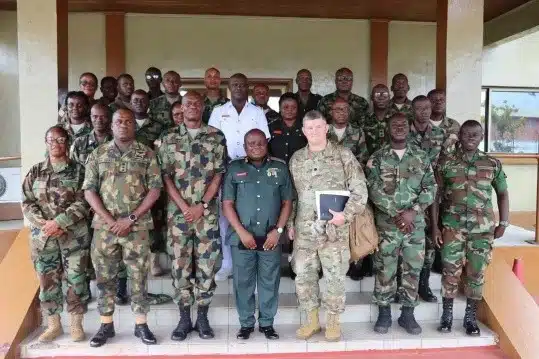
A joint delegation from the Republic of Sierra Leone Armed Forces (RSLAF) Directorate of Legal Services and the Michigan National Guard has concluded a two-day State Partnership Programme engagement with the Judge Advocate General Corps of the Armed Forces of Liberia (AFL) in Monrovia.
The engagement aimed to strengthen the AFL JAG Corps, enhance regional military legal cooperation and support efforts to establish a Court Martial system that promotes discipline, accountability and the rule of law within the Liberian Armed Forces.
The RSLAF delegation, led by Assistant Chief of Defence Staff for Legal, Brigadier General M.B.S. Kamara Esq., arrived in Monrovia on August 30, 2026. Other members included Major E.K. John Esq., Major O.C. Bangura Esq., Captain Y.B. Kamara Esq. and Corporal A. Kamara.
On the first day, the delegation paid a courtesy call on the AFL Chief of Staff, Brigadier General Davidson Forleh, at the Barclay Training Center. During the meeting, Brigadier General Davidson Forleh reaffirmed the AFL’s commitment to the State Partnership Programme and welcomed continued cooperation with the RSLAF and the Michigan National Guard.
A conference was later held at AFL Headquarters, beginning with a welcome address by the AFL Deputy Chief of Staff. Representatives of the Michigan National Guard and the RSLAF legal team also delivered opening remarks.
Lieutenant Colonel Prestine Bombo provided an overview of the purpose and objectives of the visit, while Lieutenant Junior Grade Bladee delivered a presentation on the AFL’s justice system. The session included an interactive question-and-answer segment and was formally closed by the Judge Advocate of the AFL JAG Corps, Colonel Joseph Pallay.
The second day opened with a presentation by Colonel Hunter of the Michigan National Guard Legal Team at the AFL Headquarters Conference Hall. Discussions focused on military justice, institutional development and the legal structures required to strengthen discipline and accountability within the AFL.
The delegation subsequently met with Counsellor Tiawan S. Gongloe, Senior Consulting Counsel at Gongloe and Associates Inc. and a former AFL Judge Advocate. He shared perspectives on Liberia’s military justice system and jurisprudence, drawing on his experience prosecuting a 1994 coup case while serving as a colonel.
The team also visited the President of the Liberian National Bar Association, Counsellor Juah Lawson, who welcomed the delegation and stressed the importance of establishing a robust institutional policy to guide the AFL’s evolving legal framework.
The engagement concluded with a visit to the Temple of Justice, where members of the delegation observed proceedings at the Civil Law Court and gained further insight into Liberia’s judicial system.
The RSLAF Defence Headquarters Legal Directorate said the engagement forms part of continuing efforts under the State Partnership Programme to strengthen the AFL JAG Corps and support the establishment of a Court Martial capable of promoting discipline, justice and respect for the rule of law.
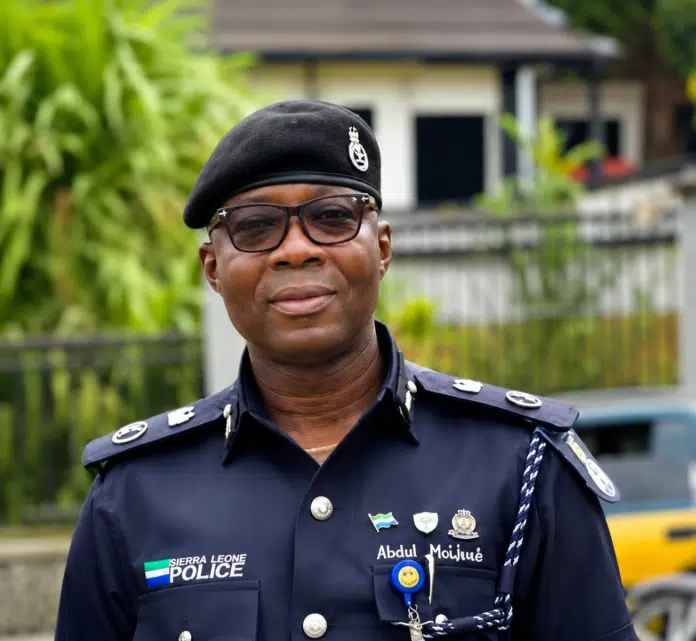
Commissioner of Police (CP), Abdul Moijue, Director of Traffic Management and Road Safety in the Sierra Leone Police (SLP), has been commended for his visible and proactive approach to managing road traffic and strengthening police presence at strategic locations across Freetown.
During a drive from Hill Station to central Freetown on Wednesday morning, September 2, 2026, police vehicles and traffic personnel were observed positioned at several strategic points along the route, demonstrating a heightened state of readiness to manage traffic flow and respond to emerging situations.
Particularly noteworthy was the physical presence of CP Abdul Moijue at G-Gate, Hill Cot Road, where he was seen on the ground working alongside traffic police personnel.
His decision to personally supervise operations rather than remain confined to his office demonstrates a hands-on leadership approach that deserves recognition. Effective traffic management in a rapidly expanding city like Freetown requires strong coordination, discipline, visibility and leadership from those entrusted with the responsibility.
The deployment of police vehicles at strategic locations, with emergency lights activated, also projected a sense of preparedness and professionalism comparable to traffic management practices seen in other jurisdictions.
CP Moijue’s visible presence sends an important message to personnel under his command that leadership must be demonstrated through action and direct engagement with operational challenges.
However, alongside the commendation, there remains a need for the Traffic Management and Road Safety Directorate to intensify efforts to address persistent public allegations of harassment and unofficial collection of money by some traffic police officers from motorists, commercial drivers, Okada riders and Kekeh operators.
Such allegations, where established, have the potential to undermine public confidence in the Traffic Directorate and overshadow the professionalism demonstrated by hardworking officers.
CP Moijue should therefore build on his current operational leadership by strengthening internal accountability, supervision and disciplinary measures to ensure that traffic officers perform their duties professionally, fairly and without exploiting road users.
Traffic management should not only be about controlling congestion and enforcing road regulations; it must also promote public confidence, road safety, discipline and respectful interaction between police personnel and citizens.
The visible leadership demonstrated by CP Abdul Moijue on the streets of Freetown is encouraging and worthy of commendation. Sustaining this momentum while confronting misconduct within the ranks could significantly improve the image and effectiveness of the Traffic Management and Road Safety Directorate.
Keep up the good work, CP Abdul Moijue. Sierra Leone needs public officials who are prepared to lead from the front and deliver results where they matter most; on the ground.
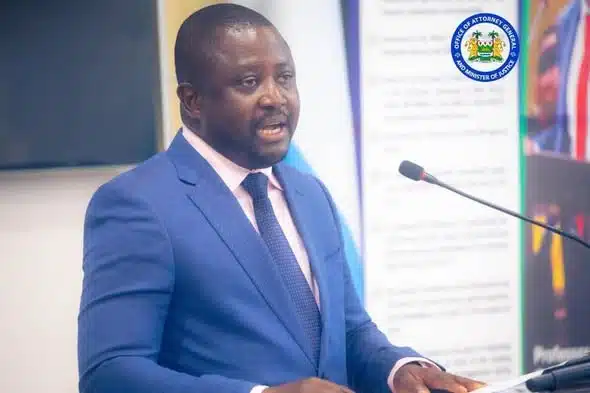
Attorney-General and Minister of Justice, Alpha Sesay Esq.
Sierra Leone’s Attorney-General and Minister of Justice, Alpha Sesay Esq., has outlined three major priorities for Africa in strengthening international justice: deeper continental solidarity, equitable representation in global institutions and renewed commitment to international law.
He also appealed to African States and the wider international community to support Sierra Leone’s candidate, Professor Charles C. Jalloh, for election to the International Court of Justice (ICJ).
The Attorney-General made the call while delivering a keynote address on the “Role of the International Court of Justice in the Peaceful Settlement of Disputes in Africa” at the Foreign Service Academy on Tower Hill in Freetown, on Wednesday, September 2, 2026.
He delivered the address on behalf of Vice-President, Dr. Mohamed Juldeh Jalloh, who was unable to attend because of an urgent engagement.
Against the backdrop of growing geopolitical tensions, armed conflicts and declining confidence in multilateral institutions, Alpha Sesay said smaller countries, particularly those in Africa, have a profound interest in defending a rules-based international order.
He maintained that Africa needs a strong, independent and effective ICJ, noting that African countries have increasingly relied on international law and judicial processes to resolve complex disputes peacefully.
The Attorney-General cited cases involving Burkina Faso and Mali, Libya and Chad, as well as Cameroon and Nigeria, as examples of African States choosing judicial settlement instead of confrontation.
According to him, at least 37 contentious cases brought before the ICJ have originated from Africa, with West African countries making a significant contribution to the Court’s work.
“The Court cannot eliminate disagreement between States. Its importance lies in giving States another option: to meet as sovereign equals before a court rather than as adversaries on a battlefield,” he stated.
Alpha Sesay also renewed calls for fairer African representation in major international institutions, particularly the United Nations Security Council and the ICJ.
Highlighting Sierra Leone’s leadership under President Dr. Julius Maada Bio through the African Union Committee of Ten Heads of State and Government, commonly known as the C-10, he argued that West Africa deserves representation on the ICJ bench.
He clarified that the demand for equitable representation must remain firmly connected to professional competence and integrity.
“We are not arguing for geography instead of merit. We are arguing that excellence and equitable representation can and should go together,” he emphasized.
Turning to Sierra Leone’s candidature, the Attorney-General thanked Ghana, Nigeria and other West African countries for supporting Professor Charles C. Jalloh’s bid. He described the renowned jurist as highly qualified and capable of making a meaningful contribution to the Court.
Alpha Sesay pointed to Sierra Leone’s role in establishing the Special Court for Sierra Leone, its service on the United Nations Security Council and its participation in international climate proceedings as evidence of the country’s longstanding commitment to justice, multilateralism and the rule of law.
He urged African countries, smaller States and international partners to translate their calls for greater African representation into concrete support for qualified African candidates.
“We cannot call for greater African representation and then hesitate to put forward our own globally renowned jurists to serve,” he said.
Concluding with the message, “Africa must support Africa,” Alpha Sesay described the ICJ as a cornerstone of the international rule of law. He called for stronger solidarity among African and smaller States, stressing that international law, credible institutions and multilateral cooperation remain essential safeguards for global peace and stability.
The swearing-in of Umaru Napoleon Koroma as Minister of Employment, Labour and Social Security became an emotional celebration of motherhood, sacrifice and resilience when he brought his 82-year-old mother to witness the historic occasion.
President Dr Julius Maada Bio administered the oath of office to Umaru Napoleon Koroma and other newly appointed Ministers and Deputy Ministers on Wednesday September 2, 2026 at State House following their approval by Parliament.
Amid the official proceedings, the presence of Umaru Napoleon Koroma’s mother, Haja Adama Vandy Kamara, captured significant attention and added a deeply personal dimension to the ceremony.
Despite her advanced age and difficulty walking, Haja Kamara attended the event to witness her son assume one of the country’s senior Government positions. Her presence represented the fulfilment of a journey marked by poverty, perseverance and an unwavering commitment to her children’s education.
Umaru Napoleon Koroma publicly recognized his mother for the extraordinary sacrifices she made to keep him and his siblings in school. During difficult periods, she reportedly sold kebbe, measured and sold rice by the cup and worked for other people to provide for her family.
Those struggles helped sustain her children through years of hardship and uncertainty, laying the foundation for Umaru Napoleon Koroma’s journey from Koinadugu to Kailahun, refugee camps in Guinea and eventually Freetown, where education offered him a pathway out of poverty.
For the newly appointed Minister, taking his mother to State House was more than a gesture of personal gratitude. It was a public tribute to parents, especially mothers, who endure hardship and place the education, welfare and future of their children above their own comfort.
Her journey from selling small quantities of rice to witnessing her son take the oath of office as a Cabinet Minister offered a powerful testimony to resilience and the transformative value of education.
Following the ceremony, Umaru Napoleon Koroma expressed gratitude to God and thanked President Bio for entrusting him with the leadership of the Ministry of Employment, Labour and Social Security.
“I am deeply humbled and grateful to God Almighty for the opportunity to take the Oath of Office as Minister of Employment, Labour and Social Security,” he stated.
Umaru Napoleon Koroma also thanked the Sierra Leone People’s Party, Parliament, his family, friends, colleagues, supporters and citizens who prayed for and supported him throughout his journey.
He described the appointment as both an honour and a major responsibility, pledging to serve with integrity, humility, dedication and a strong commitment to achieving measurable results.
The Minister said his priorities would include promoting decent employment, protecting workers’ rights and strengthening social-security systems. He also promised to collaborate with colleagues to advance President Bio’s development agenda and improve the lives of Sierra Leoneans.
As Umaru Napoleon Koroma begins his new assignment, the story of his mother’s struggle and sacrifice stands as a reminder that behind many public achievements are parents whose quiet determination makes success possible.
Finance minister Karefa Kargbo shaking hands with President Julius Maada Bio (in blue suit)
Newly appointed Minister of Finance, Karefa A. Kargbo, has pledged to promote stronger institutional cooperation and consistent delivery as he assumes responsibility for managing Sierra Leone’s public finances.
Karefa A. Kargbo made the commitment after taking the oath of office on Wednesday, September 2, 2026 at State House during a ceremony presided over by President Dr. Julius Maada Bio. Four other Ministers and Deputy Ministers were also formally inducted into office.
Addressing the ceremony on behalf of the new appointees, Karefa A. Kargbo thanked President Bio for giving them the opportunity to serve the country. He said they recognized the seriousness of their appointments and would carry out their responsibilities with humility, discipline and integrity.
The Finance Minister acknowledged that his new office plays a central role in determining the Government’s ability to implement programmes and achieve its development objectives.
He promised to consolidate the progress already made within the Ministry while identifying and addressing areas that require improvement.
“My intention is to build on that work, strengthen what is working, address the challenges that remain and ensure greater consistency in delivery,” Karefa A. Kargbo declared.
He paid tribute to former Finance Minister, Sheku Ahmed Fantamadi Bangura, for his contribution to the country’s economic and public financial management.
Karefa A. Kargbo also recognized the efforts of technical and administrative personnel within the Ministry of Finance and other Government institutions. He said their expertise and commitment would be essential to the successful implementation of economic policies.
Recognizing that the Finance Ministry cannot operate in isolation, Karefa A. Kargbo promised to maintain close cooperation with the Bank of Sierra Leone, National Revenue Authority, Ministries, Departments and Agencies, private-sector institutions and other stakeholders.
He said sound economic management depends on effective coordination, reliable information and a shared sense of responsibility among the institutions involved.
President Bio, addressing the new officeholders, described public service as a demanding responsibility that requires dedication, courage and personal sacrifice.
He said the officials had been selected on merit and must justify the confidence placed in them by producing results that benefit the people of Sierra Leone.
The President urged them to maintain honesty, dignity and firmness in the performance of their duties. He reminded them that the oath of office represented a solemn commitment to the country and should guide their decisions and conduct.
Reflecting on his own experience, President Bio said he had taken his presidential oath with the Bible and continues to respect the sacred commitment he made.
“I took my oath of office with the Bible and I took it seriously because of the sacredness of the book I used,” he said.
The President advised the appointees to honour the pledges they made using either the Bible or Quran and to remain conscious of their duty to the nation.
Also sworn in were Umaru Napoleon Koroma as Minister of Employment, Labour and Social Security; Jeneba J. Bangura as Deputy Minister of Foreign Affairs and International Cooperation; Dr Steven A. Jusu as Deputy Minister of Energy II; and Foday Mousa Fofanah as Deputy Minister of Mines and Mineral Resources.
Karefa A. Kargbo enters the Ministry of Finance with the responsibility of coordinating the Government’s financial and economic activities. His early commitment to institutional collaboration and continuity signals an intention to pursue a collective approach to the country’s economic management.
President Bio wished all five officials success and encouraged them to work together in supporting the Government’s development programme and meeting the expectations of Sierra Leoneans.
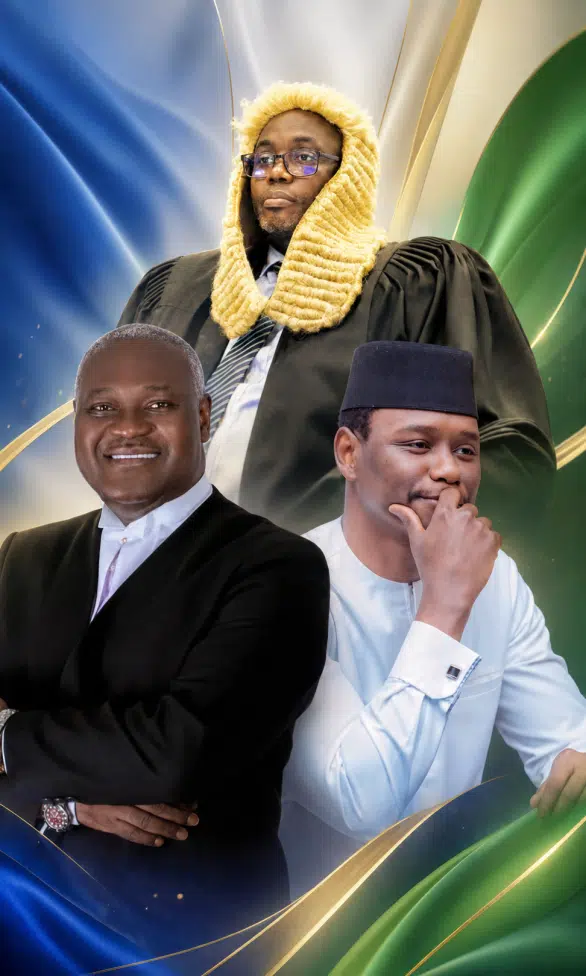
Honourable Osman Abdal Timbo, a Member of Parliament, has commenced legal proceedings before the Supreme Court of Sierra Leone, seeking an authoritative determination of constitutional questions arising from the Constitution of Sierra Leone (Amendment) Bill, 2025.
An Originating Notice of Motion was filed on his behalf on Monday, August 31, 2026, by his legal counsel, former Attorney-General and Minister of Justice Joseph Fitzgerald Kamara, Esq.
In a statement issued after filing the court papers, Joseph Fitzgerald Kamara said the action focuses on the interpretation of Sections 91(1) and 108 of the Constitution of Sierra Leone, particularly the mandatory publication requirements under Section 108(2)(a) and the two-thirds majority threshold provided for under Section 108(2)(b).
The legal team is asking the Supreme Court to determine whether the constitutional requirements governing amendments were properly observed in relation to the 2025 Amendment Bill.
Joseph Fitzgerald Kamara described the questions raised in the case as serious matters extending beyond ordinary procedural considerations. He argued that the provisions at the centre of the action were deliberately incorporated into the Constitution to prevent hurried, partisan or concealed amendments to the country’s supreme law.
“The issues raised in this matter are grave,” he stated. “These are not technicalities; they are constitutional safeguards deliberately designed to protect the Constitution from hasty, partisan or surreptitious amendment.”
According to the senior lawyer, the court action should not be interpreted as a partisan political contest. He maintained that the case is principally concerned with constitutionalism, respect for the rule of law and the responsibility of public institutions to exercise their powers within established legal boundaries.
“This action is not about politics; it is about principle,” Joseph Fitzgerald Kamara said. “It is about ensuring that Parliament, the Executive and all organs of Government act within the four corners of the Constitution.”
He further stressed that every public official and state institution remains subject to the authority of the Constitution, irrespective of the powers attached to their offices.
Joseph Fitzgerald Kamara maintained that the proceedings seek to reaffirm that neither the President, the Speaker of Parliament, the Attorney-General nor Parliament itself is above the Constitution.
He also praised Hon. Osman Abdal Timbo for initiating the legal action, describing his decision as a demonstration of courage and confidence in the judicial process. He said the lawmaker had placed his faith in the Supreme Court to provide the interpretation required to safeguard Sierra Leone’s constitutional order.
The Supreme Court is the country’s highest judicial authority and is empowered to interpret and determine questions relating to the enforcement and application of the Constitution. Its eventual ruling is therefore expected to clarify the legal requirements governing the disputed amendment process.
Joseph Fitzgerald Kamara called on citizens committed to constitutional governance, the rule of law and the supremacy of the Constitution to closely follow the proceedings.
He said the outcome could have far-reaching implications, not only for the validity of the Constitution of Sierra Leone (Amendment) Bill, 2025, but also for the procedures that must be followed when future changes to the Constitution are proposed.
“The outcome of this case will determine not only the validity of the 2025 Amendment Bill but the very integrity of our constitutional amendment process for generations to come,” he said.
The application represents the latest legal development surrounding the proposed constitutional changes and places the disputed issues directly before the Supreme Court for judicial consideration.
Concluding his statement, Joseph Fitzgerald Kamara emphasized the fundamental importance of constitutional supremacy in Sierra Leone’s democratic system.
“We are a nation of laws, not of men,” he declared. “The Constitution must prevail.”
BBC Media Action Sierra Leone, with financial support from the European Union, has conducted a two-day training workshop aimed at strengthening young people’s participation in civic engagement, public discourse and positive social change.
The training was organized under the “Dis Na Wi Voice” Project on August 27 and 28, 2026, at the Mass Communication Building of Fourah Bay College, University of Sierra Leone, in Freetown.
It brought together students from Fourah Bay College and Central University, as well as young people from the Mile 91 community. Participants received practical knowledge on leadership, journalism, digital communication, advocacy and civic responsibility.
“Dis Na Wi Voice” is a 24-month media-for-youth programme implemented by BBC Media Action Sierra Leone and funded by the European Union. It targets young people between the ages of 15 and 30 and seeks to empower them to use traditional and digital media platforms to influence public conversations and contribute meaningfully to national development.
The project is designed to strengthen the confidence, motivation and skills of young Sierra Leoneans while increasing their participation in civic life. It also seeks to address the social and political marginalization of young people by creating opportunities for them to express their views and engage decision-makers.
As part of its university-based component, the project operates through three media hubs: Radio Mount Aureol at Fourah Bay College, Njala University’s Mokonde Campus and Central University Radio in Mile 91.
BBC Media Action said the hubs would serve as youth-led production spaces where participants could receive training in journalism, leadership, advocacy and digital content creation. They would also enable young people to produce radio and online content addressing issues affecting their universities and communities.
The Fourah Bay College workshop formed part of a broader initiative to establish vibrant youth-led media spaces within participating universities. The hubs will also conduct community outreach activities to amplify grassroots voices and provide platforms for young people whose concerns are often excluded from mainstream public discussions.
Welcoming participants, Project Officer, Bashiru Kallon, encouraged them to make full use of the opportunity by asking questions, sharing experiences and participating actively in the discussions.
Bashiru Kallon said the success of the workshop depends largely on the willingness of participants to engage meaningfully with the facilitators and one another.
“Feel free to ask questions, participate and engage in meaningful discourse,” he urged, emphasizing that active involvement would help participants gain maximum benefit from the training.
Journalism Mentor for the “Dis Na Wi Voice” Project, Victor Siaka Kamara, highlighted the importance of strengthening the media and journalism capabilities of young people.
He described the training as an important platform for helping participants understand leadership and civic engagement as central components of responsible citizenship.
“Developing young people’s media and journalism capabilities is essential because it enables them to communicate responsibly, understand the issues affecting their communities and participate more effectively in public discourse,” Victor Siaka Kamara said.
He explained that the programme went beyond teaching participants how to practice journalism or operate digital platforms. It was also intended to help young people understand the responsibilities associated with having a public voice.
According to Victor Siaka Kamara, leadership does not begin with holding an official position. It involves taking responsibility, identifying community problems and contributing to efforts aimed at addressing them.
He expressed confidence that young people could play a meaningful role in shaping public discourse when provided with the appropriate knowledge, skills and opportunities.
Speaking to The Calabash Newspaper, Central University student Hassan K. Kamara praised BBC Media Action Sierra Leone for providing young people with an opportunity to contribute to national conversations.
He said the workshop had strengthened his understanding of leadership and demonstrated that people do not necessarily need formal positions to lead or make a difference in their communities.
“This training has given me an opportunity to understand that leadership does not mean that you should have a position before taking up leadership roles in your community,” Hassan K. Kamara said.
As a hub facilitator for Central University, Hassan K. Kamara pledged to share the knowledge acquired during the training with other students.
“I will make sure that other students also benefit from the knowledge I have gained from this training,” he stated.
Fourah Bay College student, Christiana Sawyerr, similarly described the workshop as an important learning experience that had deepened her understanding of civic rights and responsibilities.
She said leadership should not be viewed solely in terms of titles or positions, but as a willingness to participate in civic activities and contribute to community and national development.
“As a youth in my community, I don’t need to sit down expecting another person from another community to tell me about my civic rights and responsibilities,” Christiana Sawyerr said.
She described young people as community watchdogs with a responsibility to identify and speak out against problems affecting their surroundings. She stressed that age should not prevent any Sierra Leonean youth from exercising their civic rights or contributing to change.
Reflecting on one of the key lessons from the workshop, Christiana Sawyerr said, “Change starts with anyone.” She called on community stakeholders to support young people who are committed to promoting positive transformation.
“Without my voice, I’m unable to make changes, but with my voice, I can make a positive change,” she added.
The project also involves young people outside university communities. Sahr Samuel George, a participant from Mile 91, welcomed the inclusion of community youth in discussions surrounding civic engagement and development.
Sahr Samuel George said the workshop had helped him understand that every issue affecting his community should be a concern to him as a young person.
“I learned from this workshop about issues I previously thought were not my concern. Through this workshop, I have come to understand that, as a young person, every issue affecting my community should be a concern to me,” he said.
He stressed the importance of unity among young people, irrespective of age, gender, ethnicity or other differences.
“For our communities to develop, it is the responsibility of young people to come together and work collectively, regardless of age, gender or tribe. We must put a stop to wrongdoing in our communities,” Sahr Samuel George added.
He disclosed plans to establish a team of young people upon his return to Mile 91 to identify and help address challenges affecting the community.
The “Dis Na Wi Voice” Project targets 240 university students, 60 community youths, 15 hub facilitators, 10 digital stewards, 100 digital content creators and 16 young people who will receive placements in national media institutions.
Its expected outcomes include increased confidence, motivation, practical skills, civic participation and activism among young Sierra Leoneans.
Through university media hubs, digital platforms, community outreach and placements in mainstream media institutions, the project seeks to equip young people with the tools required to participate constructively in civic life, influence public discourse and promote positive social change across Sierra Leone.
Forty-four young men and women from slum and dumpsite communities in Freetown have completed six months of vocational and professional training designed to improve their livelihoods and create pathways to employment and entrepreneurship.
The beneficiaries were trained and certified by Make Impact Sierra Leone, in partnership with We Yone Child Foundation, at the foundation’s Skills Training Centre in the Kroo Bay community.
The programme offered practical instruction in catering, cosmetology and hairdressing, as well as professional driving. It targeted vulnerable young people seeking opportunities to acquire income-generating skills and build more secure futures.
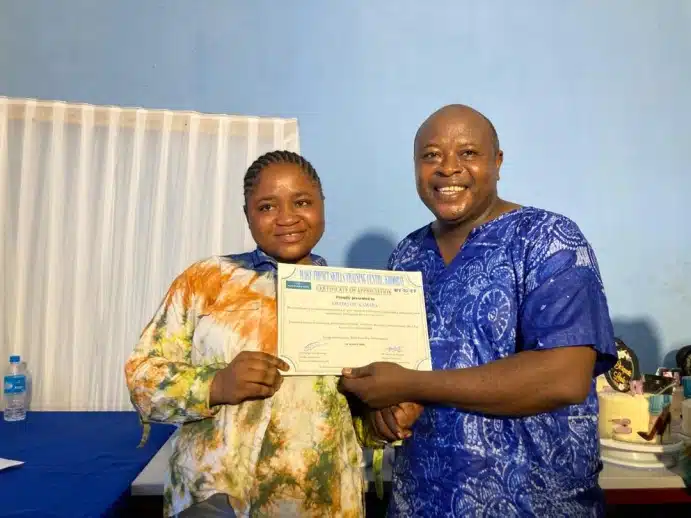
The first group of graduates received certificates during a ceremony held on Saturday, marking the successful completion of the six-month programme.
Participants enrolled in professional driving were trained through an accredited driving school. Make Impact Sierra Leone and We Yone Child Foundation covered the full cost of their tuition and driving licences.
Speaking during the ceremony, Director of We Yone Child Foundation, Santigie Bayo Dumbuya, encouraged the graduates to put their knowledge into practice and use their skills to support themselves and their communities.
“Do not hold hostage the ideas and skills that you have acquired during these six months. Go out there and implement them. If possible, teach others what you have learned, because that is how knowledge becomes beneficial to you, your community and the country,” Santigie Bayo Dumbuya said.
He described the graduation as the beginning of a broader initiative intended to reach more young Sierra Leoneans with practical training and economic opportunities.
Santigie Bayo Dumbuya thanked community leaders and other stakeholders for supporting the programme. He also commended Make Impact Sierra Leone for partnering with his organisation to deliver the training.
“We want to do more. This is just the first batch and we are looking forward to expanding this initiative and reaching more young people in the coming years,” he stated.
Make Impact Sierra Leone was established by a team associated with Mercy Ships after its members observed some of the social and economic difficulties confronting young people in the country.
The organisation later partnered with We Yone Child Foundation to provide vocational training at the foundation’s facility in Kroo Bay.
The initiative comes amid continuing concerns over youth unemployment, poverty and substance abuse in deprived communities across Freetown. Organisers believe vocational education can provide vulnerable young people with alternatives to drugs, crime and other harmful activities.
A representative of the Chief of Kroo Bay conveyed the chief’s appreciation to the two organisations for bringing the programme to the community.
The representative said the chief was pleased that local young people had been given an opportunity to acquire useful skills and expressed hope that similar interventions would continue and expand.
The ceremony also featured inspiring testimonies from graduates whose lives had been affected by the programme.
Among them was catering trainee Jalikatu Tharm, who was recognized as one of the best-performing students. Before joining the programme, Jalikatu Tharm had struggled with substance abuse, including the use of kush.
She became emotional while recounting her journey and the doubts expressed by people who did not believe she could remain committed throughout the six months.
“A lot of people did not believe that I would be able to do this. They did not believe that I would finish the training, but today I am here,” Jalikatu Tharm told the gathering.
She thanked Make Impact Sierra Leone and We Yone Child Foundation for giving her an opportunity to learn a trade. She also expressed appreciation to Santigie Bayo Dumbuya and her facilitator, popularly called “Boss Lady” by the students, for supporting and encouraging her.
Her testimony emerged as one of the ceremony’s most memorable moments, demonstrating how access to education and practical training can help vulnerable young people redirect their lives.
Another outstanding graduate, Isatu Dumbuya, thanked the organisations for providing the training. She explained that her husband had encouraged her to register for the programme; a decision that enabled her to acquire a practical skill.
Isatu said she was ready to apply what she had learned and use her training to improve her family’s livelihood.
The organizers stressed that the initiative goes beyond awarding certificates. Graduates are expected to use their skills to secure employment, establish small businesses and pass their knowledge on to others.
For the 44 graduates, the ceremony marked both the completion of six months of intensive training and the beginning of a new phase of personal and professional development.
Make Impact Sierra Leone and We Yone Child Foundation have pledged to build on the programme’s first batch and extend similar opportunities to more young people across Sierra Leone.