
Home Blog Page 26

1xBet Nigeria’s Nnanna Chigozie Ewuzie Calls for Better Player Education at Responsible Gaming Symposium

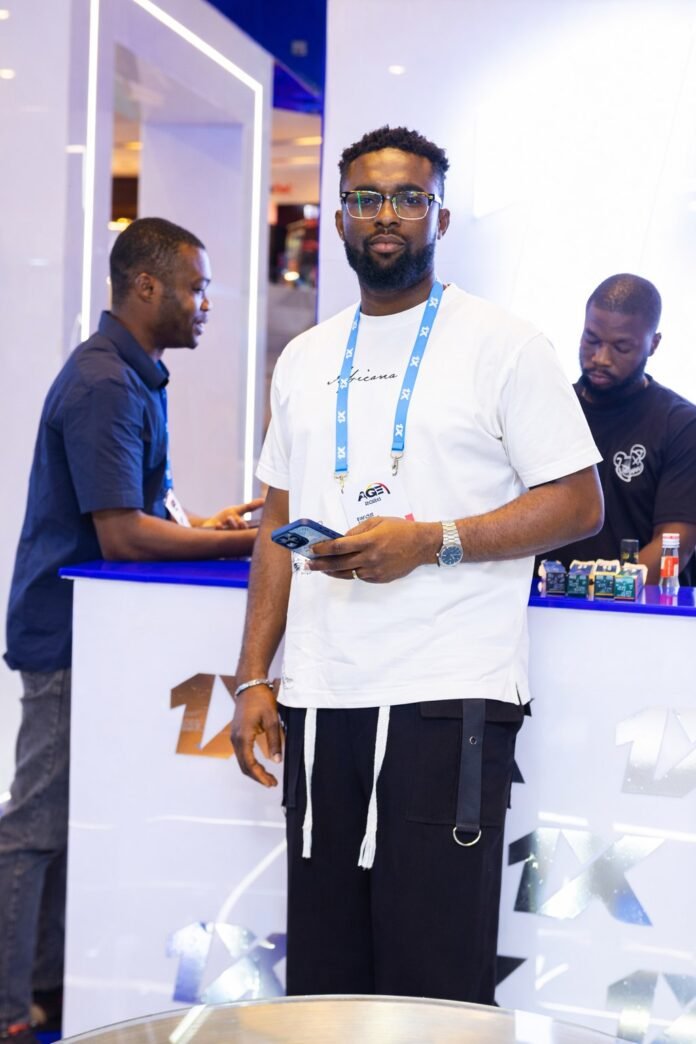
Nnanna Chigozie Ewuzie, Compliance Manager at 1xBet Nigeria

Nnanna Chigozie Ewuzie, Compliance Manager at 1xBet Nigeria, took part in the Responsible Gaming Symposium, where he focused on one of the biggest challenges for safer gambling in Africa: players need to understand protection tools before they can use them effectively.

At the Symposium, Nnanna presented 1xBet’s view on player education as a core part of responsible gambling. His remarks were built around insights from 1xBet’s research – Independently Commissioned Player Protection Index, which shows that in many African markets betting is still often seen not only as entertainment, but as a possible source of income.

Education before warnings

Nnanna stressed that responsible gambling tools remain important, but they are not enough on their own. Deposit limits, self-exclusion and time-outs can only work when players understand why these tools exist and how they can help.

“If we want safer play, we must teach, not only warn the players. A tool only works when a player understands it. A limit means nothing if a player does not know why it helps,” Nnanna said.

This was the central idea of his contribution: education turns responsible gambling from formal messaging into a practical choice. When players understand the risks, odds, limits and available protection tools, they are more likely to stay in control.

“Education turns a warning into a choice. It helps a player move from betting for hope to betting with control,” he added.

What the data shows

The Player Protection Index research by 1xBet also points to a wider shift in the industry. According to the findings referenced by 1xBet, 69% of operators now agree that a safer player is more profitable over time. This suggests that player protection is increasingly being seen not only as a regulatory requirement, but as part of long-term business sustainability.

The research also shows that 84% of respondents believe player education is the foundation of safer gambling. At the same time, Simon Westbury, Strategic Advisor to 1xBet, has highlighted that only a small share of operators strongly believe players fully understand what “Positive Play” means.

For Simon, this shows a clear gap between the tools available and the way players understand them.

“Player education was the foundation of safer gambling. Positive play is when the player is educated and informed of their decisions,” Simon said.

He also connected safer gambling with long-term trust between operators and players.

“If you can retain a player and give a player a safe, fun environment to gamble, then they are going to stay with you longer,” he said.

Africa needs local and practical solutions

The discussion also reflected the specific realities of African markets. Regulation, payment habits, languages, digital access and retail betting culture differ across countries. This means safer gambling standards cannot simply be copied from other regions.

The Player Protection Index by 1xBet points to a 56% / 44% split in views on how consistent player protection standards are across markets. For Nnanna, this reinforces the need for a common base that can be adapted locally.

That base should be simple: set limits, understand odds, take breaks and ask for help when needed. Each market can then adapt the language, examples and delivery channels to its own context.

In markets where many players rely on cash or in-person betting, education may need to come through voice, video, visual formats, local languages and shop staff, not only through long text or formal disclaimers.

“Simple words and pictures travel further than long text,” Nnanna noted.

From compliance to real understanding

Both Nnanna and Simon pointed to the same conclusion: safer gambling in Africa must move beyond small print and generic warnings.

The industry still faces real barriers. Simon has noted that 49% of respondents see commercial considerations as a blocker to player protection, while 67% of players are apathetic towards safer gambling and player protection tools. This is why education matters: many players do not use protection tools because they do not see how those tools apply to them.

For Nnanna, operators and regulators need to agree on what good player education looks like. He pointed to three practical steps: a shared standard for education, room to test what works and honest data-sharing.

“We cannot build trust if we only show the good numbers,” Nnanna said.

For Simon, collaboration is also essential. The research shows that 96% of respondents believe safe gambling is only possible through cooperation between operators and regulators. This cooperation should help turn player protection from a compliance requirement into something players can understand and use.

1xBalance and the next step

1xBet’s responsible gambling work also includes 1xBalance, a dedicated project and website focused on education, self-checking and helping players better understand their betting behaviour.

Through the 1xBalance website, players can access simple educational materials, take a self-assessment test and use a budget calculator to better understand their spending habits. The idea is to make player protection softer, clearer and less intrusive.

Instead of treating responsible gambling as a clinical or distant topic, 1xBalance presents it as something practical: a way for players to check themselves, understand their behaviour and make more informed decisions.

This reflects the main message of the Responsible Gaming Symposium: safer gambling will depend on education, cooperation and tools that players can actually understand.

For 1xBet Nigeria, Nnanna Chigozie Ewuzie’s participation showed that responsible gambling in Africa is not only a regulatory issue. It is also a communication challenge, an education challenge and a trust challenge.

The next step is clear: teach better, explain earlier and help players turn protection tools into real choices.
 

President Bio Commissions Historic 40MW Solar Power Projects, Declares New Chapter in Energy Transformation

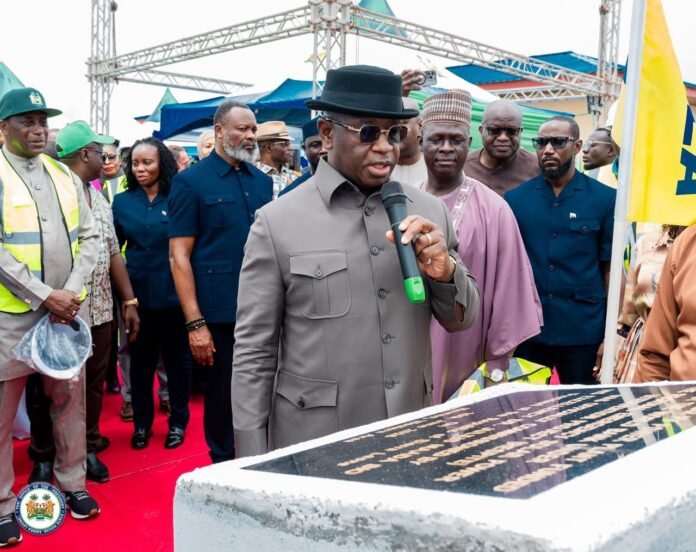
Man in a gray suit and black hat speaks into a microphone at an outdoor ceremony, surrounded by officials on a red carpet with a crowd behind.
President Dr. Julius Maada Bio

By Amin Kef (Ranger)

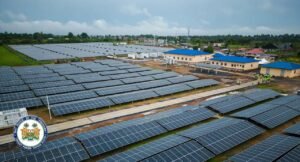
President Dr. Julius Maada Bio has commissioned two major solar power facilities with a combined capacity of 40 megawatts under the Regional Emergency Solar Power Intervention (RESPITE) Project, describing the development as the largest single addition to renewable energy generation capacity in Sierra Leone’s history.

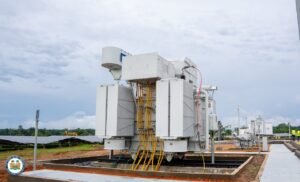
The commissioning ceremony, held on Wednesday, 10 June 2026, covered a 30-megawatt solar power plant with a 15-megawatt-hour Battery Energy Storage System (BESS) at Newton Village in the Western Area Rural District and a 10-megawatt solar power plant with a 6-megawatt-hour BESS in Lungi, Port Loko District. The projects were developed with support from the World Bank.

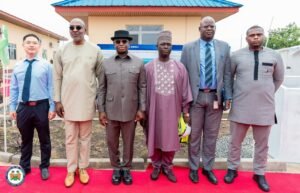
Addressing Government officials, development partners, traditional leaders and community stakeholders, President Bio described the occasion as a defining moment in Sierra Leone’s development journey and a powerful statement of national ambition.

“This ceremony is a statement of Sierra Leone’s ambition. It is a declaration that we are investing in our future. It is proof that when vision is matched by determination, partnership and action, transformation becomes possible,” the President stated.

He thanked the World Bank Group for its unwavering support, technical expertise and partnership in bringing the RESPITE Project to fruition, noting that the investment demonstrates what can be achieved through strong collaboration.

Drawing from his personal experiences travelling across the country, President Bio reflected on the daily challenges caused by unreliable electricity supply.

“I have visited schools where students struggle to study after sunset. I have seen healthcare workers striving to save lives under difficult conditions. I have spoken to entrepreneurs who bear the high cost of generators to maintain their operations,” he said.

The President stressed that those experiences have reinforced a simple truth that electricity is not a luxury but a necessity, adding that reliable power drives economic growth, strengthens livelihoods, supports innovation and creates opportunities for national development.

He recalled that when his administration assumed office, fewer than 30 percent of Sierra Leoneans had access to electricity, leaving many communities disconnected from the opportunities that dependable energy can provide.

“Today, Sierra Leone sends a clear message: we are moving forward. We are building an energy future that is cleaner, more reliable, more resilient and more inclusive,” he declared.

President Bio said the combined 40MW solar projects will strengthen the national grid, improve electricity reliability, increase resilience and expand access to power for hundreds of thousands of Sierra Leoneans.

“The electricity generated by this project will do more than just power homes and businesses. It will help preserve medicines in clinics, enable our children to study after sunset, support farmers and agro-processors, and create new opportunities for investment and employment,” he said.

He further described the projects as nation-building investments that will create jobs, strengthen healthcare and education services, stimulate industrial growth and accelerate economic transformation.

The President dedicated the achievement to students who have studied in darkness, healthcare workers who have served without reliable electricity, entrepreneurs who have endured repeated power outages and families that have patiently awaited better energy services.

“We are building a future in which reliable electricity is not a privilege for a few, but a service available to all,” he affirmed.

President Bio also called on the Electricity Distribution and Supply Authority (EDSA) and consumers to strengthen the sustainability of the sector through responsible management and payment for electricity services. He praised former Ministers of Energy, technical experts and the people of Sierra Leone for their patience, commitment and contributions to the sector’s progress.

“I want every Sierra Leonean to know that this Government hears you, understands your concerns and is acting decisively,” he assured.

The President also extended an open invitation to investors, development partners, international financial institutions, climate finance institutions, technology providers and innovators around the world to support Sierra Leone’s energy transformation agenda.

“Sierra Leone is open for investment. Sierra Leone is open for partnership,” he declared.

Minister of Energy, Cyril Arnold Grant, described the commissioning as a major milestone in the country’s quest for energy transformation and sustainable development.

Providing an overview of the RESPITE Project, the Minister highlighted the strategic importance of the Newton and Lungi facilities, noting that they are central to the Government’s policy objective of expanding reliable electricity supply and supporting economic growth.

He emphasized that the projects are expected to positively impact power generation and strengthen the country’s energy infrastructure, while also complementing broader national development priorities, including the Feed Salone agenda.

Chairperson of the ceremony, Ndeye Sesay, commended the Government and development partners for their collaboration and support in making the project a reality.

She praised the commitment demonstrated by all stakeholders and described the commissioning as a significant step towards improving access to electricity and fostering sustainable national development.

The event also featured remarks from the World Bank Country Representative, the Paramount Chief and other stakeholders, all of whom underscored the importance of the RESPITE Project in advancing Sierra Leone’s renewable energy ambitions and supporting long-term socio-economic development.

With reforms continuing across the energy sector, the successful completion of the Newton and Lungi solar power plants marks a new chapter in Sierra Leone’s drive towards energy security, economic transformation and sustainable development.

Elite Scholars Consultancy Hosts Educational Seminar at Central University

Large hall filled with students seated in rows, many with backpacks and laptops, waiting for an event.

By Ibrahim John Sesay

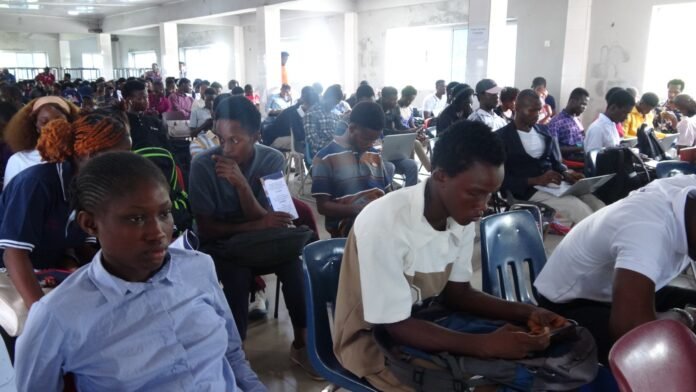
Central University on Wednesday, June 10, 2026, hosted an educational seminar organized by Elite Scholars Consultancy Company Limited, aimed at exposing students to international study opportunities and academic pathways abroad. The event took place at the Garden Hall on the Central University campus in Mile 91.

The seminar brought together students from various faculties and departments who gathered to learn about scholarship opportunities, admission procedures and visa application processes for international studies.

Elite Scholars Consultancy Company Limited is an international education advisory firm founded in Europe in 2020 and incorporated in Sierra Leone in 2026. The consultancy operates across Sierra Leone, Nigeria, Germany, the Netherlands, Canada, the United Kingdom, Belgium and other countries.

Speaking during the event, the Administrative Officer of Elite Scholars Consultancy, Kadijatu Ibrahim Jalloh, said the consultancy remains committed to helping students achieve their academic and career aspirations through global education opportunities.

“Our goal is to connect students with world-class educational opportunities and provide them with the guidance needed to successfully navigate the admission and visa application processes,” Kadijatu Ibrahim Jalloh said.

She noted that many talented students fail to pursue their dreams abroad because of limited access to accurate information and professional support. She explained that Elite Scholars Consultancy was established to provide reliable educational advisory services and help students gain access to international institutions and scholarship opportunities.

She encouraged students to remain focused on their studies and begin preparing early for future academic opportunities. She also engaged students in interactive discussions and presentations on higher education opportunities available in different countries around the world.

Central University students were provided with detailed information on studying in countries such as Germany, the Netherlands, Canada, Belgium, the United Kingdom and other destinations known for their advanced educational systems.

In her brief address, the Dean of Students’ Affairs at Central University, Zainab Sallay Koroma, expressed appreciation to Elite Scholars Consultancy for engaging students on opportunities for higher education abroad.

“We are delighted to welcome Elite Scholars Consultancy to Central University. This seminar is important because it exposes our students to opportunities that can transform their academic and professional futures,” Zainab Sallay Koroma said.

She described the initiative as timely and beneficial, especially at a period when many students are seeking opportunities for further studies and career advancement.

The Dean of Students’ Affairs assured students that the consultancy is a legitimate company operating around the globe, including Sierra Leone. She said the consultancy was at Central University to share insights about its operations.

The Regional Coordinator of Elite Scholars Consultancy, Ibrahim Mankotta, outlined the consultancy’s activities and operations in Sierra Leone. He explained that the organization works closely with educational institutions and international partners to facilitate admissions and provide advisory services to prospective students.

“We are committed to helping students gain access to quality education across the world. Through our partnerships, we support students throughout their journey; from admission applications to visa processing and travel preparations,” Ibrahim Mankotta said.

According to him, the consultancy aims to empower young people by creating pathways to international education and professional development. Students actively participated in the seminar, asking questions and seeking clarification on issues relating to admission requirements, scholarship opportunities and visa procedures.

The seminar also highlighted various scholarship schemes available to international students seeking undergraduate, postgraduate and professional development programmes.

Expressing his interest in pursuing further studies overseas, Central University student John Lappia commended Elite Scholars Consultancy for bringing the opportunity to the university.

“I have always wanted to study abroad, but I did not know much about the process. Today’s seminar has given me a clearer understanding of the opportunities available and the steps I need to take,” John Lappia said.

He described the session as informative and motivating, noting that it had inspired him to begin planning for his academic future beyond Sierra Leone.

“The information shared today has encouraged me to work harder and explore scholarship opportunities that can help me achieve my educational goals,” he added.

The seminar concluded with an interactive question-and-answer session, during which students received additional guidance on scholarship applications, university admissions and visa requirements.

Many participants described the event as informative and inspiring, expressing hope that similar educational engagements would continue to be organized for students in the future.

Lands Minister Pursues Mortgage Financing and Student Housing Support at ‘Shelter Afrique’ AGM in Morocco

Man in a blue suit speaks into a handheld microphone at a desk with papers in front.
Minister of Lands, Housing and Country Planning, Dr. Turad Senesie

By Amin Kef (Ranger)

Sierra Leone has intensified efforts to address its housing challenges by seeking strategic support from the Shelter Afrique Development Bank (ShafDB) for mortgage financing and the construction of student accommodation.

The engagement took place on the sidelines of the 45th Annual General Meeting of Shelter Afrique held on Tuesday, 9 June 2026, in Rabat, Morocco, where the Minister of Lands, Housing and Country Planning, Dr. Turad Senesie, held high-level discussions with the Bank’s leadership.

The meeting focused on two key priorities for the Government of Sierra Leone: expanding access to affordable mortgage financing for low-income earners and developing modern student hostels through a partnership involving the Government and TAF Global Africa.

During the discussions, Dr. Turad Senesie outlined a series of major legal and policy reforms that are transforming Sierra Leone’s housing and urban development sector. He informed the Bank that the Government has enacted the new Country Planning Act 2025, replacing a 75-year-old law that had become outdated and no longer responsive to modern development needs.

According to the Minister, the new legislation empowers local councils to play a central role in development control and introduces clear zoning classifications for residential, commercial, industrial and mixed-use developments, thereby creating a more structured and sustainable approach to urban planning.

He further disclosed that Sierra Leone is, for the first time since independence, developing a comprehensive Building Codes Act, which has reached an advanced stage. The proposed legislation is expected to establish strict construction and safety standards aimed at protecting public health, reducing structural failures, mitigating fire and natural disaster risks and promoting energy-efficient building practices.

Dr. Turad Senesie also highlighted the ongoing review of the country’s National Housing Policy, a process that is expected to lead to the enactment of a comprehensive Housing Act and accompanying regulations. He noted that the Government is already implementing several joint venture housing projects with private developers, including TAF Global Africa, which is spearheading affordable housing initiatives across the country.

The Minister stressed that his participation in the Shelter Afrique Annual General Meeting was largely driven by the urgent need to secure financing mechanisms that would enable more Sierra Leoneans, particularly low-income earners, to own homes while also supporting the construction of quality accommodation facilities for students.

He described the proposed mortgage financing scheme and student housing project as critical interventions needed to reduce the country’s housing deficit and strengthen urban resilience and safety.

Shelter Afrique officials welcomed Sierra Leone’s reform agenda and commended the Government’s commitment to improving access to affordable housing and sustainable urban development.

The Government of Sierra Leone, TAF Global Africa and Shelter Afrique are now expected to deepen their collaboration with the aim of significantly expanding housing delivery and improving living conditions for citizens across the country.

Also present at the meeting were Shelter Afrique’s Chief Finance Officer, Beatrice Mburu and Chief Business Officer, Gibson Mapfidza. The Sierra Leone delegation included the Director of Policy and Planning, Dr. Alphajor Cham, while TAF Global Africa was represented by its Chief Executive Officer, Mustapha Njie.

Labour Minister Calls for Human-Centred AI at Global Labour Conference

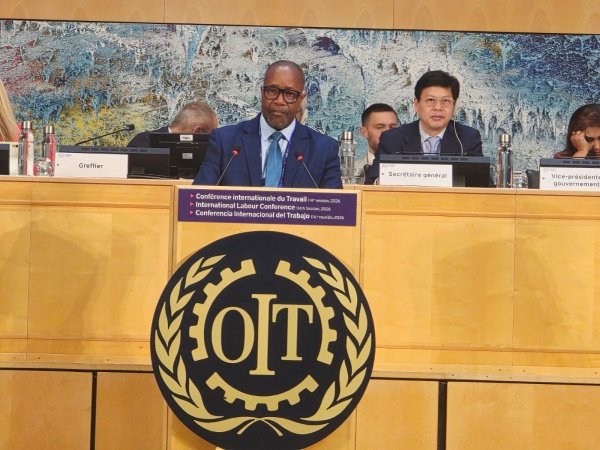
Minister of Employment, Labour and Social Security, Mohamed Rahman Swaray

By Alvin Lansana Kargbo

Sierra Leone’s Minister of Employment, Labour and Social Security, Mohamed Rahman Swaray, has urged member states of the International Labour Organization (ILO) to adopt a human-centred approach to Artificial Intelligence (AI), stressing that technological advancement must promote decent work and social justice rather than deepen inequality.

The Minister made the call while addressing the 114th Session of the International Labour Conference in Geneva, Switzerland, on Wednesday, 10 June 2026, under the theme: “A Moment of Choice: Harnessing Artificial Intelligence for Decent Work.”

Speaking at the global gathering, Mohamed Rahman Swaray described AI as more than a technological issue, noting that it is fundamentally a matter of development, employment and social justice. He cautioned that Africa cannot afford a growing digital divide, either within individual countries or between nations.

The Minister highlighted Sierra Leone’s increasing role in advancing labour governance across the continent, pointing to the country’s successful hosting of the 52nd African Regional Labour Administration Centre (ARLAC) Governing Council Meeting and High-Level Symposium in Freetown. The event brought together labour Ministers, experts and social partners from 13 African countries to discuss key labour and employment issues. He also referenced the Second National Labour Conference and Social Dialogue Forum held during this year’s May Day celebrations.

Mohamed Rahman Swaray outlined a number of labour reforms being implemented under the administration of President Julius Maada Bio. Those include a 50 percent increase in the national minimum wage from Le 800 to Le 1,200, which took effect in April 2026, the full operationalization of a digital work permit system in January 2026 and ongoing efforts to establish an Informal Sector Social Security Scheme aimed at extending pension and social protection benefits to self-employed workers.

He further disclosed that Cabinet has approved a new Data Protection and Right to Access Information Bill, describing it as a significant step towards strengthening governance, safeguarding citizens’ rights and preparing the country for an increasingly digital future.

While acknowledging that AI presents significant opportunities for youth entrepreneurship, e-commerce and remote work, the Minister warned that unequal access to internet connectivity, digital devices and digital skills training could further widen existing inequalities. He also expressed concern over issues such as worker surveillance, algorithmic bias, data privacy and potential job losses resulting from automation.

Concluding his address, Mohamed Rahman Swaray called for stronger international cooperation and the development of a renewed social contract that places people at the centre of technological progress.

“Artificial intelligence cannot and must not replace our commitment to human dignity,” the Minister stated, reaffirming Sierra Leone’s commitment to working closely with the ILO and international partners to ensure that technological innovation advances workers’ rights and leaves no one behind.

The Minister was accompanied to the conference by Sierra Leone’s Deputy Permanent Representative to the United Nations Office and other International Organizations, Samuel U.B. Saffa Esq.

Energy Minister Assures of Improved Power Supply as Major Energy Projects Advance

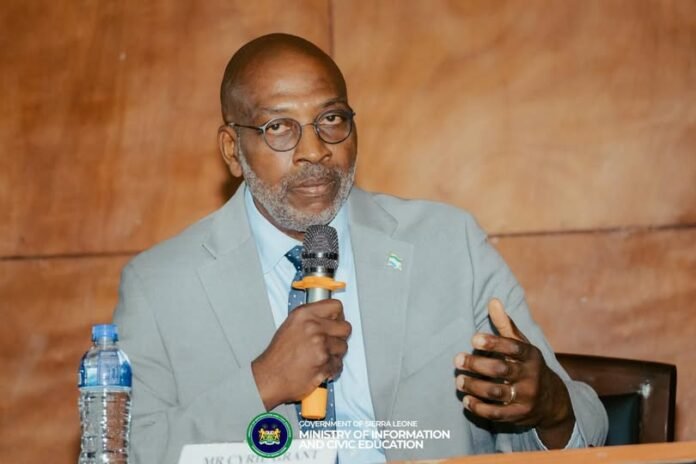
Man in a light-gray suit speaks into a handheld microphone at a panel, with a water bottle nearby and a Sierra Leone emblem on the table.
Minister of Energy, Cyril Arnold Grant

By Amin Kef (Ranger)

Sierra Leone’s Minister of Energy, Cyril Arnold Grant, has assured citizens that the Government is taking concrete steps to address persistent electricity challenges, with several major energy projects expected to significantly improve power supply across the country.

Speaking during the Weekly Government Press Conference held on 9th June 2026 at the Miatta Conference Centre in Freetown, the Minister addressed growing public concerns over frequent electricity interruptions, particularly in the capital city.

Cyril Arnold Grant explained that the recent blackouts were largely caused by seasonal reductions in water levels at the Bumbuna Hydroelectric Dam and the annual maintenance of one of its turbines.

He disclosed that the maintenance work has now been completed, allowing Bumbuna to generate between 9 and 10 megawatts of electricity. He added that Karpowership and thermal generation facilities are continuing to supplement the national grid to help stabilize electricity supply.

The Minister acknowledged the inconvenience caused by the outages but assured the public that Government is implementing both short-term and long-term measures to improve the situation.

Cyril Arnold Grant announced that President Julius Maada Bio is expected to commission the completed 30-megawatt solar power project at Newton on 10th June 2026.

According to the Minister, the project includes a 15-megawatt battery storage system that will strengthen electricity supply to the Freetown network and improve the reliability of the national grid.

He further revealed that a 20-megawatt solar power project is currently under construction at Benguema, while another 10-megawatt solar generation facility is being developed in Lungi under the Regional Emergency Solar Project.

The Minister emphasized that renewable energy investments are central to Government’s strategy to diversify the country’s energy mix and reduce dependence on a single source of power generation.

Highlighting other key developments, Cyril Arnold Grant disclosed that the Nant Energy Project remains on schedule, with turbine equipment already delivered to the project site.

He said the project is expected to generate 60 megawatts of electricity during its first phase in the first quarter of 2027 before expanding to 108 megawatts later that year.

The Minister also announced that Government has signed agreements valued at approximately 70 million United States dollars to expand the Bumbuna Hydroelectric Project. The expansion is expected to add between 50 and 60 megawatts of additional generation capacity, maximizing the use of available water resources during the rainy season.

He noted that those projects will significantly strengthen the country’s electricity generation capacity and improve power supply, particularly in Freetown and other urban centres.

Cyril Arnold Grant expressed confidence that substantial improvements in electricity supply will begin to materialize in the first quarter of 2027 as several generation projects become operational.

He stressed that Government is not only increasing electricity generation but is also investing heavily in substations, transmission lines, transformers and distribution infrastructure to ensure that the additional power reaches homes and businesses efficiently.

“Without power, we know we will not get investors to come and invest, build industries and create employment for our people,” the Minister said.

He concluded that reliable electricity remains a critical pillar for attracting investment, supporting businesses, creating jobs and driving Sierra Leone’s long-term economic growth and development.

Sierra Leone Records Major Health Gains as 300 Days of Activism Campaign Delivers Results

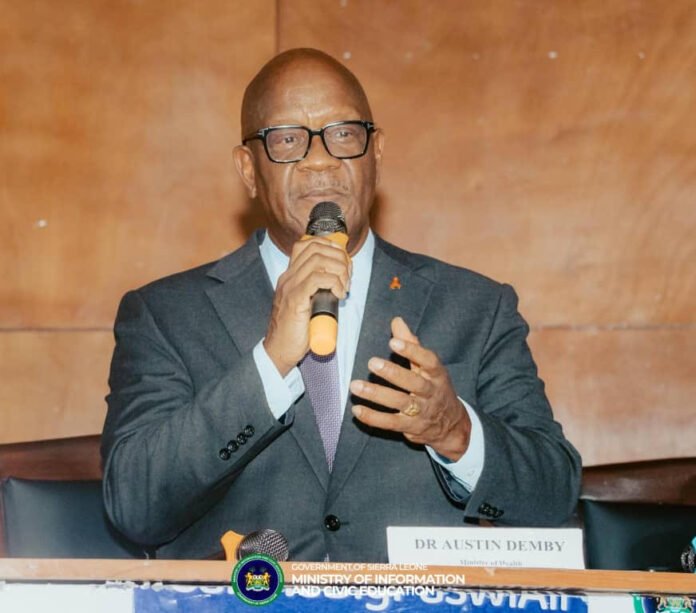
Man in a dark suit and glasses speaks into a handheld microphone at a conference panel; nameplate reads Dr. Austin Demby on the desk in front of him.
Minister of Health, Dr. Austin Demby

By Foday Moriba Conteh

The Government of Sierra Leone has announced significant progress in maternal and child healthcare during the first 100 days of its ambitious 300 Days of Activism campaign, recording major reductions in maternal and infant mortality while expanding access to essential health services across the country.

Speaking at the Ministry of Information and Civic Education’s Weekly Press Briefing on Tuesday, 9th June 2026, the Minister of Health, Dr. Austin Demby, disclosed that maternal mortality has declined by 31 percent, while infant mortality has reduced by 11 percent since the launch of the campaign.

The Minister also revealed that approximately 5,000 children who had never received routine immunization were identified and vaccinated during the first phase of the campaign. According to him, that represents a 55 percent increase in new childhood vaccinations and has reduced the number of zero-dose children by nearly half.

“We have about 9,000 children in this country who have never received a vaccine. Within the first 100 days, we identified 5,000 of those children and ensured they received their first dose,” Dr. Austin Demby said.

He attributed the achievements to strong collaboration among healthcare workers, traditional leaders, local authorities, communities, development partners, mothers and families across the country, noting that the success was driven by effective mobilization rather than additional financial resources.

Dr. Austin Demby reaffirmed the Government’s commitment to achieving three key objectives under the campaign: zero preventable maternal deaths, zero preventable child deaths and universal protection of children against vaccine-preventable diseases.

While acknowledging the encouraging results, he stressed that the next phase of the campaign would involve intensive action in communities across Sierra Leone to ensure that every mother and child receives essential healthcare services.

“The next 100 days will be days of action. We are going everywhere to ensure that every mother and every child receives the healthcare services they need,” he stated, calling on community leaders, journalists, Civil Society Organisations, development partners and citizens to support the initiative.

The Health Minister also highlighted major investments in healthcare infrastructure aimed at improving service delivery nationwide. He announced that 18 of Sierra Leone’s 20 major hospitals are now energy-independent through solar power systems developed in partnership with the Ministry of Energy.

Connaught Hospital now operates on a 1.2-megawatt solar energy system, while approximately 380 health facilities across the country have been equipped with solar power installations to ensure uninterrupted healthcare services.

He further disclosed that Government plans include the construction of a 300-bed hospital in Kerry Town, a modern cancer diagnosis and treatment centre and a large-scale oxygen production facility to strengthen healthcare services in the Western Area.

Speaking on broader healthcare reforms, Dr. Austin Demby emphasized that Sierra Leone is moving from disease-specific interventions to a people-centred healthcare system as part of its Universal Health Coverage agenda.

“Universal Health Coverage is fundamentally about people. We cannot continue to focus only on individual diseases because one person can suffer from several illnesses at the same time,” he said.

According to the Minister, Government is adopting a life-stage approach to healthcare delivery, covering pregnancy, infancy, childhood, adolescence, adulthood and old age. Significant investments are also being made in primary healthcare through the construction and rehabilitation of health facilities, recruitment of health workers and improved availability of medicines and medical equipment.

Dr. Austin Demby announced that Government is constructing new 100-bed hospitals in Karene, Pujehun and Moyamba to strengthen secondary healthcare services. He also highlighted investments in advanced medical technologies, including CT scanners, dialysis machines and ultrasound equipment.

Emergency healthcare services have also been enhanced through improved ambulance systems equipped with GPS tracking, oxygen support, trained personnel and essential medical supplies, all linked to the national 117 emergency hotline.

On human resource development, the Minister revealed that the annual number of doctors being trained has increased from about 30 to approximately 250, with plans to expand the figure to 300 annually. Similar investments, he said, are being made in the training of nurses and midwives to strengthen the country’s healthcare workforce.

Dr. Austin Demby stressed that the success of the reforms would ultimately be measured by tangible improvements in health outcomes, including reductions in maternal and infant mortality, lower teenage pregnancy rates, increased survival rates and better overall wellbeing for the people of Sierra Leone.

He concluded that early indicators demonstrate that the country’s health sector is moving in the right direction as investments in infrastructure, personnel and service delivery continue to produce positive results.

ICPNC ES Champions Peace and Women’s Leadership at Global Power Women Forum London 2026

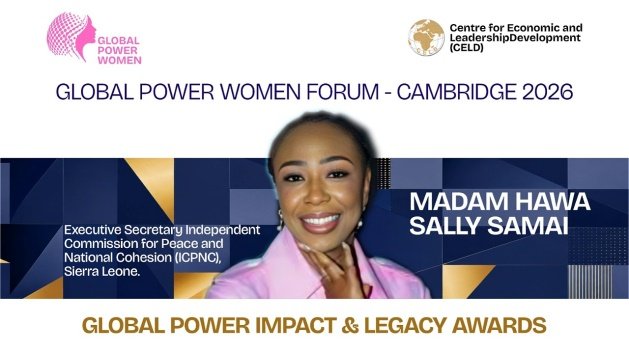
Banner announcing Global Power Women Forum - Cambridge 2026, featuring a smiling speaker labeled 'MADAM HAWA SALLY SAMAI', flanked by logos for Global Power Women and CELD, with the subtitle 'Global Power Impact & Legacy Awards'

By Ibrahim Sesay

Madam Hawa Sally Samai, the Executive Secretary of the Independent Commission for Peace and National Cohesion (ICPNC), has represented Sierra Leone at the Global Power Women Forum London 2026, a high-level international gathering of senior women leaders, policymakers, investors and development partners from more than 40 countries.

The invitation-only Forum, held across London and Cambridge, served as a platform for strengthening global collaboration and translating high-level dialogue into practical policy and development outcomes. The event focused on advancing women’s leadership in governance, investment and sustainable development while promoting inclusive growth and institutional reform.

During the Forum, Madam Hawa Sally Samai shared Sierra Leone’s experiences in peace building, governance and national cohesion, highlighting the critical role women play in fostering stability and sustainable development. She stressed that lasting peace is not simply the absence of conflict but a system built on trust, justice and strong institutions capable of supporting recovery, economic growth and investment.

Drawing on Sierra Leone’s post-conflict journey, she explained how the country’s civil war disrupted trade networks, weakened institutions and eroded social trust. She noted that continued peace building initiatives remain essential to restoring stability, rebuilding investor confidence and creating the conditions necessary for long-term national development.

Madam Hawa Sally Samai also underscored the importance of women’s participation in peace and development processes, stating that women have consistently played vital roles in mediation, community engagement and governance. According to her, empowering women is not only an issue of inclusion but also a strategic approach to strengthening economic resilience, institutional capacity and social cohesion.

The Forum further provided opportunities for engagement with global stakeholders committed to advancing gender equality, expanding leadership opportunities for women and building partnerships that support socio-economic transformation across different regions of the world.

Her participation reflects Sierra Leone’s continued engagement in international discussions on peace building, governance and inclusive development, while reinforcing the country’s presence in global policy dialogue.

Madam Hawa Sally Samai’s contribution also aligns with broader national efforts to position peace as a foundation for economic growth and social progress, particularly in post-conflict societies where institutional trust and cohesion are essential for sustainable development.

Her engagement at the Global Power Women Forum London 2026 further strengthens her growing international profile as a peace building practitioner and advocate for inclusive governance, while highlighting Sierra Leone’s contribution to global conversations on women, peace and sustainable development.

ICPNC Executive Secretary Honoured by South Carolina House for Outstanding Peacebuilding Efforts

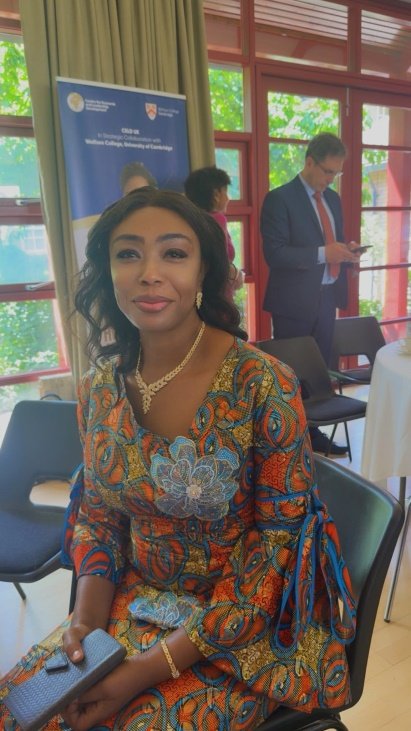
Portrait of a woman in a bright, patterned dress at a formal event, seated by a table with a blue banner behind her.
Executive Secretary of the Independent Commission for Peace and National Cohesion (ICPNC), Madam Hawa Sally Samai

By Amin Kef (Ranger)

The Executive Secretary of the Independent Commission for Peace and National Cohesion (ICPNC), Madam Hawa Sally Samai, has been honoured by the South Carolina House of Representatives in the United States of America in recognition of her outstanding contributions to peacebuilding, democratic governance, national cohesion and the protection of vulnerable communities.

The honour was conferred through a special resolution adopted by the South Carolina House of Representatives, which commended Madam Hawa Sally Samai for her decades of dedicated service in promoting peace, justice, inclusion and social development in Sierra Leone and beyond.

According to the citation, Madam Hawa Sally Samai has demonstrated exceptional leadership in advancing peacebuilding initiatives, strengthening democratic processes and fostering national unity. The resolution also acknowledged her efforts in championing the rights and welfare of women, children and vulnerable groups, as well as her commitment to building resilient and inclusive communities.

As Executive Secretary of the ICPNC, Madam Hawa Sally Samai has played a pivotal role in promoting dialogue, conflict prevention, mediation and reconciliation across Sierra Leone. Under her leadership, the Commission continues to engage stakeholders at both national and community levels to encourage peaceful coexistence and strengthen social cohesion.

The South Carolina House of Representatives also recognized her contribution to international peacebuilding efforts, highlighting her active participation on global platforms where she has consistently advocated for sustainable peace, inclusive governance and the meaningful participation of women in peace and security processes.

The recognition further acknowledged her longstanding service to Civil Society through the Advocacy Movement Network, an organisation she founded and has led in promoting human rights, citizen participation and democratic accountability.

The resolution was introduced by Representative Rosalyn D. Henderson-Myers and was formally adopted by members of the South Carolina House of Representatives on 8 June 2026 at the State House in Columbia, South Carolina.

The honour reflects the growing international recognition of the role Sierra Leoneans continue to play in promoting peace, democracy and social cohesion on both national and global stages.

Many observers believe Madam Hawa Sally Samai’s achievement will serve as an inspiration to peacebuilders across Sierra Leone and further reinforce the importance of dialogue, inclusion and collective action in building peaceful and prosperous societies.

Calls for Zainab Sheriff’s Release Grow Ahead of High Court Review Hearing

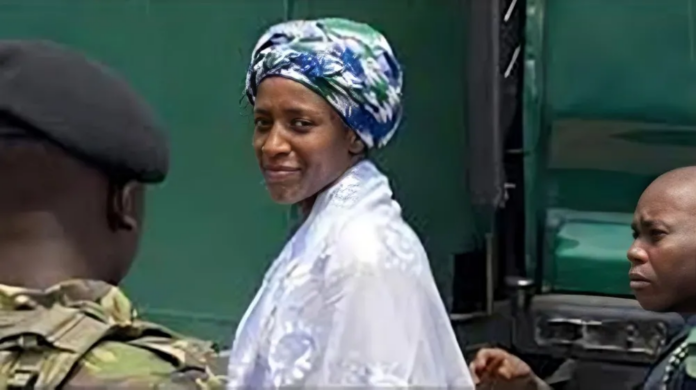
Woman in a white patterned outfit and colorful headwrap smiles, flanked by two armed security personnel near a green vehicle.
Zainab Sheriff

 By Amin Kef (Ranger)

The High Court of Sierra Leone has commenced hearing the appeal filed by the defence team of popular musician, reality television personality and politician Zainab Sheriff, challenging her conviction and four-year, two-month prison sentence imposed earlier this year by Magistrate Mustapha Brima Jah of Magistrate Court No. 1.

Sheriff was convicted of incitement and using threatening language under Section 3(2) of the Public Order Act, 1965, following remarks she allegedly made during a political rally in January.

During proceedings before Justice Mark Ngegba of High Court No. 8, Lead Prosecution Counsel Ibrahim Tholley Esq. raised a preliminary objection, arguing that the Defence had failed to comply with the Appeal Rules.

Tholley submitted that the appeal documents did not adequately set out or explain the judgment being challenged, maintaining that appeals must strictly adhere to procedural requirements. He urged the court to invoke Rule 8 of the Appeal Rules and dismiss the application.

Lead Defence Counsel R. S. Wright Esq. opposed the objection, describing it as premature. He argued that Rule 8 provides guidance but does not require absolute compliance with every statutory provision. Wright further contended that the Prosecution’s argument lacked legislative foundation, insisting that the admissibility of an appeal is a matter for judicial determination rather than prosecutorial discretion.

After hearing submissions from both parties, Justice Ngegba adjourned the matter to June 18, 2026, when he is expected to rule on whether the appeal will proceed or be dismissed at the preliminary stage.

Sheriff’s conviction arose from statements prosecutors said she made during a political rally, where video evidence allegedly showed her describing election rigging as treason and stating that those responsible “and their families should be killed.” The trial court ruled that the remarks constituted incitement and threatening language.

The appeal has attracted widespread public interest, with many observers viewing the matter as one of the country’s most significant legal cases involving political speech and the application of Sierra Leone’s public order laws.

Meanwhile, calls for Zainab Sheriff’s release have continued to grow among lawyers, opposition politicians and civil society activists, many of whom argue that the sentence raises broader concerns about freedom of expression and political dissent.

Freetown Mayor and senior All People’s Congress (APC) member, Yvonne Aki-Sawyerr, questioned the severity of the sentence, suggesting that the matter extends beyond the actual words spoken by Sheriff.

“A lot of us feel this isn’t about Zainab Sheriff’s words,” she said. “This is about Zainab Sheriff being used as a very visible, high-profile example of what you must not do in this society now. You must not speak your mind or you can be charged and end up in jail.”

Willietta Hughes, Legal Manager for AdvocAid, also expressed concern over the case, describing the sentence as excessive. She argued that no evidence had been presented to demonstrate that Sheriff’s remarks had provoked public unrest and cautioned that such prosecutions could discourage citizens from exercising their right to free expression.

Women’s rights advocates have also voiced concerns, warning that the case could discourage women from participating actively in political discourse and speaking openly on national issues.

Sheriff was arrested on February 20, pleaded not guilty to the charges and was repeatedly denied bail before being sentenced on April 14. She is currently being held at a maximum-security correctional facility in Freetown.

The High Court proceedings have also revived discussions about the possibility of a presidential pardon or other forms of executive clemency at a later stage, although there has been no official indication that such measures are under consideration.

The outcome of the appeal could have significant legal and political implications. Depending on the court’s decision, the conviction and sentence could be upheld, reduced, amended or overturned.

Many Sierra Leoneans are expected to follow the June 18 proceedings closely, with the High Court’s ruling likely to shape public debate on the rule of law, freedom of expression, civic space and confidence in the country’s justice system.