
Sierra Leone, ‘Shelter Afrique’ and TAF Global Africa Forge Alliance for Housing DevelopmentSierra Leone, ‘Shelter Afrique’ and TAF Global Africa Forge Alliance for Housing DevelopmentSierra Leone, ‘Shelter Afrique’ and TAF Global Africa Forge Alliance for Housing DevelopmentSierra Leone, ‘Shelter Afrique’ and TAF Global Africa Forge Alliance for Housing DevelopmentSierra Leone, ‘Shelter Afrique’ and TAF Global Africa Forge Alliance for Housing DevelopmentSierra Leone, ‘Shelter Afrique’ and TAF Global Africa Forge Alliance for Housing DevelopmentSierra Leone, ‘Shelter Afrique’ and TAF Global Africa Forge Alliance for Housing DevelopmentSierra Leone, ‘Shelter Afrique’ and TAF Global Africa Forge Alliance for Housing Development
Sierra Leone, ‘Shelter Afrique’ and TAF Global Africa Forge Alliance for Housing Development
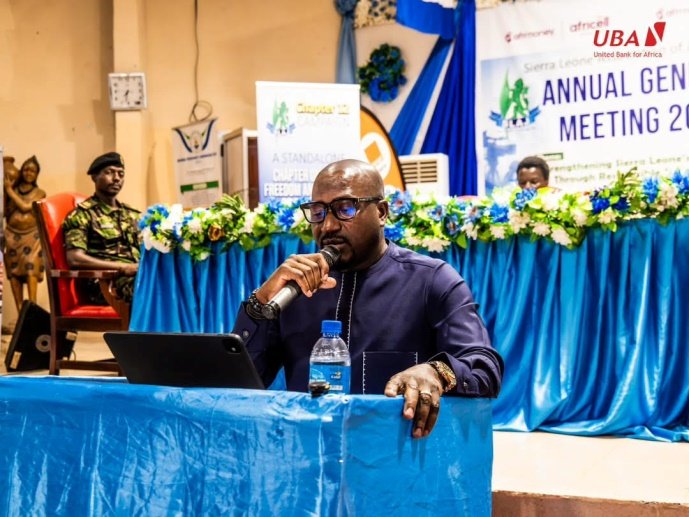
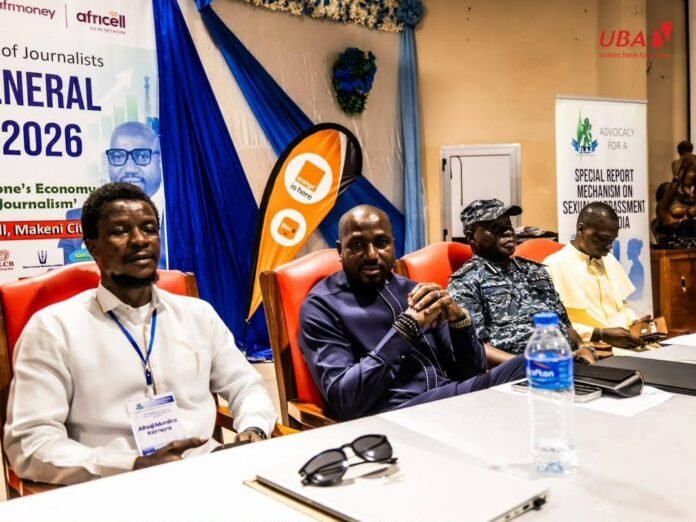
SLAJ Concludes Two-Day AGM with Renewed Commitment to Press Freedom & Responsible Journalism
By Amin Kef (Ranger)
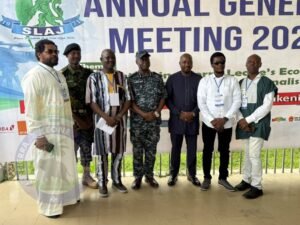
The Sierra Leone Association of Journalists (SLAJ) has successfully concluded its 55th Annual General Meeting (AGM) in Makeni City after two days of deliberations that focused on strengthening journalism, promoting media sustainability, and enhancing the role of the press in Sierra Leone’s economic and democratic development.
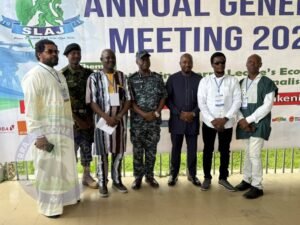
The event, hosted at the University of Makeni (UNIMAK) Auditorium from June 12 to 13, 2026, brought together journalists, government officials, development partners, civil society representatives, and other stakeholders from across the country under the theme: “Strengthening Sierra Leone’s Economy Through Responsible Journalism.”
The AGM, regarded as the highest decision-making body of the Association, provided an opportunity for members to review the progress of SLAJ, discuss challenges confronting the profession, and develop practical strategies to strengthen the media sector.
At the opening ceremony, SLAJ President Alhaji Manika Kamara reminded delegates that journalism remains one of the strongest pillars of democracy and national development.
He said journalists occupy a unique position in society because their reporting and investigations help citizens understand national issues, hold institutions accountable, and promote transparency and good governance.
According to him, responsible journalism is not merely a professional obligation but a national responsibility that contributes to building public trust and supporting sustainable economic growth.
He called on journalists to remain independent, ethical, and professional while continuing to serve the public interest.
Kamara reaffirmed SLAJ’s commitment to defending freedom of expression, protecting the welfare of journalists, and strengthening professionalism through advocacy and capacity-building programmes.
He highlighted the Association’s continued campaign for stronger constitutional guarantees for media freedom through the inclusion of a standalone Chapter 12 in Sierra Leone’s constitutional review process.
The SLAJ President also addressed public concerns regarding the Government of Sierra Leone’s annual subvention of SLE 2.7 million to the Association.
He clarified that the support does not compromise the independence of SLAJ or prevent the Association from speaking out on issues relating to media freedom, transparency, and accountability.
He explained that the subsidy is a longstanding public allocation to a recognized professional body and emphasized that the Association’s loyalty remains firmly with the principles of truth, professionalism, and the people of Sierra Leone.
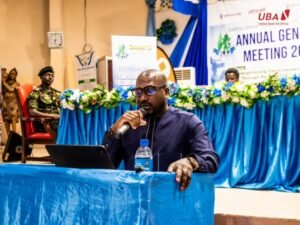
The AGM also featured a keynote address by the Managing Director and Chief Executive Officer of UBA Sierra Leone and President of the Sierra Leone Bankers Association, Mohamed Alhajie Samoura.
Samoura told delegates that responsible journalism and economic development are closely linked because trust and credible information are essential ingredients for investment and business growth.
Describing himself as “a son of the media,” he paid tribute to his late father, Mohamed Samoura, one of the pioneer founders of the Sierra Leone News Agency and a former Commissioner of the Independent Media Commission.
He said his background gave him a deep appreciation of journalism and its power to shape society and influence national development.
According to him, the world has entered an era where misinformation and disinformation can negatively affect economies and public confidence, making responsible journalism more important than ever before.
He encouraged journalists to go beyond political reporting and pay greater attention to development issues such as agriculture, entrepreneurship, financial inclusion, infrastructure, technology, and economic diversification.
Samoura urged media practitioners to familiarize themselves with Sierra Leone’s Medium-Term National Development Plan and use data-driven reporting to monitor government commitments and national development priorities.
He also called on media institutions to adopt sustainable business models by embracing digital innovation, strategic partnerships, and entrepreneurship to reduce dependence on political patronage and ad hoc sponsorship.
The National Coordinator of the Media Reform Coordinating Group (MRCG), Dr. Francis Sowa, also addressed the gathering and described responsible journalism as a vital contributor to economic transformation and democratic governance.
He said business confidence, public trust, and investment decisions are heavily influenced by the quality of information available to citizens and institutions.
Dr. Sowa commended the progress made in Sierra Leone’s media reform agenda, including the repeal of criminal libel laws and efforts to improve access to information.
He stressed that sustainable media institutions are essential for sustainable democracy and economic growth, adding that journalists must continue to provide accurate, balanced, and fact-based reporting.
The Inspector General of Police, Mr. William Fayia Sellu, also delivered a goodwill message and reaffirmed the strong partnership between the Sierra Leone Police and SLAJ.
He praised journalists for their contribution to democratic governance and acknowledged their role in giving a voice to ordinary citizens.
The Police Chief encouraged media practitioners to uphold the principles of fairness, humanity, accuracy, and accountability in their reporting.
He also referenced the Memorandum of Understanding between the Sierra Leone Police and SLAJ and pledged to strengthen collaboration between the two institutions.
As part of that commitment, he invited the SLAJ leadership to engage with police recruits at the Police Training School to promote greater understanding of the role and responsibilities of journalists.
IGP Sellu disclosed that he had served as President of the Press Club during his university days and expressed his personal admiration for the journalism profession.
He assured delegates that the Sierra Leone Police supports investigative journalism while encouraging reporters to seek balanced perspectives on matters relating to law enforcement.
Beyond the formal deliberations, the AGM also provided journalists from across Sierra Leone with an opportunity to strengthen professional relationships and reinforce the spirit of unity within the media fraternity.
The first day of activities ended with a colourful bonfire night that brought together journalists and stakeholders in an atmosphere of friendship, networking, and fellowship.
The event finally climaxed with the SLAJ-Independent Media Commission Media Awards Dinner, where distinguished journalists and media institutions were honoured for excellence, innovation, courage, and professionalism.
At the end of the two-day event, delegates expressed confidence that the resolutions and discussions held in Makeni would contribute significantly to strengthening the media landscape and promoting responsible journalism in Sierra Leone.
Participants agreed that a professional, independent, and sustainable media sector remains essential for promoting accountability, strengthening democratic governance, attracting investment, and supporting the country’s economic transformation.
The successful conclusion of the 55th AGM reinforced SLAJ’s determination to continue defending press freedom, promoting ethical journalism, and ensuring that the media remains a trusted partner in Sierra Leone’s development journey.
Immigration Department Expands Decentralised Services To BO
By Ibrahim Sesay
The Sierra Leone Immigration Department (SLID), under the leadership of Chief Immigration Officer (CIO) Dr. Moses Tiffa Baio, Esq., has extended its decentralisation programme to Bo City, marking another milestone in the Government’s drive to improve access to public services across the country.
The launch, held on Thursday, 11 June 2026, follows the successful establishment of similar immigration service centres in Kenema and Makeni. The initiative is designed to ensure that citizens can access essential immigration services closer to their communities without travelling to Freetown.
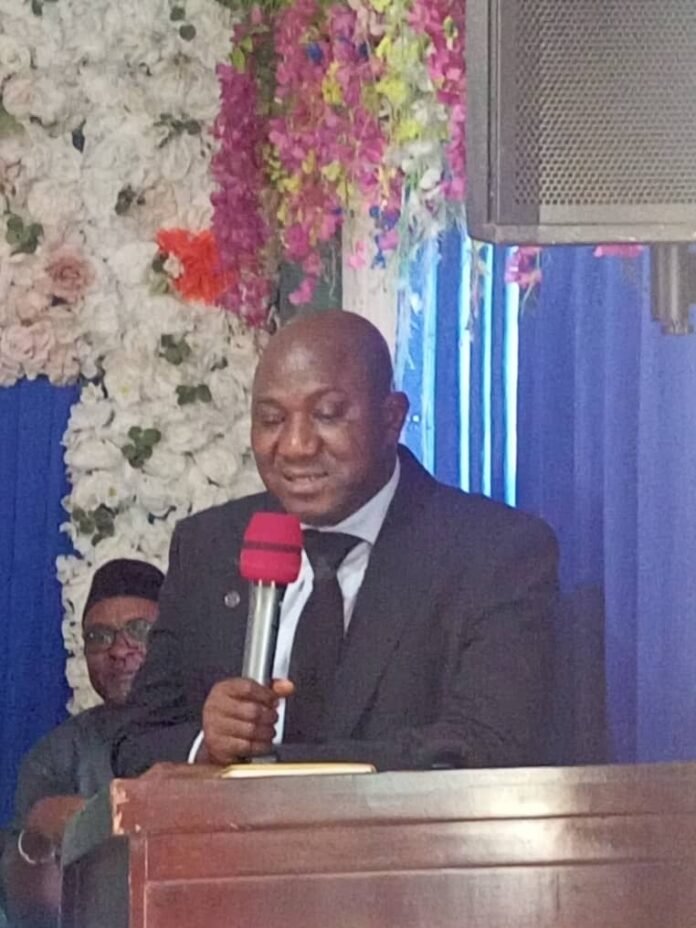
Speaking at the ceremony, the Permanent Secretary in the Ministry of Internal Affairs and Chairman of the event, Edward Aiah Ngaujah, described the occasion as more than a formal launch, saying it reflected the Government’s commitment to improving service delivery.
He commended the Minister of Internal Affairs and the Chief Immigration Officer for their efforts, noting that decentralisation would save citizens the time and cost previously associated with travelling to the capital to obtain passports and other immigration services. He also thanked President Dr. Julius Maada Bio for supporting policies aimed at enhancing public service delivery.
Bo City Mayor Kobba Musa welcomed the initiative and urged residents to protect and make good use of the facility. He recalled that many citizens previously spent weeks in Freetown seeking passports and related services, describing the new development as a major relief. He further encouraged other ministries, departments and agencies to adopt similar decentralisation programmes.
The Paramount Chief of Bo Kakua Chiefdom praised the initiative, describing it as a commendable achievement and a significant moment for the people of Bo and the Southern Region.
The Chairman of Civil Society in Bo and the Southern Region also lauded the project, stating that while decentralisation had been discussed for many years, numerous challenges had delayed its implementation. He expressed confidence that the facility would benefit not only residents of Bo but people across the entire Southern Region.
Representatives of key partners also highlighted the significance of the project. A representative of Net Page, the passport production company, said they were pleased to have fulfilled the promise of decentralising passport services, adding that the process required careful planning but all necessary systems were now operational.
The Chief Executive Officer of Constrats Systems Sierra Leone Limited said it was an honour to support the implementation of the country’s unified electronic residence and work permit system. He explained that the public-private partnership involving the Government, the Ministry of Labour, the Ministry of Internal Affairs and the Immigration Department had already produced positive results.
According to him, the 50-year agreement commenced in January 2026, while nationwide enforcement of the new system began on 1 June 2026. He noted that bringing services closer to citizens would improve access, efficiency and transparency, while also creating jobs and increasing government revenue.
The Chairman of the Parliamentary Committee on Internal Affairs described CIO Dr. Moses Tiffa Baio as a results-oriented leader and encouraged citizens to make proper use of the facility. He stressed the importance of maintaining integrity and professionalism in the delivery of immigration services.
Similarly, the Chairman of the Bo District Council welcomed the initiative, describing it as a progressive step that would contribute to more efficient and effective public service delivery.
In his address, Chief Immigration Officer Dr. Moses Tiffa Baio thanked President Julius Maada Bio for the confidence reposed in him and said his appointment was intended to support the reform and rebranding of the Immigration Department.
He disclosed that with the successful establishment of centres in Kenema, Makeni and Bo, plans were underway to extend decentralised immigration services to every district in Sierra Leone.
The CIO also thanked the Minister of Internal Affairs, Rtd. AIG Morie Lengor, and urged immigration officers to uphold professionalism and integrity. He announced that all passport and immigration applications are now expected to be processed through the new online system and advised members of the public to avoid direct dealings with immigration personnel.
He explained that the digital platform would promote transparent pricing, improve service delivery and significantly reduce opportunities for corruption and extortion. Dr. Baio further reminded foreign nationals residing in Sierra Leone to register with the Immigration Department and called on citizens to support national security by reporting suspicious immigration-related activities.
Director of Policy and Coordination at the Ministry of Internal Affairs, Mohamed Yokie, conveyed goodwill messages on behalf of the Minister, who was unable to attend the event.
Delivering the keynote address, the Resident Minister for the Southern Region thanked President Bio and the leadership of the Ministry of Internal Affairs and the Immigration Department for bringing the service to Bo. He described the initiative as historic, noting that it was the first time citizens could apply for passports directly from the city.
He urged residents across the 44 chiefdoms in the Southern Region to make effective use of the opportunity.
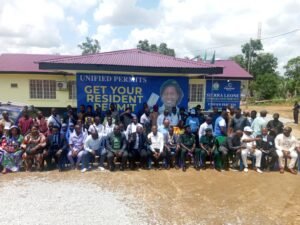
The event concluded with an inspection tour of the new Immigration Office in Bo and a group photograph involving dignitaries and invited guests.
Sierra Leone, ‘Shelter Afrique’ and TAF Global Africa Forge Alliance for Housing Development
By Amin Kef (Ranger)
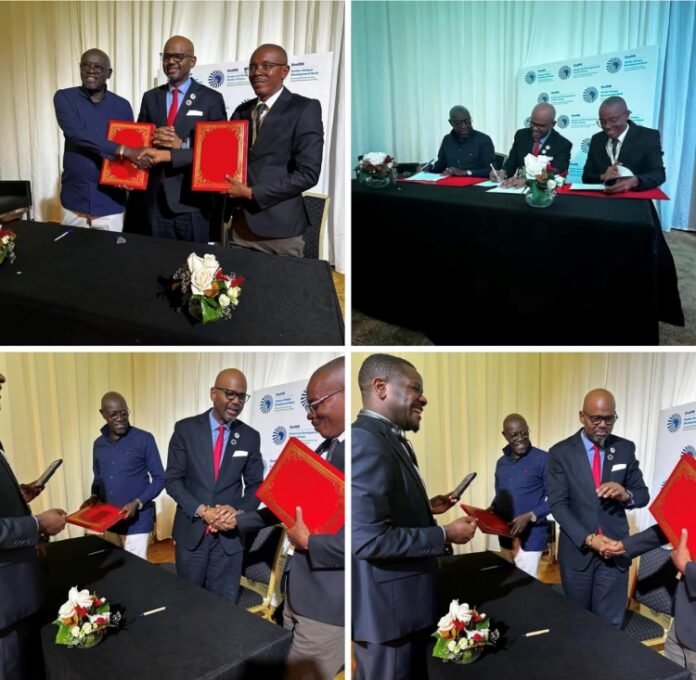
The Government of Sierra Leone, through the Ministry of Lands, Housing and Country Planning, has signed a Memorandum of Understanding (MOU) with Shelter Afrique Development Bank and TAF Global Africa for the construction of affordable homes and university student hostels across the country.
The agreement was signed on Thursday, 11 June 2026, during the Annual General Meeting of Shelter Afrique Development Bank held in Rabat, Morocco.
The partnership marks a significant step in the Government’s efforts to address the country’s housing deficit and expand access to decent accommodation, particularly for university students. It also reflects the Ministry’s ongoing legal and policy reforms aimed at creating a more sustainable and modern housing sector.
Speaking on the initiative, the Minister of Lands, Housing and Country Planning, Dr. Turad Senesie, emphasized that the collaboration with Shelter Afrique and TAF Global Africa is part of the Government’s broader agenda to improve the welfare of Sierra Leoneans by increasing access to affordable housing and quality student accommodation.
The signing of the MOU follows a high-level engagement held on the margins of the 45th Annual General Meeting of Shelter Afrique Development Bank on 9 June 2026, where Dr. Senesie sought the institution’s support for two priority projects: mortgage financing for low-income earners and the development of student hostels in partnership with TAF Global Africa.
During that engagement, the Minister outlined the Government’s ongoing reforms in the housing sector, including the enactment of the Country Planning Act 2025, which replaced a 75-year-old law and introduced a modern framework for development control and city zoning.
He also disclosed that Sierra Leone is drafting its first-ever Building Codes Act, which is expected to strengthen safety standards, promote public health, reduce structural failures, mitigate natural disasters and fire risks, and improve energy efficiency in the construction sector.
Additionally, the Government is reviewing the national Housing Policy, a process expected to lead to the introduction of a comprehensive Housing Act and supporting regulations. Dr. Senesie highlighted the Government’s joint venture arrangements with private developers, particularly TAF Global Africa, which is spearheading affordable housing initiatives across the country.
The Minister stressed that expanding mortgage financing for low-income earners and providing adequate student accommodation are critical to addressing Sierra Leone’s housing challenges and promoting sustainable urban development.
Shelter Afrique Development Bank welcomed the Government’s commitment to bridging the housing gap and expressed its readiness to support the country’s housing transformation agenda.
With the signing of the MOU, the Government of Sierra Leone, Shelter Afrique Development Bank, and TAF Global Africa are expected to work closely together to significantly enhance housing delivery and create more affordable accommodation opportunities for citizens.
Present at the signing ceremony were Shelter Afrique’s Chief Finance Officer, Beatrice Mburu, and Chief Business Officer, Gibson Mapfidza. The Minister was accompanied by the Director of Policy and Planning at the Ministry of Lands, Dr. Alphajor Cham, while TAF Global Africa’s Chief Executive Officer, Mustapha Njie, also attended the Annual General Meeting.
The agreement underscores the Government’s commitment to making shelter a central pillar of national development and ensuring that more
Sierra Leoneans, especially young people pursuing higher education, have access to safe and affordable housing.
NIB Boss Pushes for Greater SME Investment at SLEDP Investor Roundtable
By Amin Kef (Ranger)
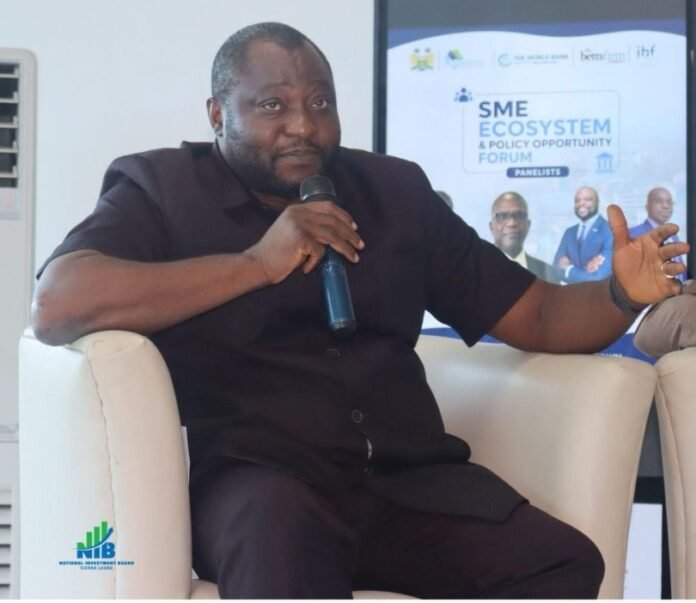
The Executive Director of the National Investment Board (NIB), Dr. Edward Hinga Sandy, has called for stronger investment support for Small and Medium Enterprises (SMEs), describing them as a critical driver of economic growth, job creation, and private sector development in Sierra Leone.
Dr. Sandy made the call on Wednesday, 11 June 2026, while delivering the opening remarks at the Sierra Leone Economic Diversification Project (SLEDP) Investor Roundtable held at the Bintumani Conference Centre in Freetown. The event was held under the theme, “Converting Investor Interest into Closed Transactions.”
The roundtable, organised under SLEDP with support from the World Bank and the Ministry of Finance, brought together investors, development partners, government institutions, business leaders, and twenty-one investment-ready Sierra Leonean SMEs seeking to attract capital and strategic partnerships. The initiative was implemented by IBF Expertise SA in partnership with The Betts Firm Consult.
In his address, Dr. Sandy said Sierra Leone is steadily repositioning itself as an emerging investment destination in West Africa through ongoing reforms designed to improve the business environment and strengthen investor confidence.
He highlighted several key initiatives undertaken by the National Investment Board to facilitate investment, including the establishment of the One Stop Shop Business Solutions Centre, the proposed Companies and Business Registration Bill, and the forthcoming Online Business Registration System.
According to Dr. Sandy, the SMEs participating in the roundtable represent some of Sierra Leone’s most promising enterprises across sectors such as tourism, hospitality, agribusiness, technology, innovation, and the creative economy. He urged investors to move beyond expressions of interest and pursue concrete business transactions that will enable local enterprises to expand, generate employment opportunities, and contribute meaningfully to national development.
As part of the event, Dr. Sandy also participated in a high-level panel discussion on the SME Ecosystem and Policy Opportunities Forum alongside representatives from the Ministry of Trade and Industry, the Sierra Leone Chamber of Commerce, Industry and Agriculture, and The Betts Firm Consult.
The panel discussions focused on strengthening collaboration within the private sector, expanding trade and investment opportunities, and creating an enabling environment for sustainable business growth and entrepreneurship.
The Investor Roundtable further reaffirmed the Government of Sierra Leone’s commitment to fostering a competitive investment climate and supporting SMEs as key drivers of economic transformation, innovation, and inclusive growth. Stakeholders expressed optimism that stronger partnerships between government, investors, and local businesses will help unlock the country’s economic potential and accelerate sustainable development.
ECSL Chairman Urges Universities to Drive Democratic Governance Education
By Amin Kef (Ranger)
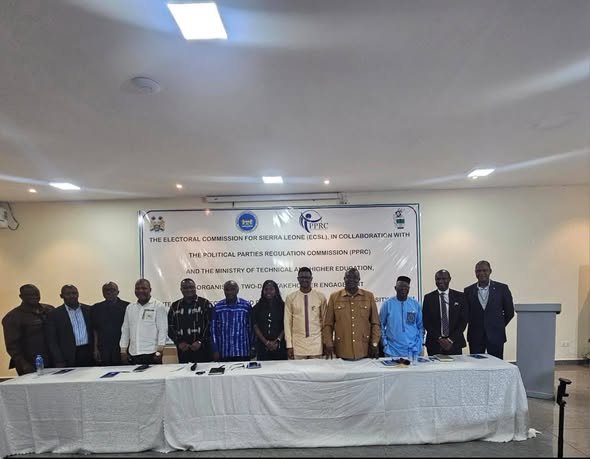
The Electoral Commission for Sierra Leone (ECSL) has concluded a two-day stakeholders’ engagement aimed at integrating Electoral Administration and Political Education into the country’s university system, marking what officials described as a significant step towards strengthening democratic governance.
The forum, held in Freetown from 11 to 12 June 2026, was organised in collaboration with the Political Parties Regulation Commission (PPRC) and the Ministry of Technical and Higher Education. The initiative is anchored in Recommendation 13 of the Cross-Party Committee Report on Electoral Systems and Management Bodies’ Review, which advocates the inclusion of governance and electoral studies in school and university curricula.
Addressing university vice chancellors, principals, curriculum development experts, media representatives, and other stakeholders, the Chief Electoral Commissioner and Chairman of ECSL, Edmond Sylvester Alpha, described the engagement as a “deliberate and historic step” towards reshaping Sierra Leone’s electoral culture.
He noted that the gathering represented a direct response to the Cross-Party Committee’s recommendation that the Electoral Commission work with educational authorities to incorporate governance and electoral topics into the nation’s educational system while strengthening civic and voter education initiatives.
According to Alpha, the report emerged from an inclusive national dialogue and called for the development of academic programmes on electoral administration and governance in collaboration with universities and other tertiary institutions.
“We are moving from recommendation to action,” he said, adding that the initiative seeks to build a generation of Sierra Leoneans who understand democracy, elections, and civic responsibility.
The ECSL Chairman stressed that elections should not be viewed as isolated events that occur every five years but as a permanent pillar of democracy sustained by informed citizens, professional administrators, and a political culture rooted in integrity.
He observed that knowledge of election management, legal frameworks, logistical systems, and ethical standards has largely remained within a small group of practitioners and said the proposed curriculum would broaden access to that expertise.
Alpha identified three major benefits expected from the institutionalisation of electoral education.
Firstly, he said it would create a professional pipeline by nurturing future electoral administrators, researchers, political and civic educators with both academic and practical knowledge of democratic processes.
Secondly, he explained that integrating political education into university programmes would help foster a culture of electoral integrity by promoting tolerance, non-violence, and respect for the rule of law among future leaders in politics, civil society, the media, and public institutions.
Thirdly, he maintained that an educated electorate remains the strongest defence against misinformation, electoral manipulation, and political apathy.
The ECSL Chairman emphasised that the two-day engagement was not merely about introducing another academic subject but about developing a comprehensive and non-partisan curriculum through collaboration.
Participants were invited to deliberate on the content of an electoral studies programme, ways of balancing theory with the practical realities of Sierra Leone’s electoral system, and strategies for tailoring courses to undergraduate, postgraduate, and professional certification levels.
He also highlighted the need for teaching approaches that would not only educate students about elections but also cultivate civic values capable of shaping responsible public conduct.
Alpha praised the expertise of university leaders and curriculum specialists, describing them as the driving force behind the initiative.
“The Electoral Commission brings technical knowledge of election management, while the academic community provides the rigour and institutional authority required to teach and certify these programmes,” he said.
Reaffirming the Commission’s commitment, Alpha disclosed that ECSL would provide institutional knowledge, resource materials, and technical personnel to support the implementation process.
He also announced plans to facilitate internships, election observerships, and joint research programmes for students.
The ECSL Chairman expressed the hope that, in the near future, graduates from Sierra Leonean universities would complete courses in electoral democracy that equip them to contribute meaningfully to credible elections.
He further called on the academic community to take ownership of the initiative, stressing that its long-term success would depend on the commitment of universities.
In a separate address during the workshop, Alpha underscored the importance of developing a curriculum in Electoral Governance for higher education institutions.
He noted that the quality of democratic institutions depends largely on the quality of citizens, leaders, and electoral practitioners produced through education.
According to him, credible elections require strong institutions, sound legal frameworks, ethical leadership, informed citizens, and competent electoral administrators.
He observed that modern electoral processes have become increasingly complex, involving issues such as voter education, electoral technology, election security, campaign financing, dispute resolution, misinformation, gender inclusion, youth participation, and electoral integrity.
Alpha therefore argued that higher education institutions should offer structured programmes capable of preparing a new generation of professionals to effectively manage and support democratic processes.
He also stressed the importance of collaboration among electoral bodies, ministries, universities, civil society organisations, development partners, political parties, and the media to ensure that the curriculum reflects both international best practices and Sierra Leone’s national realities.
Concluding the engagement, the ECSL Chairman described democracy as a learned behaviour sustained by knowledge, values, and habits passed from one generation to another.
He said embedding electoral administration and political education in the university system would help professionalise democracy, strengthen electoral integrity, enhance citizen participation, and contribute to peaceful and credible elections for generations to come.
President Bio Tours Bunce Island, Leicester Peak and Tacugama to Boost Eco-Tourism
By Amin Kef (Ranger)
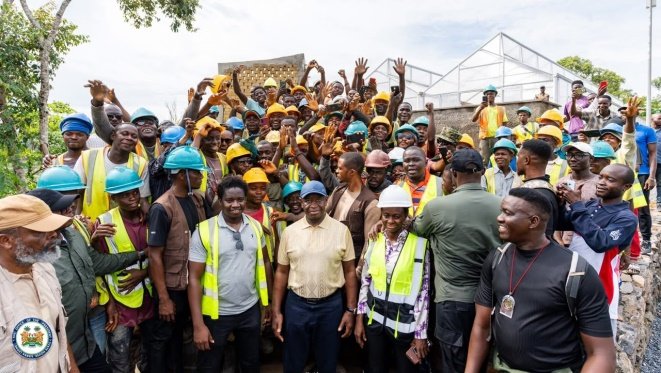
President Dr. Julius Maada Bio has undertaken a comprehensive inspection tour of some of Sierra Leone’s most important heritage, tourism, and environmental sites, reaffirming his Government’s commitment to preserving the nation’s history, promoting sustainable tourism, and safeguarding its natural resources for future generations.
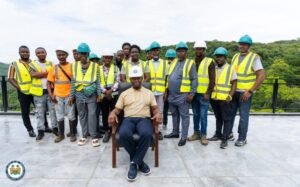
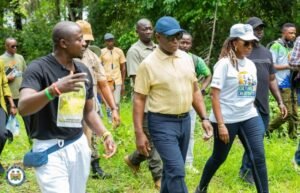
The inspection tour, conducted on Thursday, 11 June 2026, took the President to Bunce Island, the Leicester Peak Viewpoint, and the Tacugama Innovation Centre, three landmark destinations that showcase Sierra Leone’s unique blend of history, culture, and ecological wealth.
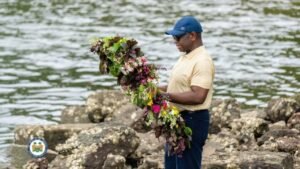
A major highlight of the visit was President Bio’s historic tour of Bunce Island, marking the first visit by a sitting Sierra Leonean President to the site in four decades. The visit reflects the administration’s determination to preserve national heritage, strengthen tourism, and deepen engagement with descendants of the African diaspora across the world.
Located in the Sierra Leone River, Bunce Island remains one of West Africa’s most significant historical landmarks and an enduring symbol of the transatlantic slave trade. The island served as a major British slave trading post from the late seventeenth century and today stands as a place of remembrance, reflection, and resilience.
During a guided tour of the historic site, the President received detailed briefings on the island’s role in the transatlantic slave trade and its lasting significance in world history. He visited key remnants of the former slave fortress, including holding areas and defensive structures that bear witness to the experiences of thousands of Africans who passed through the island before being transported across the Atlantic.
The President was also briefed on Bunce Island’s historical links with descendants of enslaved Africans in North America, particularly communities in the United States whose ancestral roots trace back to Sierra Leone. These connections continue to create opportunities for cultural exchange, heritage preservation, and diaspora engagement.
President Bio emphasized that preserving such historic sites forms part of the Government’s broader national development agenda, noting that they serve as important tools for education, historical reflection, and economic growth through tourism.
During the visit, the President laid a wreath in honour of the thousands of enslaved Africans who passed through the island, paying tribute to their resilience and sacrifice while reaffirming Sierra Leone’s commitment to preserving this important chapter of world history.
The President later proceeded to the newly developed Leicester Peak Viewpoint, one of the Government’s flagship tourism infrastructure projects.
Accompanied by the Minister of Tourism and Cultural Affairs, Nabeela Tunis, he toured the modern facility, which offers panoramic views of Freetown and the Atlantic coastline. The upgraded viewpoint is part of the Government’s broader strategy to transform Sierra Leone into a competitive and attractive tourism destination.
Commending the Ministry of Tourism for the transformation of the site, President Bio praised the quality of the work and stressed the importance of maintaining the facility.
“I want to thank you all for this tremendous job you have done here. This facelift will attract tourists and help reposition Sierra Leone as a tourism destination. However, I urge all of you to keep this place clean and tidy so that it can continue to serve the purpose for which it was built,” the President said.
He further noted that investments in tourism infrastructure are essential for creating jobs, stimulating local economies, and showcasing Sierra Leone’s natural beauty to the international community.
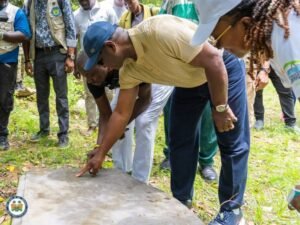
As part of the inspection tour, President Bio also visited the Tacugama Innovation Centre project, where construction is progressing on a state-of-the-art facility designed to promote tourism, education, environmental conservation, and creativity.
The ambitious project will feature a green park, observation tower, greenhouse, visitor centre, hiking trails, amphitheatre, children’s recreational facilities, and a canopy walk. Upon completion, the centre will also include a cinema, library, studio, boardroom, rooftop cafeteria, and exhibition spaces, creating a unique destination that combines learning, recreation, and environmental awareness.
Expressing satisfaction with the pace and quality of work, President Bio described the Innovation Centre as a transformative initiative aligned with Sierra Leone’s sustainable development aspirations.
“The Tacugama Innovation Centre should be utilized as a space for creativity, conservation, and sustainable development,” the President stated.
He also issued a strong warning against encroachment and land grabbing within protected conservation areas, stressing that the Government would take decisive action against individuals who threaten the country’s environmental assets.
“I want to give a clear warning against encroachment here. The law will take its full course against those who engage in land grabbing in conservation areas,” he cautioned.
The inspection tour reflects the Bio administration’s integrated approach to national development by leveraging Sierra Leone’s historical heritage, tourism potential, and environmental resources to drive economic growth, strengthen national identity, and create opportunities for future generations.
UBA CEO Calls for Development Journalism and Sustainable Media at SLAJ Annual Meeting
By Amin Kef (Ranger)
The Managing Director and Chief Executive Officer of UBA Sierra Leone and President of the Sierra Leone Bankers Association, Mohamed Alhajie Samoura, has called on journalists to embrace responsible and development-driven reporting, describing credible journalism as a key driver of economic growth and national development.
Mohamed Alhajie Samoura made the statement while delivering the keynote address at the 55th Annual General Meeting (AGM) of the Sierra Leone Association of Journalists (SLAJ), held on Friday June 12, 2026 at the University of Makeni Auditorium under the theme: “Strengthening Sierra Leone’s Economy Through Responsible Journalism.”
Addressing journalists, government representatives, development partners, and media stakeholders, Samoura said responsible journalism is no longer just a professional obligation but an economic necessity in an era increasingly challenged by misinformation, disinformation, and rapid digital transformation.
He explained that every thriving economy is built on trust, transparency, and accountability, adding that accurate and balanced reporting creates the confidence needed by investors, businesses, and development partners to make long-term commitments.
Samoura, who described himself as “a son of the media,” paid tribute to his late father, Mohamed Samoura, one of the founding fathers of the Sierra Leone News Agency (SLENA) and a former Commissioner of the Independent Media Commission. He disclosed that his own career began in journalism before moving into banking, giving him a deep appreciation of the profession and its role in nation-building.
According to him, responsible journalism should not be mistaken for public relations or the concealment of national challenges. Instead, he urged journalists to report on problems while equally highlighting solutions and opportunities for national progress.
He encouraged media practitioners to focus more on development issues such as agriculture, financial inclusion, infrastructure, entrepreneurship, technology, and economic diversification, noting that the media has the power to shape national conversations and influence policy priorities.
Samoura also challenged journalists to familiarize themselves with Sierra Leone’s Medium-Term National Development Plan and use data-driven reporting to monitor government commitments and development outcomes.
On the issue of media sustainability, he observed that many media institutions continue to face financial difficulties and urged media owners to adopt entrepreneurial approaches, embrace digital innovation, and develop sustainable business models that reduce dependence on political patronage and irregular sponsorship.
He further called for stronger collaboration between the media, government, the private sector, and development partners to promote accountability and inclusive economic growth.
Earlier, SLAJ President Alhaji Manika Kamara welcomed delegates and reaffirmed the Association’s commitment to defending press freedom, promoting professionalism, and protecting the welfare of journalists.
He described responsible journalism as a national duty that supports transparency, accountability, and sustainable development. Kamara also addressed concerns over the Government of Sierra Leone’s annual subvention to SLAJ, maintaining that the financial support does not compromise the independence of the Association or silence the media.
The National Coordinator of the Media Reform Coordinating Group (MRCG), Dr. Francis Sowa, also delivered a goodwill message in which he described responsible journalism as a critical pillar of democratic governance and economic transformation.
Dr. Sowa noted that business confidence and public trust depend largely on the quality of information available to citizens and institutions. He called for greater investment in media sustainability and professional development to strengthen independent journalism in Sierra Leone.
The Inspector General of Police, Mr. William Fayia Sellu, also addressed the gathering and praised the longstanding relationship between the Sierra Leone Police and SLAJ.
He commended journalists for giving a voice to the voiceless and contributing to democratic governance while encouraging practitioners to uphold the principles of fairness, accuracy, humanity, and accountability.
IGP Sellu reaffirmed the Sierra Leone Police’s commitment to strengthening cooperation with the media and invited the SLAJ leadership to engage with police recruits as part of efforts to improve understanding between journalists and law enforcement officers.
The keynote presentations and goodwill messages formed one of the major highlights of the two-day AGM, with delegates agreeing that a professional, independent, and sustainable media sector remains essential for promoting accountability, strengthening democracy, attracting investment, and supporting Sierra Leone’s economic transformation.
Vice President Hails Seamless 2026 Hajj, Praises President Bio’s Leadership
By Amin Kef (Ranger)
Vice President of the Republic of Sierra Leone, Dr. Mohamed Juldeh Jalloh, has praised the successful organization of the 2026 Hajj pilgrimage, commending the dedication and coordination of the Presidential Hajj Taskforce and all institutions that contributed to what he described as another successful religious exercise for Sierra Leonean Muslims.
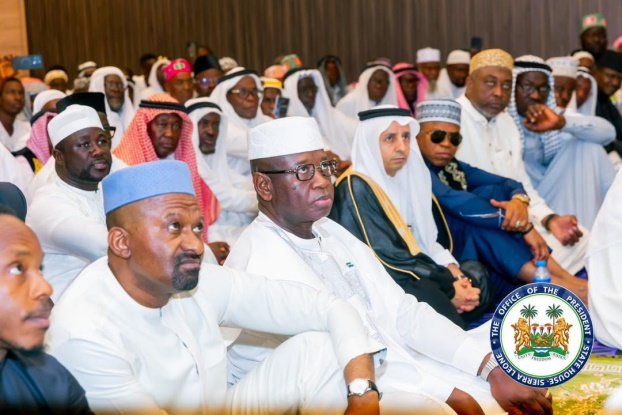
Speaking on Friday, 12 June 2026, after joining President Dr. Julius Maada Bio for Jummah prayers at State House to welcome returning Hajj pilgrims from the Kingdom of Saudi Arabia, the Vice President highlighted the Government’s commitment to improving the management of one of Islam’s most sacred obligations.
Dr. Juldeh Jalloh noted that the gathering was an opportunity to celebrate the safe return of the pilgrims and to thank Allah for the successful completion of the holy journey.
“Today, I joined His Excellency President Julius Maada Bio for Jummah prayers at State House to welcome our returning Hajj pilgrims from Mecca,” the Vice President stated, adding that the President had emphasized the significant progress made in the administration of the Hajj programme, including the expansion of opportunities for Sierra Leoneans living in the diaspora to participate in the pilgrimage.
As Supervisor of the Presidential Hajj Taskforce, Dr. Juldeh Jalloh expressed profound appreciation to members of the Taskforce and all partner institutions whose dedication ensured the smooth coordination and successful execution of this year’s pilgrimage.
“I want to extend my sincere appreciation to the Taskforce and all institutions whose hard work and coordination made this year’s pilgrimage another success,” he said.
The Vice President also offered prayers for the returning pilgrims and the nation, saying, “May Allah accept the Hajj of our pilgrims and continue to bless Sierra Leone.”
The special congregational prayer at State House brought together returning pilgrims, religious leaders, government officials, and members of the Muslim community to offer gratitude for a safe pilgrimage and to pray for lasting peace, unity, and national development.
Providing an overview of the 2026 Hajj exercise, Chairman of the Presidential Hajj Taskforce, Alhaji Murtada Sesay, disclosed that a total of 2,626 Sierra Leonean pilgrims, including members of the diaspora community, participated in this year’s pilgrimage. According to him, 826 pilgrims travelled directly from Sierra Leone, and all participants successfully completed the sacred rites and returned home safely.
Alhaji Sesay commended President Bio and his Government for their unwavering support and acknowledged the collaborative efforts of various stakeholders whose contributions ensured effective planning and management throughout the exercise.
President Dr. Julius Maada Bio, in his address, warmly welcomed the pilgrims home and congratulated them on fulfilling one of Islam’s most important acts of worship. He praised the Presidential Hajj Taskforce for its efficiency and commitment, noting that the continuous improvements in the Hajj management process reflect the Government’s determination to provide better public services for all Sierra Leoneans.
The President further encouraged institutions, development partners, and citizens to continue supporting national development efforts while praying for peace, unity, and prosperity across the country.
The prayer session concluded with special supplications for national cohesion, economic progress, and the continued advancement of Sierra Leone, reaffirming the important role of faith in promoting hope, solidarity, and collective responsibility in nation-building.
Community Climate Resilience and Emergency Preparedness Project Empowers Communities in Moyamba District
By Tilda Mammah
The Generational Impact Movement (GIM), with support from Plan International through the Youth Challenge Fund, has successfully implemented the Community Climate Resilience and Emergency Preparedness Project in selected communities across Moyamba District, significantly boosting awareness of climate change and strengthening local capacity to respond to environmental challenges.
The initiative was designed to promote environmental conservation, improve emergency preparedness, and build community resilience against the growing impact of climate change, particularly among vulnerable groups, including women, young people, schoolchildren, and persons with disabilities.
The project began with a comprehensive community assessment carried out by the GIM project team in collaboration with local stakeholders. The assessment identified communities and schools facing environmental threats such as deforestation and declining vegetation cover. Through consultations with community leaders, school authorities, women, youth groups, and disability organizations, the project selected its target communities and beneficiaries.
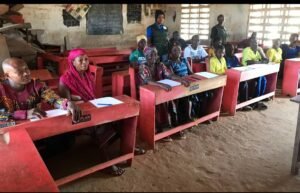
Following the assessment, an implementation strategy was developed to ensure broad community participation and ownership. The project placed particular emphasis on involving school-going children, youth, women, traditional leaders, and persons with disabilities, recognizing their critical role in promoting environmental sustainability and climate resilience.
The project was officially launched on 24 March, bringing together stakeholders from across the participating communities. During the launch, participants were introduced to the objectives of the initiative, expected outcomes, and the collective responsibilities required to advance climate action and emergency preparedness.
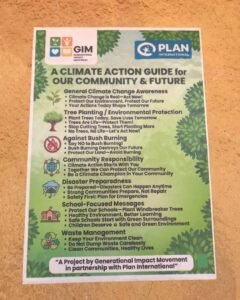
As part of the implementation process, a series of climate change awareness sessions were organized to educate beneficiaries on the causes and consequences of climate change and environmental degradation. Discussions focused on issues such as deforestation, poor waste management practices, and other human activities that contribute to climate-related disasters.
Participants were also equipped with practical knowledge on climate change mitigation and adaptation measures, enabling them to adopt environmentally friendly practices that can help protect their communities and natural resources.
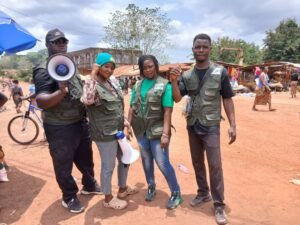
To expand the reach of the awareness campaign, the project team organized weekly market sensitization activities and radio discussion programmes. These platforms created opportunities to engage traders, farmers, women, youth, and the wider public on the importance of environmental protection, responsible waste disposal, and collective efforts to address climate challenges.
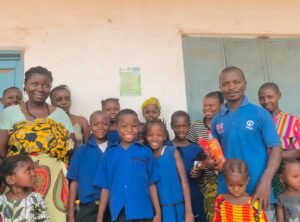
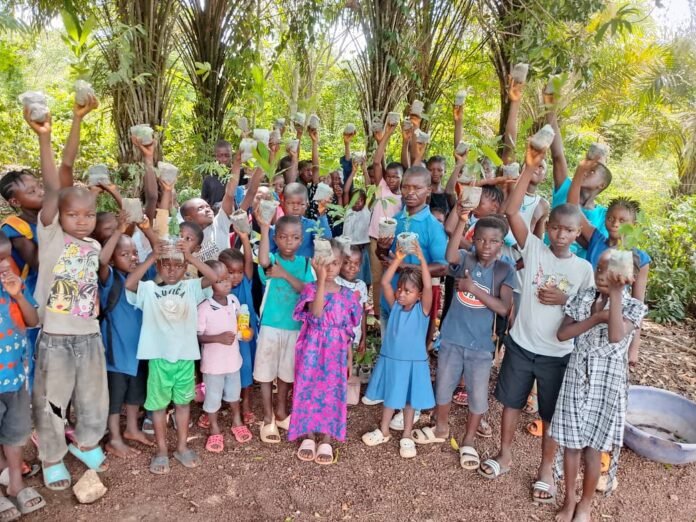
A major highlight of the project was its environmental restoration component through tree planting. A total of 100 tree seedlings were distributed and transplanted across selected schools and communities, including Njagbahun and Mokorewa in Fakunya Chiefdom and Mbaoma in Dasse Chiefdom.
The tree planting exercise attracted the active participation of students, teachers, community leaders, women, and young people, reinforcing the importance of environmental stewardship and long-term sustainability.
The project concluded with an Emergency Preparedness Training that brought together community members and key stakeholders to discuss disaster risk reduction strategies and practical emergency response measures. Participants received training on protecting natural resources, promoting proper waste disposal, and strengthening community resilience against climate-related hazards.
According to GIM, the initiative directly benefited 160 people across the target communities and schools. Through a combination of awareness campaigns, community engagement, tree planting exercises, market sensitizations, radio programmes, and emergency preparedness training, the project has significantly enhanced public understanding of climate change and environmental conservation.
Project Highlights
- Direct beneficiaries reached: 160
- Schools engaged: 3
- Seedlings distributed and transplanted: 100
- Key activities included: Project Launch, Climate Change Awareness Sessions, Weekly Market Sensitizations, Radio Discussion Programmes, Tree Seedling Distribution and Transplanting, and Emergency Preparedness Training.
The Generational Impact Movement expressed gratitude to Plan International and the Youth Challenge Fund for their support in making the project a success. The organization reaffirmed its commitment to empowering communities, promoting climate action, and contributing to sustainable development across Sierra Leone.