
Home Blog Page 45

ONGA Celebrates Sierra Leone’s Culinary Excellence as Phebean Kamara Wins Salone Jollof Battle, Launches New Powder Spice

Smiling woman in yellow holding an oversized blue winner's cheque at an ONGA event.

Sierra Leone’s leading seasoning brand, ONGA, marketed by Premium Divine Trading Company Limited, has successfully concluded the 3rd edition of the ONGA Awojor Fiesta – Salone Jollof Battle Edition, with Phebean Kamara emerging as the winner of the maiden national cooking competition. The grand finale, held on Sunday, July 5, 2026, at the Melian Event Center in Murray Town, Freetown, brought together five talented home cooks who competed for the title of Salone Jollof Champion and the opportunity to represent Sierra Leone at the regional ONGA Jollof Battle scheduled for August 22, 2026, in Ghana.

After a competitive cooking session and assessment by a panel of professional judges, Phebean Kamara was crowned champion based on criteria including taste, presentation, creativity, hygiene and cooking techniques. She received Le35, 000 cash, an ONGA product hamper, a standing freezer and an all-expense-paid trip to Ghana, where she will represent Sierra Leone at the regional competition coinciding with the annual celebration of World Jollof Day.

The regional competition will bring together contestants from five West African countries Sierra Leone, Ghana, Nigeria, Senegal and Côte d’Ivoire to compete for regional recognition.

The national competition featured five finalists, including Kadie Turay from Kambia District and Mary Kargbo, Salamatu Kamara, Phebean Kamara and Bintu Yie Octobean from Freetown.

Mary Kargbo emerged as first runner-up, receiving Le15, 000 cash, an ONGA hamper and an electric stove, while Kadie Turay secured the second runner-up position with Le10,000 cash, an ONGA hamper and an electric stove. Bintu Yie Octobean and Salamatu Kamara were placed fourth and fifth respectively, receiving Le5,000 cash, assorted ONGA products, and electric stoves.

The event also featured the official launch of the new ONGA Powder Spice, entertainment activities, lucky dips where attendees won prizes including smart televisions, electric heaters and ONGA products, as well as consumer engagement activities. The company also recognized wholesalers and retailers for their continued contribution to the growth and success of the ONGA brand in Sierra Leone.

Speaking at the event, Marketing Lead at Premium Divine Trading Company Limited, Philip Kanu, said the ONGA Awojor Fiesta was created to celebrate food, culture and community while promoting Sierra Leone’s culinary heritage.

He explained that the word “Awojor” is rooted in Krio culture and refers to a feast or celebration where people gather to enjoy food, fellowship and entertainment. According to him, the addition of “Fiesta” reflects the wider activities of the event, which included music, games, lucky draws and other recreational activities alongside the cooking competition.

Philip Kanu said the maiden Salone Jollof Battle was designed to identify and promote Sierra Leone’s culinary talents while serving as the country’s qualifying competition for the World Jollof Day celebration.

He assured contestants and guests that the competition was conducted fairly and professionally, adding that ONGA remains committed to creating platforms that celebrate local talents and promote Sierra Leone’s food culture.

Representing the Ministry of Tourism and Cultural Affairs, Robert H. Leigh, Assistant Director of Tourism, described the event as an important platform for promoting Sierra Leone’s culture, creativity and gastronomy.

Robert H. Leigh said the ONGA Awojor Fiesta aligns with the Ministry’s focus on culture and creativity, noting that food remains a major component of Sierra Leone’s cultural identity and tourism potential.

He explained that the event serves as a build-up to the UN Tourism Gastronomy Forum, which Sierra Leone is expected to host in December 2026. According to him, the forum will provide the country with an opportunity to showcase its diverse culinary heritage to a global audience.

“As a Ministry we are supporting our food culture because we believe our cuisine is one of the best in the world,” Robert H. Leigh stated.

During the event, Joseph Ashong, Cluster Head of Marketing at Promasidor, launched the new ONGA Powder Spice, describing it as an all-in-one seasoning designed to improve flavour, aroma and appearance of meals.

Joseph Ashong explained that the product contains carefully selected ingredients, including garlic, onion, ginger, chili pepper, black pepper, iodised salt, natural spices, flavour enhancers, sugar and colouring, which combine to deliver a richer taste experience.

He encouraged consumers to use the seasoning in preparing jollof rice, soups, stews, sauces, vegetables and grilled foods, noting that the product helps cooks achieve better aroma and taste with minimal effort.

The new product, he continued, demonstrates ONGA’s commitment to innovation and meeting the changing needs of consumers across Sierra Leone.

He concluded by officially launching the new ONGA Powder Spice Stick Pack, describing it as an innovation aimed at providing consumers with convenience while maintaining the trusted taste and quality associated with the ONGA brand.

Chief Judge of the competition and National President of the Professional Chefs Association of Sierra Leone, Chef Abdul Edward Kainessie, while announcing the result praised all contestants for demonstrating creativity and professionalism throughout the competition.

Chef Abdul Edward Kainessie disclosed that the judging process was based on the African Chefs Association (ACA) criteria, ensuring fairness, transparency and professionalism.

He said contestants were assessed on presentation, taste, hygiene, cooking techniques, creativity and overall performance.

Although only one contestant emerged as champion, Chef Abdul Edward Kainessie described all finalists as winners, noting that their participation demonstrated their commitment and potential in the culinary industry.

He commended ONGA and Premium Divine Trading Company Limited for organizing what he described as a professionally executed competition that promotes Sierra Leone’s culinary identity.

He encouraged Phebean Kamara to serve as a strong ambassador for Sierra Leone at the regional competition in Ghana and showcase the country’s rich food heritage.

Speaking after her victory, Phebean Kamara expressed appreciation to ONGA for creating a platform that celebrates culinary talents.

She attributed her success to hard work, dedication and preparation, while thanking her family, friends and supporters for their encouragement throughout the competition.

Phebean Kamara said she understands the responsibility of representing Sierra Leone at the regional ONGA Jollof Battle and expressed confidence that she will perform well and bring honour to the country.

The ONGA Awojor Fiesta – Salone Jollof Battle Edition has been described by stakeholders as a significant step towards promoting Sierra Leone’s culinary industry, supporting local talents and positioning food culture as an important part of national identity and tourism development.

Africell CEO Urges Private Sector, Alumni to Invest in Fourah Bay College’s Historic 200th Anniversary Projects

Promotional banner for Fourah Bay College’s bicentennial, showing Shadi Al-Gerjawi and the slogan 'A legacy worth transforming, a future worth building.'


The Chief Executive Officer of Africell Sierra Leone, Shadi Al-Gerjawi, has called on the private sector, investors, alumni, development partners and friends of Fourah Bay College (FBC) to unite in support of an ambitious campaign to transform and modernize Sierra Leone’s oldest institution of higher learning ahead of its historic 200th anniversary.

In a public appeal issued as part of the College’s Bicentennial celebration campaign, Shadi Al-Gerjawi, who described himself as a proud Fourahbite, urged stakeholders to invest in the future of the institution and help preserve its rich academic legacy for generations to come.

He emphasized that Fourah Bay College has played a pivotal role in producing leaders and professionals who have contributed significantly to Sierra Leone and the wider African continent. He also noted that the bicentennial celebration presents a unique opportunity to reposition the institution as a modern centre of excellence.

Using the campaign slogan, “A Legacy Worth Transforming. A Future Worth Building,” the Africell Sierra Leone CEO appealed to the private sector, investors, friends and alumni to partner with the College in implementing major infrastructure and innovation projects that will strengthen its academic environment.

According to the campaign, priority development projects include the construction of improved toll road infrastructure, a mini stadium, a multipurpose building, student hostels and expanded digitization and innovation facilities aimed at enhancing teaching, learning and research.

Shadi Al-Gerjawi stressed that collective action is essential to ensure the institution remains competitive and continues producing graduates capable of driving national development.

He further encouraged all Fourah Bay College alumni and supporters to contribute towards the transformation agenda, stating that the initiative is about building a lasting legacy that will inspire the next 200 years.

The campaign concludes with a strong call for national support under the theme: “Invest in Our Heritage. Transform Our Future. Support FBC @ 200 – Together, We Can Make It Happen.”

The bicentennial celebration marks a historic milestone for Fourah Bay College, which was established in 1827 and remains one of West Africa’s most respected institutions of higher education. The anniversary is expected to bring together alumni, Government officials, development partners, corporate institutions and friends of the College in support of its long-term transformation and modernization agenda.

Notification of Retirement of Group Chairman of United Bank for Africa and Appointment of Successor

Newly Elected Group Chairman of United Bank for Africa, Mr. Emmanuel N. Nnorom

United Bank for Africa Plc has announced that Mr. Tony O. Elumelu, CFR, Group Chairman of UBA, will retire from the Board of Directors of UBA on 21 August 2026, upon the completion of the 12-year tenure limit prescribed for Non-Executive Directors of Banks by the Central Bank of Nigeria.

At its meeting held on 6 July 2026, the Board accepted Mr. Elumelu’s retirement and elected Mr. Emmanuel N. Nnorom, a Non-Executive Director of the Bank, as his successor, with effect from 21 August 2026.

The Board places on record its profound appreciation to Mr. Elumelu for his visionary leadership and exceptional contribution to the strategic vision and institutional strength of the UBA Group.

Mr. Elumelu’s tenure has been a defining chapter in the Group’s history. Under his stewardship, UBA was transformed into a pan African institution, operating in 20 African countries and 4 global financial centres and serving over 50 million customers.

Mr. Nnorom is a chartered accountant with over forty years’ experience in banking, finance and audit. He brings to the role extensive leadership experience and deep institutional knowledge of UBA.

Commenting on his retirement, Mr. Tony O. Elumelu, CFR, said:

“Serving United Bank for Africa has been one of the great privileges of my career. UBA has established a unique competitive position, across Africa and globally, and I leave the Board with great confidence in UBA’s future. Emmanuel Nnorom is a leader of integrity, experience and sound judgement, and I am confident that the Bank will continue to thrive under his leadership.”

Mr. Emmanuel N. Nnorom, on his appointment, said:

“I am honoured by the trust the Board has placed in me and deeply conscious of the legacy I inherit. I look forward to working with my colleagues on the Board, Management and our staff across all our markets to sustain UBA’s momentum and continue delivering long-term value to our shareholders, customers and stakeholders.”

United Bank for Africa Plc is Africa’s Global Bank. Operating across twenty African countries and in the United Kingdom, the United States of America, France and the United Arab Emirates, UBA provides retail, commercial and institutional banking services, leading financial inclusion and implementing cutting edge technology. UBA is one of the largest employers in the financial sector on the African continent, with 25,000 employees group wide and serving over 50 million customers globally.


Tempered through 105 Years of Refinement and Forging Ahead: Reflections on the Journey of the Communist Party of China

Chinese Ambassador to Sierra Leone, His Excellency Zhao Yong

On July 1, 2026, the Communist Party of China (CPC) celebrates its 105th founding anniversary. Over the past 105 years, the CPC has led the Chinese people to remarkable achievements in the new-democratic revolution, socialist revolution and construction, reform, opening-up and socialist modernization, and Socialism with Chinese Characteristics for a New Era. In just a few decades, China has completed an industrialization process that took many developed countries several centuries, creating the twin miracles of rapid economic growth and sustained social stability. Behind these extraordinary accomplishments lies a set of enduring and incomparable fine qualities of the CPC—qualities that hold the key to understanding China’s development path and its development philosophy. I would like to share some thoughts on this with my friends in Sierra Leone.

— The dedication to the pursuit of truth that ensures it always advances in the right direction. The CPC embraces Marxism as a powerful ideological weapon for changing both the subjective and the objective world. We remain committed to freeing our minds, seeking truth from facts, advancing with the times, and taking a pragmatic approach. We constantly guide new practice with evolving theory, ensuring that the cause of the Party and the people always stays on the right path.

— The deep bond with the people that ensures it always enjoys a solid foundation. The CPC keeps firmly in mind that the country is the people, and the people are the country. We remain committed to serving the public interest and exercising power for the people, and faithfully uphold the fundamental purpose of serving the people wholeheartedly. We stand with the people, think with them, and work with them.

— The determination to shoulder historic missions that ensures it always holds the strategic initiative. The CPC is dedicated to the enduring cause of the Chinese nation. It firmly shoulders the great responsibilities entrusted to it by history and by the people, maintains coherence between long-term and phased goals, and formulates and implements sound line, principles, and policies, ensuring that the Party always leads and holds the initiative in advancing its cause.

— The readiness to follow the trend of development that ensures it alwaysstays at the forefront of the times. The CPC maintains a high degree of historical consciousness and a broad global vision. It has a clear understanding of China’s national conditions and the defining theme of our times. It actively identifies, adapts to, and shapes change, and forges ahead with unwavering resolve. It makes sure that its work is relevant to the times, grounded in objective laws, and innovative.

— The courage and capability to fight that ensures it always maintained unwavering confidence in victory. The CPC upholds and carries forward the spirit of dauntless and heroic struggle. For the people, the country, the nation, and for our ideals and convictions, no matter how powerful the enemy, how arduous the road, or how severe the challenges, we have never flinched or retreated. With an iron will that remains unshaken in the face of all storms, we inspire the people to march from victory to victory.

— The commitment to self-strengthening that ensures it always keeps its vitality. The CPC is fully aware that it takes a good blacksmith to make good steel. It excels at examining itself against the demands of the times, keeping itself alert with a keen sense of urgency, and improving itself through self-revolution.

From achieving national independence to building national prosperity, from meeting basic needs to realizing moderate prosperity in all respects, the CPC has grown from a party with just over 50 members at its founding in 1921 to a party of over 100 million members and more than 5.4 million primary-level party organizations today. In 105 years, the CPC has proven that a political party that always breathes the same air as the people and shares their fate, a political party that continuously pursues self-revolution and always strives for progress, can not only lead China toward its great rejuvenation, but also contribute China’s wisdom and solutions to the cause of human progress, offer new options for developing countries in their pursuit of modernization, and continuously inject China’s strength into building a community with a shared future for mankind.

Investigation Reveals Airport Fee Suspension May Trigger Costly Contract Dispute and Renew Focus on Missing K5 Collections

Older man wearing glasses and a grey shirt speaks into a handheld microphone beside a large printed document in a binder.

The decision to temporarily suspend the collection of the US$25 Airport Security Fee at Freetown International Airport has triggered serious concerns over the country’s contractual obligations to Securiport (SL) Limited, with fears that the move could expose the Government to another substantial financial liability running into millions of United States dollars.

In a ministerial directive dated 1st July 2026, the Ministry of Internal Affairs instructed Securiport to suspend the collection of the Airport Security Fee from 6th July 2026 until December 2026 while the Government undertakes a comprehensive review of the contract and conducts a special audit. The Ministry argued that the existing manual cash collection system is cumbersome, inconvenient for passengers and inconsistent with modern airport operations.

However, documents relating to the original agreement and subsequent amendments raise significant legal and financial questions regarding the suspension.

According to the 2012 Agreement governing Securiport’s operations in Sierra Leone, the company financed and installed the country’s immigration security system on the understanding that it would recover its investment exclusively through the Airport Security Fee. The contract reportedly obliges the Government to enforce collection of the fee and compensate the company whenever Government’s actions prevent its collection.

Records further show that a similar interruption in fee collection in previous years resulted in a substantial financial dispute. That dispute was eventually settled after the Government agreed to pay US$12 million, representing a negotiated settlement of much larger accumulated liabilities arising from earlier contractual breaches.

Information available also indicates that Government already owes US$8 million under previous contractual obligations.

The Ministry has emphasized that the suspension is not intended to terminate the contract but rather to facilitate completion of an independent audit by the Audit Service Sierra Leone and allow authorities to redesign a more efficient collection system. However, Securiport has so far not be found wanting.

The directive also instructs Securiport to continue maintaining all technological infrastructure and passenger screening operations while collecting passenger statistics during the suspension period, including recording the amount of revenue that would ordinarily have been generated under normal operations. Such a directive, according to analysts is highly laughable because it is very inimical and gives the Government a huge financial burden.

Put in other words, contract documents suggest that requiring the company to continue operating without collecting its sole source of contractual revenue could significantly increase Government’s financial exposure.

One of the major issues emerging from the documents relates to the collection mechanism itself.

The Ministry’s directive attributes the suspension partly to the inconvenience associated with manual cash payments at the airport.

Ironically, an official correspondence dated 18 September 2017 confirms that the International Air Transport Association (IATA) approved Tax Code K5 specifically for Sierra Leone.

According to that document, the K5 Aviation Safety Fee became effective for tickets issued and travel undertaken from 8 September 2017.

The arrangement provided that:

  • The fee would be collected automatically at the point of ticket purchase.
  • The US$25 charge would appear separately on airline tickets.
  • Airlines would be responsible for remitting the proceeds.
  • The purpose of the tax was to finance immigration services provided by Securiport.

Those records appear to indicate that an internationally recognized airline ticket collection mechanism was already in place.

The existence of the K5 code has now generated fresh questions over how the Airport Security Fee has been administered since 2017.

Industry observers are asking whether airlines have consistently applied the K5 code, whether the revenues generated under that mechanism were properly remitted in accordance with the established procedures, and, if the automated collection system was operational, why passengers continued making manual cash payments at the airport? Was it that the money generated was siphoned by few people?

According to analysts, those questions may become central to the ongoing special audit mentioned by the Ministry.

Contract documents further indicate that previous amendments gave Government additional time to migrate fully to airline ticket collection while offering technical assistance to implement the system.

Despite those arrangements, manual collection reportedly continued for years.

Legal observers note that if Government suspends the fee while simultaneously requiring Securiport to continue operating, maintaining its technology and processing passengers, the company may be entitled under the contract to seek compensation for revenue that would otherwise have been collected during the suspension period.

Through investigation it was learnt that the company is also reportedly seeking confirmation that Government will honour any revenue lost during the suspension period, settle outstanding contractual obligations and complete implementation of the airline ticket collection mechanism before the suspension expires.

The development has also attracted attention because Securiport is a United States-owned company, raising concerns among some analysts that any prolonged contractual dispute could have wider implications for investor confidence and potentially affect aspects of Sierra Leone’s commercial relations with U.S. businesses.

While no official indication has been made by either Government or U.S. authorities regarding any diplomatic consequences, legal experts caution that disputes involving foreign investors are closely watched by the international business community and could influence perceptions of Sierra Leone’s commitment to contractual certainty.

With the special audit now underway and the suspension set to take effect on 6 July, attention will focus on whether the Government can complete its review, clarify the status of the K5 airline ticket collection system, address outstanding contractual obligations and avoid the accumulation of another costly financial settlement similar to the US$12 million previously paid following earlier contractual disputes.

Jorg Wolf Foundation Distributes €10,000 Worth of Relief to Vulnerable Communities Across Sierra Leone

People at a charity distribution outside a building: a man hands a plate to a girl while by stacked rice sacks, oil containers, and boxes; volunteers and recipients watch.

The Jorg Wolf Foundation, in partnership with Human Aktiv of the New Apostolic Church International (NACI) Mission Aid, has distributed food and essential non-food items worth approximately €10,000 to hundreds of vulnerable people across Sierra Leone, bringing much-needed relief to communities struggling with rising food prices and the challenges of the rainy season.

The humanitarian outreach reached beneficiaries at the Kpatema Elderly Home in Moyamba District, Grafton in the Western Area, Bombali School for the Blind and Kapethe Village in Bombali District, Njegbwema Town and Bandajuma Sinneh, the Blind School RTI in Kenema District, and Yamandu in Bo District.

The distribution exercise was coordinated by Josephine Gbakie and Joseph Ngegbai, who travelled alongside District Elders and representatives of the Church’s Apostles to ensure the donations reached those most in need. The outreach was conducted under the supervision of Working Area Apostles, Briama Saffa, Abu Bangura, Thaimu Kargbo and Saidu.

Speaking during the distribution, Joseph Ngegbai said the initiative reflected the Church’s commitment to serving humanity through practical acts of compassion.

“As Scripture teaches, it is more blessed to give than to receive. This mission is love in action, restoring dignity, bringing hope and reminding our brothers and sisters that they are precious in God’s eyes. In these difficult times, when many struggle to meet their daily needs, we stand together as one family in Christ, affirming that no one should be forgotten or left behind,” he said.

At the Blind School RTI in Kenema District, beneficiary Marie Kallon expressed appreciation for the continued support from the Church and its partners.

“This food helps us live another day,” she said. “The rainy season makes life even harder, but whenever the Church comes, we feel God’s love and gain renewed strength to continue caring for our children.”

In Njegbwema Town, residents also welcomed the assistance. Community representative, Sahr Borbor, described the donation as a lifeline during a difficult period.

“Times are hard, but this support gives us strength,” he said. “The rains often destroy our small harvests, leaving families with very little to eat. Today, we have not only received food but also love and encouragement. Though the benefactors may not know us personally, they have shown that they truly care.”

Sahr Borbor added that the presence of Church leaders reassured the community that their struggles had not gone unnoticed.

“We are poor people, but today we feel rich in kindness. The Church has given us hope to face tomorrow,” he said.

At the Bombali School for the Blind, Ibrahim Sesay thanked the Foundation and the Church for their unwavering support.

“We may be blind, but today we feel seen,” he said. “Blindness makes survival difficult, especially during the rainy season. We depend on others and many times we are forgotten. This donation reminds us that we are not alone.”

He commended the consistency of the Church’s humanitarian outreach, noting that the institution continues to remember vulnerable communities every year.

In Grafton, Patrick Kamara praised the New Apostolic Church for standing with disadvantaged families during difficult times.

“The New Apostolic Church always remembers us,” he said. “The rains flood our homes, food becomes scarce and sickness increases. Today’s donation has brought relief and reminded us that the Church is truly our family.”

Beyond its annual Hungry and Needy Project, the Jorg Wolf Foundation has continued to finance humanitarian and development initiatives across Sierra Leone, Guinea, Liberia and Côte d’Ivoire. Its support includes the construction of schools, toilets, water wells, scholarships and sanitation facilities aimed at improving the lives of vulnerable communities.

For many beneficiaries, the New Apostolic Church remains one of the few faith-based organizations that consistently extend assistance year after year, providing not only material support but also hope and encouragement.

The latest outreach by the Jorg Wolf Foundation and Human Aktiv was more than a charitable exercise; it was a powerful expression of compassion, solidarity and faith. At a time when economic hardship and the rainy season continue to place immense pressure on vulnerable families, the initiative restored hope and dignity to hundreds of beneficiaries. Beyond the food and essential supplies distributed, the outreach delivered a reassuring message that the most vulnerable members of society have not been forgotten, reaffirming the importance of sustained humanitarian support and community solidarity.

IGP Sellu Unveils State-of-the-Art Forensic Laboratory to Enhance Criminal Justice System

The Inspector General of Police (IGP),  William Fayia Sellu, has officially commissioned a state-of-the-art Transnational Organized Crime Unit (TOCU) Forensic Laboratory at Hastings, marking a significant step towards strengthening scientific investigations into transnational organized crime, particularly illicit drug trafficking.

The commissioning ceremony, held on Thursday, 2 July 2026, underscored the Sierra Leone Police’s commitment to modernizing law enforcement through evidence-based policing and enhancing the country’s criminal justice system.

The newly established facility provides a modern and conducive working environment for the Police Forensic Laboratory while accommodating key administrative offices. It is expected to significantly improve the Sierra Leone Police’s capacity to conduct scientific investigations, analyse forensic evidence and support successful criminal prosecutions.

Delivering the keynote address, IGP William Fayia Sellu described the commissioning of the laboratory as a major milestone in strengthening the Police’s forensic capabilities. He stressed that scientific evidence remains one of the most credible and reliable forms of evidence presented before the courts, making forensic investigations essential in securing successful convictions.

The Police Chief commended Forensic Analyst, Assistant Superintendent of Police (ASP) Steven, for his professionalism, technical expertise and dedication in advancing forensic services within the Sierra Leone Police.

IGP William Fayia Sellu further disclosed that the forensic laboratory had been relocated from Connaught Hospital to Hastings to enable the Sierra Leone Police to maintain full operational control over its forensic equipment and services. He further directed that officers previously trained in forensic investigations be identified and redeployed to reactivate the dormant forensic laboratory at Police Headquarters in Kingtom.

Highlighting his broader vision for institutional transformation, the IGP encouraged police officers to pursue specialized career paths, develop professional expertise and place institutional development above personal interests. He noted that the establishment of the TOCU Forensic Laboratory forms part of wider reforms aimed at addressing longstanding institutional challenges through improved infrastructure, specialized training and the acquisition of modern policing equipment.

Reflecting on achievements recorded during his tenure, IGP William Fayia Sellu cited the construction of the Police Mortuary, the completion of the Aberdeen Police Station, the Ross Road Regional Police Headquarters and the Matru Jong Police Station, as well as the extensive rehabilitation and expansion of Police Headquarters. He also highlighted the transformation of the Police Hospital, achieved with support from international development partners.

The IGP urged personnel of the Transnational Organized Crime Unit to maximize the opportunities provided by the new laboratory, expressing confidence that enhanced forensic capacity would contribute significantly to higher conviction rates and more effective criminal investigations.

He also acknowledged the support of partner institutions, particularly through the National Taskforce, whose collaborative efforts have strengthened Sierra Leone’s fight against narcotics-related offences.

Reaffirming his commitment to the continued growth of the forensic unit, IGP William Fayia Sellu assured officers that any additional resources required to improve the laboratory’s operations would receive his full support. He expressed confidence that professionalism, teamwork and sustained investment would continue transforming the Sierra Leone Police into a stronger, more efficient and technologically advanced institution.

Speaking during the ceremony, the Executive Director of the National Drug Law Enforcement Agency (NDLEA), Chief Andrew Jaiah Kaikai, described the commissioning of the laboratory as a strategic investment in strengthening Sierra Leone’s response to transnational organized crime and illicit drug trafficking. He said the facility demonstrates the Government’s commitment to building resilient security institutions capable of responding to emerging criminal threats.

Chief Andrew Jaiah Kaikai commended IGP William Fayia Sellu for what he described as the remarkable transformation and professionalism demonstrated by the Sierra Leone Police since 2023. He praised the IGP’s hands-on leadership and unwavering dedication to institutional development.

Representing the Director of Crime Services, the Head of the Criminal Investigation Department (CID), ACP Alieu Jalloh, emphasized the growing importance of scientific evidence in modern policing. He observed that forensic analysis often provides greater reliability than eyewitness testimony and expressed confidence that the new laboratory would significantly strengthen criminal investigations and improve service delivery. He also thanked the IGP for his continued support in enhancing the Criminal Investigation Department through infrastructure development and capacity-building initiatives.

The commissioning ceremony brought together members of the Sierra Leone Police Executive Management Board, representatives from the Office of National Security, officials of the National Drug Law Enforcement Agency and other key stakeholders from the security sector. Participants unanimously stressed the importance of sustained inter-agency collaboration in combating transnational organized crime, curbing illicit drug trafficking and safeguarding Sierra Leone’s national security.

SLRSA-FRSC Five-Year Agreement Sets New Standard for Road Safety Collaboration in ECOWAS

Two uniformed officials stand side by side in a conference room, each holding blue documents as microphones sit on the table in front; flags and framed portraits hang on the wall behind them.

The Federal Road Safety Corps (FRSC) of Nigeria and the Sierra Leone Road Safety Authority (SLRSA) have strengthened regional cooperation on road safety following the signing of a landmark five-year Memorandum of Understanding (MoU), marking a significant milestone in institutional collaboration, knowledge exchange and coordinated efforts to improve road safety across West Africa.

The agreement, signed on Friday at the FRSC National Headquarters in Abuja, reinforces the commitment of both agencies to promote innovation, capacity building, data-driven road safety management, research, vehicle administration and enforcement. It also seeks to accelerate the achievement of the Sustainable Development Goals by reducing road traffic crashes and fatalities throughout the ECOWAS region.

The signing of the MoU culminated a three-day working visit to Nigeria by a high-level Sierra Leone delegation led by the Executive Director of the Sierra Leone Road Safety Authority, James B. Bio, at the invitation of the Corps Marshal of the Federal Road Safety Corps.

Earlier during the visit, the delegation paid a courtesy call on Sierra Leone’s High Commissioner to the Federal Republic of Nigeria, Dr. Julius F. Sandy, where discussions centred on strengthening bilateral cooperation and expanding institutional partnerships between the two countries.

Addressing the signing ceremony, James B. Bio described the agreement as a defining moment in the longstanding relationship between the two road safety institutions. He commended the exceptional professionalism, operational excellence and technological advancement of the Federal Road Safety Corps under the leadership of Corps Marshal Shehu Mohammed.

He said the Sierra Leone delegation had gained valuable insights from Nigeria’s road safety management systems and operational best practices, expressing confidence that the knowledge acquired would contribute significantly to strengthening road safety administration in Sierra Leone.

James B. Bio stressed that the agreement would go beyond ceremonial commitments, assuring both parties that it would be implemented through concrete actions, structured engagement and continuous evaluation.

“This MoU will not gather dust on the shelf,” he declared, affirming Sierra Leone’s commitment to translating the partnership into measurable improvements in road safety, institutional development and public service delivery.

During the earlier courtesy visit, Mr. Bio explained that the Abuja mission was specifically designed to deepen bilateral cooperation through technical exchanges, institutional learning and the sharing of best practices capable of enhancing Sierra Leone’s road safety system.

He noted that the partnership would further consolidate the longstanding relationship between Sierra Leone and Nigeria while creating new opportunities for sustained collaboration in road safety administration and management.

Welcoming the delegation to the Sierra Leone High Commission in Abuja, High Commissioner Dr. Julius F. Sandy commended the Executive Director and his team for undertaking the strategic visit, describing institutional partnerships as critical to national development and regional integration.

Dr. Sandy reaffirmed the cordial bilateral relations between Sierra Leone and Nigeria, noting that stronger collaboration between public institutions continues to deliver practical developmental benefits for both countries.

Also speaking at the MoU signing ceremony, Sierra Leone’s Deputy High Commissioner to Nigeria and Deputy Head of Mission to ECOWAS, Major General (Rtd.) Dauda Alpha, praised the remarkable transformation of the Federal Road Safety Corps under the leadership of Corps Marshal Shehu Mohammed.

He described the FRSC as a continental model for road safety administration and said the new partnership would serve as an important bridge for enhancing regional integration, technical cooperation and collective efforts to protect lives on African roads.

The agreement is expected to facilitate joint training programmes, research initiatives, policy development, institutional capacity building and the exchange of technical expertise between the two agencies over the next five years.

The Sierra Leone delegation included Secretary to the Authority and Board, Abu-Bakarr Sheriff, Esq.; Director of Finance, Joseph H. Momoh; Director of Human Resource, Assanatu Judith Mansaray; Director of Audit,  Elizabeth Joko Bassey and Manager of Research and Planning, Ambrose Tucker.

The signing of the historic agreement represents another important step in expanding cross-border cooperation on road safety and positions both Sierra Leone and Nigeria to play a leading role in promoting safer roads, sustainable mobility and stronger institutional collaboration across the ECOWAS sub-region.

ECOWAS Opens Historic Headquarters in Abuja as President Bio Champions Unity and Prosperity


His Excellency President Dr. Julius Maada Bio, Chairman of the Authority of Heads of State and Government of the Economic Community of West African States (ECOWAS), has officially commissioned the new ECOWAS Headquarters in Abuja, Nigeria, describing the iconic facility as the “Eye of West Africa” and a lasting symbol of regional unity, cooperation and shared prosperity.

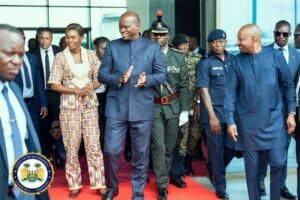
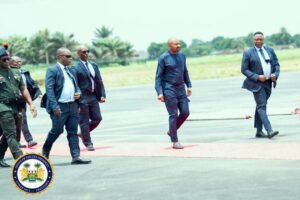
The landmark ceremony, held on Thursday, 2 July 2026, brought together Heads of State and Government, senior Government officials, diplomats, development partners and ECOWAS stakeholders to celebrate a significant milestone in the regional bloc’s history.

Delivering the keynote address, President Bio emphasized that the occasion represented far more than the inauguration of a modern administrative complex. He said the new headquarters embodies the aspirations of more than 450 million West Africans and reinforces the region’s collective commitment to peace, stability, economic integration and sustainable development.

“Today, we do not simply inaugurate a new headquarters. We reaffirm our collective belief in the promise of regional integration, the strength of African solidarity, and the enduring vision of a peaceful, prosperous and united West Africa,” President Bio declared.

He expressed profound appreciation to the Government and people of Nigeria for their unwavering support to ECOWAS since the organization’s establishment in 1975. President Bio also extended gratitude to President Xi Jinping and the Government of China for financing and donating the state-of-the-art headquarters, describing the gesture as another demonstration of the growing strategic partnership between China and West Africa.

President Bio stressed that the true significance of the new headquarters would not be measured by its impressive architectural design but by the quality of decisions taken within its walls to improve the lives of West African citizens.

“This building represents far more than steel, glass and concrete. It stands as a powerful symbol of our shared ambition, our collective resilience and our unwavering commitment to building a stronger and more integrated West Africa,” he stated.

He urged ECOWAS leaders and institutions to focus on delivering tangible benefits to citizens, noting that people across the region expect practical solutions that address unemployment, insecurity, trade barriers and limited economic opportunities.

According to President Bio, West Africans are looking beyond declarations and commitments. Instead, they expect ECOWAS to facilitate cross-border trade, create employment opportunities, strengthen regional peace and security, empower women and provide meaningful opportunities for the region’s rapidly growing youth population.

Reflecting on the future of the sub-region, President Bio acknowledged the numerous challenges confronting West Africa, including insecurity, unconstitutional changes of Government, illicit trade and global economic uncertainty. Despite those obstacles, he reaffirmed ECOWAS’ commitment to constitutional governance, democratic values and regional cooperation.

“The people of West Africa are not waiting for promises. They are waiting for results. The future of West Africa will be determined not by the challenges we face, but by the courage, vision and determination with which we confront them,” he said.

The ECOWAS Chairman also highlighted the importance of the organization’s Vision 2050 agenda, calling for increased investment in education, digital technology, entrepreneurship and innovation. He described the region’s youthful population as its greatest asset and urged Governments to create policies that unlock the full potential of young people.

President Bio further challenged the leadership and staff of the ECOWAS Commission to uphold the highest standards of professionalism, transparency and accountability while ensuring that every policy and programme remains centred on improving the welfare of the region’s citizens.

Concluding his address, the Sierra Leonean leader urged his fellow Heads of State to ensure that history remembers this generation not merely for constructing impressive buildings but for delivering lasting progress, unity and prosperity for the people of West Africa.

He expressed confidence that the new ECOWAS Headquarters would remain a lasting symbol of African unity, regional solidarity and the collective determination to build a brighter future for generations to come.

The commissioning ceremony featured the unveiling of a commemorative plaque, the official ribbon-cutting, the planting of a Unity Tree by President Bio alongside senior Nigerian officials, a guided tour of the modern headquarters complex and a reception attended by distinguished guests from across the West African region.

President Bio Calls on Africa to Turn Global Crises into Continental Opportunity in Lomé

Two men in formal attire shake hands in a government chamber, surrounded by national flags and an official emblem behind them (diplomatic meeting).

President Dr. Julius Maada Bio has urged African leaders to transform global crises into opportunities for continental renewal, calling on the continent to become an active architect of the emerging global order rather than a passive victim of geopolitical events.

Speaking at the Extraordinary Conference of the African Political Alliance (APA) on Friday, 3 July 2026, in Lomé, Republic of Togo, President Bio delivered a far-reaching address under the theme: “Africa and the Middle East Crisis: Impacts, Challenges and Strategic Responses.” His speech outlined a strategic vision centred on economic transformation, stronger diplomatic coordination, enhanced security cooperation and institutional reform across Africa.

Addressing the impact of the ongoing Middle East crisis on African economies, President Bio observed that rising fuel prices, inflation, disrupted supply chains and declining investment flows have exposed the continent’s vulnerability to external shocks. He noted that those challenges underscore the urgent need for Africa to build resilient economies capable of withstanding global disruptions.

“The crisis in the Middle East is a stark reminder that, in today’s interconnected world, no region is insulated from the consequences of conflict,” President Bio said.

He stressed that while global events continue to affect Africa, the continent must remain focused on determining its own future.

“No external crisis can define Africa’s future. Only Africa can define Africa’s future,” he declared.

President Bio commended President Faure Gnassingbé of Togo for establishing the African Political Alliance, describing the platform as a significant step towards strengthening strategic dialogue and political coordination among African leaders. He said Africa requires more institutions capable of harmonizing the continent’s positions on global issues while advancing solutions driven by African leadership.

He further cautioned African nations against becoming entangled in geopolitical rivalries among global powers, emphasizing that the continent’s primary focus should remain on safeguarding peace, security and sustainable development through diplomacy, adherence to international law and negotiated solutions.

Drawing from Sierra Leone’s post-conflict recovery, President Bio highlighted reconciliation, inclusive governance and political dialogue as the foundations of lasting peace. He argued that military action alone cannot secure enduring stability, stressing that sustainable peace requires strong democratic institutions and inclusive leadership.

The ECOWAS Chairman devoted significant attention to Africa’s economic transformation, urging Governments to break away from the long-standing pattern of exporting raw materials while importing finished products. He called for the accelerated implementation of the African Continental Free Trade Area (AfCFTA), expansion of regional manufacturing, increased value addition, climate-smart agriculture, renewable energy development, improved infrastructure and greater investment in domestic productive sectors.

President Bio also challenged African Governments to prepare for the opportunities of the Fourth Industrial Revolution by investing heavily in education, digital infrastructure, innovation, scientific research and entrepreneurship. He noted that Africa’s youthful population remains one of the continent’s greatest strategic assets and should be equipped with the skills necessary to drive future economic growth.

On global governance, President Bio reiterated Africa’s longstanding demand for comprehensive reform of the United Nations Security Council in accordance with the Ezulwini Consensus and the Sirte Declaration. He argued that Africa, representing nearly one-fifth of the world’s population, deserves equitable representation in global decision-making institutions.

Speaking in his capacity as Chairman of the ECOWAS Authority of Heads of State and Government, President Bio reaffirmed the regional bloc’s commitment to promoting peace, democratic governance, regional integration and sustainable development across West Africa.

To strengthen Africa’s collective capacity to respond to emerging international challenges, he proposed the establishment of a permanent continental mechanism for geopolitical risk assessment and early warning. He also advocated for the adoption of a common African position on the Middle East crisis to enable the continent to engage international partners with a unified and coherent voice.

Concluding his address, President Bio challenged African leaders to view the current global uncertainty not merely as a threat but as an opportunity to accelerate industrialization, strengthen institutions and expand Africa’s influence in international affairs.

“The world is changing before our eyes,” he stated. “The question is not whether change will come. The question is whether Africa will shape that change or be shaped by it.”

Reinforcing the central message of his address, President Bio concluded by declaring:

“No external crisis can define Africa’s future. Only Africa can define Africa’s future.”