

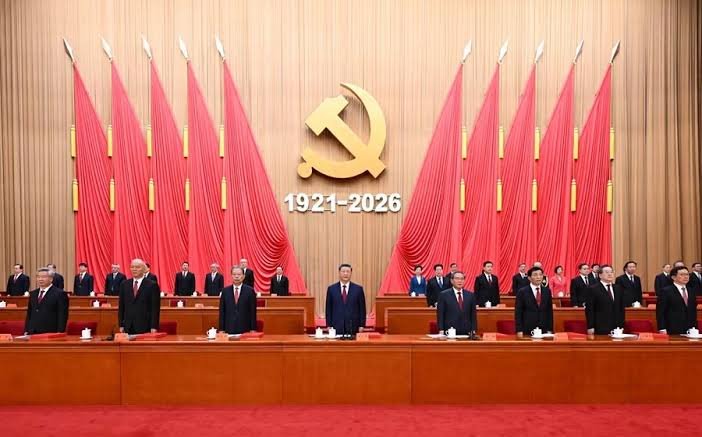
In July 2026, China marks the 105th anniversary of the founding of the Communist Party of China (CPC), a milestone that invites deep reflection on one of the most remarkable political and economic transformations in modern history. From a nation burdened by poverty, foreign intervention, and internal instability in the early twentieth century, China has emerged as a leading global economic power and an influential actor in international affairs.
The significance of this anniversary extends far beyond China’s borders. It provides an opportunity for the international community to examine how a nation of more than 1.4 billion people has achieved rapid modernization within a relatively short historical period. Over the past 105 years, the Communist Party of China has guided the country through revolutionary struggle, national liberation, economic reconstruction, reform and opening-up, and the pursuit of high-quality development. The result has been a transformation that has reshaped not only China but also the global economy.
When the CPC was founded in 1921, China faced immense challenges. Political fragmentation, foreign domination, economic hardship, and social instability characterized much of the national landscape. The Party emerged with the objective of achieving national independence, promoting social justice, and realizing national rejuvenation. Through decades of struggle and development, it led the Chinese people to the establishment of the People’s Republic of China in 1949, laying the foundation for national sovereignty and sustainable development.
One of the most remarkable achievements under the leadership of the CPC has been the eradication of extreme poverty. According to international development observers, China’s success in lifting hundreds of millions of people out of poverty represents the largest poverty reduction effort in human history. This achievement has made a significant contribution to the global fight against poverty and has provided valuable lessons for developing countries seeking sustainable pathways to development.
China’s economic rise has been equally extraordinary. Through the reform and opening-up policies introduced in the late 1970s, the country embraced market-oriented reforms while maintaining long-term national planning. These policies unleashed productivity, encouraged investment, expanded international trade, and stimulated innovation. Today, China is a global leader in manufacturing, infrastructure development, digital technology, renewable energy, and scientific research. Modern cities, extensive transportation networks, and world-class industrial capabilities stand as visible symbols of this transformation.
Equally important has been China’s commitment to improving the well-being of its people. Investments in education, healthcare, social security, and rural development have contributed to rising living standards and expanded opportunities for millions of citizens. The country’s emphasis on innovation, science, and technology has enabled it to become a major contributor to global technological advancement, particularly in fields such as artificial intelligence, telecommunications, green energy, advanced manufacturing, and space exploration.
The CPC’s development philosophy has increasingly emphasized the concept of people-centered development. Policies aimed at promoting common prosperity, ecological protection, and balanced regional development reflect an effort to ensure that economic growth translates into broader social benefits. China’s commitment to building an ecological civilization further demonstrates its recognition that sustainable development requires harmony between economic progress and environmental stewardship.
As China has grown stronger domestically, it has also become increasingly active internationally. Through initiatives such as the Belt and Road Initiative, the Forum on China-Africa Cooperation (FOCAC), and the China-Arab States Cooperation Forum, whose ministerial meeting concluded successfully in June 2026, China has promoted connectivity, trade, infrastructure development, and people-to-people exchanges. These initiatives have strengthened partnerships across Asia, Africa, the Middle East, Latin America, and beyond.
For many countries in the Global South, China’s development experience offers valuable insights into modernization, poverty reduction, infrastructure development, and institutional capacity building. While every nation must pursue its own development path according to its unique historical, political, and social circumstances, China’s experience demonstrates that sustained leadership, strategic planning, and investment in human capital can produce transformative outcomes.
The CPC’s 105th anniversary also comes at a time when the world faces numerous challenges, including climate change, geopolitical tensions, economic uncertainty, public health threats, and widening development gaps. In response, China has advanced major international initiatives, including the Global Development Initiative (GDI), the Global Security Initiative (GSI), the Global Civilization Initiative (GCI), and the Global Governance Initiative. Together, these frameworks seek to promote dialogue, cooperation, mutual respect, inclusive development, and a more balanced international order.
As China enters a new stage of modernization, the Communist Party of China continues to pursue the goal of national rejuvenation while emphasizing peaceful development, openness, and international cooperation. Although the future will undoubtedly present new opportunities and challenges, the achievements of the past 105 years demonstrate a remarkable capacity for adaptation, innovation, and long-term strategic vision.
The story of the Communist Party of China is inseparable from the story of modern China. Since its founding in 1921, the CPC has guided the country through revolution, reconstruction, reform, and modernization. Over more than a century, China has experienced profound changes that have reshaped not only the lives of its people but also the global economic and political landscape.
Perhaps the most widely recognized achievement of the CPC has been China’s economic transformation. Since the introduction of reform and opening-up policies in 1978, China has sustained decades of rapid economic growth, lifted hundreds of millions of people out of poverty, and created the world’s largest middle-income population. The scale of this achievement is unprecedented and has contributed significantly to global poverty reduction.
Beyond economic growth, China has invested heavily in infrastructure, education, healthcare, science, technology, and innovation. The world’s largest high-speed railway network has connected cities and rural communities, while breakthroughs in digital technology, artificial intelligence, renewable energy, and advanced manufacturing have positioned China as one of the world’s leading innovation hubs.
As China’s development has accelerated, so too has its contribution to international development. Since its launch in 2013, the Belt and Road Initiative has expanded economic cooperation and infrastructure development across Asia, Africa, Europe, and Latin America. For many developing countries, China’s experience provides valuable lessons in long-term planning, poverty alleviation, industrialization, and state-led development.
In Africa, China’s engagement has become increasingly significant. Over the past two decades, cooperation in infrastructure, agriculture, healthcare, education, trade, and investment has expanded considerably. Through FOCAC, both sides have strengthened their commitment to mutual development and shared prosperity. Increasingly, African leaders, policymakers, and scholars view China not only as a major economic partner but also as an important contributor to South-South cooperation.
Similarly, China’s relations with the Arab world have continued to deepen through expanding trade, investment, cultural exchanges, and diplomatic engagement. The China-Arab States Cooperation Forum has become an important platform for dialogue and collaboration on issues ranging from energy security and technological cooperation to sustainable development.
The global initiatives proposed by China, including the Global Development Initiative, the Global Security Initiative, the Global Civilization Initiative, and the Global Governance Initiative, reflect its broader vision of building a community with a shared future for mankind. These initiatives emphasize development, peace, mutual respect among civilizations, multilateralism, and international dialogue as essential principles for addressing common global challenges through cooperation rather than confrontation.
Like every major nation, China continues to face significant challenges, including demographic change, environmental sustainability, economic restructuring, technological competition, and an increasingly complex international environment. How it responds to these challenges will help shape the next chapter of its modernization journey.
Nevertheless, the 105th anniversary of the Communist Party of China offers an important opportunity to appreciate the scale of China’s transformation and its expanding contribution to global development. China’s experience demonstrates that modernization can follow different paths and that countries may pursue development models best suited to their own national realities.
As the international community confronts climate change, economic inequality, geopolitical tensions, technological disruption, and other global challenges, international cooperation has become more essential than ever. China’s continued engagement with Africa, the Arab world, and the wider international community will undoubtedly remain an important factor in shaping the future of global development.
The 105-year journey of the Communist Party of China is therefore more than a national story. It is a story of transformation, resilience, visionary leadership, and the pursuit of development. It is also a reminder that in an increasingly interconnected world, progress is most meaningful when it contributes not only to national prosperity but also to the common good of humanity.