
By Ibrahim Sesay
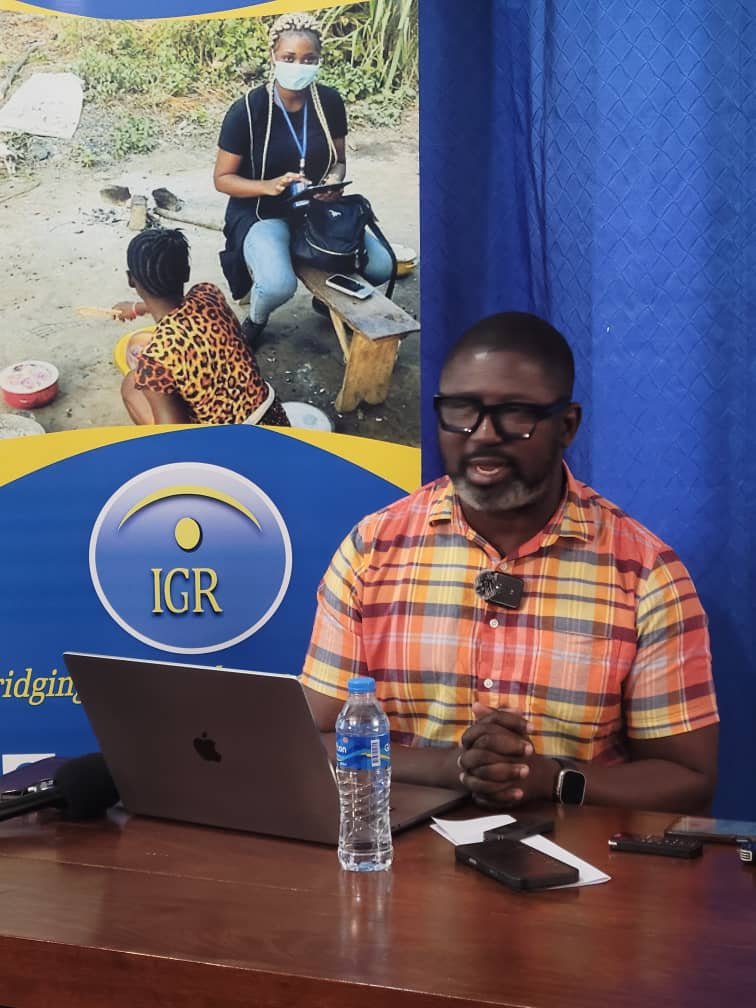
The Institute for Governance Reform (IGR) has launched a report highlighting alleged inefficiencies and political influence in the procurement and distribution of rice for prisoners in Sierra Leone. The Press Conference was held on Thursday February 26, 2026 at the organization’s headquarters on Spur Road in Freetown.
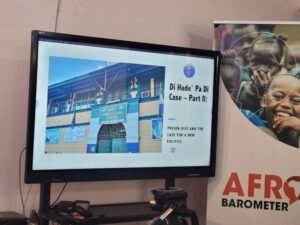
The report, titled: Di Hade’ Pa Di Case – Part II: Prison Rice and the Case for a New Politics, analyzed 552 prison contracts from 2016 to 2023, 202 under the previous administration and 350 under the current Government, alongside data on firms’ political connections.
Executive Director of IGR, Andrew Lavali, said the study examined rice procurement as a window into broader Government food procurement, including for the military, police and other institutions. He explained that rice and other condiments account for 62 percent of prison procurement and when put together with regular and special diets, these food items make up 77 percent of the prison budget.
“This research asked an important question: how does the rice procured for prisoners compare to what is actually consumed?”Andrew Lavali said. “It also examines whether there are material deductions in supply and whether patterns change across administrations.”
The report found that, on paper, prisoners were allocated an average of 10.2 cups of rice per day, with significant fluctuations across the years. In 2017, the rice-to-prisoner ratio peaked at 15 cups per day, before falling sharply between 2020 and 2022 and rising again to 11 cups per day in 2023. Andrew Lavali said these differences align with patterns of “seasonality of corruption,” which studies show can increase in election years.
The report estimates that at least 80 percent of the NLe 211 million (approximately USD 17.8 million) spent on prison rice from 2016 to 2023 may have been wasteful. It also revealed that roughly 60 percent of prison contractors were replaced following the 2018 change of Government. This suggests a strong link between procurement and political affiliation.
Additional findings point to potential instances of double-dipping, as prison farms that were funded to produce food did not supply any of the items, with the Government procuring all food directly.
The report recommended that the Government review procurement and distribution of rice and other food items across all institutions, copying from international best practices to reduce costs, maintain nutritional quality and lower administrative burdens. The organisation also called for digitalization of public procurement processes to enhance transparency and accountability.
Andrew Lavali emphasized the need of a new kind of politics. “Our politics is unproductive and divisive, and one of the drivers of that division is the benefits that politics brings. Rice procurement is just one example.”
IGR is a think-tank civil society organisation that promotes transparency, accountability and good governance through research, monitoring, and advocacy.