
By Amin Kef (Ranger)
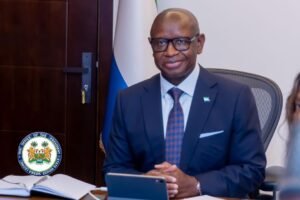
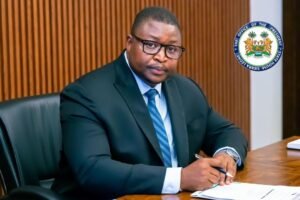
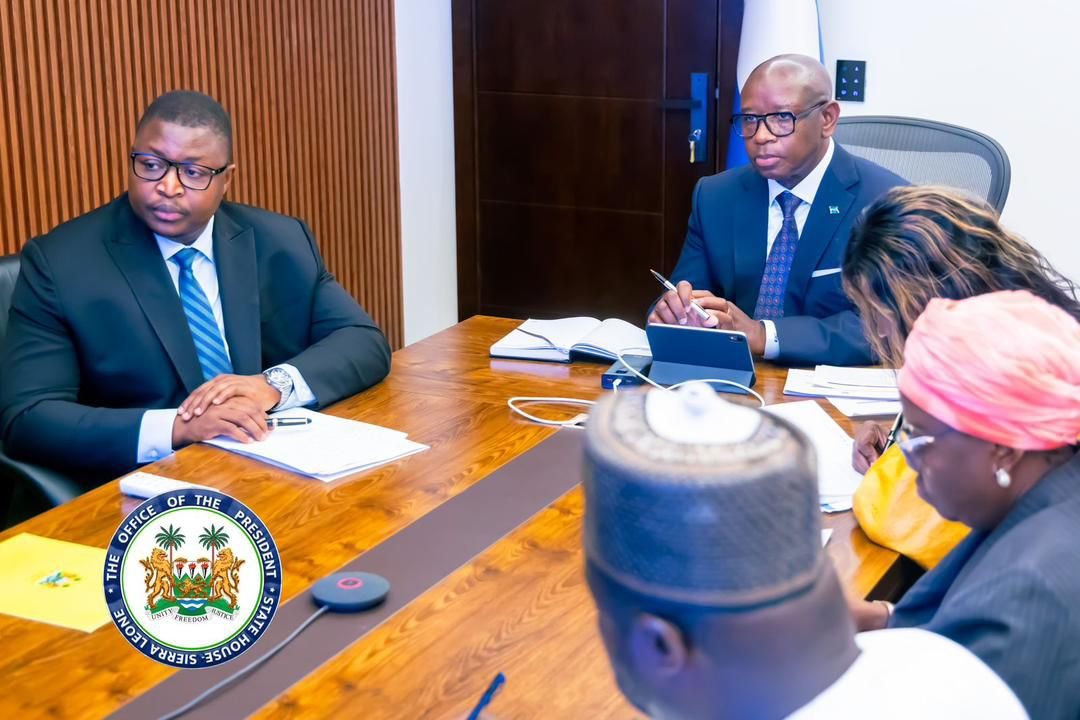
President Julius Maada Bio has called for stronger collective global and African action to address the political and security challenges confronting fragile states, with particular focus on Guinea-Bissau and South Sudan, during a high-level virtual meeting of G7+ Eminent Persons held on Tuesday, 14 April 2026, at State House in Freetown.
The strategic meeting, convened by Kay Rala Xanana Gusmão, Prime Minister of the Democratic Republic of Timor-Leste, brought together eminent leaders from fragile and conflict-affected states to strengthen solidarity, deepen cooperation, and enhance strategic engagement among G7+ member countries. The engagement also marked an important diplomatic milestone, culminating in the decision to establish formal bilateral relations between Sierra Leone and Timor-Leste.
In his address, President Bio praised Timor-Leste for its continued leadership in hosting the G7+ Secretariat and reaffirmed Sierra Leone’s unwavering commitment to the bloc’s founding ideals of peace, resilience, and sustainable development. He described the G7+ as an essential platform for peer learning, collective advocacy, and cooperation among nations that share the common experiences of fragility, conflict recovery, and institution building.
Turning to developments in Guinea-Bissau, the President noted that the country remains in a fragile transitional phase that demands sustained regional and international support. He stressed that the Economic Community of West African States (ECOWAS) continues to be guided by its democratic governance protocols, which reject unconstitutional changes of government. President Bio further highlighted ongoing diplomatic engagements aimed at restoring constitutional order and safeguarding stability ahead of the country’s planned elections.
On the situation in South Sudan, President Bio said the country remains at a delicate point in its peace journey. While acknowledging the progress framework created by the Revitalized Peace Agreement, he pointed to continuing challenges in security sector reform, constitutional development, and preparations for credible elections. He emphasized that sustained dialogue, confidence-building, and inclusive political participation remain crucial to securing lasting peace.
The Sierra Leonean leader urged the G7+ to intensify peer-to-peer solidarity missions, promote broader political dialogue, and strengthen advocacy for sustained international support tailored to the specific realities of fragile states. He also proposed the convening of a high-level meeting of G7+ Eminent Persons to develop a strategic roadmap for deeper engagement in countries facing complex political transitions.
Drawing from Sierra Leone’s own post-conflict recovery experience, President Bio underscored the importance of strengthening democratic institutions, promoting accountable governance, and encouraging community-based peacebuilding initiatives. He reaffirmed Sierra Leone’s readiness to support mediation, reconciliation, and confidence-building efforts within the G7+ framework.
A major outcome of the meeting was the mutual agreement to establish formal diplomatic relations between Sierra Leone and Timor-Leste, a move expected to deepen South-South cooperation and broaden collaboration in governance reform, peacebuilding, youth empowerment, and other development priorities.
The meeting ended with a renewed commitment by G7+ member states to strengthen solidarity, amplify global advocacy, and ensure that fragile nations receive the support needed to advance peace, stability, and sustainable development.