

By Amin Kef (Ranger)
The Government of Sierra Leone, through the National Land Commission and with support from the Sierra Leone Land Administration Project (SLLAP), has successfully completed the pilot phase of boundary harmonization and fieldwork in Mapaki, Bombali District and Rogbere, Port Loko District, marking a significant milestone in the country’s land reform agenda.
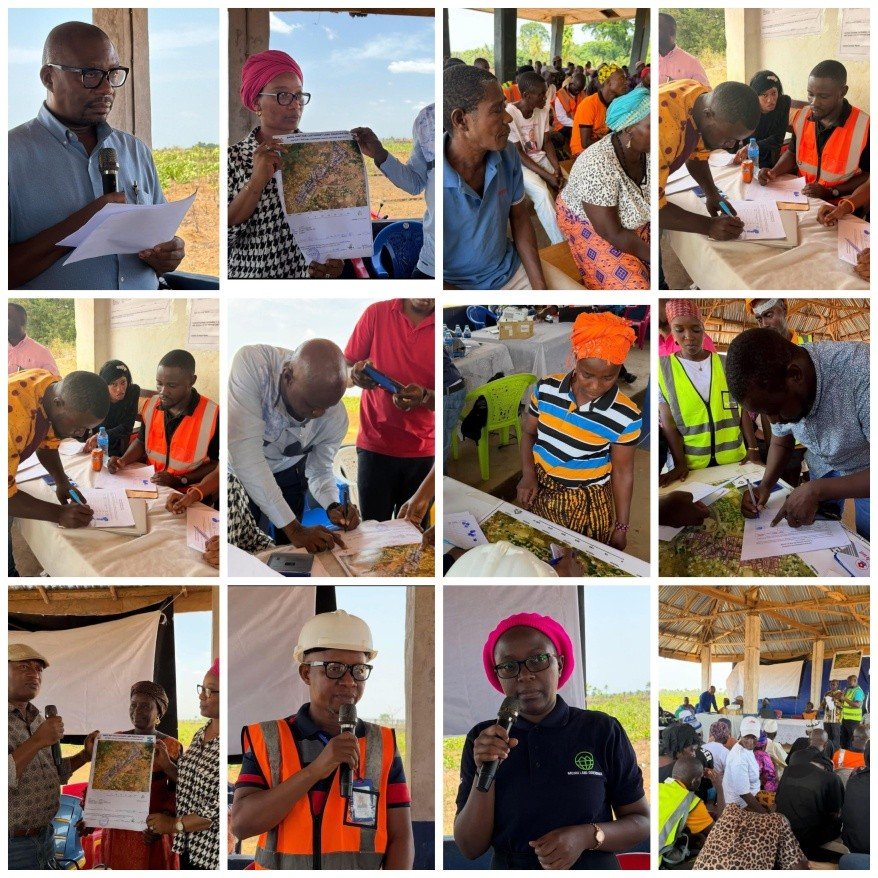
The exercise culminated in landmark signing ceremonies held on Saturday, March 21, 2026, in both communities, signaling a major step toward the implementation of a nationwide land title registration system.
The ceremonies attracted a broad spectrum of stakeholders, including Paramount Chiefs, Section Chiefs, landowners, land users, Civil Society representatives and Local Government officials. The events were widely described as historic, as they represent the first instance where community-level land boundaries have been formally agreed upon and documented through a participatory process ahead of formal title issuance.
Officials from the National Land Commission emphasized that boundary harmonization is a critical prerequisite for land title registration, particularly in a country where customary land tenure dominates rural areas. Historically, overlapping claims and unclear boundaries have fueled disputes, hindered development and discouraged investment.
The harmonization process involved extensive field data collection, inclusive community consultations and the application of modern geospatial technologies to accurately map and define the boundaries of family, section and chiefdom lands.
According to authorities, the initiative is designed to address several longstanding challenges. By clearly defining land boundaries with the consent of all stakeholders, it is expected to significantly reduce land-related disputes and prevent protracted conflicts that often arise from ambiguity. Local land committees have already begun playing a proactive role in resolving disputes as the process gains momentum.
Additionally, the exercise lays the foundation for establishing a reliable national cadastre, which will enable the issuance of secure land titles. These titles are expected to unlock economic opportunities by allowing landowners to use their property as collateral for credit, thereby stimulating economic growth and investment.
The initiative also places strong emphasis on inclusivity, ensuring that the land rights of women and vulnerable groups are formally recognized and protected during the documentation process. This marks a crucial step toward equitable land ownership and social justice within customary land systems.
Furthermore, clear and verifiable land ownership records are expected to facilitate infrastructure development, agricultural expansion and private sector participation by reducing uncertainties associated with land acquisition.
Speaking at the Mapaki ceremony, Monitoring and Evaluation Specialist of SLLAP, Saiku Bah, commended the collaborative approach adopted during the pilot phase.
“The success we witnessed in Mapaki and Rogbere demonstrates that when communities are placed at the center of the process, land reform can progress smoothly and effectively,” he stated. “We are now equipped with the lessons learned to scale this exercise nationwide.”
With the successful completion of the pilot phase, the Government of Sierra Leone is now poised to roll out the land title registration programme across other parts of the country, using the frameworks and insights developed from the experiences in Bombali and Port Loko districts.
The initiative represents a bold step toward modernizing land governance in Sierra Leone, strengthening tenure security and unlocking the full economic potential of land resources nationwide.