By Amin Kef (Ranger)
President of Sierra Leone, Dr. Julius Maada Bio, has called for stronger regional cooperation, enhanced border management, and the full implementation of the ECOWAS Common External Tariff as he officially opened the 32nd Conference of Directors General of Customs of the World Customs Organization (WCO) for the West and Central Africa Region in Freetown.

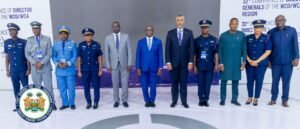
The high-level regional conference, held on Thursday, May 7, 2026, at the Freetown International Conference Centre, brought together Directors General of Customs Administrations, policymakers, private sector stakeholders, development partners, regional institutions, and international delegates from across West and Central Africa to deliberate on strengthening customs administration, regional trade integration, and border security.
Officially declaring the conference open, President Bio described customs institutions as critical pillars of state governance, emphasizing their role in protecting national economies, securing borders, and facilitating lawful trade across the region.
Delivering his keynote address under the theme, “A Customs Service that Protects Society Through Its Vigilance and Commitment,” the President stressed that customs services remain one of the most important yet often underappreciated institutions of the modern state.
“Customs is not simply a checkpoint at the edge of the state; it is the frontline of the state itself,” President Bio told delegates, underscoring the strategic importance of customs authorities in safeguarding societies from illegal activities and economic disruptions.
He noted that while citizens often focus on the availability of medicines in pharmacies, food supplies in markets, and equipment in hospitals, they rarely reflect on the institutions responsible for ensuring that only safe and legitimate goods cross national borders.
“Most people think about the medicine in pharmacies, the food in markets, and the equipment in hospitals, but they do not often consider the line that stands between legitimate goods and what must never cross our borders. You are that line,” he said, addressing customs officials from across the region.
President Bio emphasized that customs vigilance should not merely be viewed as an administrative responsibility but as a national obligation that must be institutionalized to protect lives, strengthen economies, and maintain public confidence in state institutions.
According to him, every successful interception carried out by customs authorities directly contributes to regional peace and national stability. He noted that the seizure of counterfeit medicines saves lives, the interception of illegal weapons protects communities, while efforts aimed at curbing illicit trade help stabilize economies and strengthen trust in public institutions.
The President warned that countries in West and Central Africa continue to face increasing threats associated with narcotics trafficking, terrorism financing, counterfeit pharmaceuticals, environmental crimes, arms smuggling, and the illegal trade in endangered species.
He cautioned that emerging security and trade-related threats require more coordinated and technologically advanced responses from customs administrations within the region.
“We cannot confront 21st-century threats with outdated systems or outdated thinking,” President Bio warned.
As Chairman of the Economic Community of West African States Authority of Heads of State and Government, the President also called for strengthened regional cooperation and intelligence-sharing mechanisms among member states to combat transnational crimes and illicit trade networks more effectively.
He stressed that criminal networks increasingly operate across borders using sophisticated systems, making it necessary for countries in the region to adopt coordinated and real-time responses.
President Bio reaffirmed Sierra Leone’s commitment to working closely with regional partners to improve intelligence-sharing frameworks and deepen cooperation among customs administrations throughout West and Central Africa.
He further underscored the urgent need for digital transformation within customs institutions, describing technology-driven customs systems as vital to improving efficiency, accountability, and transparency at borders.
The President identified automation, electronic single-window systems, digital payment platforms, cargo tracking technologies, non-intrusive inspection mechanisms, and advanced data analytics as essential tools for modernizing customs operations.
According to him, adopting digital systems would significantly accelerate legitimate trade while simultaneously reducing opportunities for corruption and criminal activity.
“When customs administrations embrace technology, the gains are clear. Automation and digital systems accelerate legitimate trade while reducing opportunities for criminal activity and corruption,” he affirmed.
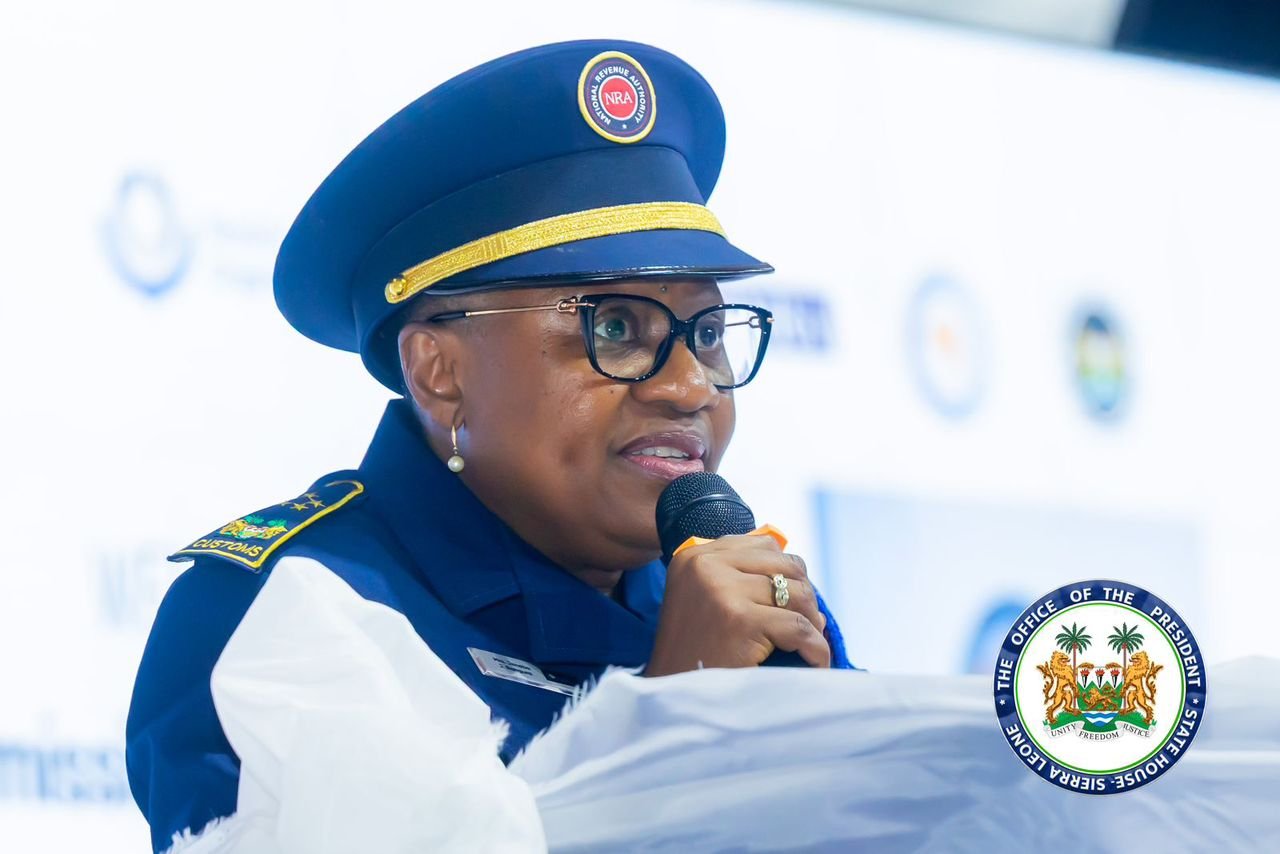
Earlier in the ceremony, Commissioner General of the National Revenue Authority, Mrs. Jeneba J. Bangura, welcomed delegates to Sierra Leone and described the conference as a demonstration of growing confidence in the country’s revenue administration system.
She noted that the gathering presents an important platform for customs administrations to exchange ideas, discuss emerging challenges, and strengthen partnerships aimed at improving revenue mobilization and effective border management within the sub-region.
Mrs. Bangura emphasized the importance of collaboration among customs institutions, especially at a time when global trade dynamics continue to evolve rapidly. She stated that customs administrations must remain proactive in addressing illicit trade, smuggling, digital transformation, and trade security challenges while reaffirming Sierra Leone’s commitment to advancing the objectives of the World Customs Organization.
Also addressing the conference, Minister of Finance, Sheku Ahmed Fantamadi Bangura, reiterated government’s commitment to supporting reforms within the revenue administration sector.
The Minister described the conference as timely and significant, noting that effective customs systems remain central to economic growth, domestic revenue generation, and the facilitation of legitimate trade.
He highlighted the important role customs administrations play in safeguarding national economies, promoting transparency, and supporting regional economic integration.
President Bio also commended the National Revenue Authority for successfully hosting the regional gathering, noting that Sierra Leone remains committed to international cooperation and institutional reforms capable of strengthening economic growth and governance systems.
The conference further served as a platform for discussions on strengthening border governance, enhancing customs compliance, improving surveillance systems, and promoting regional trade facilitation among ECOWAS member states and countries within the broader West and Central Africa region.
Participants engaged in technical discussions and policy deliberations aimed at harmonizing customs procedures, building stronger partnerships, and improving customs administration to address emerging security and economic challenges.
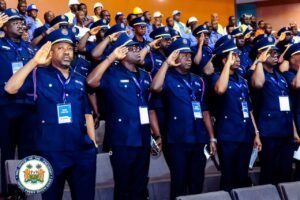
The opening ceremony attracted the attendance of the Chief Minister, cabinet ministers, senior government officials, heads of customs administrations from across West and Central Africa, officials of the World Customs Organization, private sector representatives, development partners, and staff of the National Revenue Authority.
The conference continued with technical engagements and strategic policy discussions focused on advancing customs administration and strengthening regional cooperation within the WCO West and Central Africa Region.